A short history of the search for perpetual motion.
by Donald E. Simanek
 |
|
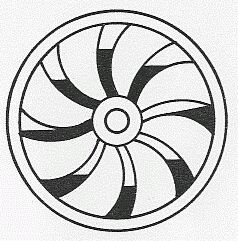
| Bhaskara Wheel with curved spokes. |
|---|

A short history of the search for perpetual motion.
by Donald E. Simanek
|
|
| Bhaskara Wheel with curved spokes. |
|---|
Want to give something special to your Valentine or favourite person around the department? Need a box for it? Here’s a perfect box!
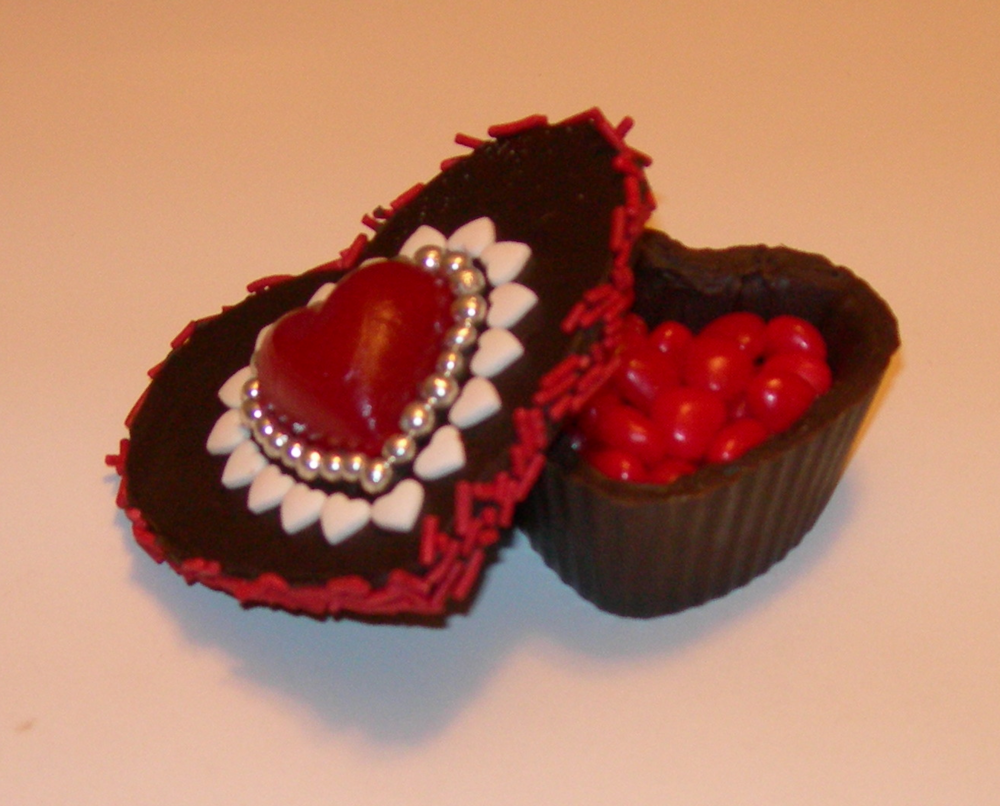
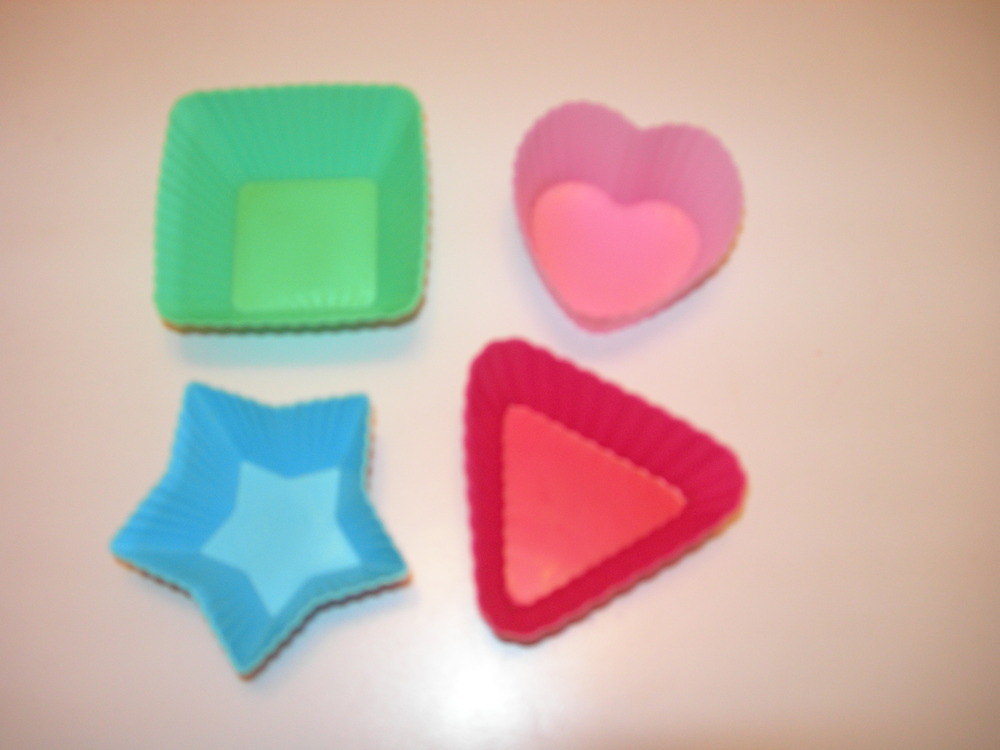
To create this, I have used a cupcake silicon baking cup. They are great and come in all sorts of shapes (shown below), but they can be expensive. A cheaper alternative is to use a paper cupcake baking cup inside a muffin tin (so it has support) or line a mug with aluminum foil.
Ingredients:
– chocolate chips (what I used) or Merckens coloured melting wafers
– candy for decorating the lid
Other stuff:
– cupcake silicon baking cup or alternative
– paintbrush with plastic bristles
– microwave safe bowl
– spoon
– two cookie cutters—one in the shape that you want for the lid, larger than the opening of the baking cup, one in the same shape as the opening of the baking cup, small enough to fit inside the opening and have at least ¼ inch space between it and the cup all the way around
– wax paper (a piece larger than largest cookie cutter)
– two plates
– sharp knife (optional)
How to melt chocolate chips:
Place chocolate chips in a microwave safe bowl. Heat in the microwave 30 seconds at a time, stirring in between until smooth.
Create the box
1. Melt chocolate chips and paint the inside of the silicone baking cup (or alternative) completely. Refrigerate until solid (depending on the thickness of the chocolate layer 2-5 minutes).
2. Repeat step 1 until there is a thick, solid layer of chocolate coating the inside of the baking cup (or alternative).
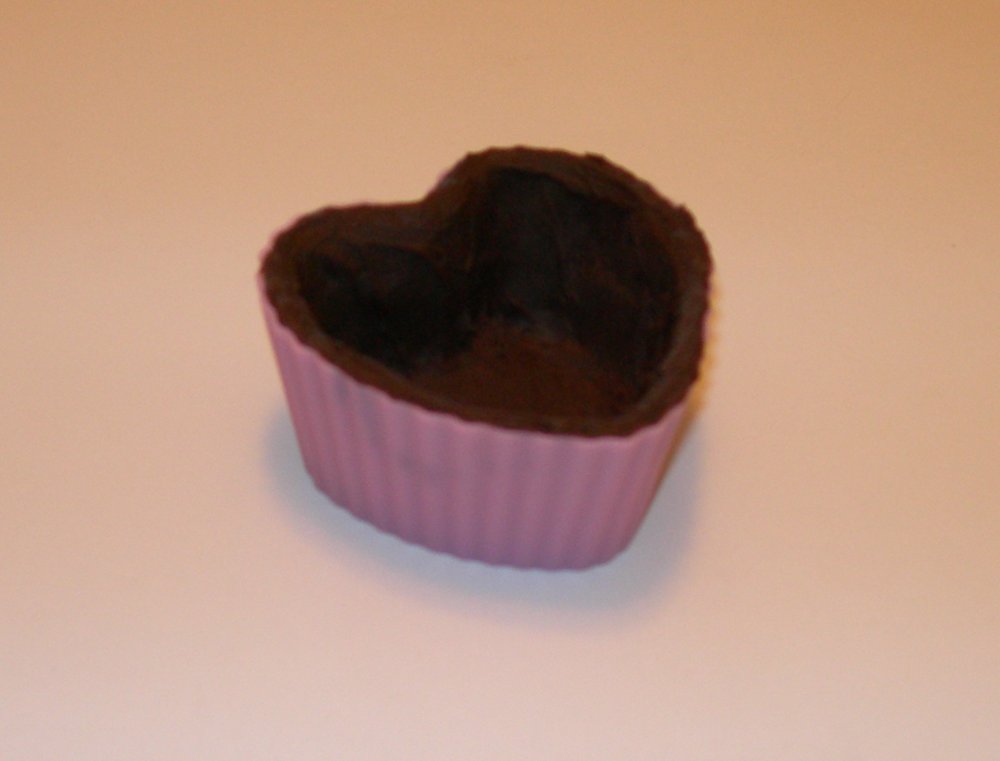
3. Carefully peal the silicone or paper baking cup off of the chocolate. If you are using an aluminum lined mug, gently remove the aluminum foil and chocolate from the mug, and then peel the aluminum off.
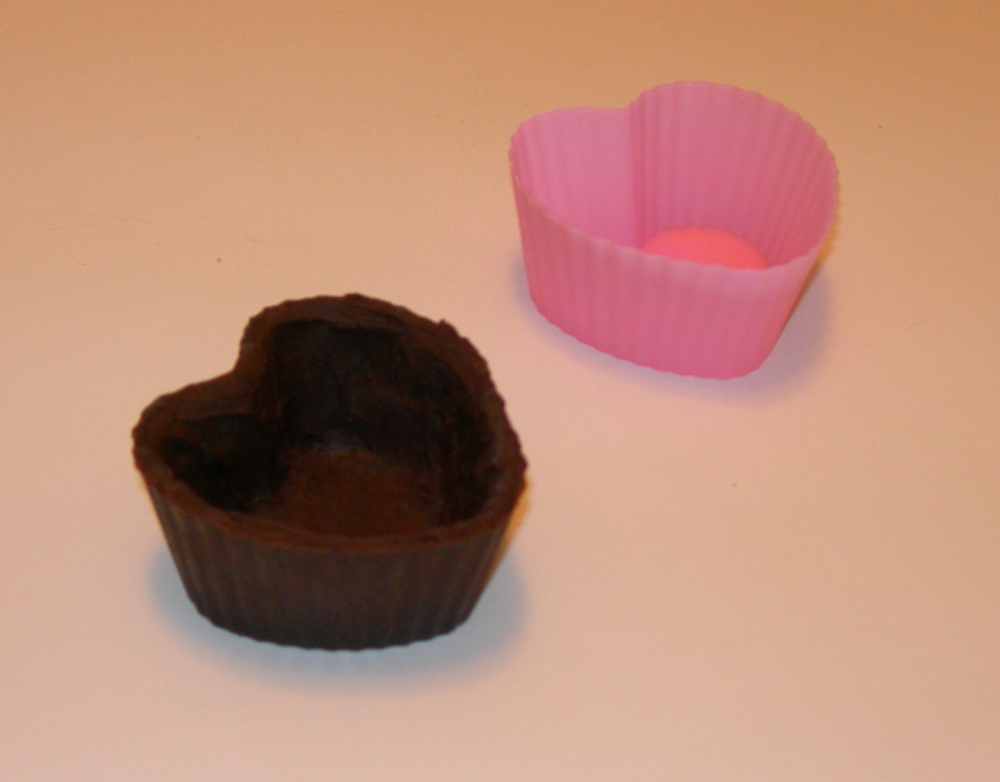
Create the lid
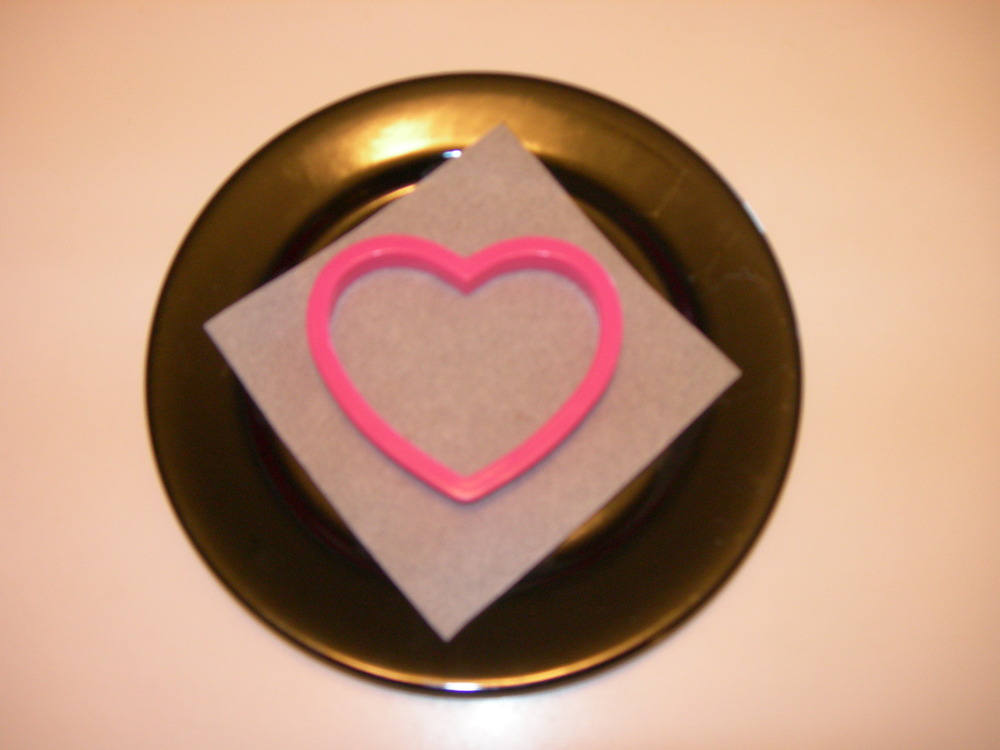
1. Put the wax paper on the plate and the largest cookie cutter on top.
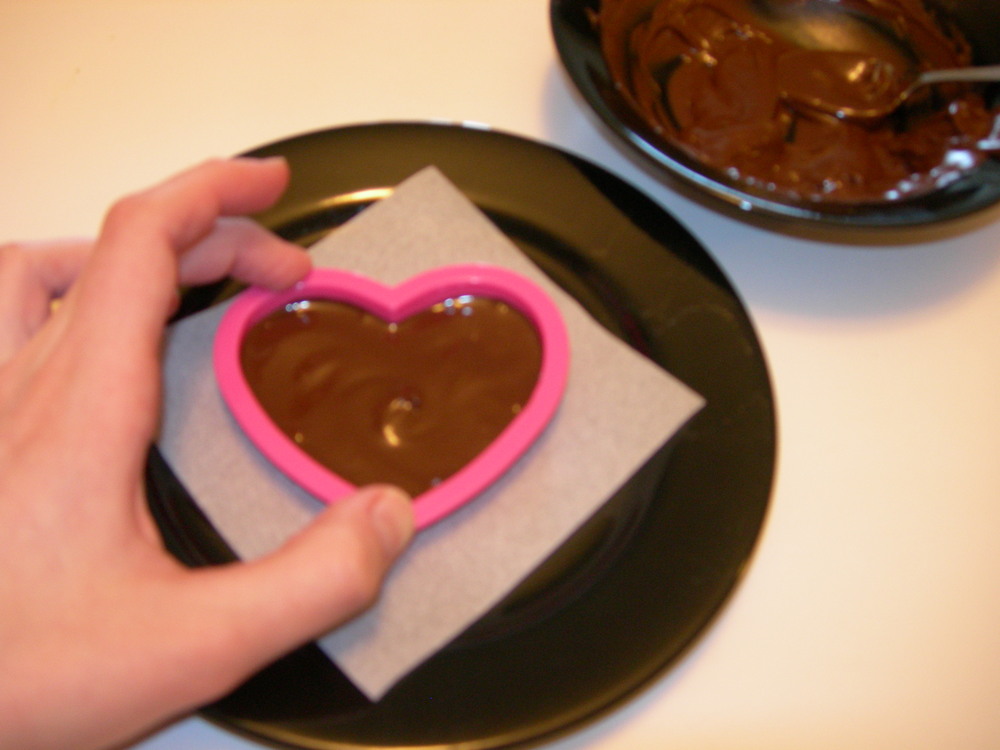
2. As you hold the cookie cutter, fill the cookie cutter with melted chocolate, at least ¼ inch high. Use a spoon (or your clean fingers) to try to “level out” the chocolate.
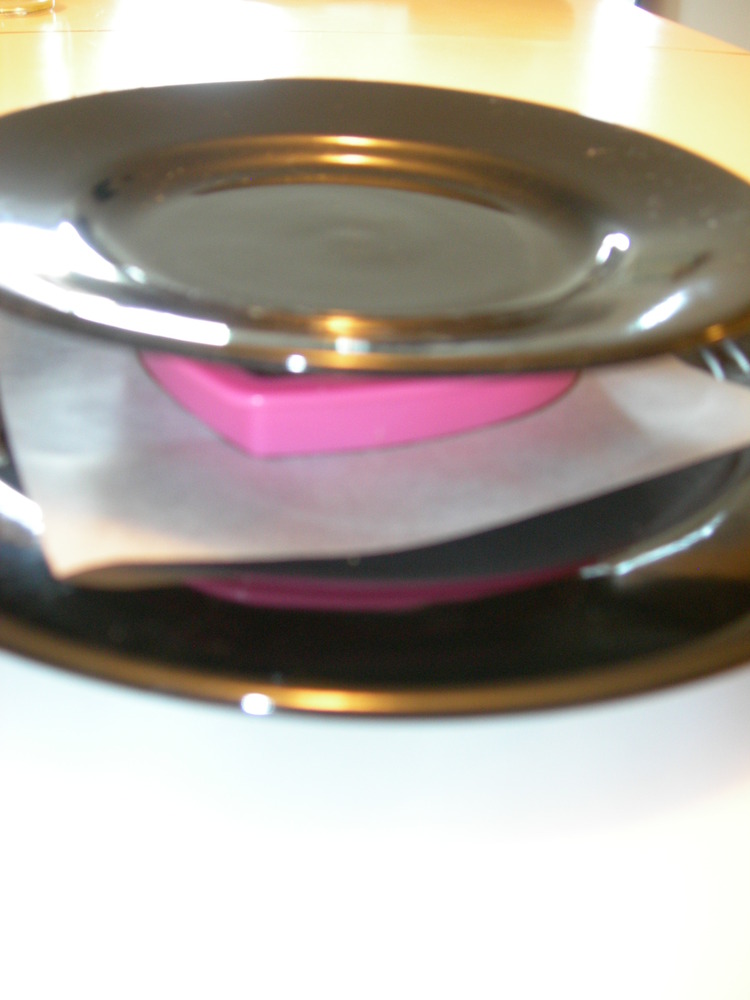
3. Place the second plate on top of the cookie cutter (to weigh it down) and refrigerate until solid. Since this is a lot of chocolate, it will probably need 5-10 minutes.
4. Once the chocolate is solid, remove the top plate. Gently press the chocolate out of the cookie cutter. Centre the smaller cookie cutter on the chocolate shape and fill with chocolate (about ¼ inch high) as you hold the cookie cutter down. Level out the chocolate. Place the second plate on top of the cookie cutter and refrigerate until solid. This creates a lip on the bottom of the lid so that it won’t slide off the box.
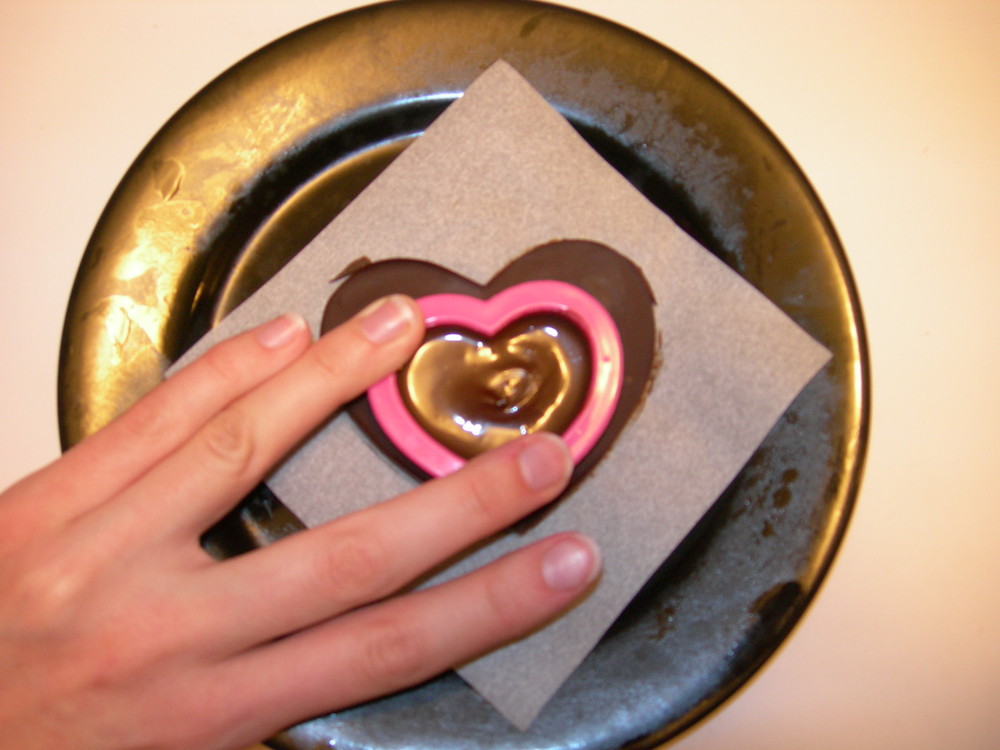
5. Gently press the chocolate out of the cookie cutter. It should look something like this. You can round off the sharp edges by “shaving” the chocolate with a sharp knife, if you wish.
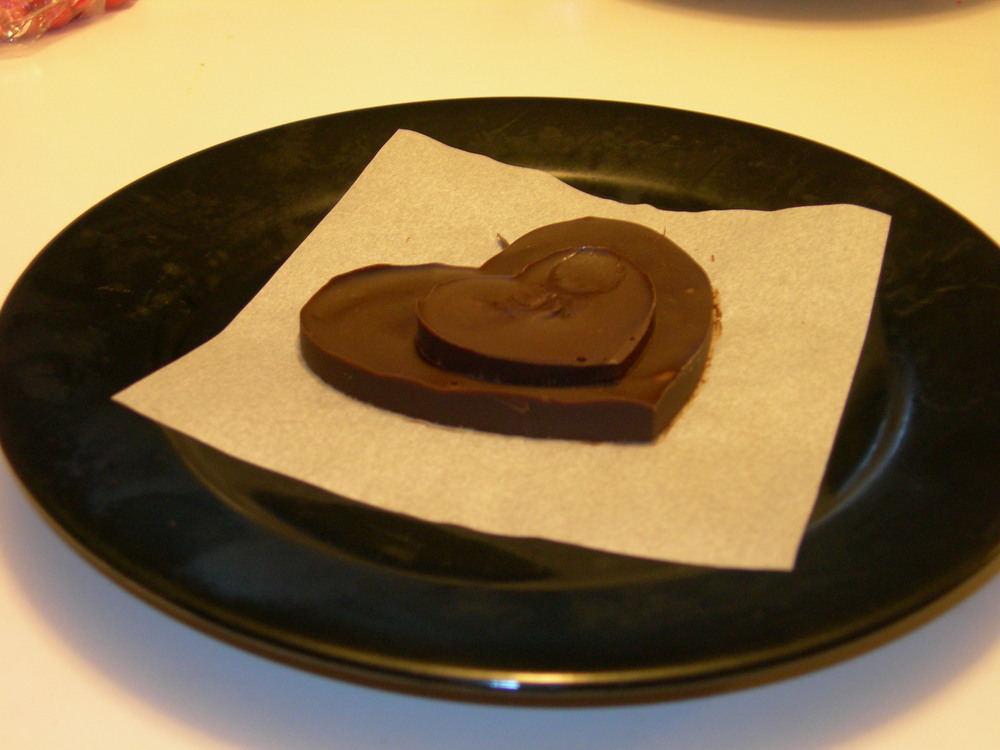
6. Flip the lid over (so the wax paper is on the top) and peel off the wax paper. Decorate the lid with icing and candies, such as sequins, jujubes, cinnamon hearts, and sprinkles. Use melted chocolate or royal icing as glue for attaching candies to the lid.
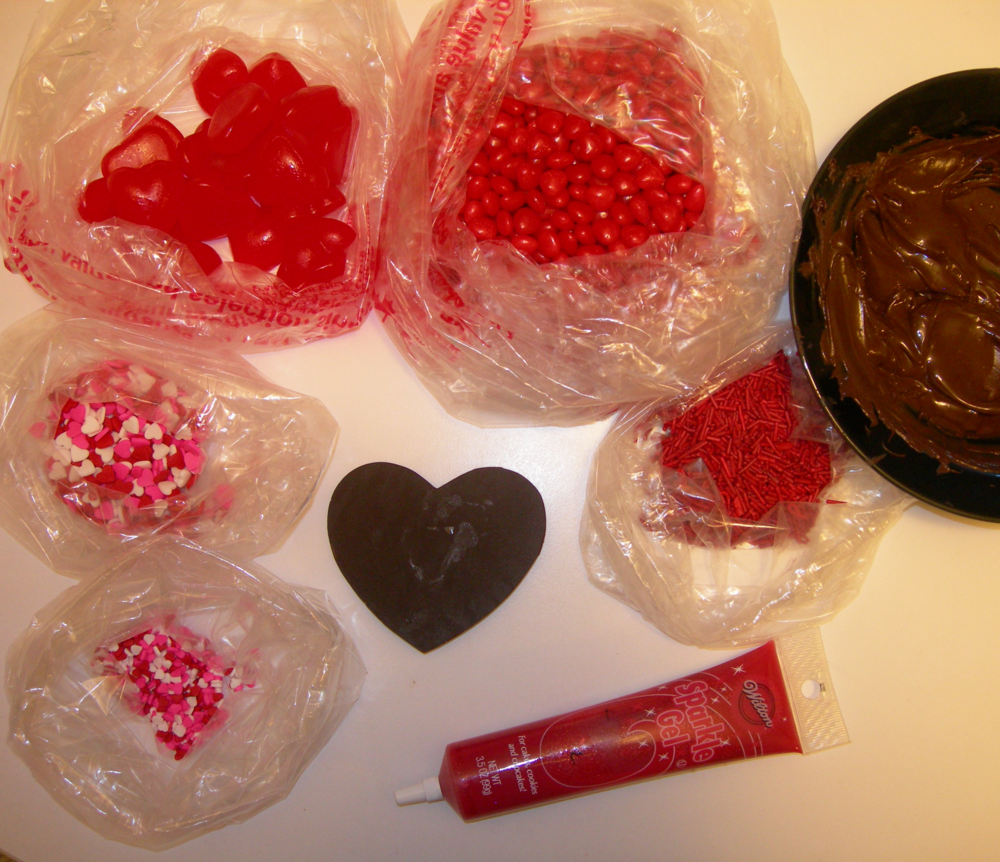
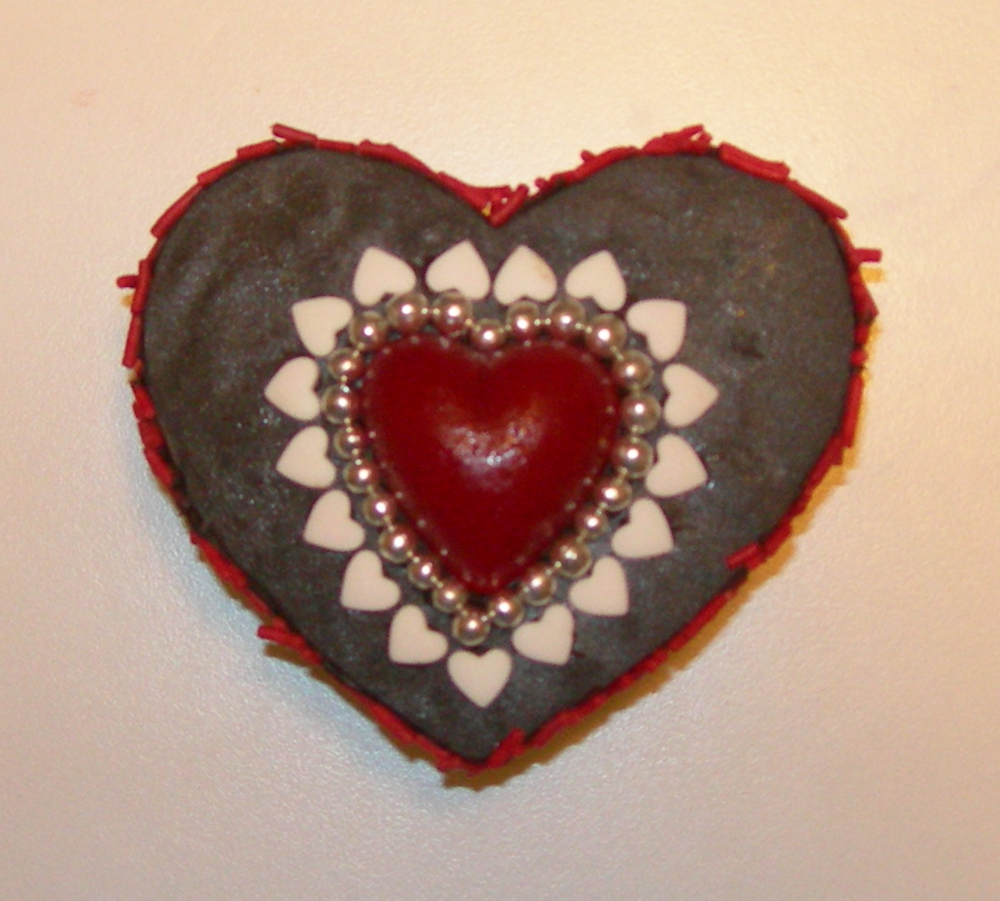
7. Fill the box with candy, a note, or a gift, place the decorated lid on top. Store in the fridge (or at room temperature, just not near heat sources) until you are ready to give it away/eat it.
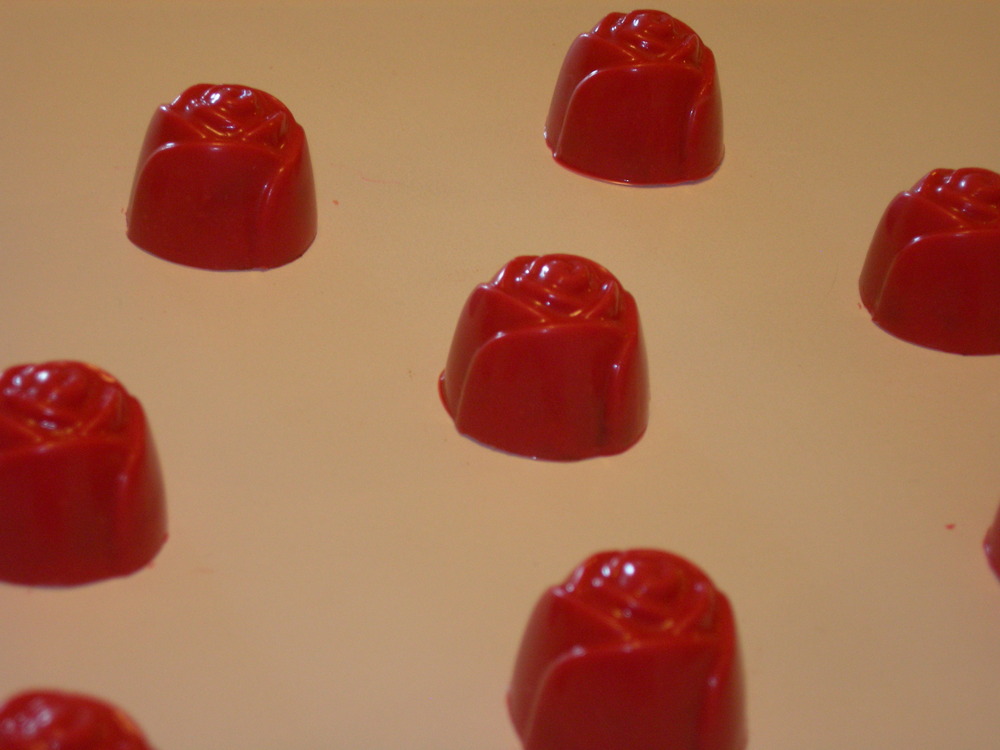
These truffles are both tasty and cute and guarenteed to please any chocolate lover. The candy shell allows them to be stored at room temperature without melting, while the truffle inside melts in your mouth. The truffle recipe I used is from Jordan Demello, an engineer here at the University of Western Ontario. Instead of truffles, you could also try caramel, nuts, marshmallow fluff, candied cherries, jam, etc.
These treats use coloured melting wafers (coloured disks that taste like white chocolate, available in a variety of colours from Bulk Barn). If you cannot find the colour you want, you can mix the wafers, but do not use water based food colouring as the wafers are oil based. Likewise, make sure that the plastic mold is completely dry before using with the wafers.
I don’t intend to sound like an advertisement for Bulk Barn, but it is probably my favourite store—and students and seniors get 10% off on Wednesdays.
Ingredients:
– Merckens coloured melting wafers (roughly 0.25 kg makes 36 candy shells)
– filling (I used the truffle recipe below)
Other stuff:
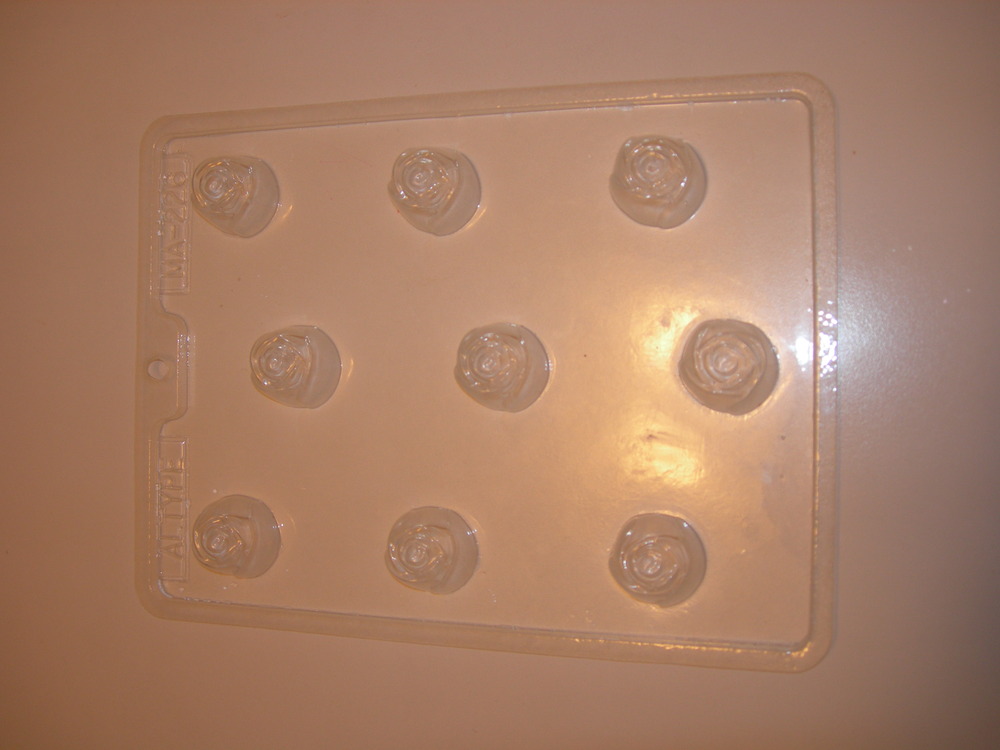
– rose (or whatever shape you want) candy mold (available from Bulk Barn, shown here)
– paintbrush with plastic bristles (available from Bulk Barn, but expensive there. Probably available at a lower price from Zellers or Walmart.)
– microwave safe bowl
– spoon
1. Put a handful or two of the melting wafers into the microwave safe bowl. Microwave for 30 seconds.
2. Stir vigorously until smooth. If there are a lot of wafers in the bowl, you may need to put them in the microwave for another 15-30 seconds.
3. Spoon melted wafers into each cavity until the cavity is slightly less than half full (it is better to underfill than overfill). Tap the mold to release any air bubbles.
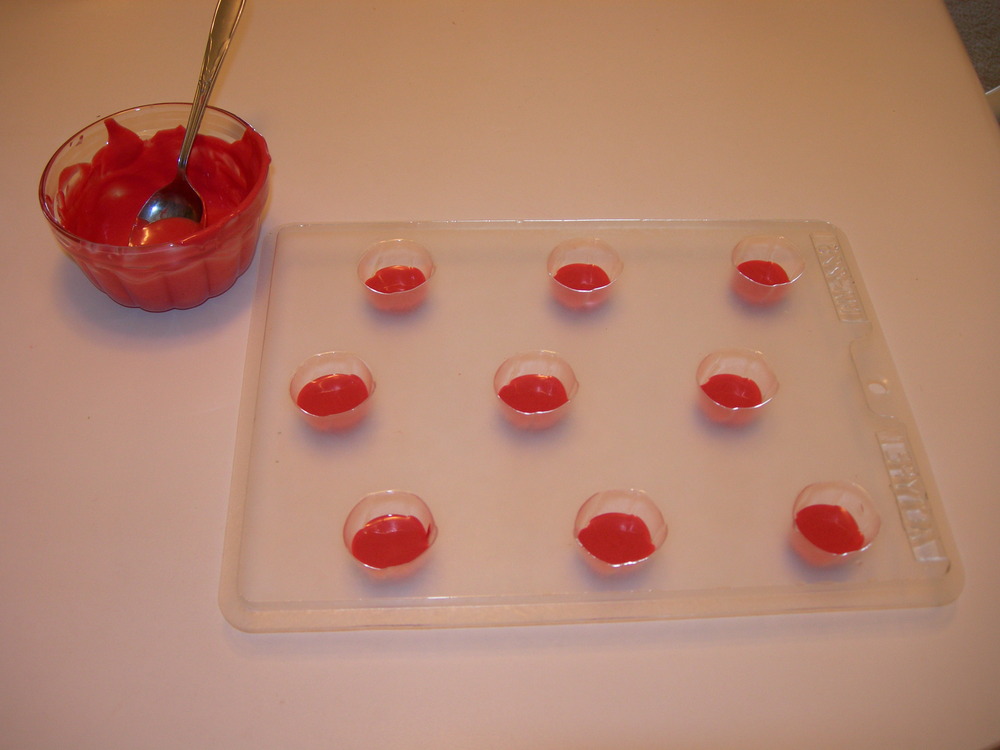
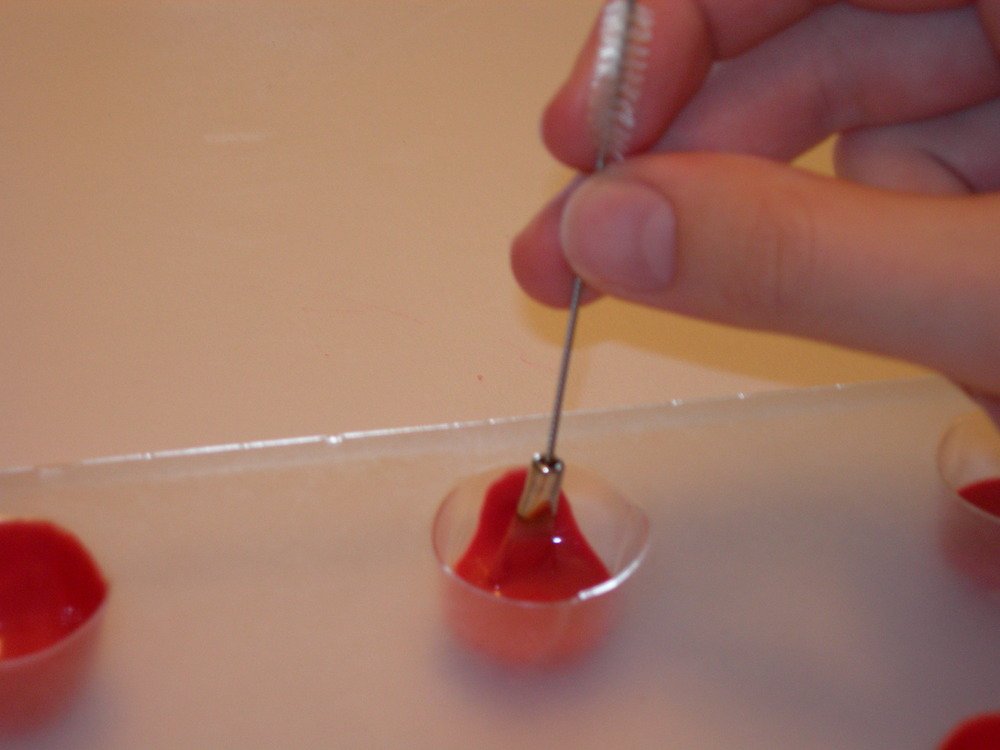
4. With the paintbrush, paint the melted wafers up the side of the cavity. Make sure all sides and bottom of the cavity are completely covered. If you need more wafers in the cavity, you can grab some with the paint brush.
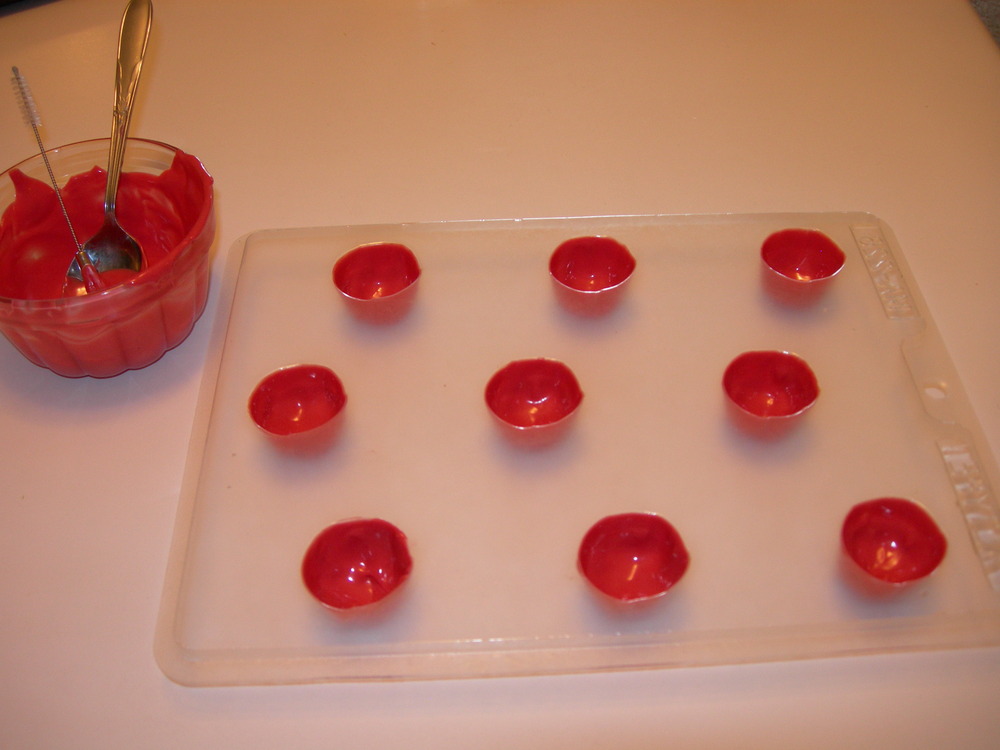
5. Refrigerate until set (about a minute or two). The candy is set when it looks “frosty” if you look through the plastic mold at the candy (if it is not set, it will look wet and rich in colour).
6. Fill each cavity with the filling of choice, leaving the top ¼ inch of the cavity empty. If you are using a viscous filling, such as the truffles, you may need to gently, but firmly, press the mixture into the cavity (as to not trap air inside). If using a temperature sensitive filling (such as truffles), it is good to put them in the fridge for a minute or two to allow them to stiffen again.
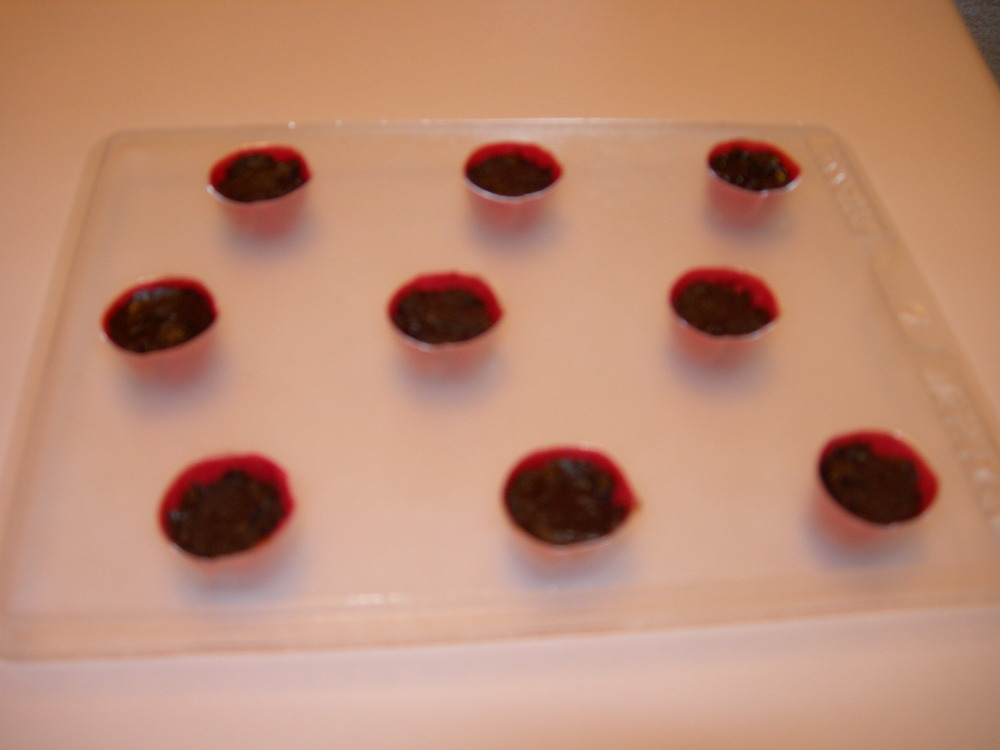
7. Spoon melted wafers in cavities to fill (may need to add more wafers and/or microwave your wafers again). Tap the mold to release air bubbles and flatten the bottom of the candies. Put in the fridge for 2-3 minutes (until set and firm to the touch).
8. Invert the mold onto a clean surface. Tap the mold to release the candies.
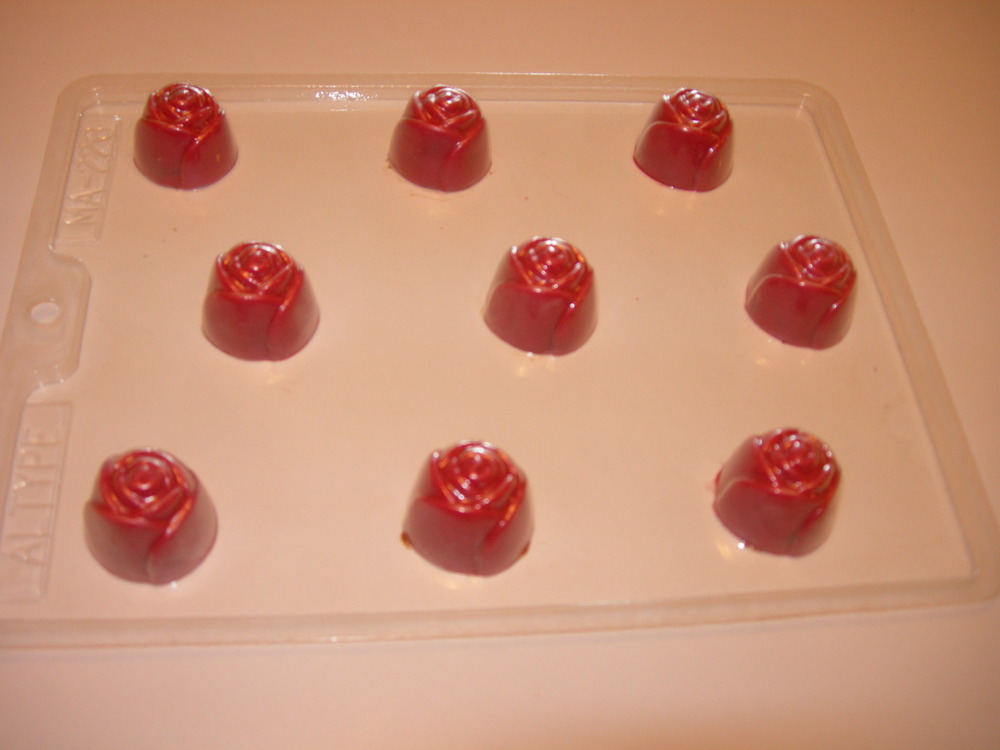
9. Enjoy or store at room temperature or in the fridge/freezer to enjoy later.
Truffles (from Jordan Demello)
Ingredients:
– 350 grams (roughly 2 cups) semisweet or bittersweet chocolate chips
– 1 cup (250 mL) whipping cream (35% cream)
– 3 tablespoons butter
– 2 tablespoons flavouring –optional (some good ones are vanilla extract, orange extract, mint extract or alcohol (such as Grand Marnier, Kahlua, rum, etc.))
– covering (if making candy covered truffles, then you don’t need this as the candy shells are the covering. If you are making just truffles, you will need something to roll them in, such as icing sugar, cocoa powder, crystallized sugar, sprinkles, etc.)
Other stuff:
– a heat resistant bowl (and lid)
– a pot
– a spoon/whisk
– a couple teaspoons
1. Put the chocolate chips in the heat resistant bowl, set aside.
2. Combine the rest of the ingredients in the pot and bring just to a boil over medium low heat, stirring frequently.
3. As soon as the mixture starts to boil, pour the hot liquid over the chocolate chips and cover with the lid. Leave it for a few minutes to allow the heat to permeate.
4. Whisk/stir thoroughly. The mixture will jump from a thin “chocolate milk” consistency to a dark, viscous one.
5. Refrigerate up to two hours, or until set (firm enough to work with).
6. Put this into candy shells or roll into small spheres (roughly ¾ inches in diameter) then roll in the “covering”. Warning: This part is very messy. Using a couple teaspoons to form the spheres helps cut back on the mess. You may need to move the truffle mixture in and out of the fridge to keep it at a workable temperature.
7. Enjoy or store in the fridge/freezer to enjoy later.
So, it’s almost Valentine’s day and you forgot to get a date… again. No worries if you are a disbeliever in “Hallmark holidays”, but if you are a hopeless romantic, it can be slightly depressing. Fortunately, you still have a couple days to try to catch a date. The best strategy–cheesy one-liner pick-up lines.
The beauty of one-liners is that they are simple, show your sense of humour, inexpensive, and don’t involve plots, ploys, or other people. And the best part–the answer you get back is straight forward; the reciever will either look at you awkwardly (and possibly run away) or smile and giggle at you. You want the latter.
Getting the right pick up line for the right person can be a little tricky though. There are websites claiming to have the best pick up lines, like http://www.pickuplinesgalore.com/ (that has a physics and math subsection) or http://www.mademan.com/mm/nerdy-pick-lines.html, but the best ones are unique.
Take a spin off of an old pick-up line.
Examples:
1. Instead of: “I wish I was your derivative so I could lay tangent to your curves all night”, try “I wish I was your integral so I could fill the space under your curves.”
2. Instead of “You’re one in a million”, try “You are further than 4.891638 standard deviations from the mean.” (I thought of this one immediately following my statistical mechanics professor telling the class, “There is nothing fishy about the Poisson distribution.”)
Or think of something new and sciencey! Maybe something that relates to current research.
Example: You are like the discovery of faster-than-light neutrinos–too good to be true.
Do you have good pick-up lines that may be useful for someone else? Post them as a comment here!
You’ll be able to follow the new Western Worlds internet radio broadcasts (@wwafm) by following us (@uwophysastro) at Twitter.
Watch the [HD] time-lapse video of Aurorae in Norway.
http://apod.nasa.gov/apod/astropix.html [Feb 9]
A recent article summarized on astrobites states that a star can capture WIMPS [hypothetical dark matter (DM) particles]. These DM particles can transport energy out of the star via collisions BUT do not contribute to radiation pressure since they do not interact/emit photons.
For high DM density environments [dwarf spheroidal galaxies] where a star captures many DM particles, the energy carried away from the inner stellar core can exceed the energy produced there! [see article]
This forces properties of the star to change and alters its position on the HR diagram.
Article:
http://astrobites.com/2012/02/08/dark-matter-inside-a-star/
Paper:
Physicists at the University of Miami have released a study that focuses on “fractures” in the stock market. A fracture occurs when the price of a stock moves up or down in less than a second, causing instabilities.
A link between fractures and stock market crashes was found – before the September 2008 and May 2010 crashes.
For those of you who don’t enjoy physics and just want to make money this is a good career choice [developing algorithms for traders etc.]
Article:
http://www.newscientist.com/article/dn21455-stock-trading-fractures-may-warn-…
Paper:
Smearing ink on the eyepiece, so as to give the observer an appearance of a “black eye”.
What do you call a lawyer in space? A.) A good start
One blonde asks the other, “Which is closer, Florida or the Moon?
the second answers: “Duh! The Moon! You can’t see Florida from here!
A Higgs-Boson walks into a bar. The bartender says “You know, there were some guys looking for you.”

Much of the research I do involves the warm and dense surroundings of stars that are not very massive, and that are nearing the end of their lives. These stars eject most of their stellar material into the vast “empty” space between the stars (called the interstellar medium) by means of slow and gentle, but massive stellar winds. In the immediate neighbourhood of these stars, temperatures and densities are ideal to produce large amounts of molecular gas: at much lower temperatures, the gas would freeze and form ices; but turn up the heat a notch, and the molecules dissociate. Molecular gas is easily detected at infrared wavelengths, and has indeed been studied in great detail by infrared (often space-based) observational progams
Last year though, I helped with the analysis of infrared observations of a different beast: the supernova remnant Cassiopeia A, shown here in full splendour:
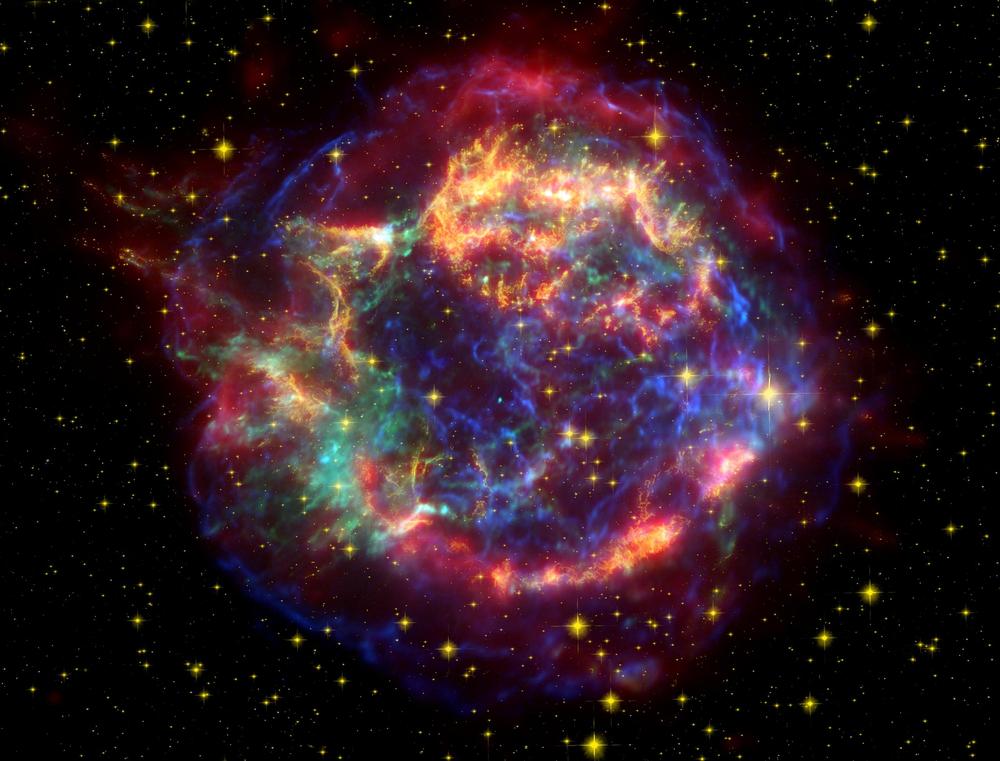
A supernova also signals the end of a stellar life, but it is by no means a slow and gentle event. A supernova explosion releases enough energy to temporarily rival the brightness of an entire galaxy, and these violent events result in ejecta moving at speeds of up to 10% the speed of light! The large (10 light years across) gas bubble that we call Cas A represents the expanding remains of a star that exploded as a supernova about 330 years ago. The event passed by largely unnoticed, probably because earlier mass ejections had created a thick shell of dust around the star that attenuated the light from the explosion. It is quite amazing that we can still observe the supernova explosion today, by looking at light echoes from the supernova explosion. Light echoes occur when a dust cloud acts like a mirror and reflects the light from the supernova explosion toward the Earth (check out this cool time-lapse sequence of light echoes of SN 1987A). By studying such reflections, astronomers have determined that the supernova that created Cas A was a type IIb supernova, and thus the collapse of a massive star.
You wouldn’t think that young supernova remnants like Cas A are good ponds to go fishing for molecules. The gas in Cas A is hot — millions of degrees — which is way outside any molecule’s comfort zone. Collisions between molecules and fast moving particles would break even the strongest molecular bond. Yet infrared spectra recorded by the Japanese spacecraft AKARI at different positions within Cas A clearly reveal the presence of CO (carbon monoxide) — known on Earth as the silent killer. The shape of these molecular bands at infrared wavelengths is very sensitive to temperature and density (as you can see for yourself at SpectraFactory), and the wavelengths at which you see them is determined by their (radial) velocity. I modeled these bands, and so we found that the CO gas is quite hot as well (~2,000 K), and is moving fast, so it is clearly associated with the supernova remnant. The density that we derive is also fairly high; and thus we think that the CO possibly resides in very dense “pockets” or “bullets” of gas that are cooler than their surroundings and that offer a protective cocoon that shields the CO molecules. Further observations will hopefully be able to confirm this. One implication of this work may be that far less carbon dust is created in supernova explosions than is currently thought, because a large amount of carbon is locked up in the CO gas and can thus not be used to make carbon dust. If you want to know more about our results, here’s the full press release from the Japanese space agency, and our paper in ApJ Letters that appeared Feb 8, 2012.