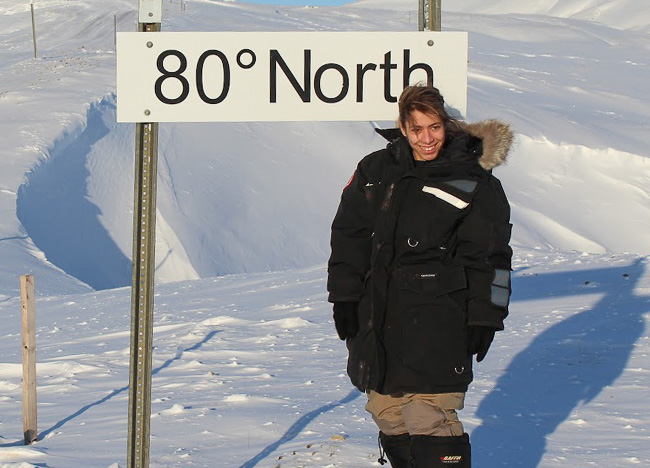
As quick and elusive as its distant southern relative, the African Gazelle, the Arctic Ghazal displays a unique behaviour. She does atmospheric research in Canada’s far north.
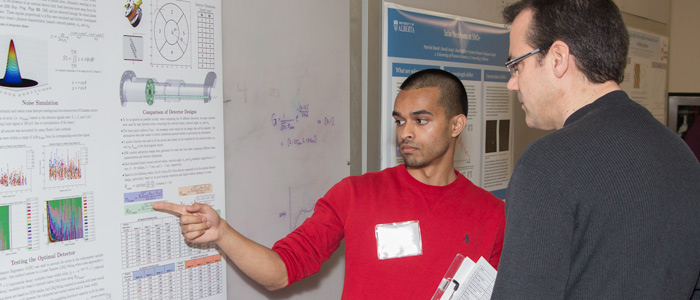
Student presenter Abhilash Matthews (left) describes his research to judge Prof. Colin Denniston (right).
By 10:30 a.m. the poster papers and computer displays were ready for public viewing.
The official program began at 12:30 p.m. with two public oral student presentations, moderated by Professor John de Bruyn.
Nathalie Thibert spoke on “Outflowing Winds in Quasars: A Study of CIV Broad Absorption Lines”.
Next, Ian Mulholland spoke on“Optimizing Kuiper Belt Occultation Searches in the Ecliptic Plane”.
Julie Hlavacek-Larrondo
After a short break, Université de Montréal astronomer Julie Hlavacek-Larrondo gave a talk titled “Black Holes: Sculptors of Galaxies and Clusters“. Host was Chair Bob Sica.
The full house then adjourned for pizza lunch and tour of the poster papers, all in the Physics and Astronomy building atrium. The posters were judged.
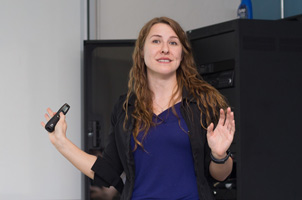
Stephanie Simmons
Following the poster session and lunch, the CAP (Canadian Association of Physicists) lecture was given to another packed room by Simon Fraser University physicist Stephanie Simmons. The talk was titled, “The International Race for a Quantum Computer”.
Following Stephanie’s talk, the student awards were announced.
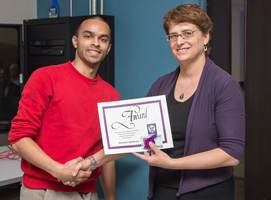
Abhilash Matthews was winner of the award for best poster oral presentation, while Nathalie Thibert received the award for best poster presentation. Professor Tamie Poepping presented the awards.
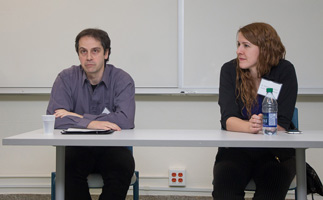
Expert panelists Michael Cuffaro (left), and Stephanie Simmons (right).
To finish the day, a panel discussion was held on the the topic “How our World Changes with Quantum Computing”. Panelists were Simon Fraser University physicist Stephanie Simmons and Western University philosopher Michael Cuffaro. Moderators were Dylan Del Papa and Jonathon Riddell.
Abhilash Matthews (left) – best poster oral presentation
The organizers, under the direction of Prof. Tamie Poepping, could be proud of hosting a well organized and very well attended event. The student research was impressive, and the invited speakers could not have been better mentors.
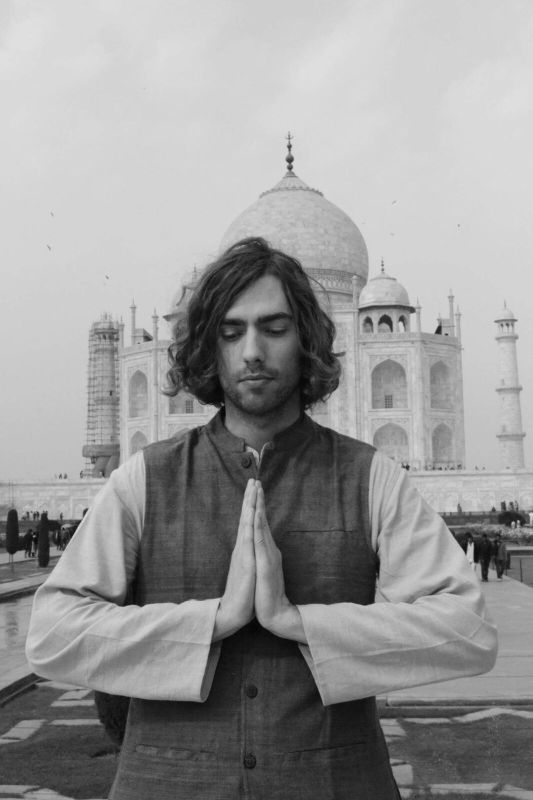
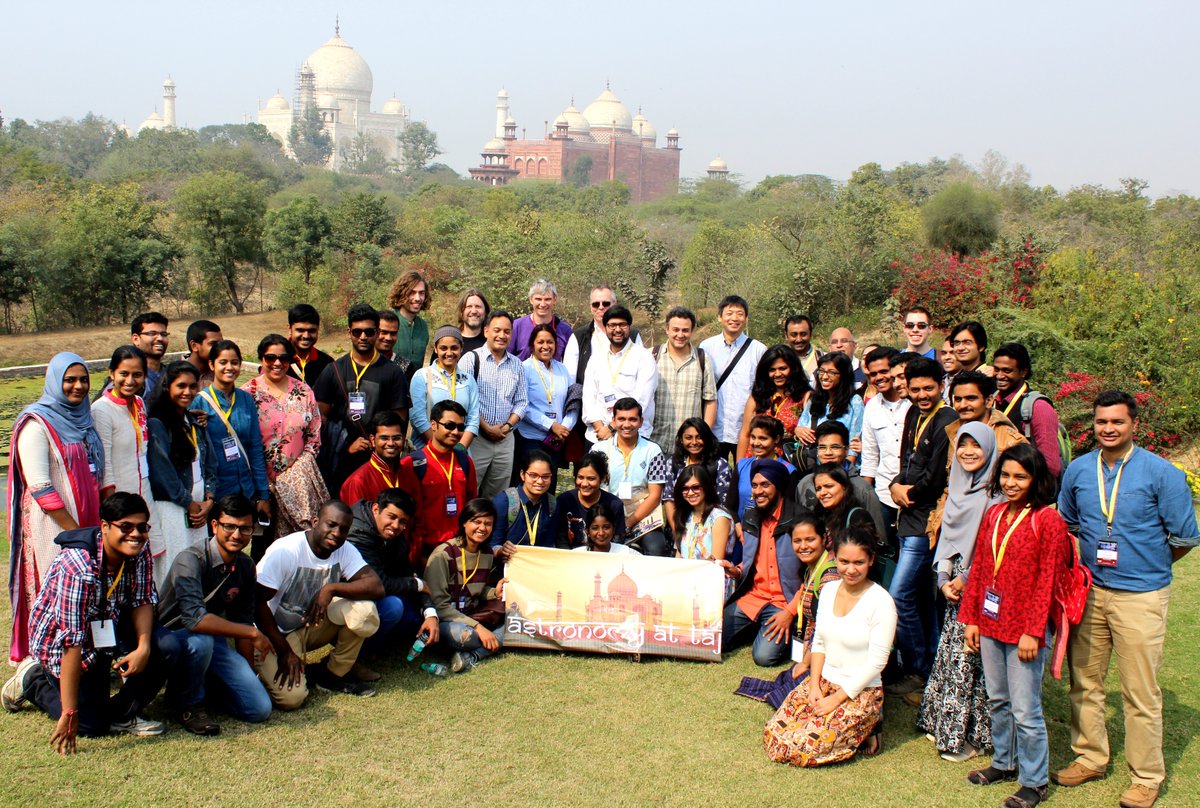
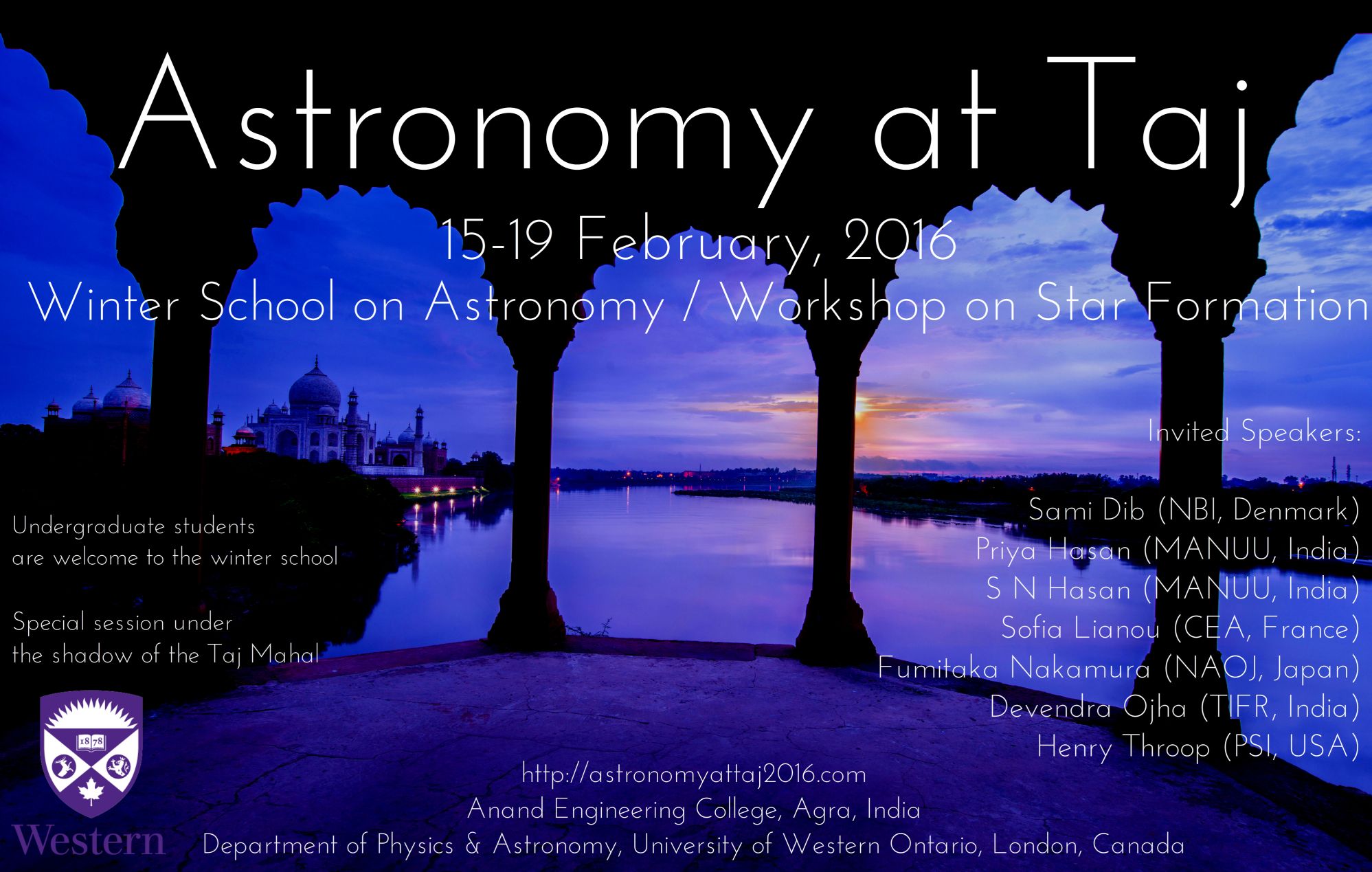
Situated on the banks of the Yamuna River, Agra, India is a former capital city of the Mughal Empire. Millions of tourists visit the city yearly in order to see monuments like the Agra Fort, Fatehpur Sikri palace complex, and the famed marble mausoleum known as Taj Mahal. During February 15-19, 2016, Agra also hosted a unique educational and cultural event, known informally as “Astronomy at Taj”. This was a joint effort between Anand Engineering College, Agra, and Western University of London, Canada.
This unconventional event combined several initiatives. It was an educational event, as a winter school in astronomy for college undergraduate students. It was also a focused research workshop in star formation research with speakers from six countries. Finally, it represented a cultural exchange and interaction between students from India and Canada. For Canadian students it represented a valuable study abroad opportunity organized by Western University’s Department of Physics and Astronomy, and conveniently occurring during Reading Week at Western. Another goal was to bring astronomy and science awareness to the general public in Agra.
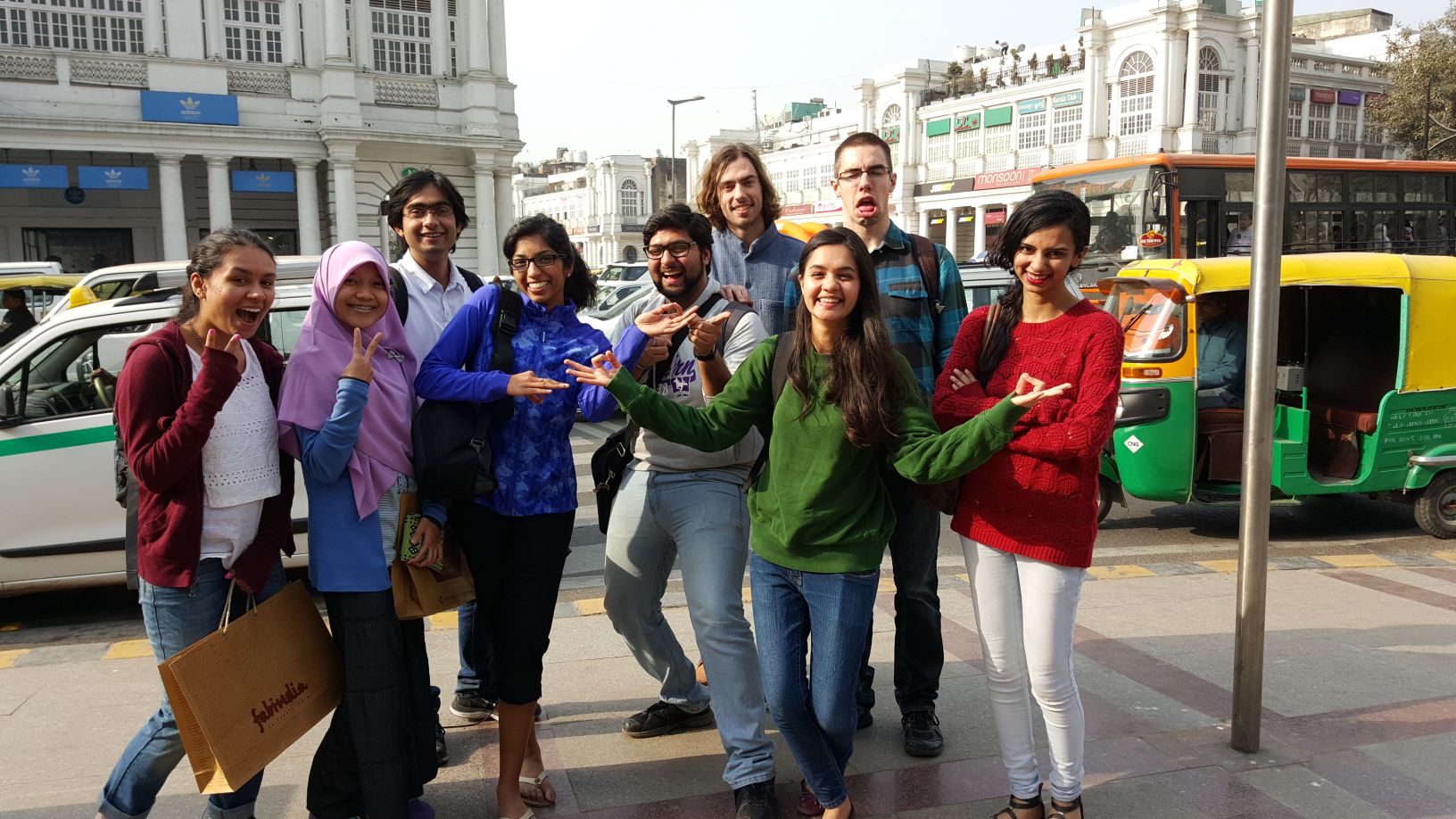
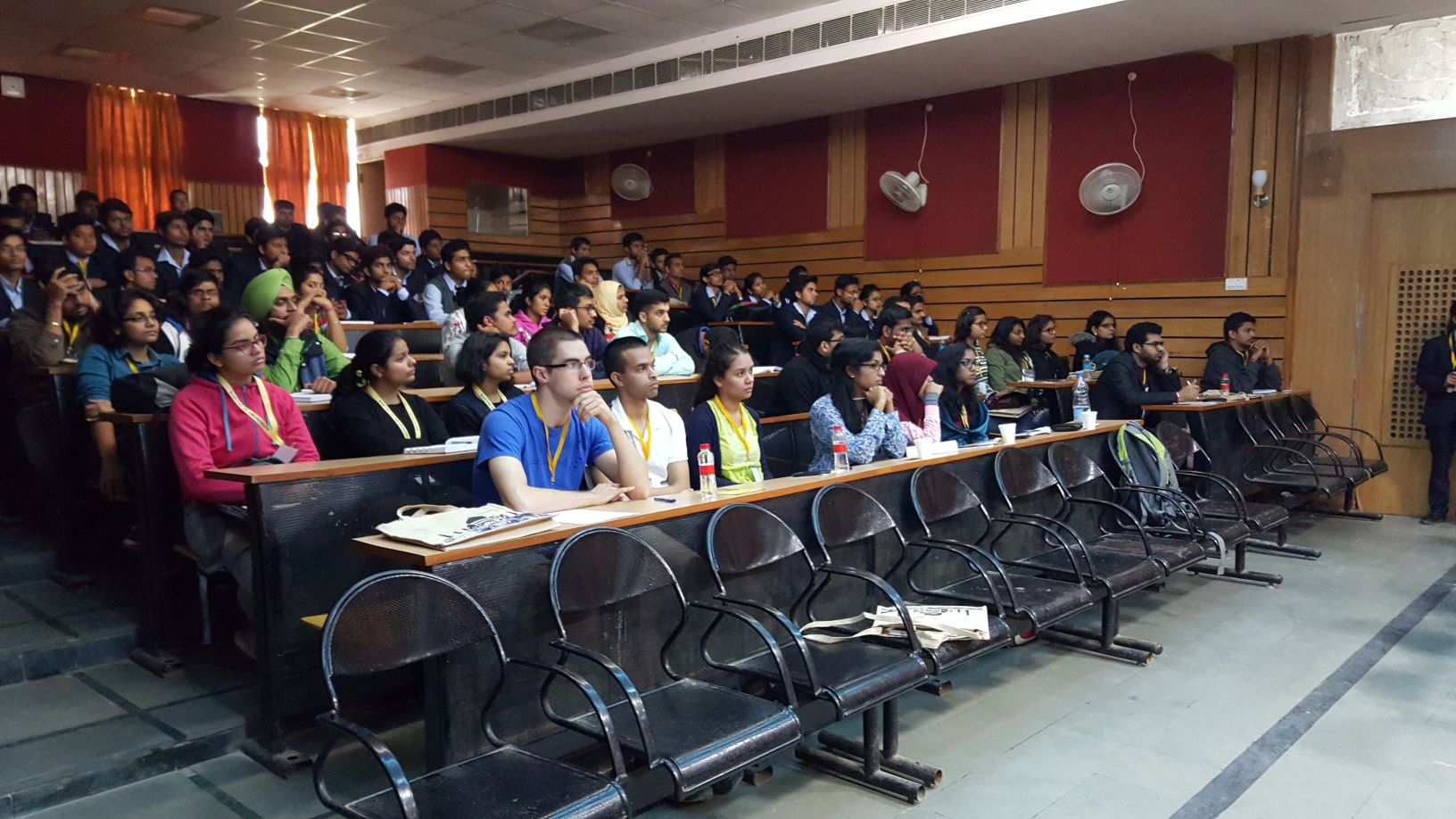
About 65 students from India participated in the school, representing the vast range of the country, from Jammu and Punjab in the north, Gujarat and Maharashtra in the west, Kerala and Tamil Nadu in the south, and West Bengal to the east. There were 12 delegates from Western, plus their friends and spouses. There were 8 Canadian students at the event, which was open to students from all disciplines as long as they had an interest in astronomy, and these included Western students enrolled in Astronomy, Physics, Anthropology, Engineering, English, and Political Science programs. One student from Indonesia also made an admirable effort and attended the school. The 40% female student participation rate was higher than the typical North American average for Physics or Astronomy undergraduate programs. There were ten internationally renowned invited speakers, from India, Canada, Denmark, France, Japan, and the USA. The organizing committee consisted of Prof. Shantanu Basu (Western), Pranav Sharma (Anand College), Prof. Priya Shah Hasan (MANUU, India), and Western graduate students Sayantan Auddy, Mark Baker, and Pranav Manangath from the Department of Physics and Astronomy, and Deepakshi Madaan from the Department of Applied Mathematics. The Director of Anand College, Prof. Anil Kishore Saxena, and the Dean-Academics of Anand College, Prof. Amit Sharma, also contributed immensely to the support and organization of the event.
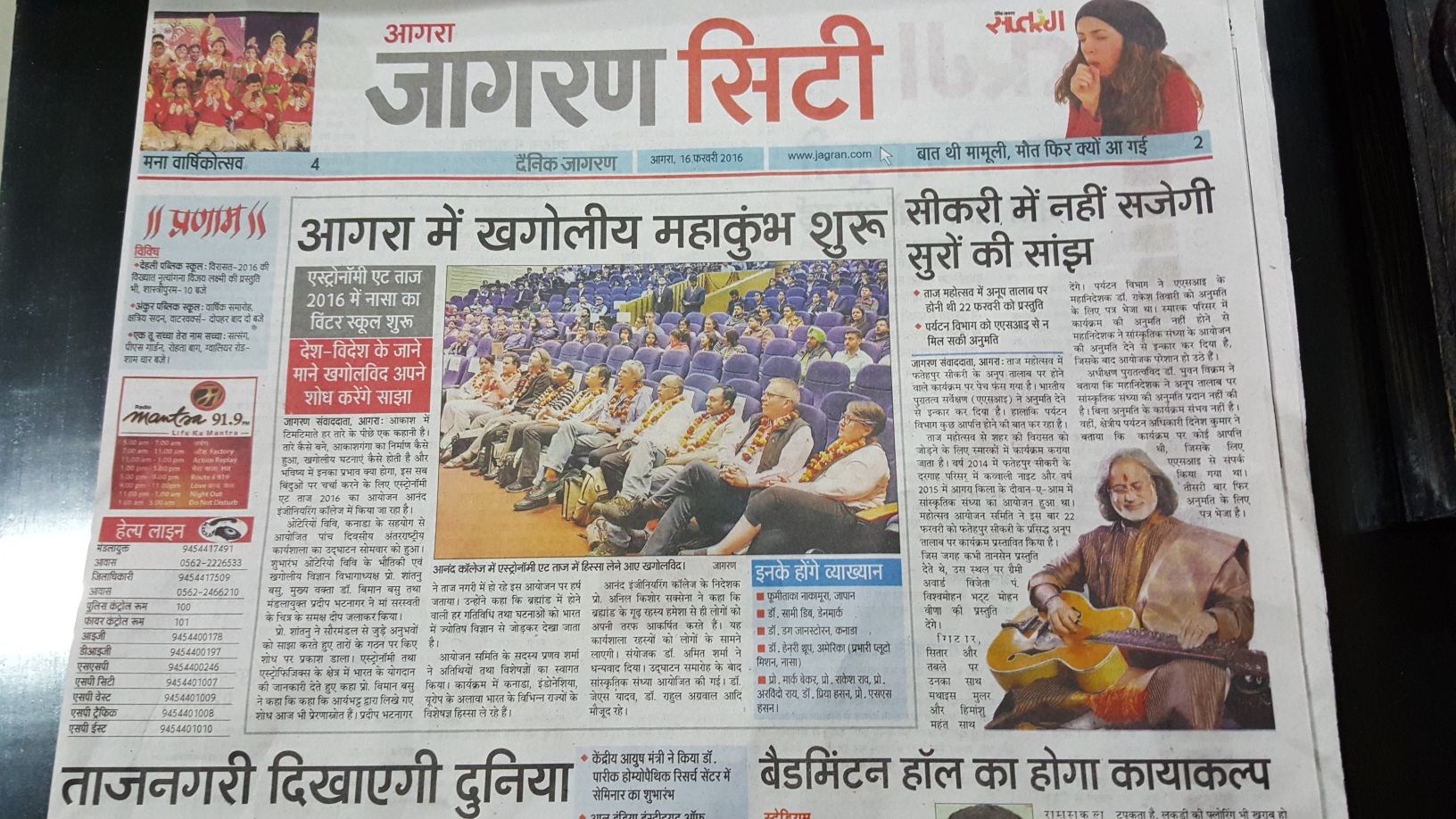
Local media coverage of the opening ceremony
From the start, the event combined fellowship with science, exhibiting Indian hospitality and exuberance. The official opening saw the traditional Indian lamp lighting ceremony, and a beautiful exposition of the Indian traditional dance form Mohiniattam, by renowned dancer Vijayalakshmi. Prof. Anil Kishore Saxena pointed out that he was supporting the event because it would allow his students to diversify their learning, examine new career options, and broaden their contacts. Prof. Shantanu Basu pointed out that Astronomy at Taj had gone from conception to execution in a mere four months time. The opening research workshop talks highlighted the role of new global observatories Atacama Large Millimeter/Submillimeter Array (ALMA) and Herschel Space Observatory in revealing the initial conditions of star formation. The winter school participants heard lectures about the recent NASA New Horizons mission to Pluto, the possibility of extraterrestrial life and the search for its existence. In this context, the first day also saw the screening of the 1997 movie Contact, based on a novel by Carl Sagan. This movie led to an open discussion the following day on both the accurate and inaccurate portrayals of science in the movie, as well as important issues touched on in the movie, such as the position of women in astronomy, the relationship between religion and science, and the efficacy of doing conventional versus unconventional science. The opening day also saw a keynote talk by science journalist Biman Basu on “Indian contributions in shaping astronomy and astrophysics”, which expounded on ancient as well as more recent Indian contributions, with very interesting insights like the development of the Indian calendar that incorporates both lunar and solar cycles.
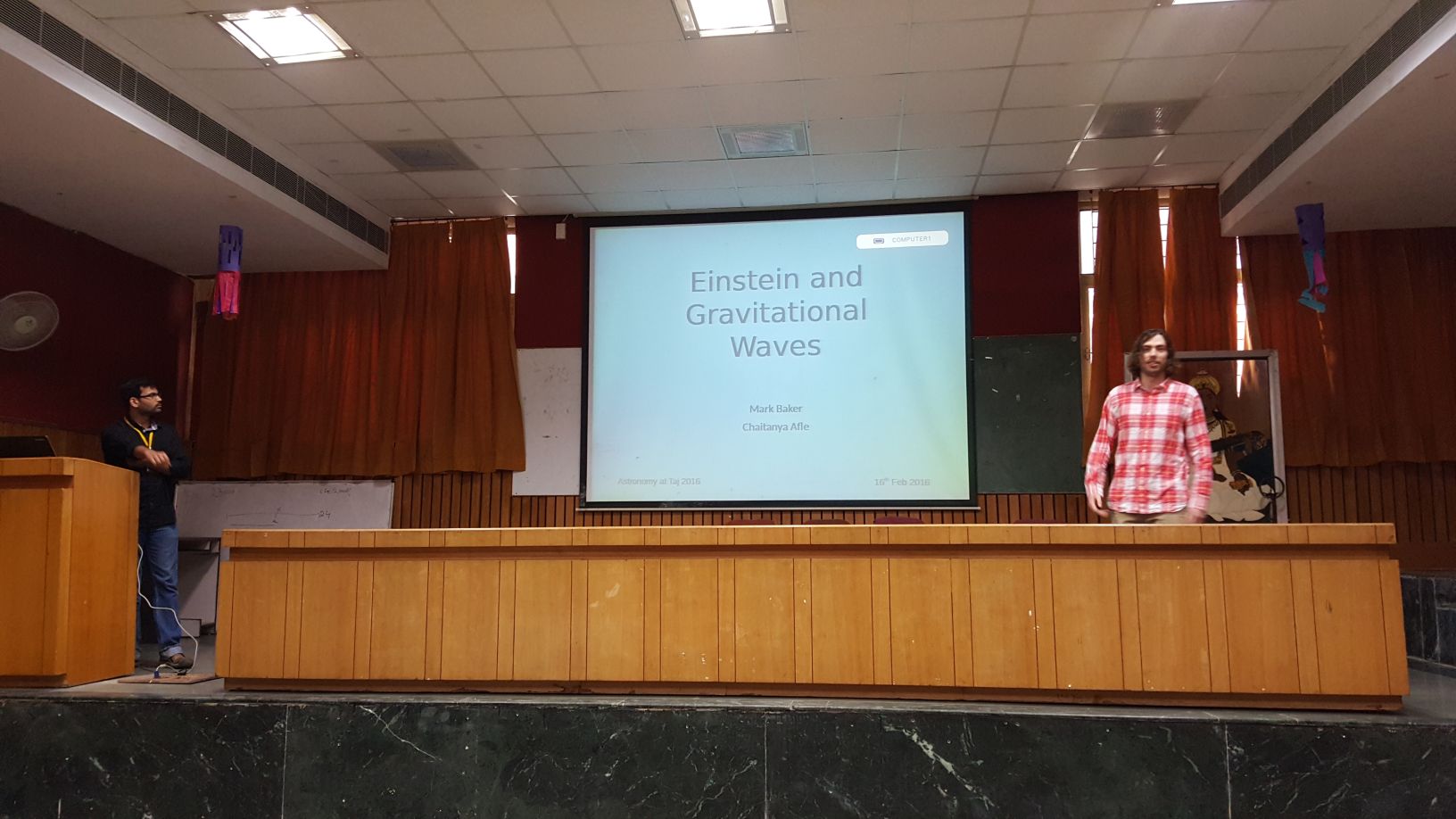
Chaitanya Afle and Mark Baker give a joint talk.
The second day witnessed a slew of science talks at the star formation workshop, as well as talks in the winter school about relativity and the recent detection of gravitational waves. The latter was an excellent collaborative effort led by an Indian and a Canadian student. There was also a special session for hundreds of students from local public schools in Agra. The workshop talks illustrated the fast moving nature of research, with results presented about the masses of stars. New results showed that the mass distribution of stars in clusters can vary significantly from one to the other, and particularly in the low mass end of the distribution. A constant universal distribution of stellar masses was definitely not favored by workshop participants and their data. This variability was also true for the mass distribution of prestellar cores, the precursors of stars, as seen with new ALMA data. Student talks also illustrated new approaches to characterizing the stellar mass function, and also a prediction for the numbers of very low luminosity stars, still undetected, that may exist throughout our Galaxy.
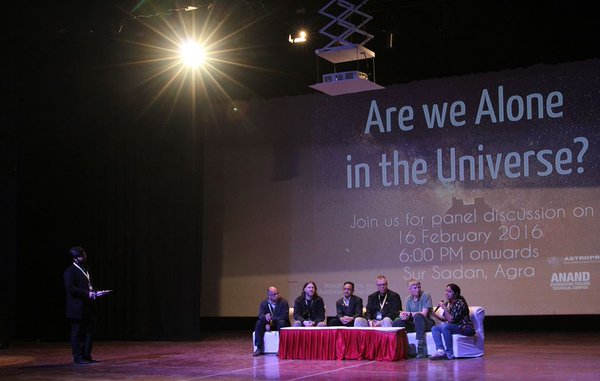
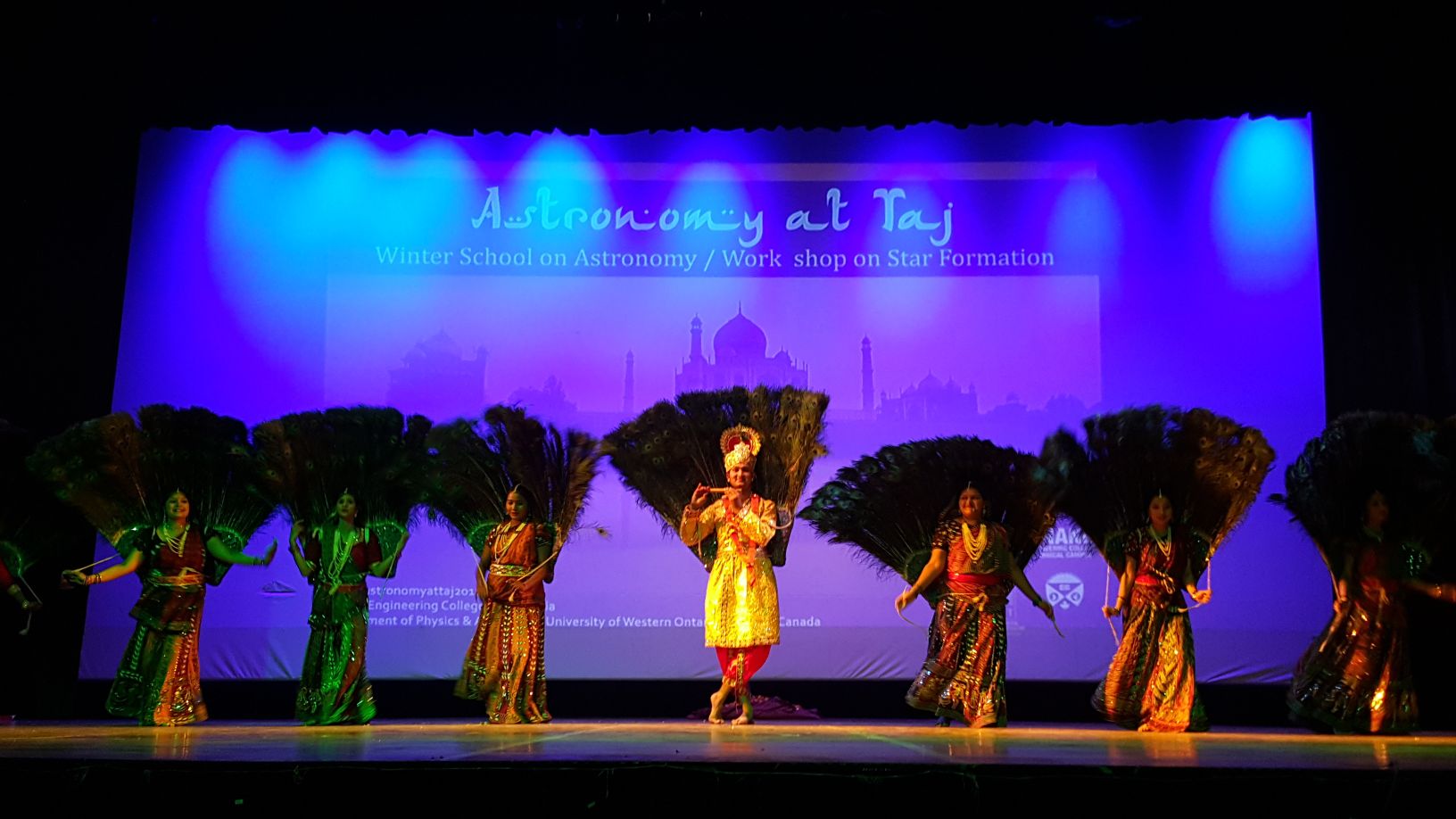
On the second evening, the conference participants shifted from Anand College to the public lecture hall Sur Sadan in Agra city, for a public event with Agra citizens. The evening got off to a rocking start with a series of Indian dance performances representative of many different regions of India. All performers were students of Anand College, part of a very talented student body indeed! This was followed by the main event, a public lecture on the new global observatory the Thirty Meter Telescope (TMT), by Prof. Devendra Ojha of the Tata Institute for Fundamental Research (TIFR) in Mumbai. India has recently joined the consortium as a partner, alongside Canada, China, and Japan, as well as Caltech and the University of California. Following the public lecture was a panel discussion on the subject “Are we Alone in the Universe?”, moderated by Mr. Pranav Sharma of Anand College, with panelists Prof.’s Shantanu Basu and Chris Essex from Western, Prof.’s Priya Hasan and Najam Hasan from MANUU, India, Dr. Doug Johnstone from NRC, Victoria, Canada, and Dr. Henry Throop from Planetary Science Institute, USA. Does life exist elsewhere in the universe? If so, where? Why have we not found it yet or why has it not yet found us? Questions were taken from many of the several hundred attendees of the Agra citizenry, and a freewheeling discussion ensued. Prof. Najam Hasan also summarized the discussion in Hindi.
The cultural program ended with the enthralling Holi dance featuring Lord Krishna and gopis. Click on image for video.
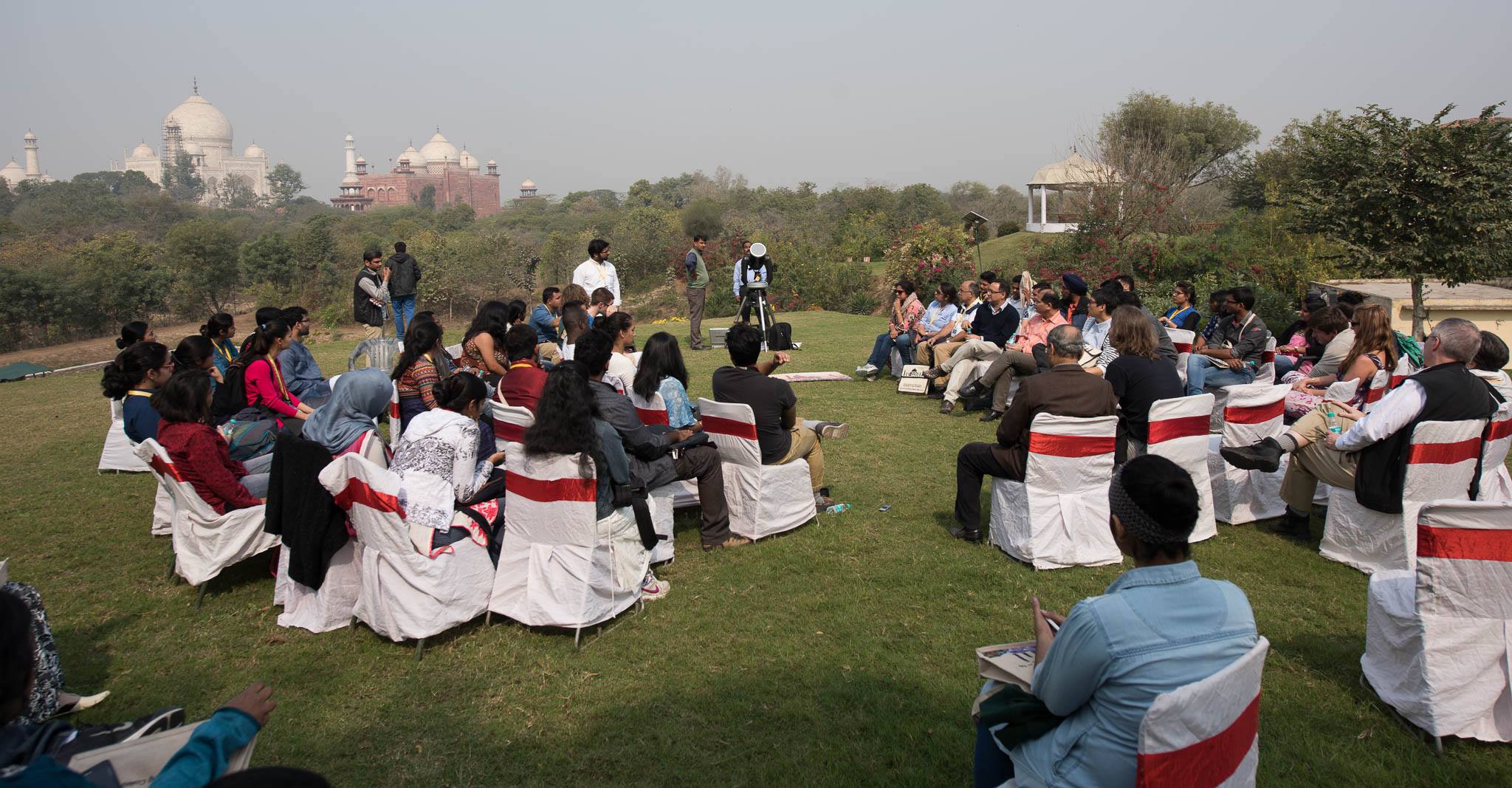
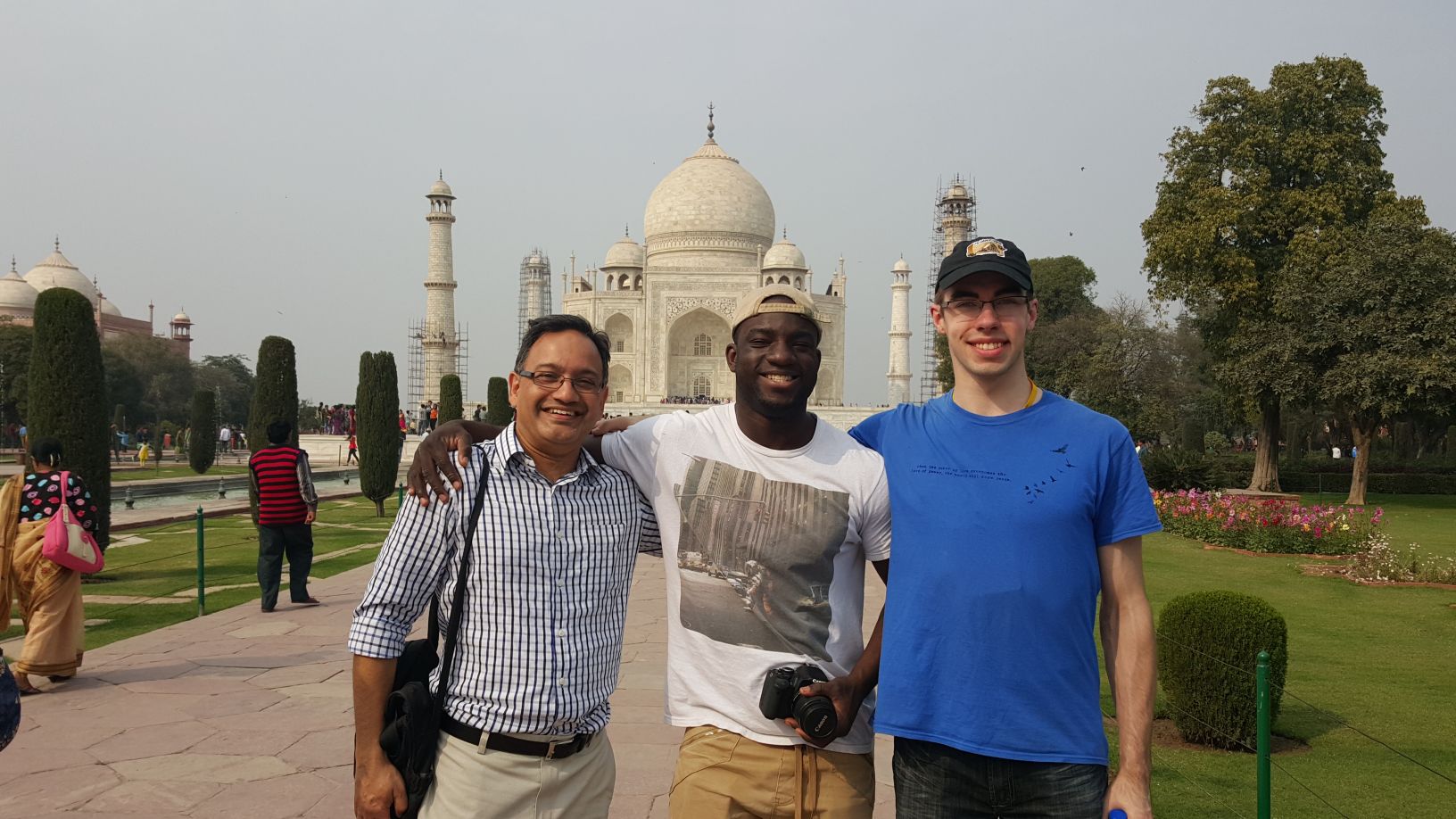
The third day was spent entirely outdoors, at one of the world’s most spectacular settings. The morning session took place at the Taj Nature Walk, a short distance from the Taj Mahal, and with a majestic view of the Taj from a hilltop. The Archaeological Survey of India had granted special permission to hold the event at this protected location. In the marvelous surroundings, a group discussion took place about careers in astronomy while a solar telescope was set up to view the sun and its sunspots (only one visible that day). The wide-ranging discussion dealt with very practical questions from students about strategies to get accepted into graduate Astronomy programs both in India and in Europe and North America. With free interaction and the presence of so many senior astronomers from many countries available to comment, many students found this to be one of the most valuable sessions of the winter school. The afternoon was reserved for a tour of the Taj Mahal, and participants made the most of the many hours on a beautiful sunny day to view the Taj from many angles, each one spectacular in its own way, to go inside, and to enhance fellowship with their fellow participants. Back at Anand College in the evening, there was outdoor night sky viewing with an 8-inch Celestron telescope, as well as a session on astrophotography hosted by filmmaker and astronomy enthusiast Rakesh Rao.
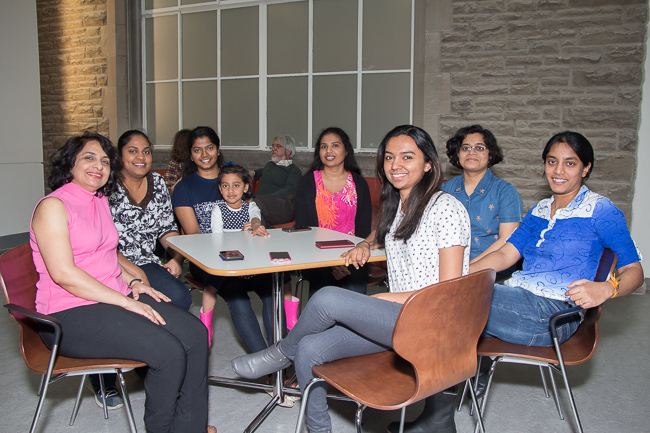
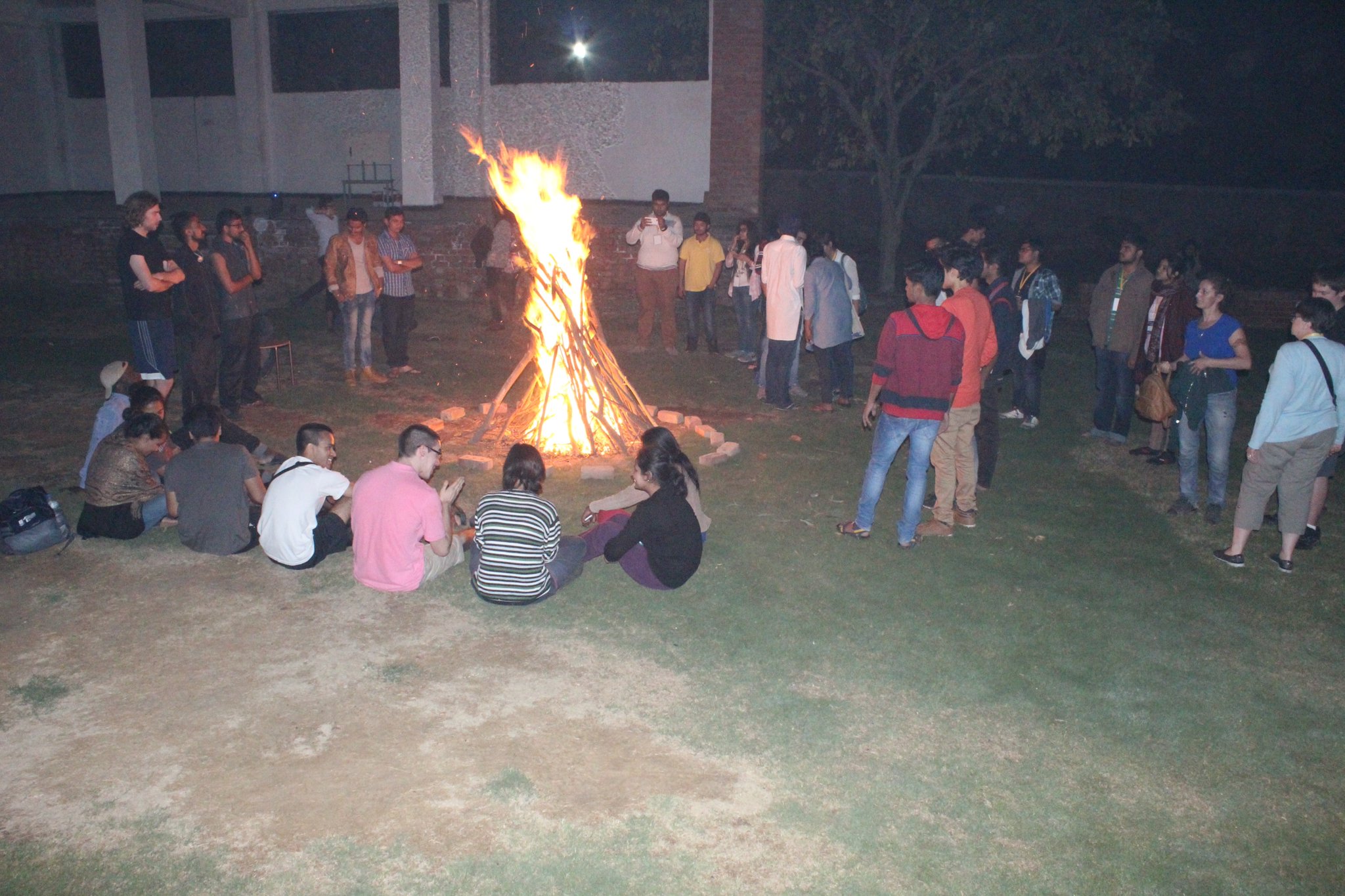
The fourth day saw more workshop talks in the morning, on planet formation and time variability in stellar mass accumulation. The afternoon was spent on a tour of the famed palatial complex at Fatehpur Sikri, home of Mughal emperor Akbar and his wives. Participants got a view of the complex architecture that combined Persian and Indian elements, the palaces of the emperor and queens, and the awe-inspiring 55 m tall gateway, the Buland Darwaza. As the week drew to a close, the participants had bonded well with each other. Many experiences had been shared, including communal meals at the Anand College cafeteria. Freshly-made delicious North Indian vegetarian food was served each day, and this was itself another cultural experience for the Canadian students. The last evening was spent socializing around a communal bonfire. An impromptu soccer match also broke out, utilizing the large sports arena of Anand College. By the time the last day arrived, emotions were running high as students, professors, and Anand College volunteers and staff all realized how much they had bonded together, but that they would soon be going their separate ways. This event required that approximately 100 people, including the Anand College volunteers and staff, lived together and shared learning and cultural experiences for a week. Many new friendships were forged, that span the breadth of India as well as Canada to India. There is no underestimating the camaraderie that was established, and the age of social media means that these ties will be maintained and nurtured. The closing ceremony saw an open microphone session where participants spoke from the heart about their experience and how it had changed them. The overwhelming conclusion was: this was a wonderful idea and event, and let’s do it again!
Canadian and other international delegates also spent the day before or after the conference touring Delhi. Sites like the Akshardham temple, Humayun’s Tomb, Jantar Mantar (ancient astronomical observatory), and Red Fort were visited, along with much shopping at Connaught Place.
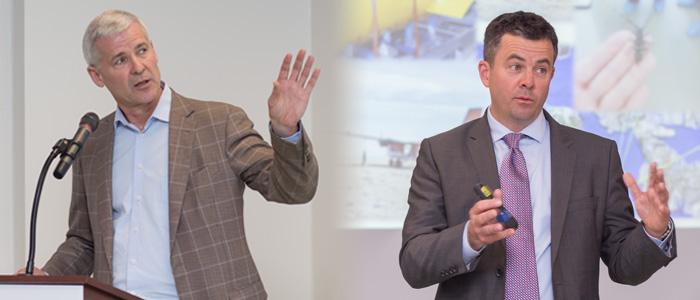
Natural Resources Canada Deputy Minister Bob Hamilton (left) and CIO Pierre Ferland (right)
On Monday, March 14, Deputy Minister of Natural Resources Canada (NRCan) Bob Hamilton spoke on the federal government’s perspectives on a changing context in natural resource management in Canada. Physics and Astronomy Rm 100 was filled for the event.
Immediately afterwards, NRCan Chief Information Officer (CIO) Pierre Ferland spoke on IT-related career opportunities (particularly as they relate to the management of Big Data). His talk was titled, “The Future of IT within the Government of Canada: Computing Careers.”
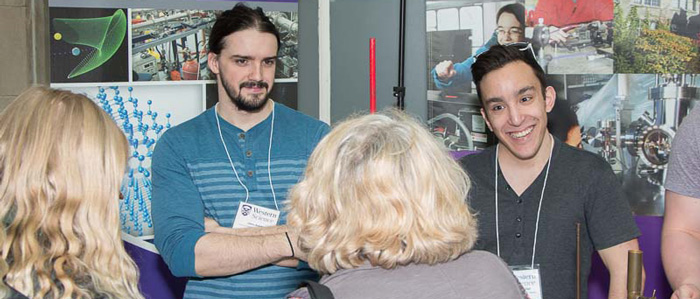
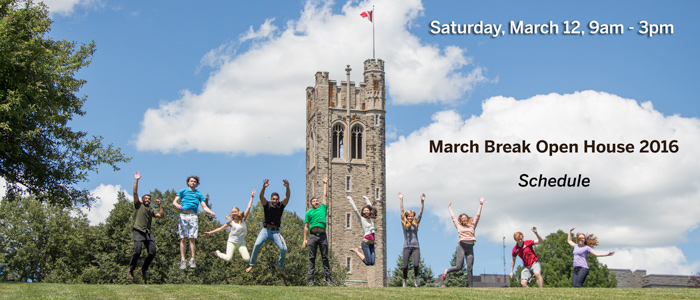
March Break Open House 2016 was held in the Physics and Astronomy building atrium on Saturday, 12 March 2016.
There was a wonderful, positive hum of activity throughout the entire day not only in the atrium, but at the first year laboratories as well.
A meet and greet for Physics and Astronomy was attended by about two dozen people. We can’t thank guest mentors Nataliya Moldovan and Laura Lenkic enough for sharing their experiences with our prospective physics and astronomy students. You can view Laura’s and Nataliya’s testimonials online.
Volunteers for 2016 were Patrick Hatch, Nathalie Thibert, Conor Dunne, Nedim Smailovic, Pritpal Matharu, Michael Molliconi, Adrian Mahjour, Jason Aubrey, Jon Levert, Ian Mulholland, Mark Wheatley, Alex Buchel, John de Bruyn, Carol Jones, Wayne Hocking, Jan Cami, Bob Sica, Tammie Poepping, Eugene Wong, Kanthi Kaluarachchi, Shailesh Nene, Peter Frank, Phin Perquin, Jen Tilston, Brian Davis, Dilini Subasinghe, Shayamila Gamage, Edith Yeung, Henry Leparskas.
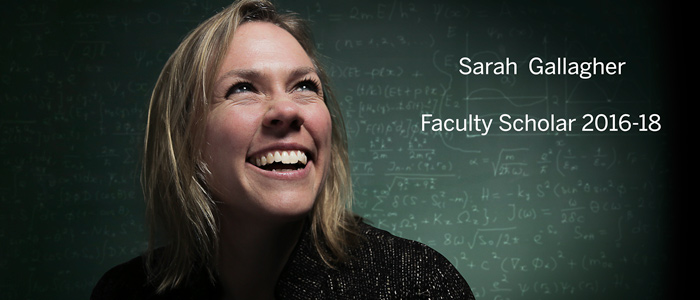
Western astronomer Professor Sarah Gallagher has been named as a Western University Faculty Scholar for 2016-18.
The citation reads, “These awards are limited in number and recognize scholarly achievements of a faculty member at a critical point in his or her career. The awards recognize the complete scholar who has maintained an excellent record in teaching and research, and who has recently achieved prominence in one of these two domains.”
Areas of study in the Faculty of Science include: Actuarial Science, Animal Behaviour, Applied Mathematics, Astrophysics, Bioinformatics, Biology, Chemistry, Computer Science, Environmental Geoscience, Environmental Science, Financial Modelling, Game Development, Genetics, Geology, Geophysics, High Performance Computing, Information Systems, Materials Science, Mathematics, Medical Physics, Physics, Planetary Science, and Statistics.
Disciplines in the Basic Medical Sciences (Schulich School of Medicine & Dentistry) include: Biochemistry, Chemical Biology, Computational Biochemistry, Epidemiology and Biostatistics, Interdisciplinary Medical Sciences, Medical Biophysics, Medical Cell Biology, Medical Health Informatics, Microbiology and Immunology, Neuroscience, Pathology, Physiology and Pharmacology.
Physics and Astronomy:
The Physics and Astronomy building will be the site for:
Physics and Astronomy displays and demonstrations (in the atrium)
All Science displays and demonstrations (in the atrium)
Career and Internship Services
Physics laboratory tours
Glassblowing demonstrations
GENERAL SCHEDULE
Welcome Centre 9 a.m. – 2:30 p.m.
North Entrance Atrium, Physics & Astronomy Building
Departmental Displays (Science and BMSc) 9 a.m. – 3 p.m.
Atrium, Physics & Astronomy Building
Welcome and Overview: Bachelor of Science (BSc) and Bachelor of Medical Sciences (BMSc) degrees 9:30 – 10:10 a.m. or 1 – 1:40 p.m.
Room 145, Natural Sciences Centre
Why Western Science and Basic Medical Sciences? Stop by one of these presentations to find out.
Science Tours 9:30 a.m. – 2 p.m.
Room 106, Physics & Astronomy Building
Student led tours of first-year labs, Taylor Library, Zoological Collections and more.
Peer Perspectives 10:30 – 11:10 a.m. or 2 – 2:40 p.m.
Room 145, Natural Sciences Centre
Current students will take questions and offer a student’s view to the Science/BMSc programs at Western.
Biology Student Live Lab 10:30 – 11:30 a.m. or 1:30 – 2:30 p.m.
Room 330, North Campus Building
Participants will get experience in a live lab.
Biology Students’ Q&A for Parents
10:30 – 11:30 a.m. or 1:30 – 2:30 p.m.
Room 295, North Campus Building
Current Biology students will take questions from parents while prospective students are in the live lab.
Mock Lecture– Experience your first class at Western!
11:30 a.m. – 12:30 p.m.
Room 145, Natural Sciences Centre
Our professors will excite you with their lecture style and subjects.
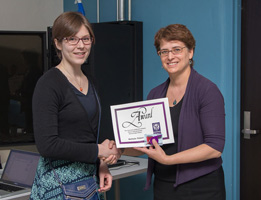
Silvia was awarded for ‘Best Paper Presentation’ for a talk titled, “Waveguide Evanescent Field Microscopies for Application in Cell- and Bacteria- Biophysics“.

 By the time the last day arrived, emotions were running high as students, professors, and Anand College volunteers and staff all realized how much they had bonded together, but that they would soon be going their separate ways. This event required that approximately 100 people, including the Anand College volunteers and staff, lived together and shared learning and cultural experiences for a week. Many new friendships were forged, that span the breadth of India as well as Canada to India. There is no underestimating the camaraderie that was established, and the age of social media means that these ties will be maintained and nurtured. The closing ceremony saw an open microphone session where participants spoke from the heart about their experience and how it had changed them. The overwhelming conclusion was: this was a wonderful idea and event, and let’s do it again!