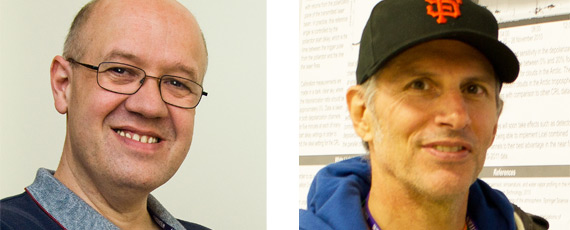
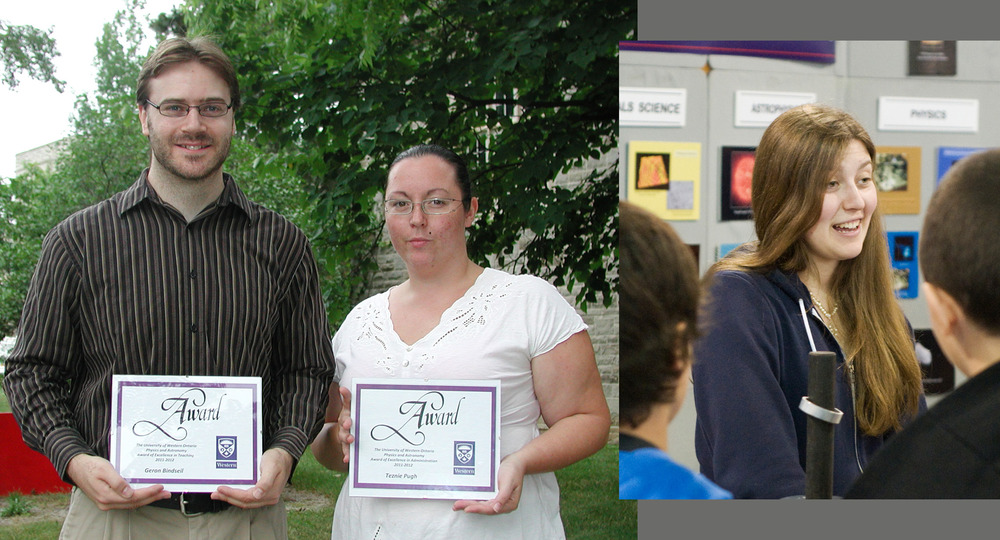
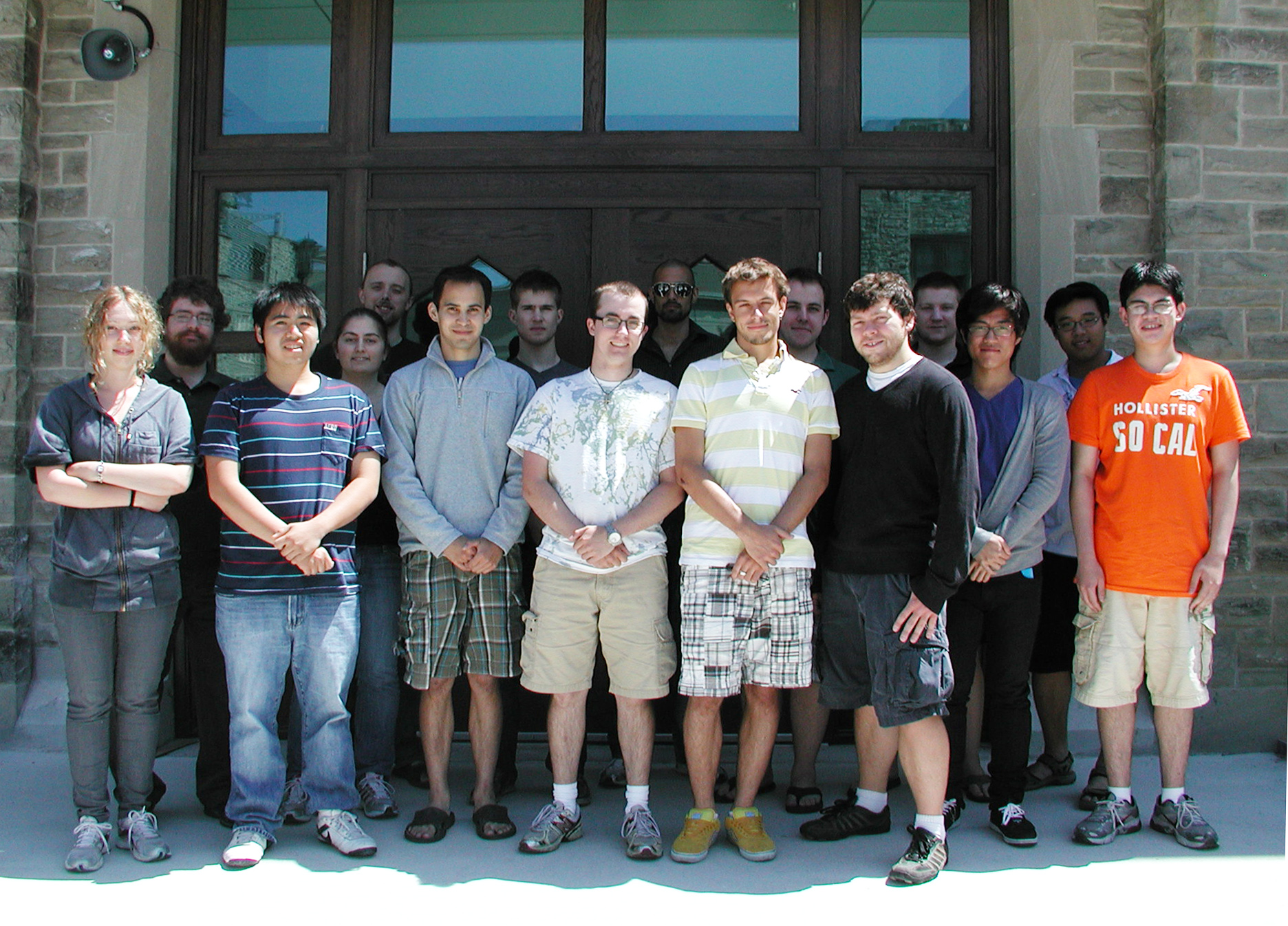
A couple of days ago, the twitterverse was abuzz with discussion of a video which is supposed to promote girls’ interest in science by implying that science is not incompatible with wearing high heels and lipstick. Astrophysicist blogger Peter Coles calls it “patronising drivel“. For more, have a look at #itsagirlthing and #realwomeninscience.
The women-in-science business is, of course, important, and it’s what I was originally going to write about. But it’s also been done to death and I don’t have much new to add. So instead I want to discuss “who is a scientist” in a more general way.
Let’s assume that whether a person can be a scientist does not depend on whether they have a Y chromosome, or wear lipstick, or have messy white hair. Are there other characteristics that mean a person is well-suited to be a scientist? This is something that I think about every so often, since I have to evaulate potential graduate students; it also comes up when I talk to school-age kids about being a scientist.
Of course the inter-tubes can tell us the answer: here is one list of “character traits and attitudes of a scientist”. Another extensive list is here (this is a chapter in a larger book which looks like it might be interesting summer reading), and Mike Brotherton — SF writer and astronomy prof — has a more concise list here. (Check out his fiction too!)
Brotherton’s list of “raw brain power”, “stick-to-it-iveness”, “communications skills”, “curiosity”, “attention to detail” covers most of what I think is important. Let’s look at some of the items in more detail to see what they don’t say.
Smarts: as he says, I think you need some base level of smartness to be a successful scientist. You have to be able to follow a logical argument relatively quickly, to think through the implications of things, and you need a decent working memory to be able to keep track of what you’re doing. But from my experience and contrary to popular belief, most scientists are not geniuses. I sometimes wonder if the “portraits of famous scientists” you find in textbooks can discourage people from going into science because they think they’re not brilliant enough.
Communications skills: while scientists know that you need these to be a succesful scientist, we obviously need to, er, communicate this better. We haven’t been able to break the stereotype that a scientist works alone in the lab and communicates only through scribbled equations, or that there are “math people” and “language people” with only the former suited to be scientists. Some of this is rooted in pop-psychology “left brain versus right brain” ideas — my limited understanding is that the real brain is a lot more complicated, and that you really need both halves to be good at anything, including science.
Curiosity: this is the big motivator for most scientists. Why else would you be in this job, if it wasn’t for the interest in finding out how the world works? You’re probably not going to get rich or famous, but most of us don’t think that’s a bad thing. When astrophysicist Sidney van den Bergh was recently inducted into the Canadian Science and Engineering Hall of Fame, which we got to watch from the recent CASCA meeting, he mentioned in his speech that one of the joys of our field is that you get to work with people who aren’t in it for the money. And while a few scientists are famous, most are not. Again, I wonder about the textbook thing here: is it clear enough to potential scientists that you don’t have to be a superstar — or want to be one — to be a scientist?
Aside from these traits and the others Brotherton discusses, is there a “scientist personality”? I don’t think so. In my colleagues in astrophysics, I know people who are extremely gentle and mild-mannered, and people who are extremely brash and assertive; people who are the life of the party and people who are most comfortable in a small group. Scientists are people, just like anybody else; we are merely fortunate enough to be able to work at something we love. I hope we can get beyond worrying about appearances and promote the message that if you are a human being, then you too are a potential scientist.