
As of July 1, 2013, Drs. Pauline Barmby, Jan Cami, and Gordon Osinski have been promoted to the rank of Associate Professor with tenure, while Drs. Blaine Chronik and Martin Houde have been promoted to Professor.
Monthly Archives: April 2013
The Aurora Borealis and Space Weather – Talk by Bob Sica at RASC meeting – Friday, April 19
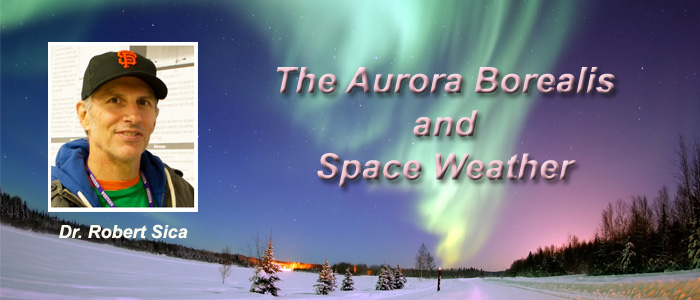 RASC London Centre monthly meeting.
Presentation by Dr. Robert Sica of Western University.
“The Aurora Borealis and Space Weather.”
Space Weather is the study of the interaction of the particles which flow from the Sun with Earth’s atmosphere. This talk will describe the visual result apparent to us on the surface, the Northern (and Southern) Lights, as well as give a lay description of a cutting edge of research: how can the particles from the Sun affect weather on the surface?
Time: 7:00 pm (19:00 hours)
Date: Friday, April 19, 2013
Location: Fanshawe College Rm B1073
Home grown organs
So some clever researchers at MGH (the medical wing of Harvard, a couple of students from the department have gone on to work there as post docs) have grown a working rat kidney. Yes, a working rat kidney that pees.
I have posted before about the heart research, and this is another like it, but the organ is more functional. Do I have to say how amazing this kind of stuff is? Envisage the future….. No more waiting for a donor, tragedy with a purpose. Instead you grow you own organs to replace failing ones. Long life with good health.
The only problem with all the promise that this research, and similar research holds, is that we while we will probably be able to fix almost every part of the body within maybe 10-20 years from now, the one part that matters more than the rest is still a bit of a mystery. We do everything with our brains, and currently we do not even understand the causes of brain problems, never mind the solutions needed to fix them.
Watch this space over the next decade as brain research becomes the thing.
Registration is ongoing for summer and distance studies courses for 2013
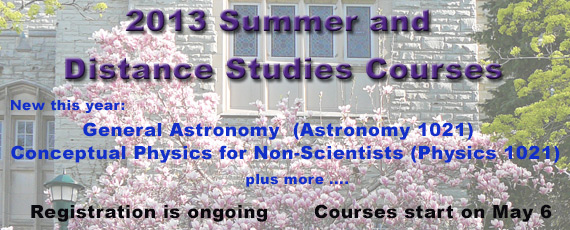 Registration is ongoing for all of our summer and distance studies courses.
Courses run from May 6 until July 26, 2013.
New courses for this year include General Astronomy (Astronomy 1021) and Conceptual Physics for Non-Scientists (Physics 1021).
Here is a complete list of offerings for the summer of 2013.
An unusual reunion
Last week I went to a reunion for Harvard astronomy PhD graduates. This was kind of an unusual event — Harvard does lots of reunions, but they are usually for people who were undergrads there, and whom the university hopes will donate lots of money. The astronomy department was also attempting to raise money from this event, although one might think that soliciting scientists would be fairly futile. (Certainly my initial reaction to getting a fundraising letter was that surely Harvard astronomy professors could write grant proposals, just like the rest of us academics.)
You might find it interesting to know, however, that people with PhDs in astronomy from Harvard are not all astronomy professors, not by a long shot. There is a complete list of all alumni here, and you can see that there is a variety of careers, from professor to medical doctor (!) to lawyer (!!), with quite a number of people now working in the financial industry. Presumably the fund-raising effort was aimed more at these folks.
At the reunion itself I shook hands with an astronaut, rubbed elbows with a Nobel Prize winner, and caught up with classmates who are now Harvard and MIT professors. I also talked to many of my colleagues who (like me) fill out the fainter end of the luminosity function. I think most of us are happy in our fields, even if there is the occasional pang when our mothers ask us why we’re not famous too.
The two panel discussions covered the hot topics in astrophysics — cosmology and exoplanets — and featured both alumni and profs. I found both to be a bit bittersweet, with justifiable excitement about recent accomplishments but worries that we might not be able to follow up on this excitement. Nobody, even rich Harvard astronomers, is without funding problems, it seems; as I have opined here before, we may have to get used to doing more with less. On a grander scale, Frank Shu noted that the Fermi paradox is a deep mystery and possibly does not bode well for the future of human civilization. Geez, just as we figure out all of cosmology, our descendants won’t last long?
At this particular reunion, two groups were represented that are not ordinarily at a reunion: current astronomy professors—not all Harvard alumni, although there are many—and current grad students. I was interested to see that the current grad students seem to be just as concerned about future jobs in astronomy as students I have seen elsewhere. The faculty didn’t seem to be particularly worried about this and it’s also interesting to note that the size of the grad student class has expanded by about a factor of 2 since I started in 1995. This PhD-training-versus-jobs disconnect is something that I plan to talk about more here; it was addressed nicely in a recent Globe and Mail op-ed piece.
All in all, it was an interesting day, providing a nice snapshot of how the field of astronomy has changed over the past few decades and ideas about where it will possibly go in the future. Actually I find it pretty difficult to imagine what the field will be like in 20 years; I wonder if this blog post will still be around then for comparison!
PhD Public Lecture – MEGHAN McGILL – MONDAY, 22nd April @ 1:30
WesternUniversity
Department of Physics and Astronomy
PhD Public Lecture
Meghan McGill
Supervisors: Drs. Carol Jones & Aaron Sigut
“Gravitational Darkening of Classical Be Stars”
DATE: MONDAY, 22nd April 2013
TIME: 1:30 p.m.
PLACE: P&A Seminar Room PAB 100
All are welcome to attend.
Physics & Astronomy Colloquium – THURS. 25th April – DR. AVERY BRODERICK, U Waterloo / Perimeter Inst.
Western University
DEPARTMENT OF PHYSICS AND ASTRONOMY
PHYSICS & ASTRONOMY COLLOQUIUM
Date: Thursday, 25th April 2013
Time: 1:30 p.m.
Location: Physics & Astronomy Seminar Room 100
Dr. Avery Broderick
Department of Physics & Astronomy
University of Waterloo & Perimeter Institute
“Imaging Supermassive Black holes on Horizon Scales”
ABSTRACT
Supermassive black holes, the million to billion solar mass cousins of the more commonly described remnants of massive stars, are now believed to exist at the centers of nearly all galaxies, and power some of the most energetic phenomena in the universe, with cosmological implications. Nevertheless, due to their compact nature, it remains unclear how supermassive black holes grow, how they launch the ultra-relativistic outflows observed, if gravity in the vicinity of their horizons is well described by general relativity, and even if event horizons exist. However, the Event Horizon Telescope, a developing Earth-sized millimeter-wave interferometer, has now probed two supermassive black holes on spatial scales smaller than their respective event horizons. I will describe how these observations are being performed, and how existing (and forthcoming) data from the Event Horizon Telescope is already providing novel insights into both their enigmatic behaviors and fundamental natures.
Refreshments will be available.
Life as a Professor
In this period between the end of classes and the start of finals, I thought I would provide some insight into life as a professor.
Images from the Physics Undergraduate Conference 2013 presentations.
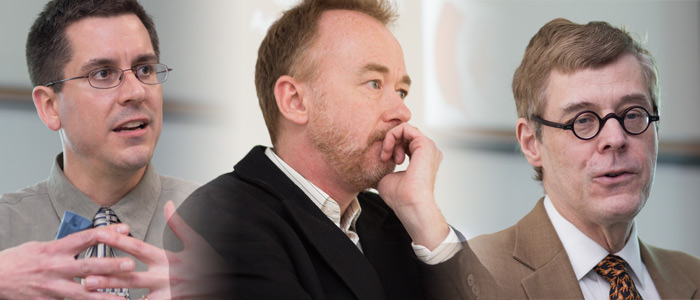
The Physics Undergraduate Conference (PHUNC) for 2013 was held on April 9.
Plenary speakers (left to right in photo) were Dr. Steve Rehse of The University of Windsor, Dr. Adrian Owen of Western University, and Dr. Robert Boyd of the University of Ottawa and The University of Rochester.
In addition there were 15 student presentations throughout the day.
Marek Brzozowski, Suzanne Dalgleish, Leesa Fleury, Liz Gray, Gabe Keenleyside, Jim Nicholson, and Kyle Windsor
Professor Emeritus Dr. Yen Fu Bow dead at 92 years of age.
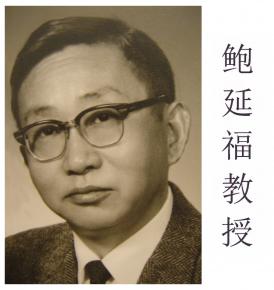
Professor Emeritus Dr. Yen Fu Bow died at age 92 on April 1, 2013 at University Hospital. Dr. Bow was a faculty member in the then separate Department of Physics (there was a separate Department of Astronomy under Head Dr. William H. Wehlau until the amalgamation of the two departments in 1996), from 1966 to 1986.
You can view Dr. Bow’s obituary at http://www.westviewfuneralchapel.com/pages/obituaries/details.php?p=1274.
Professor Emeritus Dr. Don Moorcroft recalls that Dr. Bow received his PhD rather late in life, at age 42, from The University of Michigan.
You can view Don Moorcroft’s history of the Department either on the departmental news->history archives or on Don’s personal web pages.
I was taught 4th year nuclear physics by Dr. Bow. There were two students, so we were lectured in Dr. Bow’s office. I recall him as a very kind and generous teacher who always had a ready smile to give.