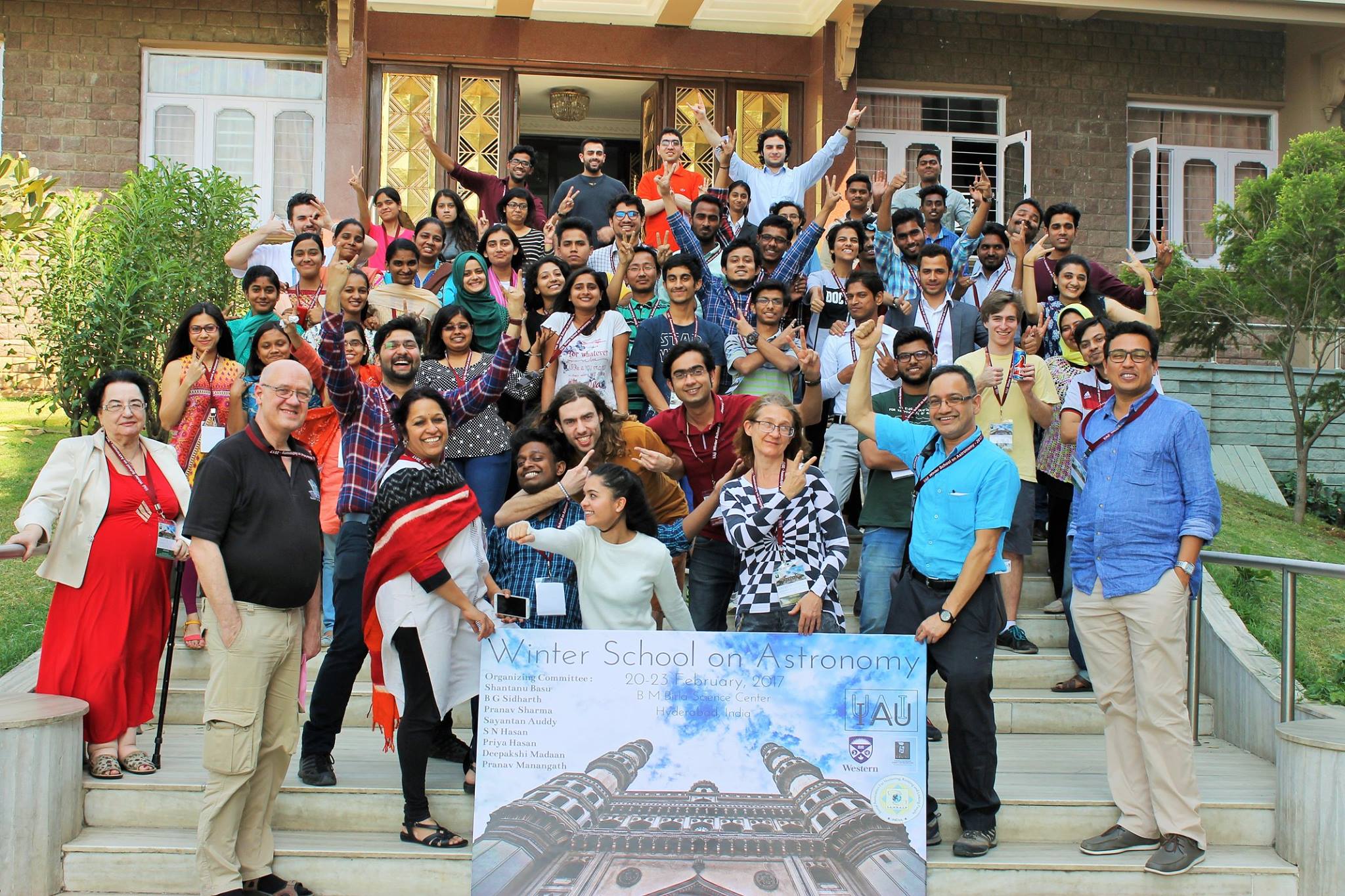
The Astronomy Winter School in India, or Astrowin, was held in Hyderabad, India, on February 20-23, 2017. This was the second in a series of schools, the first of which was held in February 2016, in Agra, India. The Astrowin events are actually a combination training school for Bachelors and Masters degree level students, a research workshop, and a cultural experience. Accessibility to participants from diverse backgrounds is a founding principle of the schools. The diversity of the school reached new heights in 2017, with a fully gender-balanced participant list and 11 different countries
represented by the students and speakers. These countries were Bangladesh, Canada, Egypt, India, Indonesia, Iran, Malaysia, Nepal, Philippines, the UAE, and the USA. The largest contingent among the 70 students was from India, followed by Canada. The Indian students also represented the length and breadth of the subcontinent, from Maharashtra to Manipur, and Punjab to Tamil Nadu. The 2016 school had been sponsored by generous funding from Anand College, Agra, India, and Western University, Canada. In 2017 the school was funded by the International Astronomical Union – Office of Astronomy for Development (IAU-OAD), giving it a greater international profile. The event was held at the B M Birla Science Centre in Hyderabad, and many thanks go to its Director, Dr. B. G. Sidharth.
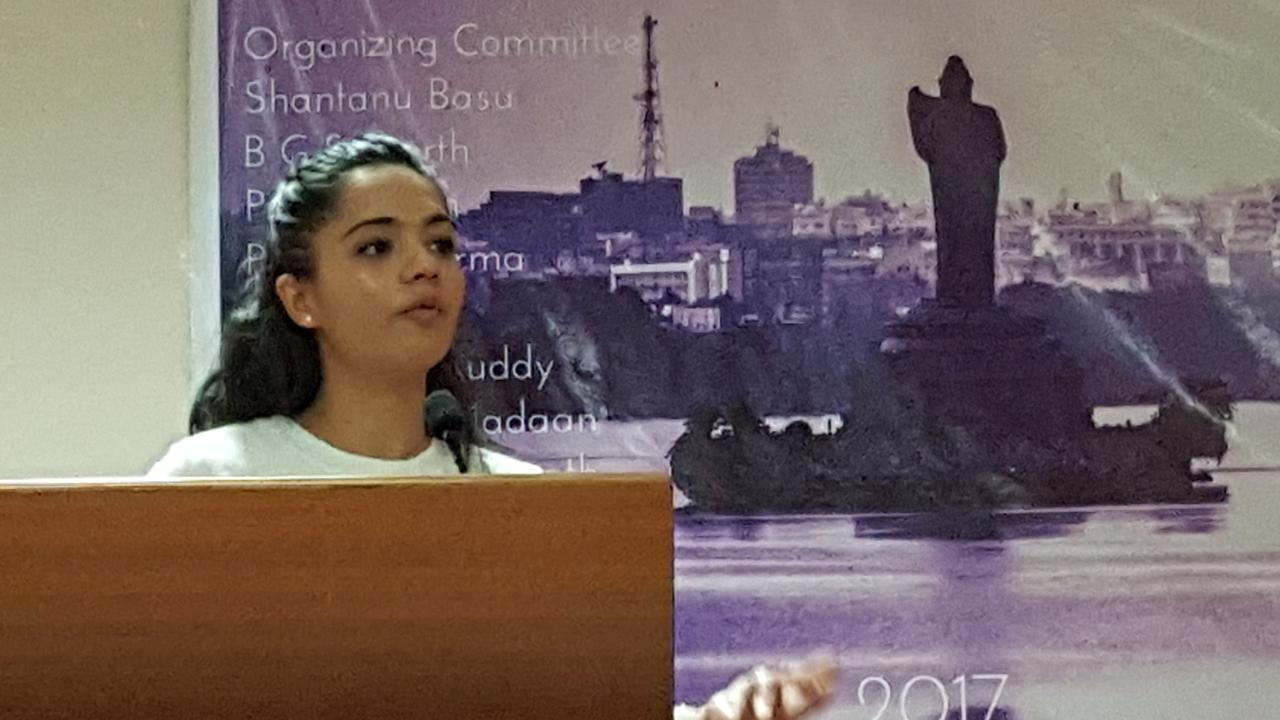
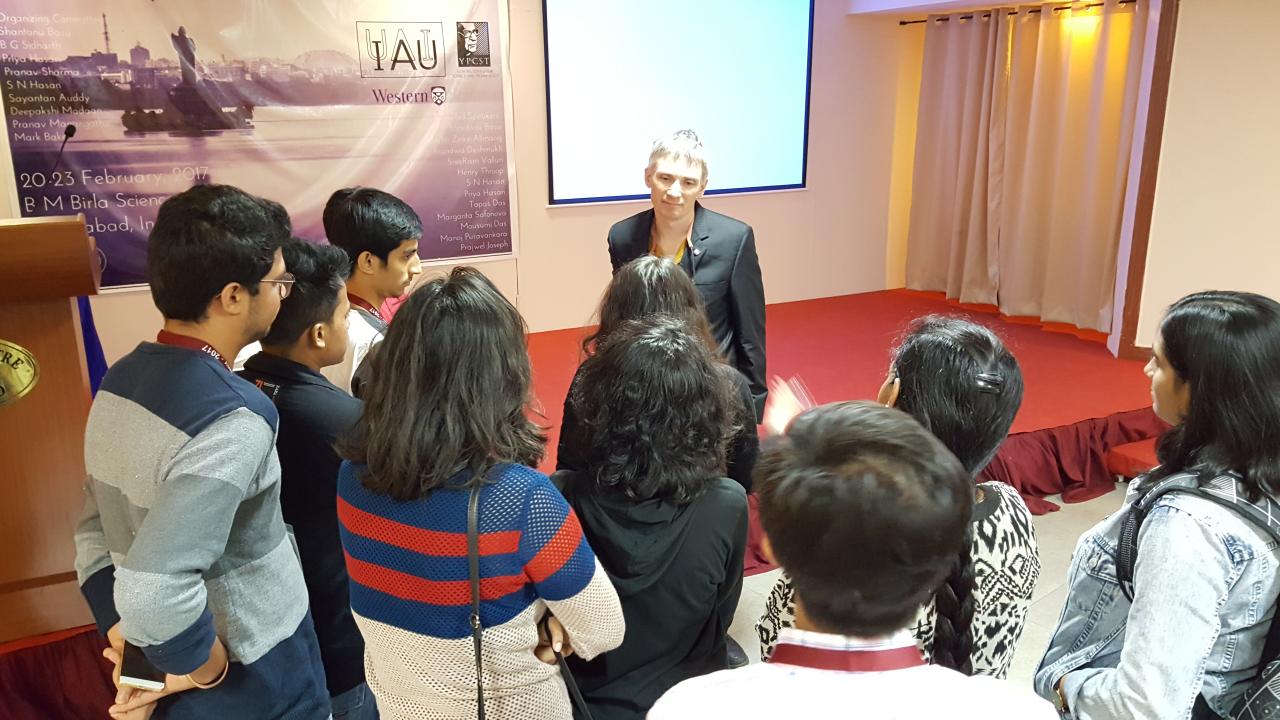
The school segment of the event featured two hands-on astronomy sessions. Priya Shah Hasan (Maulana Azad National Urdu University, India) led an interactive session on GAIA telescope data analysis, and Sayantan Auddy and Deepakshi Madaan of Western University teamed up to lead a workshop on the use of the Python programming language with an application to measuring the mass function of stars in a stellar cluster. Other school highlights included Henry Throop (Planetary Science Institute, USA) speaking on the New Horizons mission to Pluto, Pranav Manangath (Western) speaking on the Theory of Planet Formation, Pranawa Deshmukh (IIT-Tirupati) speaking on Precession of Planetary Orbits in General
Relativity, Ajith Parameswaran (ICTS Bangalore) on Binary Black Hole Detection by LIGO, and Tapas Das (HRI Allahabad) speaking on Accretion onto Supermassive Black Holes.
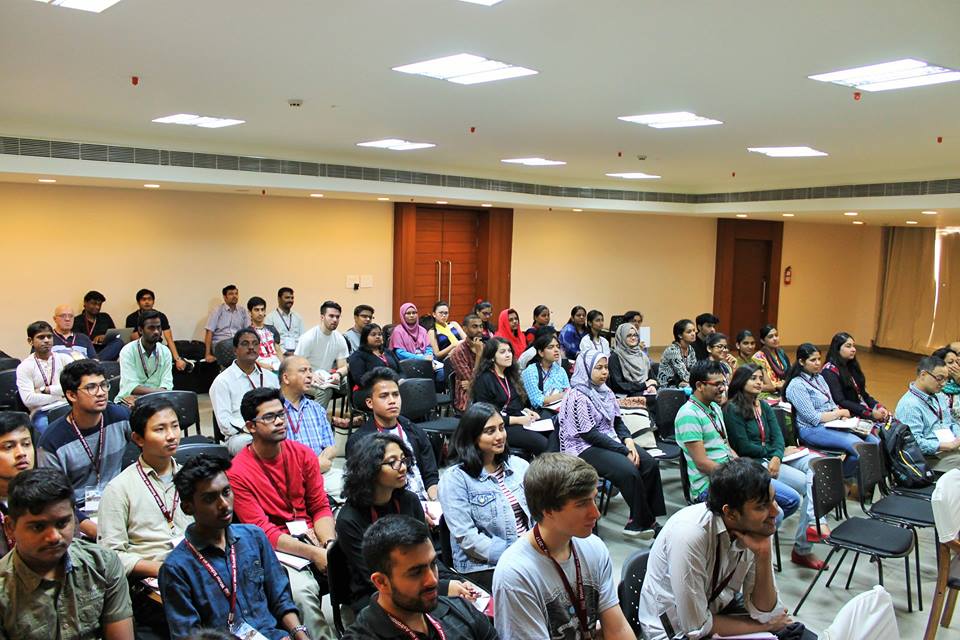
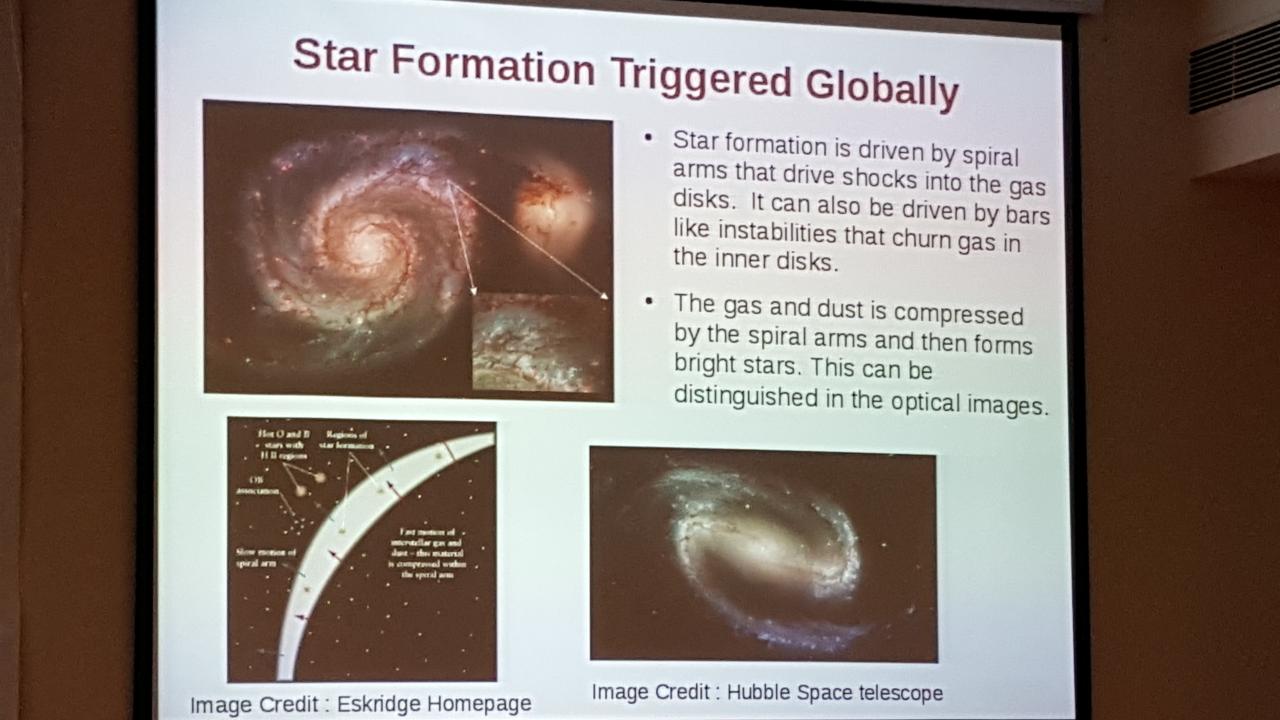
The final day was a research workshop on various aspects of stellar clusters and star formation, where students experienced a research presentation environment, with plenty of opportunity to interact with the speakers. In addition to talks by many of the school lecturers, there were several invited talks including by Mousumi Das (IIA Bangalore), Manoj Puravankara (TIFR Mumbai), and Margarita Safonova (IIA Bangalore).
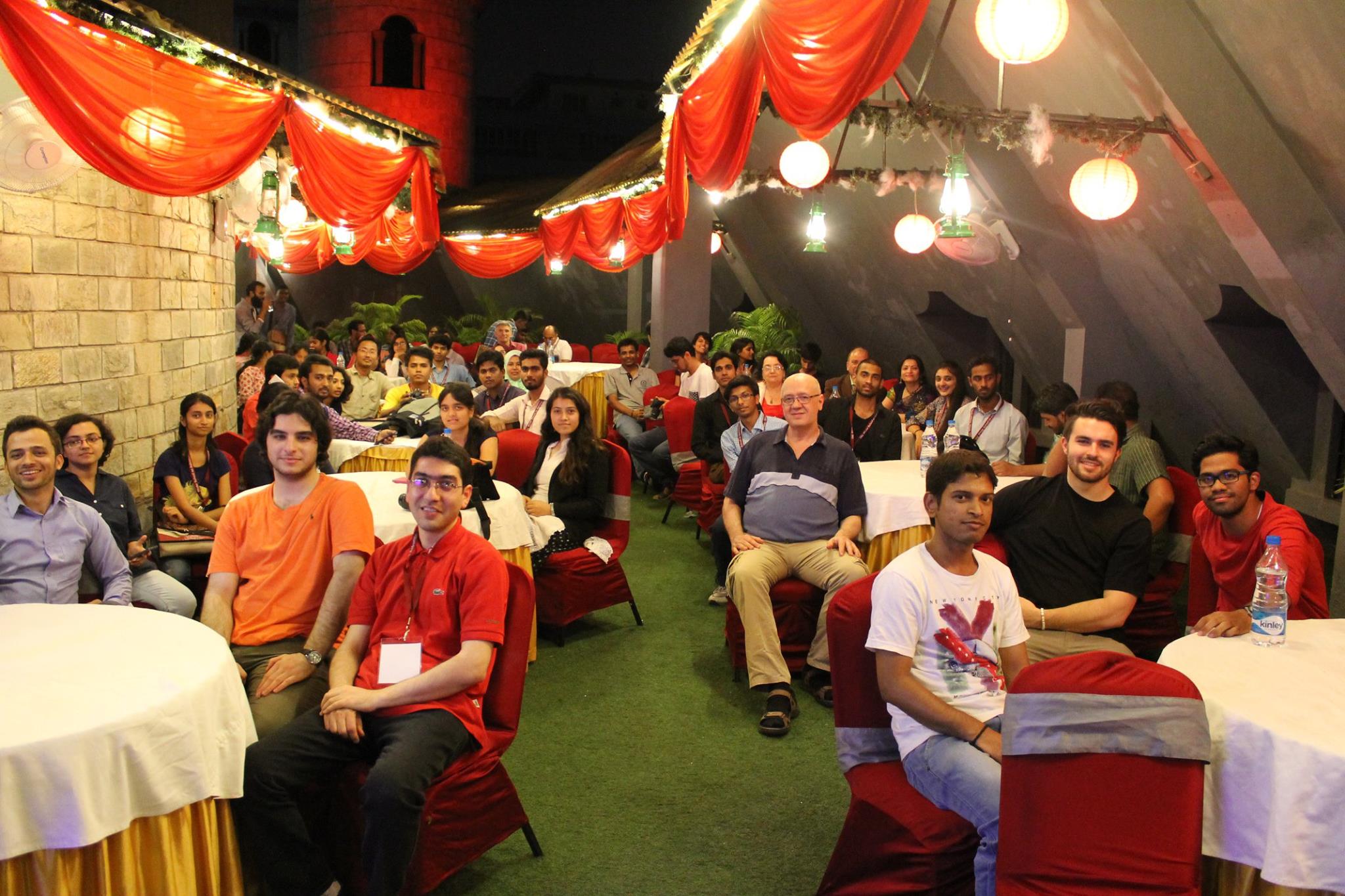
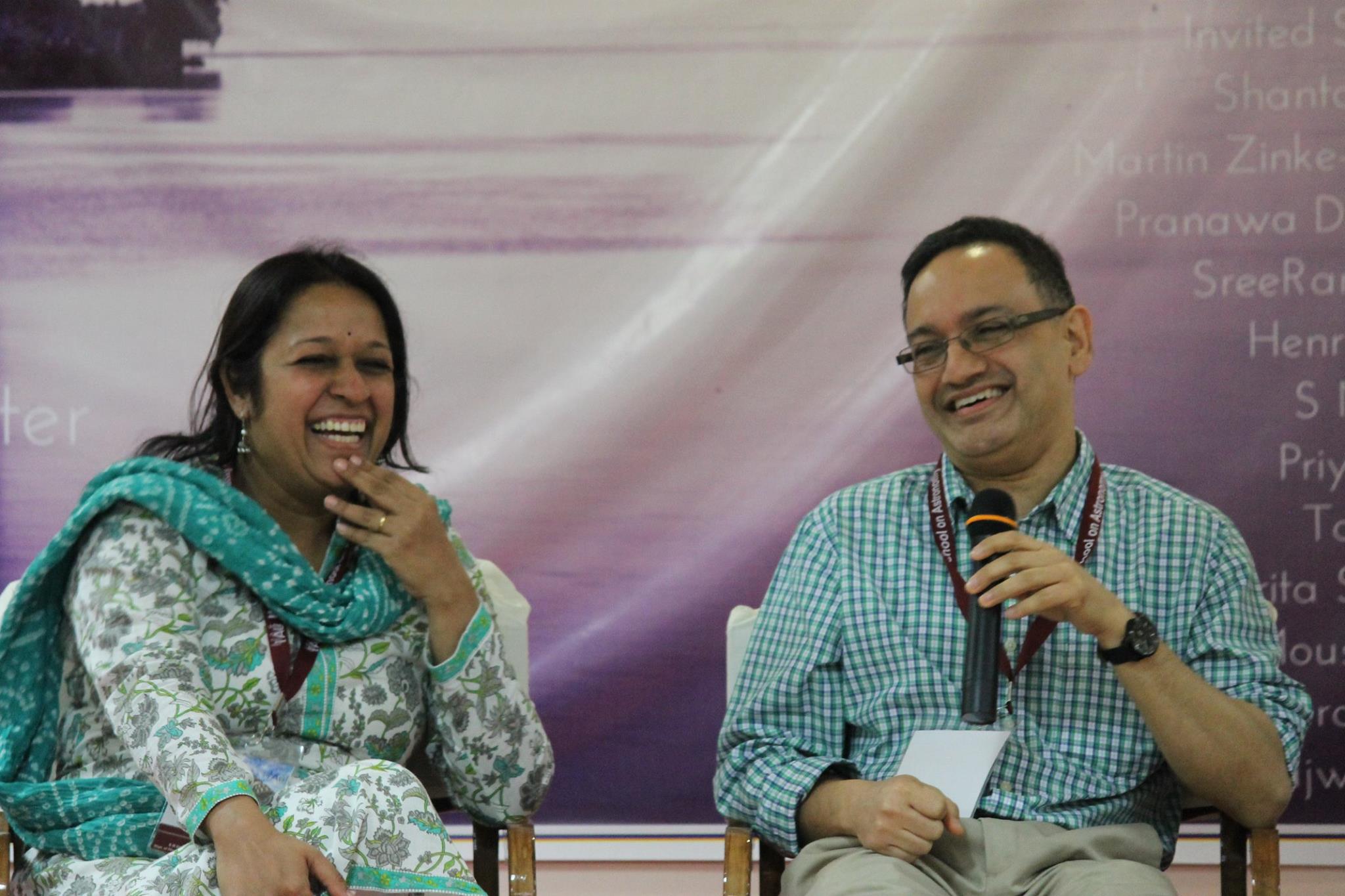
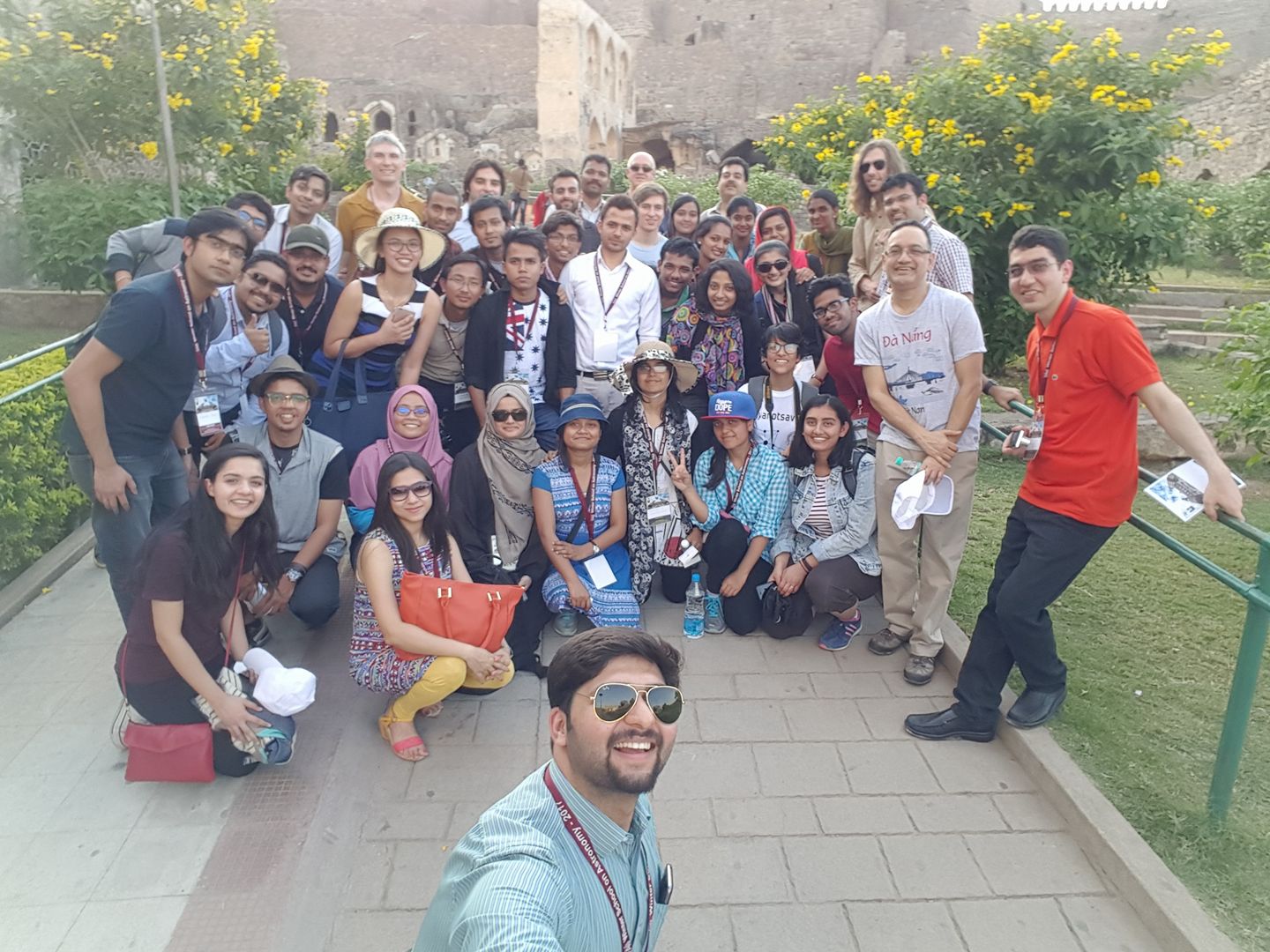
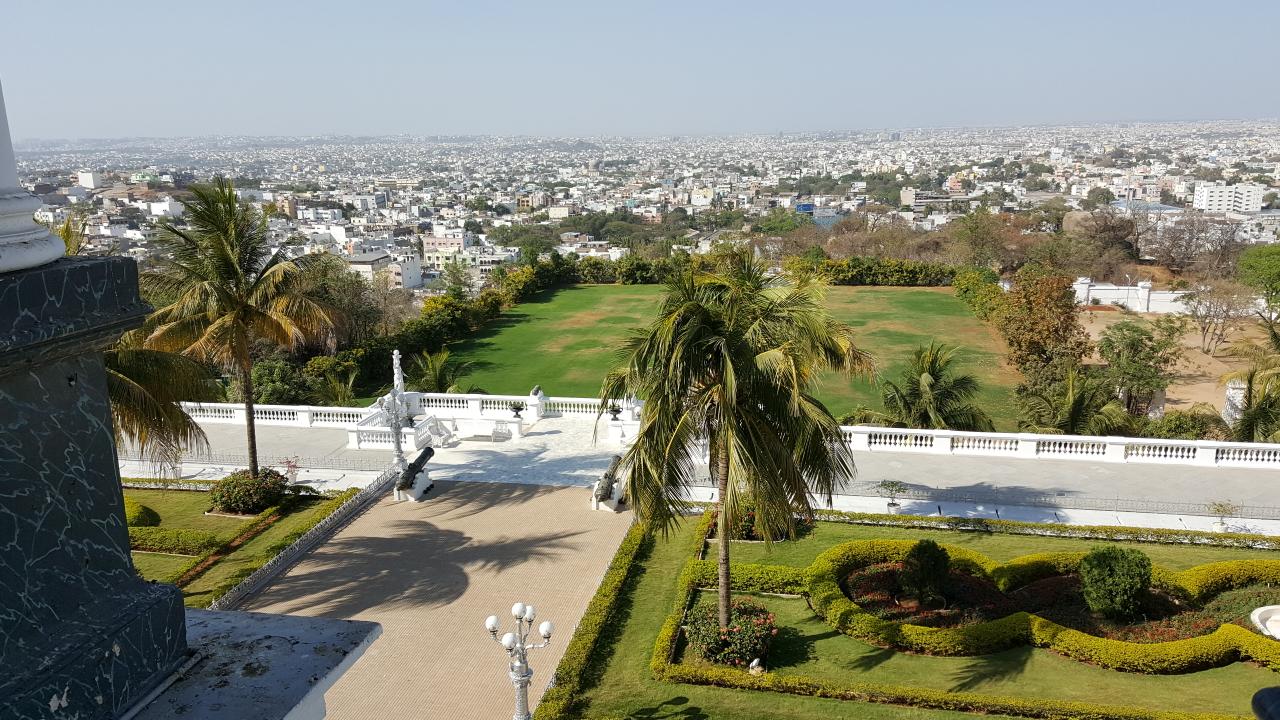
A special feature of the Astrowin series is simply bringing a diverse group of people together and letting them interact. Relationships are developed and cross-cultural awareness is gained. On the second day, there was a group excursion to the historic Golconda Fort, located just outside Hyderabad and overlooking the city. The fort dates back to about the 12th century and has been in use by many successive dynasties. In recent centuries its international fame had come from its association with nearby diamond mines that yielded the largest and most famous diamonds in the world, notably the Koh-i-Noor diamond and the Hope diamond. Participants made the trek to the top of the hill while developing fellowship with each other, and the group stayed till the evening light show. Another part of the school was a panel discussion on careers in astronomy, with students asking very frank questions about what it takes to get a PhD position, and a conversation about the international nature of astronomy research.
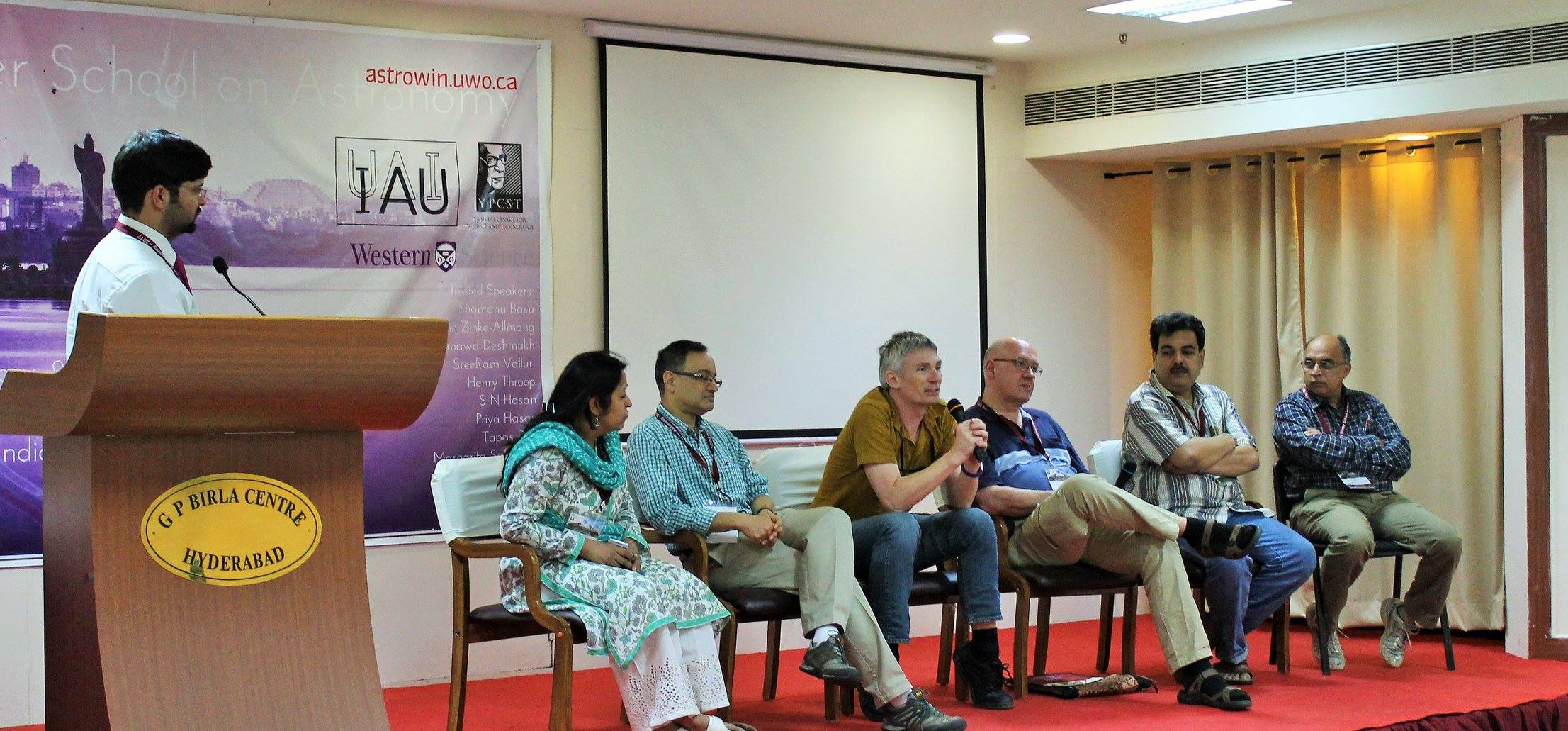
Astrowin provided an opportunity for education, travel, and cross-cultural interaction. It allowed Canadian students (from Western University, Wilfrid Laurier University and the University of Toronto) to meet international students in a study abroad event while experiencing India. For Indian students and those from other Asian countries, it provided a valuable opportunity to interact with leading scientists from many countries in a relaxed and inquisitive environment. The very large number of applicants for the Astrowin schools means that there is a strong demand for these kind of events and surely there will be more to come.
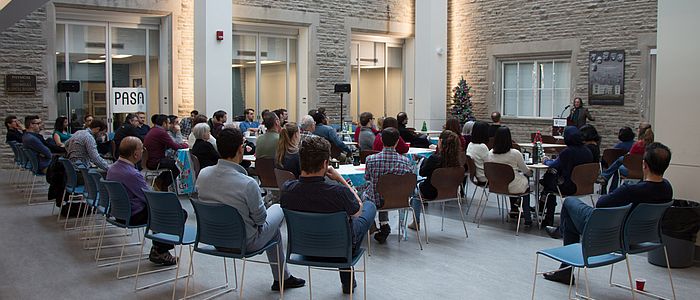
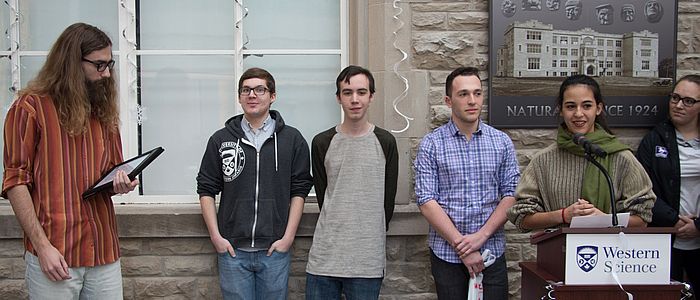
 The event was well attended as always, the lunch delicious, the atrium well-appointed and the prop-laden photo booth enjoyed as well.