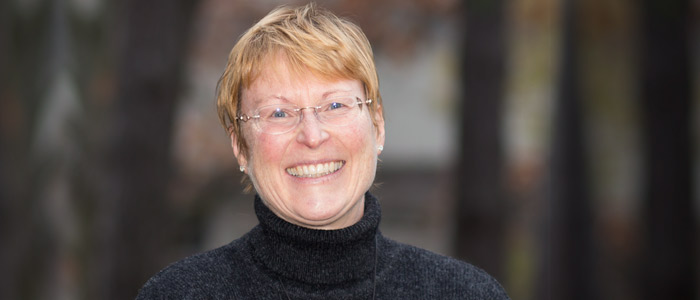
Teaching Assistant Award of Excellence recipients for 2013_14 announced

TA_awards_winners_2014

Teaching Assistant Award winners for the past year have been announced by Chair Shantanu Basu.

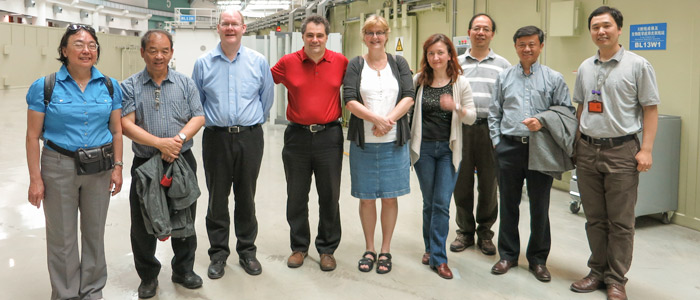
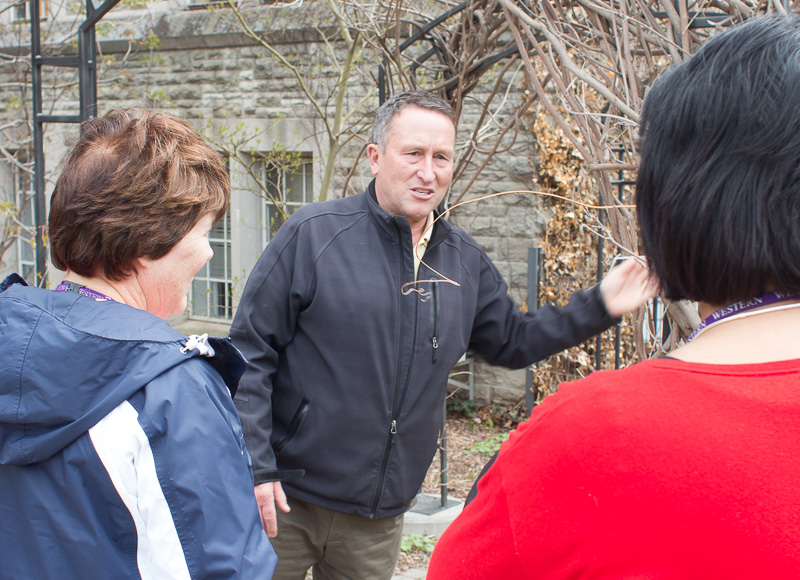
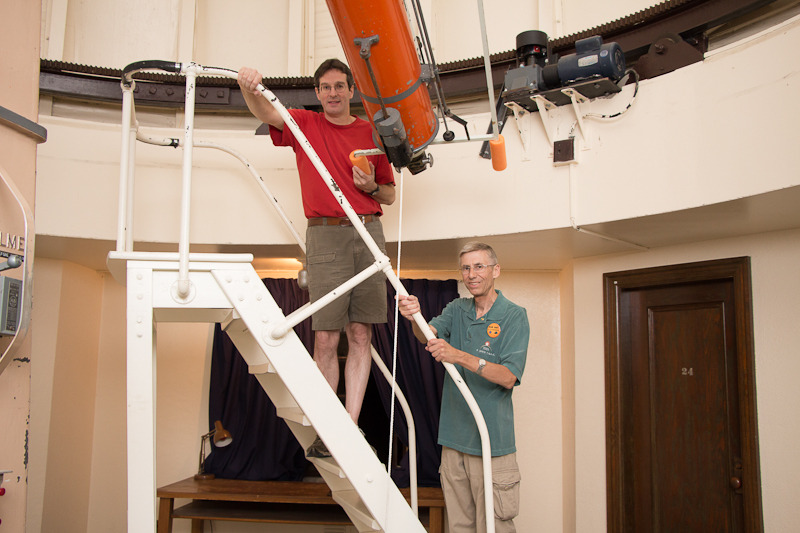
Departmental recipients of the Teaching Assistant Award of Excellence are Richard Cyr (left in photo), Aycha Tammour (2nd from left in photo), and Kendra Kellogg (right in photo).

Faculty of Science recipient of the Teaching Assistant Award of Excellence is Wayne Oswald (2nd from right in photo).

The 31st annual Science Olympics were held on May 22, 2014

Beal_teammates

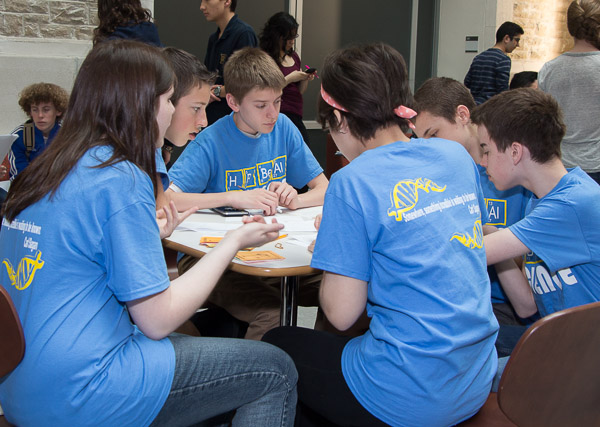
Over 700 high school students, comprising 253 teams from 24 schools, descended onto the Western campus on Thursday, May 22, 2014 for the 31st London and District Science Olympics.

Schools from as far away as Goderich, Richmond Hill, and Cambridge, as well as most of the local schools in the London area, participated.

Many events were held in our newly renovated Physics and Astronomy building, taking advantage of new classrooms, laboratories, and the wonderful atrium space.

[more images from the Science Olympics 2014]

Western astronomer predicts potentially exciting new meteor shower for May 24, 2014

wiegert_meteors_banner_may2014

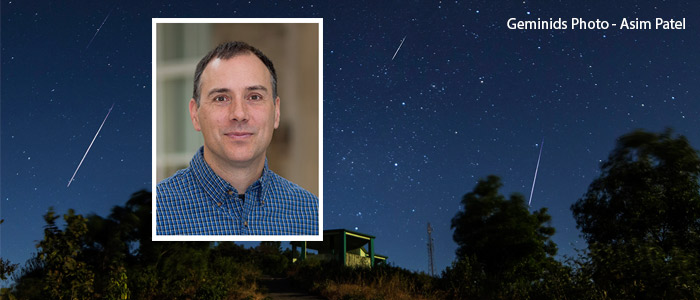
Astronomers around the world, including Western’s Paul Wiegert (shown in photo), are predicting a brand new visible meteor shower on Saturday, May 24, 2014.

Professor Paul Wiegert is one of the astronomers who has actually calculated a model of what we might expect to see.

This shower is a result of an ancient flyby of a relatively unknown comet named 209P/LINEAR.

Dr. Wiegert predicts the peak of the shower will occur approximately between 2:00am and 4:00 am on Saturday morning, May 24.

The peak number of meteors is predicted to be approximately 200, which is similar to the famous summertime Perseid meteor shower.

[more details in the Globe and Mail]

Continued collaboration with Soochow University, China

soochow_workshop_2014

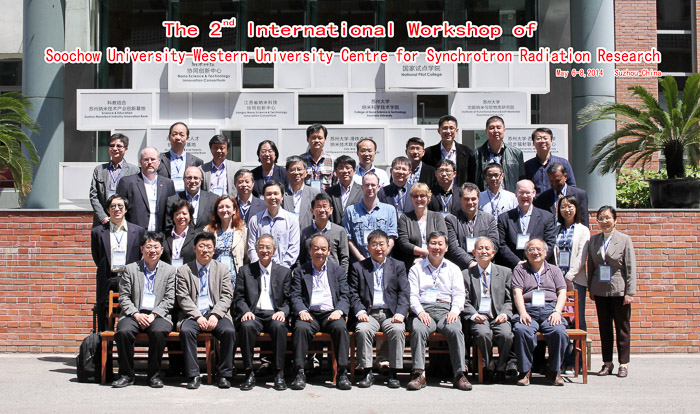
As part of established collaboration between Western and Soochow University China, and also in a continued effort to promote a dual-degree (2+2) PhD program between Soochow  and Western Universities, several faculty members from Science, Engineering, and Medicine Faculties at Western visited the university while also attending a workshop on Synchrotron Radiation Research.

From Physics and Astronomy, the contingent included Professor Lyudmila Goncharova (4th from right in top photo), and Professor Giovanni Fanchini (4th from left in top photo).

soochow_workshop_group_photo

Silvia Mittler to be new Associate Chair of Graduate Studies

Silvia_Mittler_assoc_grad_chair

Professor Silvia Mittler becomes the new department Associate Chair for Graduate Studies.

Department Chair Shantanu Basu communicates,

“I am very pleased to announce that Prof. Silvia Mittler will be appointed as the new Associate Chair for Graduate Studies in the Department of Physics and Astronomy for a three year term beginning 1 July 2014.

Silvia brings in over a decade of service to this Department and much experience from a career that spans two continents. She will undoubtedly work for the upliftment of our programs, with valuable new insights and initiatives to move us forward. Welcome to this position Silvia!

I would also like to take this opportunity to collectively thank Prof. Bob Sica and Prof. Martin Houde for their work as Associate Chairs during the last two years. Martin has very ably managed the position for the last six months, to complete the term vacated by Bob due to his sabbatical. The last two years have seen many new initiatives and I am particularly pleased that we have developed the culture of regular advisory committee meetings.

A professional bio of Silvia follows:

Silvia Mittler received her Masters in Physics at the University of Mainz, followed by a PhD in Physics jointly from the Max-Planck Institute for Polymer Research, Mainz and the University of Mainz. In 2000, she earned the Habilitation, the highest level academic qualification in Germany, in Physical Chemistry from the University of Mainz. She held postdoctoral fellowships at the Max-Planck Institute for Polymer Research, the University of Arizona, and the University of Central Florida. She was a Project Leader at the Max-Planck Institute for Polymer Research from 1992 till 2003. Silvia joined Western as a Full Professor in the Department of Physics and Astronomy in 2003. Her research work focuses on the Photonics of Surfaces and Interfaces and on Materials Science more generally. She has a lifetime number of 30 MSc theses and 18 PhD theses either supervised or co-supervised.”

 

Awards brought home from NSERC Arctic Atmospheric Research Symposium

OLYMPUS DIGITAL CAMERA

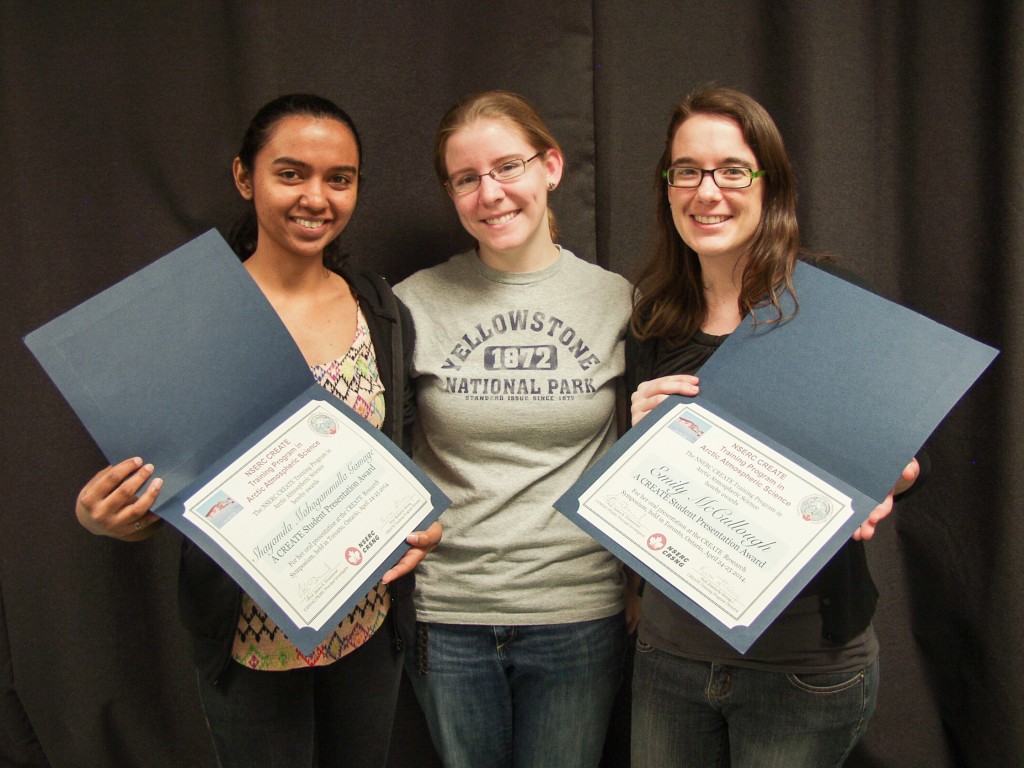
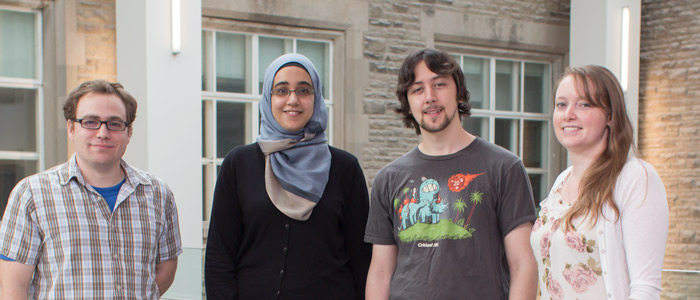
The NSERC CREATE Arctic Atmospheric Science Research Symposium was held in Toronto on April 25, 2014.

Three student presentation awards were received by Western students.

Shannon Hicks (at centre in photo) received an honourable mention for the M.Sc. category with her talk “Automating the Purple Crow Lidar”.

Shayamila Gamage (at left in photo) won the M.Sc. category prize with “Water Vapour Retrieval Using CANDAC Raman Lidar, Eureka”.

Emily McCullough (at right in photo) won for the Ph.D. category with “Calibrating the CRL for depolarization measurements”.

Shannon, Shayamila, and Emily work with supervisor Dr. Robert Sica of the Purple Crow Lidar facility.


Wayne Hocking photo takes 2nd prize in CAP “Art in Physics” competition

upp_tang_arc_yk_dec22_noon_2013

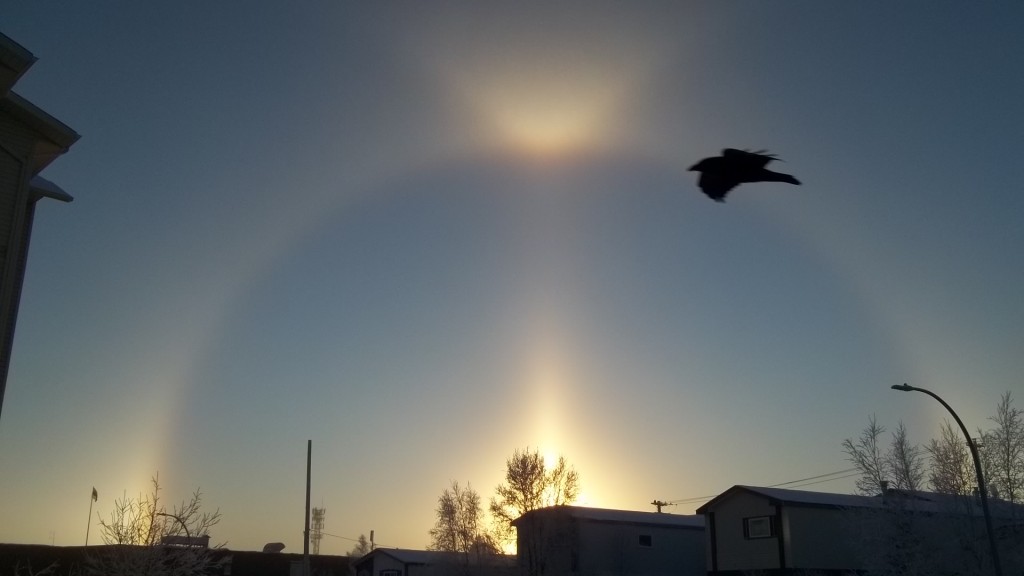
The photo above, taken by Professor Wayne Hocking, earned the 2nd place prize in the Canadian Association of Physicists (CAP) ‘Art in Physics’ competition.

Wayne describes his winning photo as follows.

“Photo showing a simultaneous 22-degree halo, upper tangent arc and sun pillar taken on Dec 22 2013 at Yellowknife, just before noon, as the sun poked its head slightly above the horizon a brief few hours. These are due to ice-crystals formed in super-saturated air. At modest degrees of supersaturation, and temperatures just below 0C, ice crystals are hollow and solid hexagonal cylinders, while at temperatures below -10C, they become largely hexagonal plates. At higher levels of supersaturation, the crystals become dendrites (essentially snow-flakes). The upper tangent arc is due to refraction of sunlight through horizontally aligned hexagonal cylinders, aligned in this way due to their gently fluttering downward movement. The central sun-pillar is due to reflection from horizontally aligned hexagonal plates, also fluttering gently downward. The 22-degree arc is due again to hexagonal columns, but this time ones that have conglomerated together in clusters, so there is no particular alignment as they tumble downward. Other sundogs were visible further to the left and right (outside the picture). The raven gives the photo a distinctly Yellowknife flavour.”