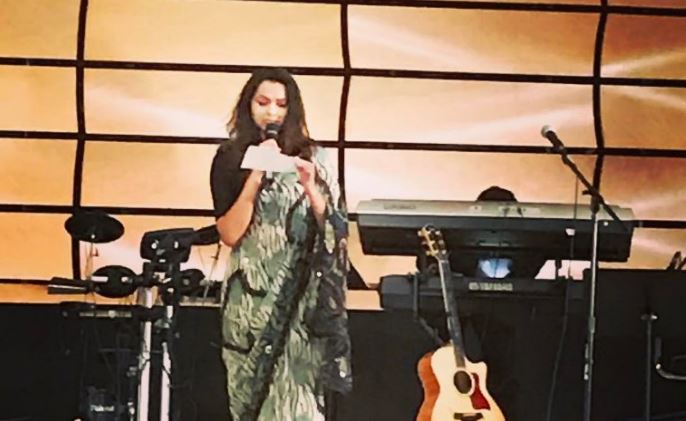
Our graduate students Shayamila Gammage and Achini Abayakoon performed at a Sri Lankan cultural event that took place in the Don Wright Faculty of Music auditorium on Saturday, February 25, 2017.
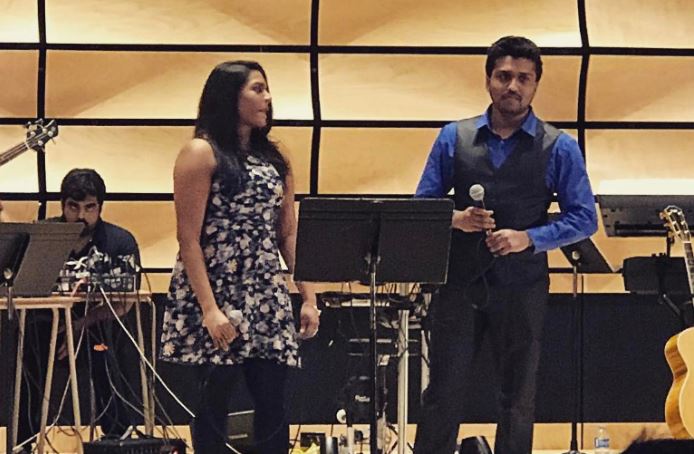

Our graduate students Shayamila Gammage and Achini Abayakoon performed at a Sri Lankan cultural event that took place in the Don Wright Faculty of Music auditorium on Saturday, February 25, 2017.
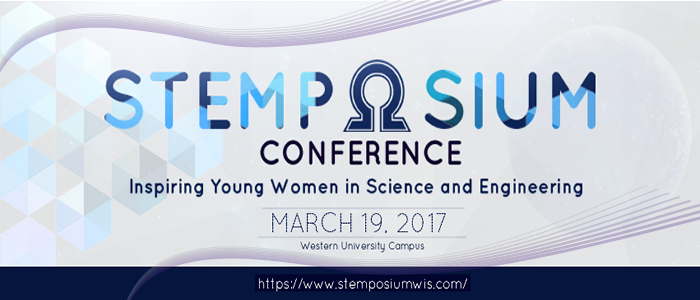 As local organizer Cassie Gobin describes, “The purpose of this conference is to introduce female high school students to the great diversity of post-secondary opportunities in STEM (Science, Technology, Engineering, and Mathematics) in order to support the developing passion of the students interested in these fields. ”
Guest speakers are our own Dean of Science, Dr. Charmaine Dean, along with Western alumna, science writer Dr. Kate Moise, and Nobel Peace Prize winner Dr. Brad Bass.
Visit the local web site: https://www.stemposiumwis.com/
Listen to Western astronomer Stan Metchev speak to CHRW radio about exoplanets, and specifically the new NASA discovery of many exoplanets around star Trappist-1.
https://chrwradio.ca/content/understanding-extrasolar-planets-dr-stan-metchev
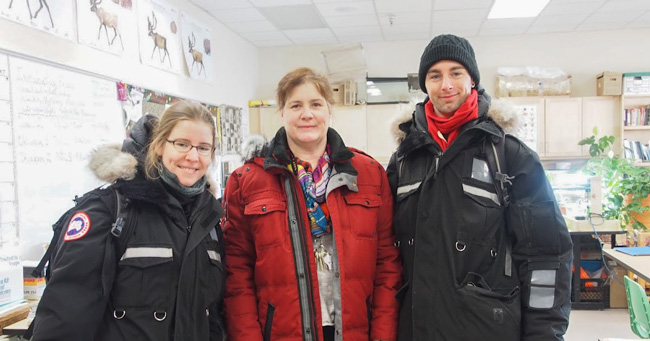 Shannon Hicks of Western (left), CANDAC’s Aubyn O’Grady (centre), and Dan Weaver from University of Toronto (right), spent the week of February 5-10 in Iqaluit, Nunavut launching the 2017 Student-Researcher Atmospheric Collaboration Program with students at Joamie Iliniarvik School and Inuksuk Highschool.
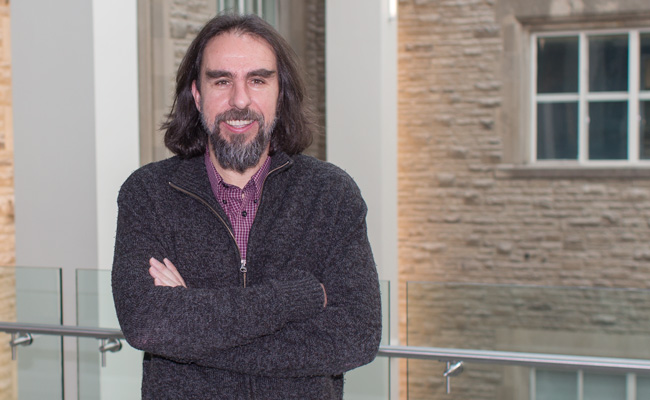
Scientists at Western were part of an international research study that has made a huge leap forward in our ability to interpret functional MRI scans.
Medical physicist Andrea Soddu and his graduate student Demetrius Ribeiro de Paula, along with Adrian Owen, the Canada Excellence Research Chair in Cognitive Neuroscience and Imaging at Western’s Brain & Mind Institute, were principal investigators in the study.
See more details at Western Media Relations.
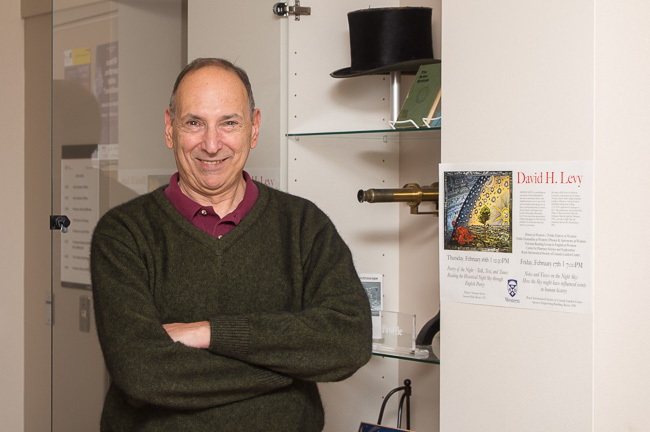
One of the world’s most successful comet hunters, David Levy, spoke in the Department of History on Thursday 16 February 2017.
David conveyed his passion forthe night sky in a talk which was titled, “Poetry of the Night — Talk, Text and Tunes: Reading the Historical Night Sky through English Poetry”.
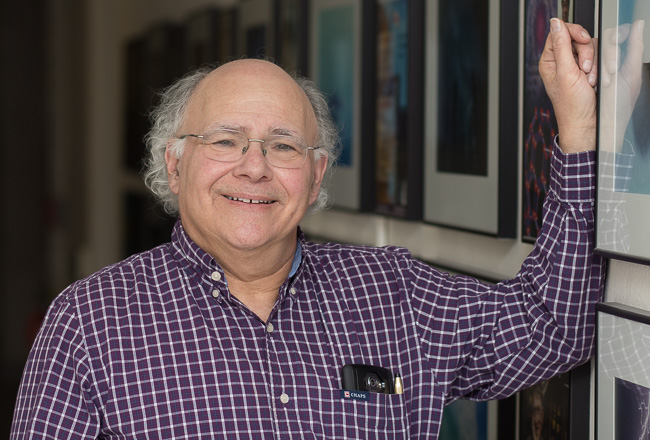
The annual Canadian Association of Physicists (CAP) Lecture was given by Professor Emeritus Stanley Greenspoon of Capilano University.
In the audience were members of the senior undergraduate seminar course, as well as a number of specially invited prospective undergraduates, along with staff, faculty, researchers, and graduate students.
Prof. Greenspoon’s talk was titled, “What’s New in the Search for Exoplanets and Extraterrestrial Life“.
A pizza reception was held in the atrium after the talk. Many Physics and Astronomy faculty members, Prof. Greenspoon, and senior students were on hand to answer questions from the prospective undergraduates.
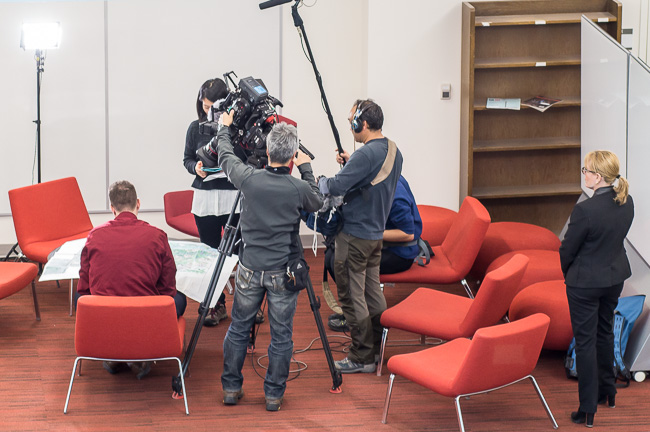 A one hour film special is being produced by a Japanese network on the story of the 18 January 2000 Tagish Lake fireball event.
A film crew rolled into town on Monday to interview Peter Brown, one of the leading researchers of the Tagish Lake event. The film crew then flew to Calgary to visit Alan Hildebrand, having been to NASA to interview Mike Zolensky, and to Brown University to film Takahiro Hiroi and Carle Pieters.
There will also be filming on site at Tagish Lake B.C. with Jim Brook and Alan Hildebrand.
The one hour special should air in April of this year.
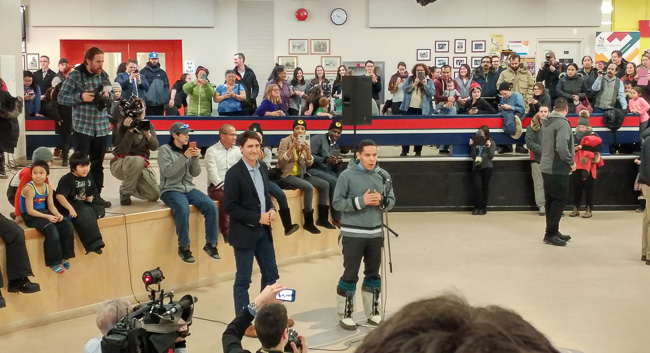
Prime Minister Justin Trudeau visited Iqaluit for signing of a new Inuit-Crown Partnership.
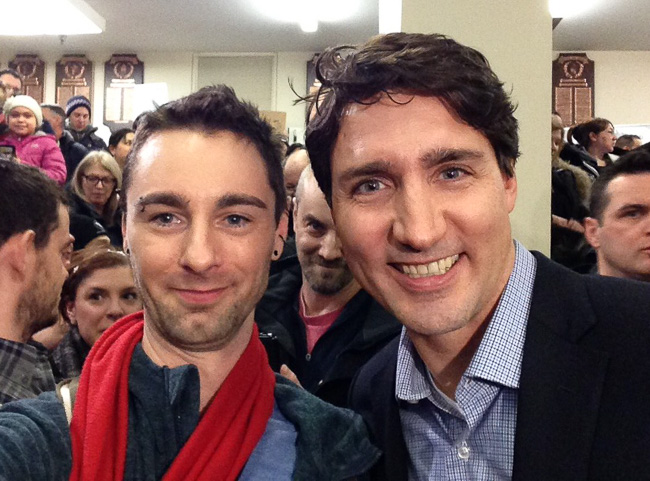
While there, the PM got a chance to meet three CANDAC members, one of whom is our own Purple Crow Shannon Hicks, along with U of T grad student Dan Weaver, and Aubryn O’Grady (CANDAC outreach coordinator), who were visiting Iqaluit as part of the NSERC CREATE program.
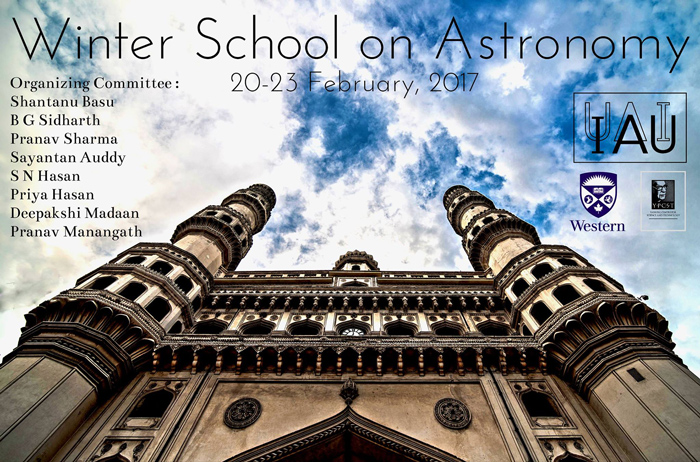 The Winter School on Astronomy is a four-day educational and cross-cultural rendezvous of astronomy targeted to university students. The school intends to inspire and breed a new generation of astronomers.
Our goal is to bring opportunities for astronomy training and discussion with high-level experts for the young bright minds in the developing world. Invited lecturers will teach various topics in theoretical and observational astronomy. Hands-on exercises will equip the students with various tools in astronomy and data analysis. The last day will feature a a research workshop on stellar clusters that will introduce students to the latest developments in the field.
The school is unique in many ways, including its inclusivity of all disciplines. It is the second in a series, with the inaugural school being held in Agra, India. This school, held in Hyderabad, India, has participants from most states of India and from many developing countries. In total, students from nine different countries are registered. The event also promotes cultural exchange and awareness between students from the developed and developing world. Interaction between
students and between lecturers and students are high priorities. Career counseling by lecturers through discussion groups and informal interactions is another important part of the school.
With almost one hundred participants, this is a unique event that reaches out to all of Asia and beyond.