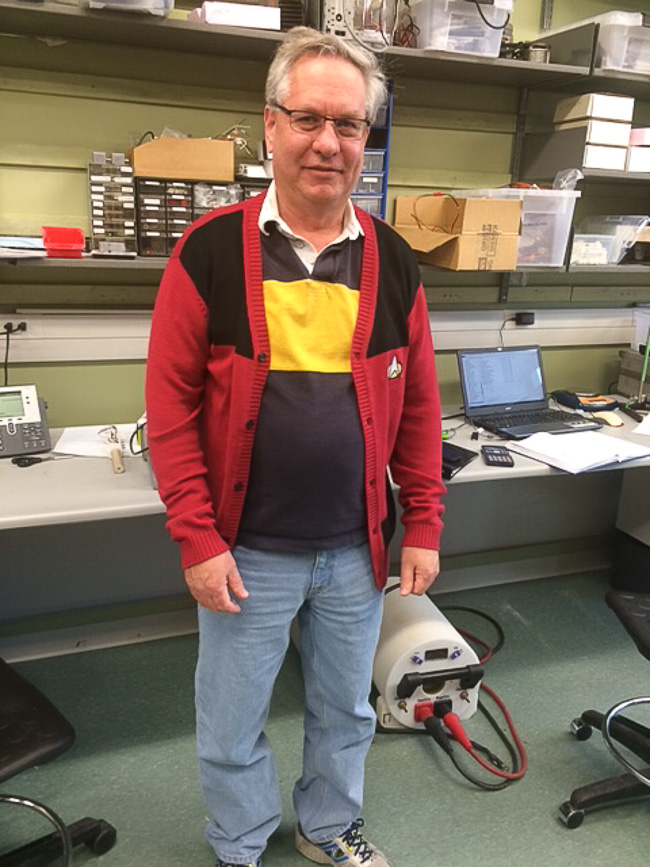
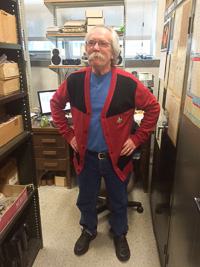
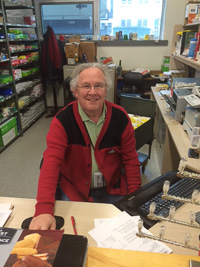
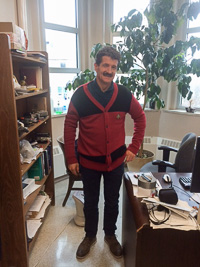
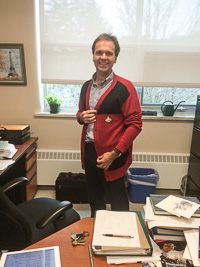
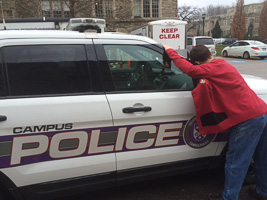
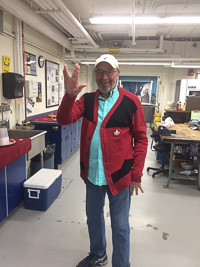
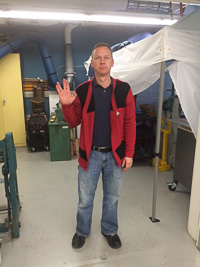
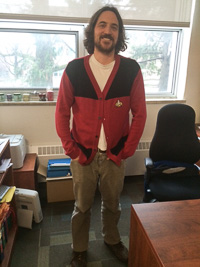
Physicist recovering after traumatic theft of Star Trek sweater

As perhaps relevant background information, it has been well determined by scholarly study that the  average number of nerdy, geeky researchers per science department at Canadian universities stands at around 1.7 for males, and  0.46 for females.
Wills_ST_sweater-2
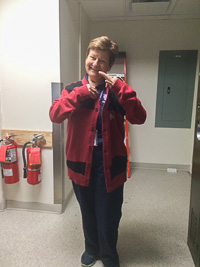
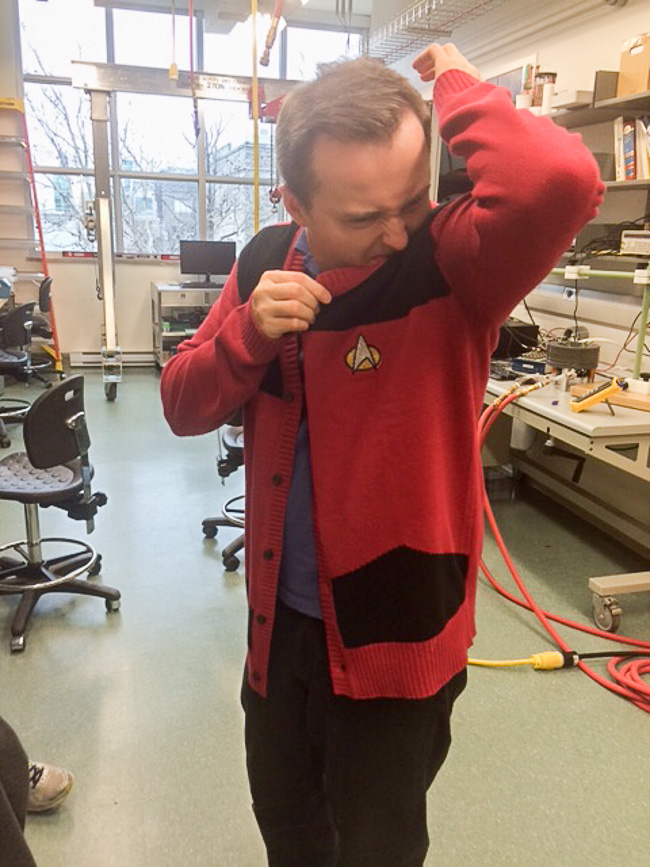
“This one is mine”, said Krys. “I can smell the difference.”

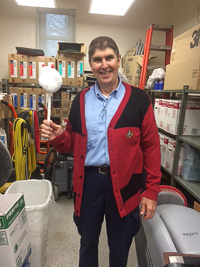
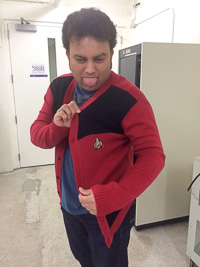
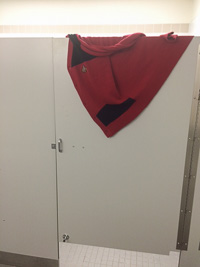
The theft of a valued Star Trek sweater from one of ‘this’ cohort in our department has left people shaken, angry, and scared.

“It’s like taking a pacifier away from a baby”,  related technical staff member Henry.

“He’s okay now, but it was touch and go until we knew that the sweater had been recovered”, said boss Blaine.

“We thought that it was an April Fools joke,  perhaps perpetrated by those who pulled our leg about London considering an LRT system”, said Chair Bob.
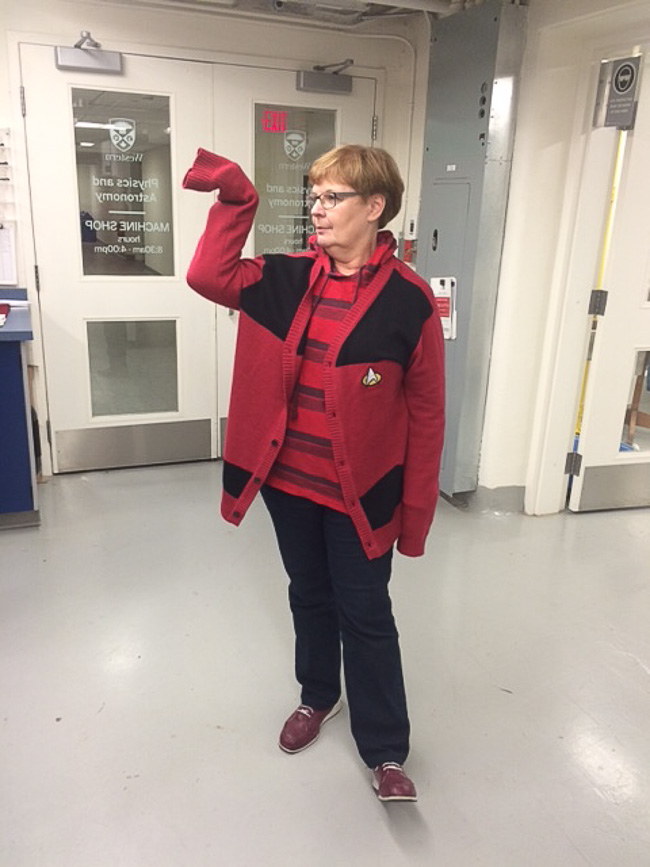
"I don't even like red", said Lauraine.
“I don’t even like red”, said Lorraine.

Volunteers scoured the building after the sweater had been reported missing yesterday.  The victim was covered in a blanket and kept warm and strapped down to his chair, “For his own safety”, admitted Chair Bob.

He was later taken to be cared for by his young daughters. “They know how best to calm him”, said wife Sheila.

“Everyone is just so relieved that the sweater was found, tucked behind the victim’s own Star Wars lunch pail and Toy Story thermos on his desk”, said office mate Geron.
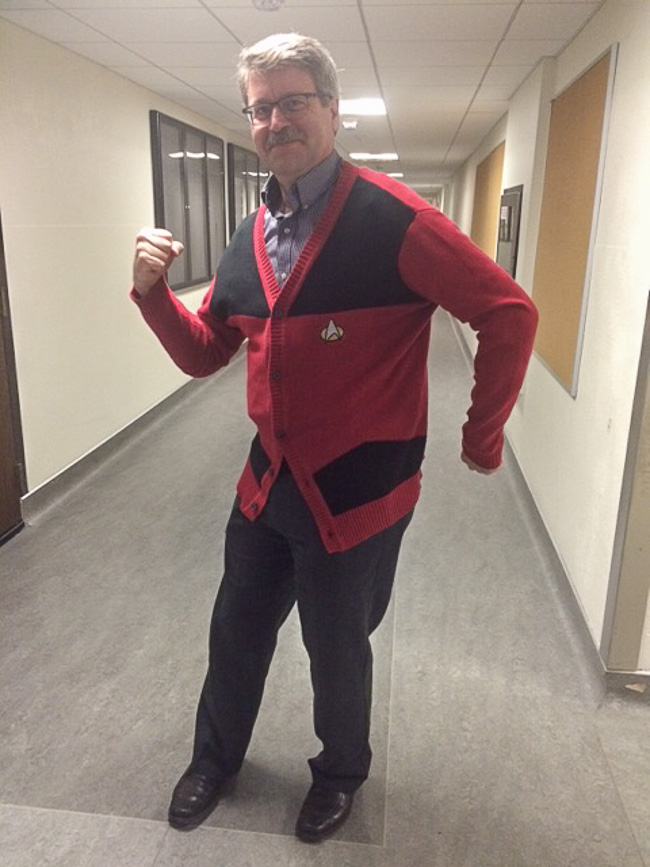
"Well, I guess that I would look pretty good in one of these", said scientist Tim.
“Well, I guess that I would look pretty good in one of these”, said scientist Tim.
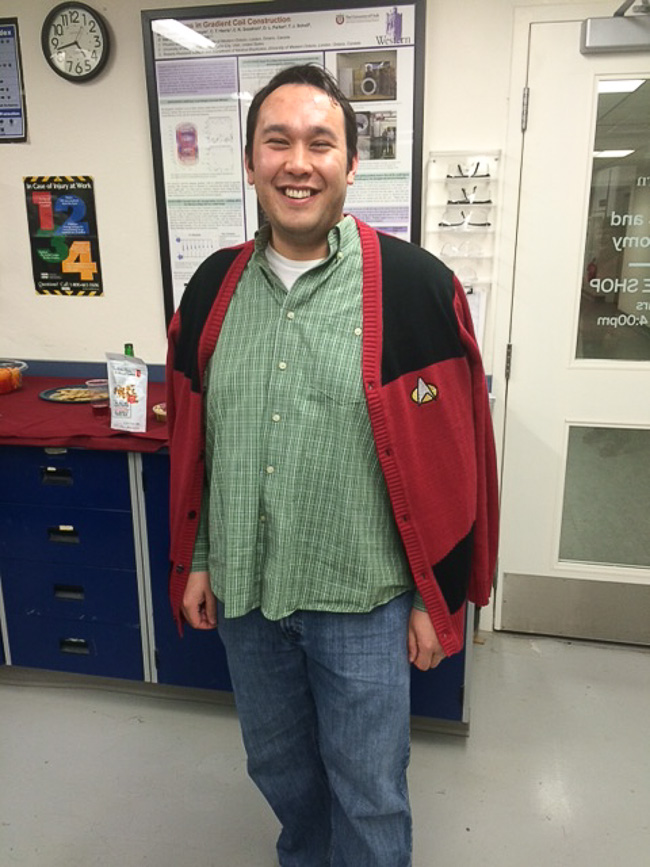
"We could use this in our experiments", said Michael.
“We could use this in our experiments”, said Michael.
"I didn't even like Star Trek", admitted Jack.
“The fit is a bit tight”, admitted Jack.


“He often tells us that his things have gone missing, but we normally never believe him. This time is seemed different. Luckily there was a happy ending. Still everyone is quite relieved”, said staff member Brian.  “And I had nothing to do with it”, he added.
Wills_ST_sweater_200px-6
“I think your sweater is sexy”, said Frank.
Wills_ST_sweater_200px-7
“He’ll never get this back”, said Doug.
Wills_ST_sweater_200px-8
“We’ll stock these from now on”, said Phin.
Wills_ST_sweater_200px-9
“I’ll propose to make these standard attire at the radar site”, said Zbig.
Wills_ST_sweater_200px-10
“Now I just need my gap wedge”, quipped Martin.
Wills_ST_sweater_200px-11
Brian was held 4 hours for questioning.
Wills_ST_sweater_200px-12
That’s certainly not Spock with arthritis. Well done Peter!
Wills_ST_sweater_200px-13
“Let me show you my tent”, invited Ryan.
Wills_ST_sweater_200px-14
Emira likes it !
Wills_ST_sweater_200px-15
Mike looks comfy.
Wills_ST_sweater_200px-16
Shailesh will eat anything.
Wills_ST_sweater_200px-17
Shailesh, after eating anything.
Wills_ST_sweater_200px-18
Almost Habs colours.

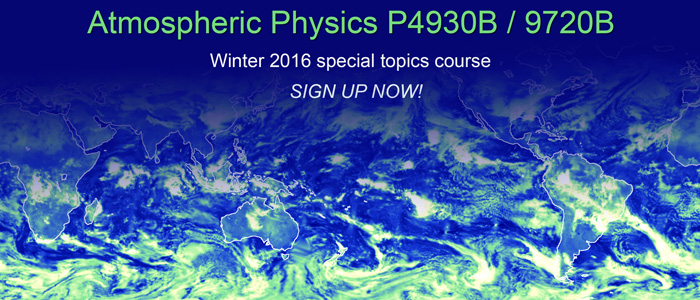
NEW – Atmospheric Physics special topics course – winter 2016


P4930B_2016_banner[view this page on the Physics and Astronomy web site]

An opportunity exists in the Winter term to take a course in atmospheric physics. Modern atmospheric physics studies the entire Sun-Earth system, starting with the radiation and particles emitted by the Sun and ending with the distribution of that energy into the atmosphere causing weather. We are familiar with weather on the surface, but you may not realize the weather you experience is the result of wave interactions on scales from 10s to 1000s of meters that couple the surface with processes that occur 100s of km in altitude above the surface.

  • Atmospheric science is highly interdisciplinary and addresses some extremely important problems that are important to maintaining our current lifestyles. The course will introduce the physical processes necessary to understand problems such as the following:
  • anthropogenic (human) effects on climate (e.g. in the recent Paris Climate Change Conference, why a 2 K temperature rise and how robust is this prediction)
  • Antarctic (and now Arctic) ozone holes
  • El Nino events; the El Nino forecast for this winter will be one of the 3 largest ever observed and will affect weather in Canada
  • atmospheric waves
  • space weather (space weather is weather associated with the interaction between Earth’s neutral upper atmosphere and the ionized solar wind).
Join us in gaining an understanding of these interesting topics by enrolling in our special topics course Physics 4930/9720 in the Winter term 2016.

Fallona Family Interdisciplinary Showcase 2015

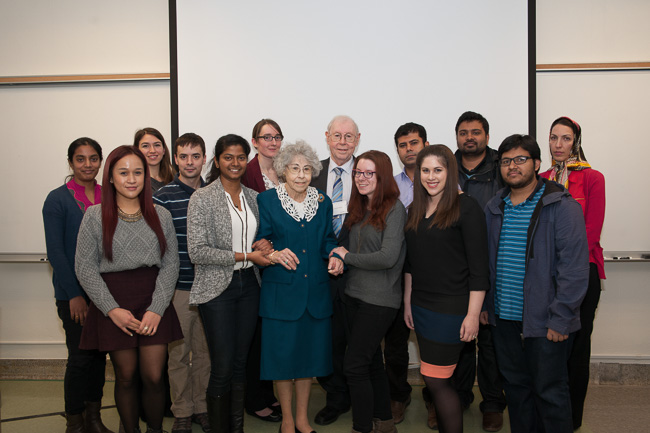
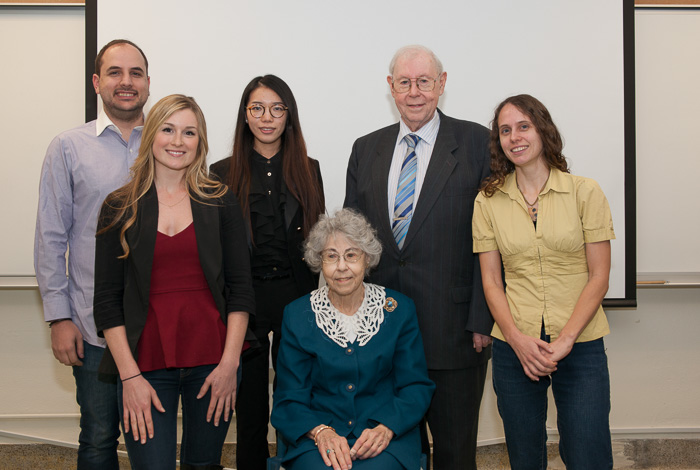
Mary Catherine Fallona (front centre). and James Fallona (rear centre) with the Three Minute Thesis presenters.

The second annual Fallona Family Interdisciplinary Showcase was held in the Physics and Astronomy building on Tuesday, December 8, 2015.

This successful event is a result of the generous support and vision of Western alumni Mary Catherine and James Fallona.

The first international winner of the Fallona Interdisciplinary Science Award was Professor Jocelyn Millar of the University of California, Riverside.

Professor Millar’s keynote presentation was titled, “Travel with my ant: Deciphering the chemical languages of insects.”

In addition, a group of 13 Western science graduate students from all disciplines gave Three Minute Thesis presentations on their research topics.

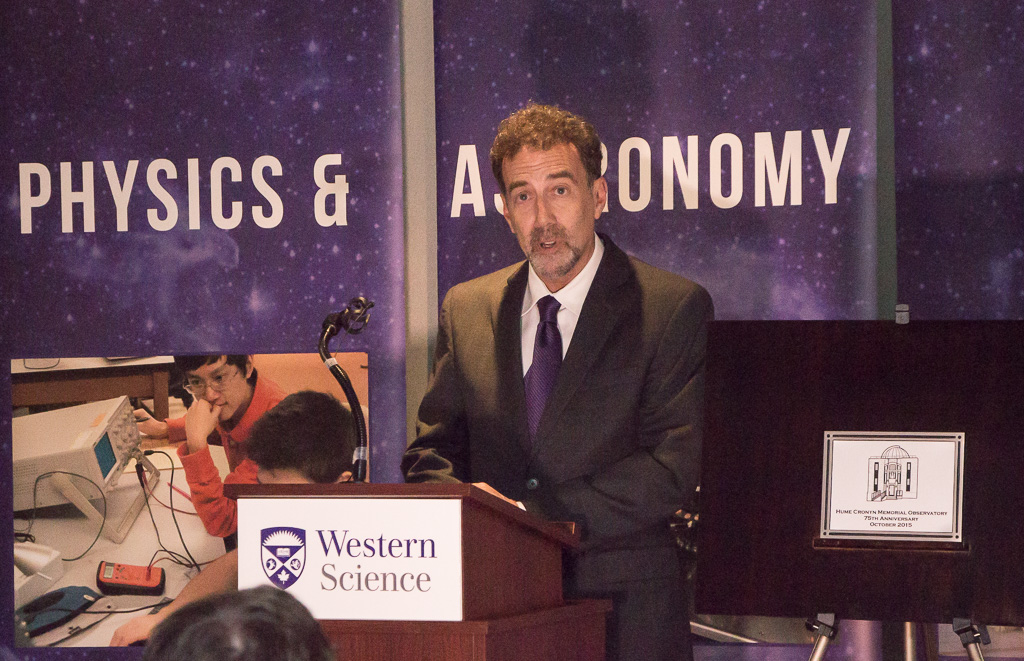
The introductions and opening remarks were made by event organizer, Special Advisor to the Dean of Science (Research) Martin Houde, along with the Dean of Science, Charmaine Dean.

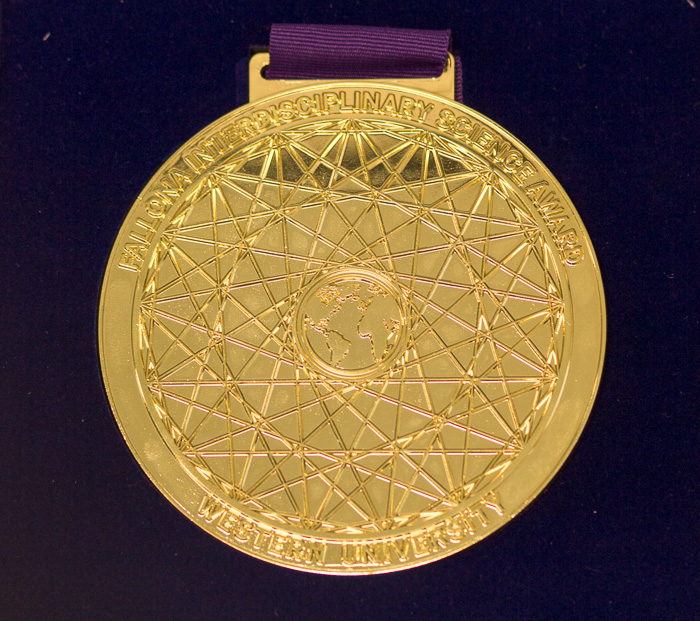
After oral the presentations, James Fallona spoke of his passion for intersdisciplinary studies, giving everyone a fascinating insight into the design of the medal which is presented yearly to the award winner.

During the afternoon, approximately 110 posters were on display throughout the atrium of the Physics and Astronomy building. Graduate student researchers were on hand to discuss their research posters while everyone enjoyed light snacks and drinks after the oral presentations.

The Physics and Astronomy building atrium was a showpiece, being geometrically arrayed with newly acquired poster boards all adorned in deep Western purple.

A group of faculty judges chose poster winners and runners-up from four categories of interdisciplinary sciences.

The Three Minute Thesis presenters from the Department of Physics and Astronomy were:

  • Shayamila Gamage
  • Ali Jalali
  • Pubuditha Abeyasinghe
  • Sivayini Kandeepan
  • Jeffrey VanKerkhove

[images on Flickr]  [Physics and Astronomy highlights on Youtube] [check Western Science for more images and all videos]


The Fallonas along with the poster prize winners.
The Fallona Family Interdisciplinary Showcase Award medal.

Volunteerism Matters – “Saving Canada’s Largest Telescope” – Paul Mortfield at TedXMarkam

Paul Mortfield, Director of David Dunlap Observatory, gives a brief, but passionate account of how volunteers from the Royal Astronomical Society of Canada helped to save Canada’s largest telescope.

Paul was an honoured guest at the 75th Anniversary celebration of Cronyn Observatory, and he partook in the re-enactment of the original opening ceremonies.

Paul Mortfield is, amongst other things, Director of the David Dunlap Observatory in Richmond Hill, Ontario.
Paul Mortfield on October 24, 2015,  re-enacting the part of Dr. Clarence Chant, who was Director-emeritus of David Dunlap Observatory in 1940 when the Hume Cronyn Observatory was opened.


Support for Christmas Angel tree initiative is overwhelming

Angel_tree_gifts_11Dec-1
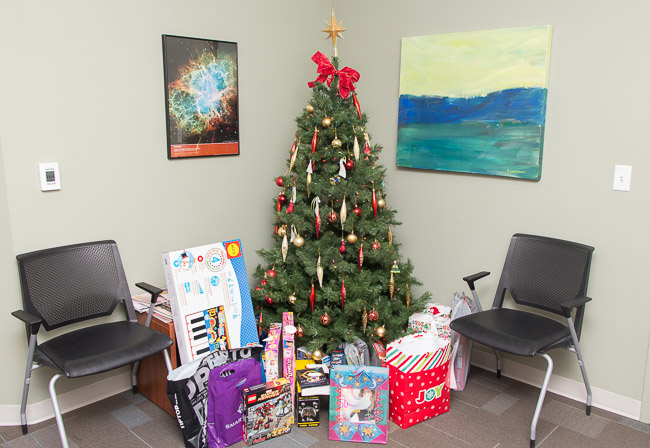
A mountain of Christmas gifts.

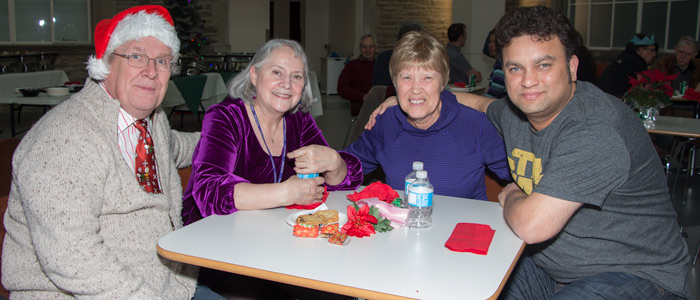
The Angel tree campaign of the St. Vincent de Paul Society, has had overwhelming support in the Department of Physics and Astronomy.  Numerous gifts are now arranged under the tree, waiting to be distributed to needy children.

Thanks to everyone for their generous donations, and to Joanne, Jodi, Brian, and Keri for organizing.

Tandetron lab highlighted on Western Top 100 Employer site

Jack_tandetron_Western_top100_Employer_smAccording to Wikipedia, Eluta is a Toronto based Canadian job search engine owned by Mediacorp Canada Inc., a company that specializes in employment based publications.

One of Eluta’s projects is a list called  Canada’s Top 100 Employers.

Western University has made the list for 2016.

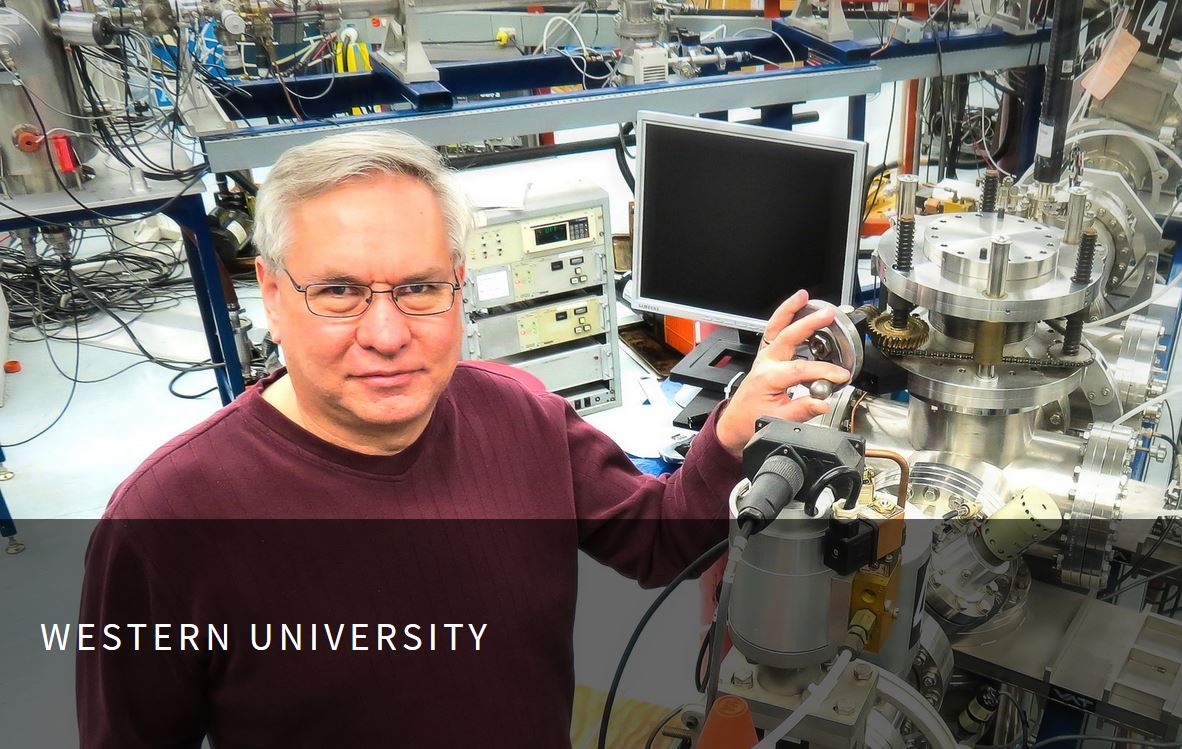
On the cover of the Western winner’s page we find Jack Hendricks at the Tandetron lab of the Department of Physics and Astronomy.