Astronomers develop sensitive technique for detecting and tracking asteroids

metchev_asteroid_detection

Western astronomer Stanimir Metchev, recent MSc graduate Joseph Trollo, and Stony Brook University postdoctoral fellow Ari Heinze have dramatically refined the science of asteroid hunting.

Heinze, Metchev, and Trollo have developed a revolutionary rapid digital photographic image scanning technique that allows them unprecedented access to information about our enigmatic neighbours from the asteroid belt.

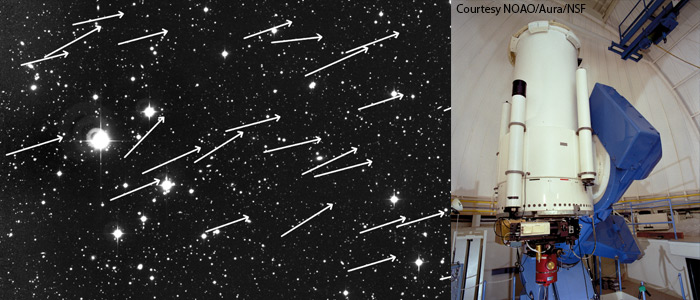
First of all, they took the old technique of looking for asteroid trails and stood it on its head. Instead of looking for asteroid trails on the image, they shift and stack the images so that the background stars appear to have trailed, while the images of detected asteroids become points on the photograph. This yields a far superior signal to noise ratio and thus provides for asteroid detection that is 10 times more sensitive than is possible with other techniques.

Not stopping there, Heinze and Metchev developed a technique they call Rotational Reflex Velocity (RRV) distance measurement.  RRV lets them determine a distance to the newly detected asteroid with only a day or two between observations. Traditionally such a parallax based distance measurement would have taken a large telescope perhaps a week or more to achieve.

The initial observations were done using the 0.9m WIYN telescope at Kitt Peak in Arizona.

[Discovery News article]  [NOAO article]
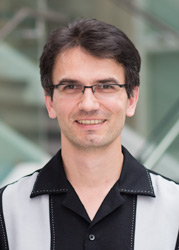
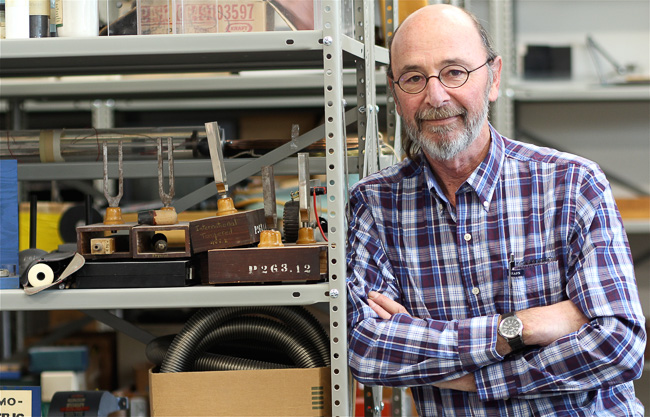
Stanimir Metchev
Stanimir Metchev
Joseph Trollo
Joseph Trollo
Ari Heinze
Ari Heinze

Visit by the Boys and Girls Club of London

Boys_Girls_Club_visit_19Aug2015

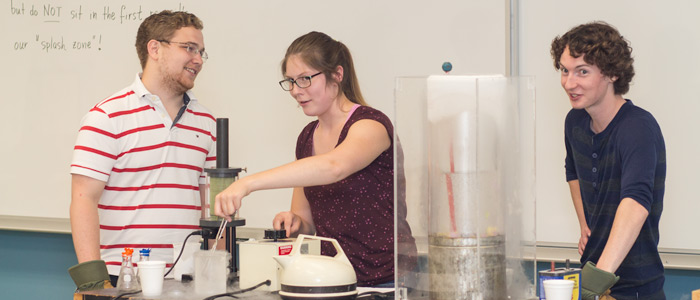
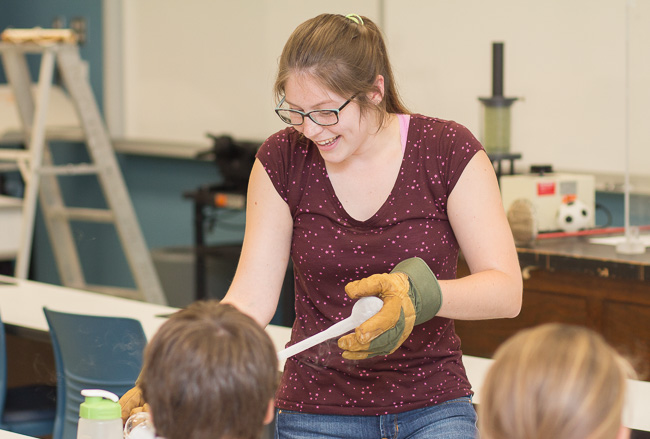
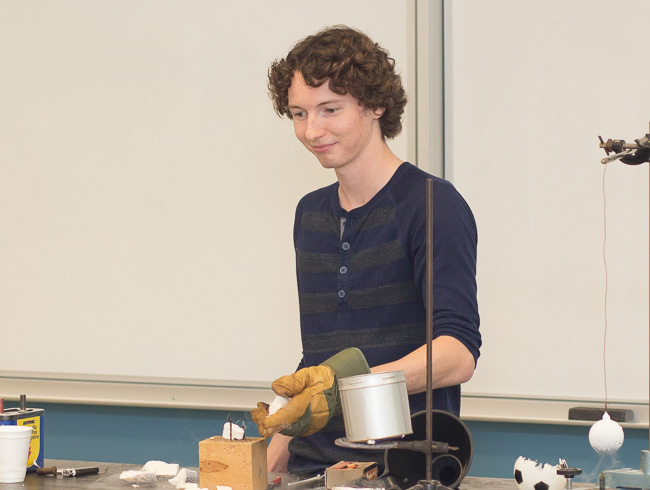
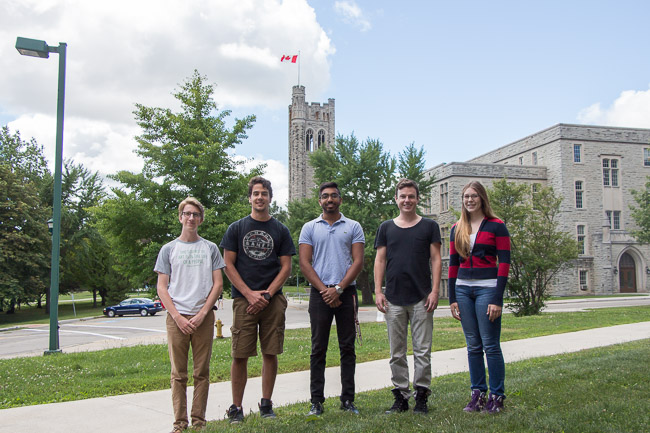
Three talented undergraduate volunteers, members of the Physics and Astronomy Student Association (PASA), welcomed two large groups from the Boys and Girls Club of London on August 19, 2015.

Staff member Peter Frank coordinated the demonstrations and equipment.

At their stop in the Department of Physics and Astronomy, the groups of eager youngsters were treated to the fascinating world of low temperature physics by way of a liquid nitrogen demonstration.

[images on Flickr] [images via Lightroom]

Our volunteers:

bg_club_650px-1
Nathalie
Ian
Ian
Jonathan
Jonathon
Peter
Peter


Western Astronomers involved in milestone extra-solar planet discovery

Metchev_51_Eridani_b_2015_d

The Kepler Space Telescope sees extra-solar planets by way of their shadow.

The Gemini Planet Imager sees their glow.

Professor Stanimir Metchev and his research group were co-investigators on an international effort that yielded the faintest and coldest planet ever discovered by the method of direct imaging.  Principal investigator is Dr. Bruce MacIntosh at Stanford University. Named 51 Eridani b, this should be the first of many new extra-solar planets to be found by the new Gemini Planet Imager.

Also involved are Stan Metchev’s group members Juan Sebastian Bruzzone (PhD candidate at Western) and Rahul Patel (PhD candidate at Stony Brook University).

The 51 Eridani system is interesting for many reasons.  Metchev’s team had previously discovered signs of an existing asteroid belt, while the Herschel space telescope has seen evidence of a cometary belt.  Thus, this young 20 million years old planetary system already has more than a passing resemblance with our own solar system.

The discovery has been published in the current issue of Science magazine.

[Western Media Relations article]

[Western Worlds Podcast]


NSERC USRA winners working within the department this summer

nserc_usra_2015_650-1

The Department of Physics and Astronomy has a contingent of 7 undegraduate students working this summer who are winners of the NSERC USRA (Undergraduate Summer Research Award) for 2015.

The students are:

  • Kevin Bloxam
  • Dylan Del Papa
  • Tristan Flemming
  • Sumit Sharma
  • Jagan Sivakumaran
  • Nathalie Thibert
  • David Uren

Congratulations to all of the awards winners, and we hope that your summer of research at Western will leave you with great memories.

Specialized MRI development initiative receives CFI funding

MRI_coil_manufacture_650-1
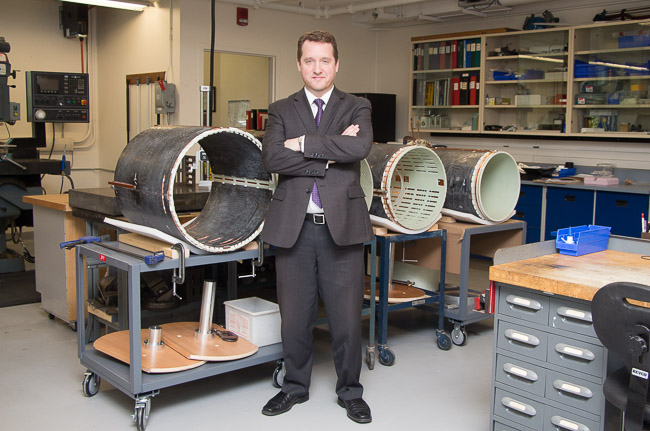
Prof. Blaine Chronik with some  MRI system components.

While “Smaller, lighter, cheaper, and easier to use” rings a bit like the Olympic motto, we need to look up to find a more suitable analogy, because Blaine Chronik’s MRI Development Lab is trying to go where no MRI system developer in Canada has gone before.

Blaine’s MRI Development Lab has received CFI funding for the development of specialized MRI systems that have the potential to be function specific, mobile, and must cheaper and smaller than existing MRI machines.

Read the full story at Western Media Relations.