I was looking for interesting images of capacitors to use in an upcoming lecture, and found this.
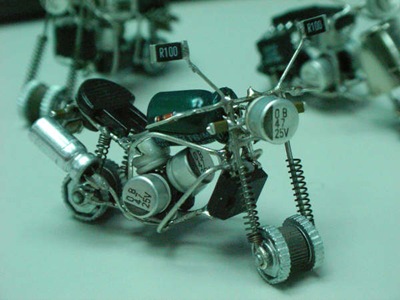
There are others here: http://www.amusingplanet.com/2008/09/capacitor-bikes.html

I was looking for interesting images of capacitors to use in an upcoming lecture, and found this.
There are others here: http://www.amusingplanet.com/2008/09/capacitor-bikes.html
Look at the horizon in this picture….
! 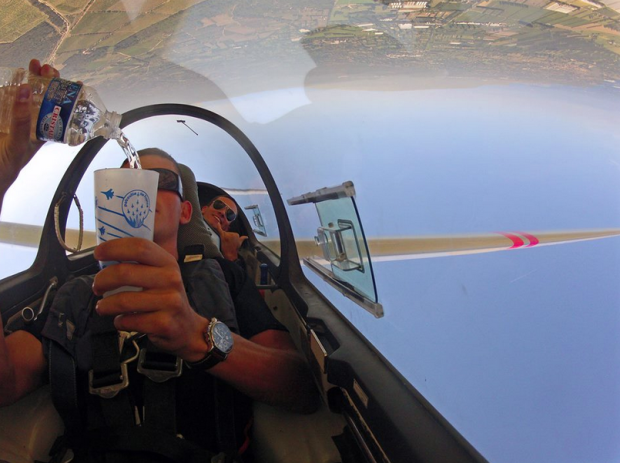
My son showed me this picture; it comes from http://richardwiseman.wordpress.com/2013/09/10/can-anyone-explain-this-2/
This article from gizmodo.com confirms my belief that your average bug (or Mother Nature, at least) is way smarter than we are: http://gizmodo.com/this-insect-grows-its-own-microscopic-gears-to-move-abs-1302488227
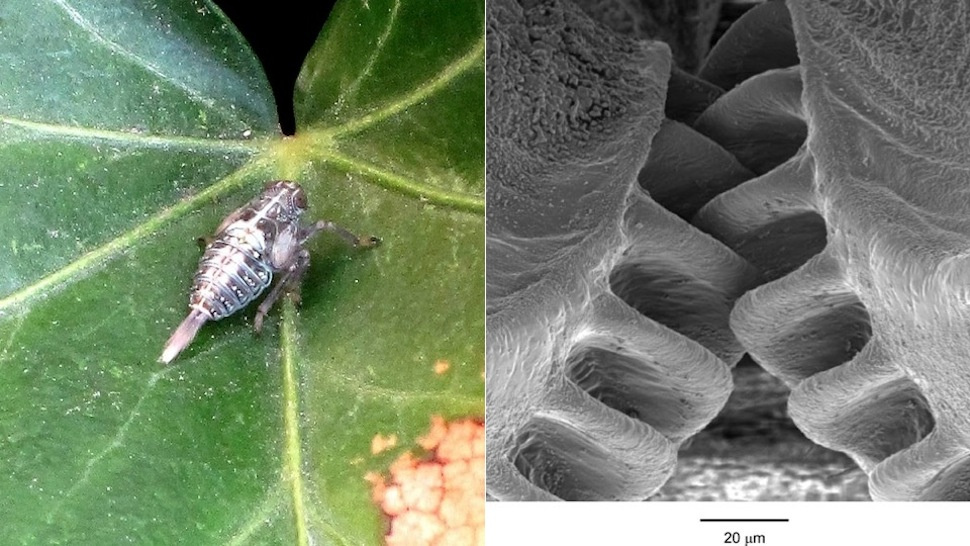
Seems that this particular kind of teenage bug has evolved bio-gears to help it jump, giving it an acceleration of a whopping 400 g! Pictures are from the website above. The adults are more responsible, of course.
Here is an interesting article from BC:
http://www.theprovince.com/business/university+degrees+losing+their+value/8855657/story.html
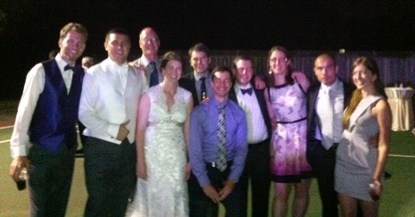
The Department of Physics and Astronomy was well-represented at the wedding of Erin Kennedy (B.Sc. in Physics, 2011) and Andrew Dittmer (B.Sc. in Physics, 2010), which took place Saturday, August 24, 2013. Erin and Andrew met when they were on the executive of PASA. Erin is now teaching in Waterloo, and Andrew works for Trudell Medical in London. The happy couple plans to live in Woodstock, because, of course, compromise is a key to a successful marriage. Shown in the photo (L-R) are past and present P&A Department members Matt Quinn, Andrew Dittmer, John de Bruyn, Erin Kennedy, Justin Bondy, Peter Legg, Sam Chippin, Allison Hill, Alex De Souza, and Natalie Kehl. All their friends in the Department wish Erin and Andrew the best!
The fraction of Americans who “believe in” global warming has dropped from 70% to 63% over the last six months, according to this article:
Only 42% of those surveyed believed that there is consensus among scientists about climate change. To quote from the article, “This is a problem – both because it is so at odds with reality, and because it likely helps prevent more Americans from recognizing and accepting some pretty straightforward scientific realities.”
Here is a very neat video with high-speed videos of breaking glass. You will be amazed.
http://t.co/FXqDUtMcrE
It is well known to faculty members that the relatives of students tend to become ill and/or die much more frequently during exam and midterm season than at other times of the year. I was delighted to find a serious (?) statisitcal analysis of this phenomenon here:
http://www.math.toronto.edu/mpugh/DeadGrandmother.pdf
The data clearly indicate that the likelihood of a student’s relatives dying during exam time is strongly correlated with the student’s grade. One conclusion of this paper is that relatives of students worry themselves to death over their loved ones’ academic progress. The study recommends, among other things, that only orphans be allowed to attend universities. Unfortunately, the study is a bit out of date (1990), but I bet things haven’t changed much in the last twenty years.
There is an interesting article on the back page of the latest issue of APS news about using the GRE exam as part of the admission criteria for physics graduate programs. It’s also available on-line here: http://www.aps.org/publications/apsnews/201302/backpage.cfm
Here is a short excerpt:
Of these [physics grad programs], none … have concluded the GRE predicts success in research …. Our analysis finds that the QGRE correlates with only one metric, the graduate GPA (but it is such a weak correlation the scientist in me rebels when fitting it to a line). That said, we find undergraduate GPA to be a better predictor of graduate GPA.
I’d like to remind you to take the time to fill out NSERC survey about the findings of the CCA report on funding science research. This report, and the feedback NSERC receives about it, will have an important influence on the reallocation of funds within the Discovery Grant program, and in the allocation of any future funding increases.
The survey is at: www.nserc-crsng.gc.ca/NSERC-CRSNG/Reports-Rapports/Assessment-Assessment_eng.asp
It took me about 45 minutes to complete. It is a horrible survey, and both the questions and the way they are worded are complicated. You should read at least the executive summary of the CCA report (on the CCA website) and the document outlining the CAP’s response (which CAP members received by email recently). But it’s important!