All posts by Jan Cami

Awesome simulation

Computer simulations are very common now in science, and sometimes the results are just awesome and pretty at the same time. Here’s an example of galaxy formation and mergers, and although there’s many such simulations out there, this one I find particularly impressive. Calculations were done on a supercomputer at the NASA Ames Research Center in California, for a total of 1 million CPU hours…..


Planet around one of our nearest stellar neighbours.

Astronomers have discovered a planet with a mass very comparable to the Earth, circling alpha Centauri B, one of our closest stellar neighbours merely 4 light years away! It’s a hot planet close to its parent star, but there’s probably more planets hiding in that system — and who knows, maybe one we’ll find one in the Goldilocks zone!

This finding is yet another indication that small rocky planets must be very common around stars — what would otherwise be the odds of finding one circling our nearest neighbour?


http://www.bbc.co.uk/news/science-environment-19959531

lookin’ at some o’ th’ weeest stuff

Cool images be common in astronomy, an’ ’tis quite likely that ye an’ yer astronome heartys be havin’ an impressive collection o’ pretty pictures o’ th’ heavens — some bein’ th’ largest objects a scallywag can be seein’ wi’ his very own one good eye!


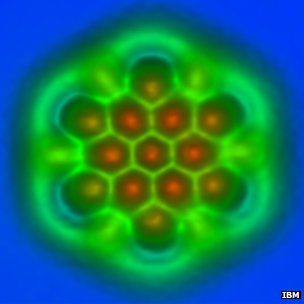
At th’ other end o’ th’ size chart be th’ stuff that makes up th’world around us. An’ thar`s another field ‘ere jaw droppin’ images can be made. Jus’ recently, a crew from IBM managed t’ obtain mighty detailed imageso’ a wee molecules — showin’ amongst others a visualization o’ th’ bonds between th’ atoms in carbonaceous molecules (polycyclic aromatic hydrocarbons fer instance) at a level ‘ere distortions be now measurable. Such images be an absolute breakthrough, an’ be important tests fer our knowledge o’ th’ physics o’ chemistry! As an astrophysicist wi’ an interest in chemistry, I’ave t’ pick up me jaw from th’ floor now….!


An’ I wish ye all a happy Talk like a gentleman o’ fortune tide!


Summer days in Asia, part I: Taiwan

Preparing classes would probably be the sensible thing to do right now, but instead, I decided to travel to Asia. I’ll be attending the 28th General Assembly of the International Astronomical Union (IAU) in Beijing, China from tomorrow on (more about that in a later post), but while “in the neighbourhood”, I also took up an earlier invitation for a work visit to the Institute for Astronomy and Astrophysics at the Academia Sinica (ASIAA) — say the equivalent of the National Academies. The institute has a staff of about 170 people under the directorship of Paul Ho, and is operated from a new and modern building on the campus of the National Taiwan University.


A key element in the operational model of the ASIAA are active
collaborations with some of the world’s leading institutes, facilities
and researchers. My visit came after an invitation from my friend and
collaborator Ciska Kemper. I’ve known Ciska since I was a Masters
student at the Leiden Observatory in the Netherlands in 1996, and we
both got our PhD from the University of Amsterdam in 2002. After a
Spitzer fellowship at UCLA and faculty positions at the University of
Virginia in Charlottesville and the University of Manchester, she took
up her current position at the ASIAA, where she is the ALMA project
manager.


After 29 hours of traveling (there is a 12 hour time difference
between London and Taipei, so it’s quite far away…), I arrived in
Taipei on Tuesday evening. It has been a fruitful visit, resulting in
several new collaborative projects about fullerenes, dust formation
and AGB stars. As it generally goes for work visits, I also gave a
colloquium, and had a very nice chat with Paul Ho (the ASIAA
director). In addition, there was ample time for social contacts, and
for exploring parts of Taipei and the surroundings. In Taipei,
appartments tend to be fairly small, and often do not include a proper
kitchen, and thus people go out for dinner pretty much every
evening. There’s a large number of restaurants and food stalls; at
street level, almost all building space is used for restaurants or for
shops. I enjoyed all sorts of different cuisines — Korean, Japanese,
Chinese, Shanghai-ese, … all very very yummy! I also gave a guest
lecture about Belgian beer in a pub that was all stocked up with such
liquid delights.


On Saturday, we took the Maokong gondola up to the Chi Nan temple, and
then on to the teahouses where we enjoyed the views, and fresh tea and
a few bites. Later that day, we visited the Taipei 101 — the second
tallest building in the world. Quite impressive! On Sunday, we decided
to go hiking in Yangmingshan National Park, up to the peak of Mount
Qixing which is the highest point in the park. It was — how shall we
say this — a fairly strenuous hike for a person of my fitness
level. In fact, it was brutal. The trail went up steeply at times —
apparently nobody around here believes in switchbacks and thus trails
go up steeply. And the tropics are great, but not so much when you’re
hiking. The temperature was about 36 degrees with a high humidity;
even higher up, it was still much hotter than is comfortable for a
normal human being….As if that wasn’t hot enough, the area is
volcanic and the trail passes over several very hot fumaroles. Along
the path were lots of pretty lizards, butterflies and a lonely
poisonous snake in a landscape of bamboo and other tropical plants and
flowers. I made it to the top, and probably had about 20 less liters
of body fluids to carry down the hill. But the views of the city and
out to the ocean were worth it! After hiking down and taking a very
wild busride back home, a cold shower and a good Japanese dinner by
the water made us forget most of the painful muscles.


And so the week has gone by quickly! Tomorrow I’m off to Beijing and
the IAU GA, but that’s for another time!
 

Ordinary Physics solves another mystery.

For several years, the known laws of physics seemed inadequate to explain what should have been a simple physics textbook exercise: the trajectory of the Pioneer spacecraft through the outer Solar System. The Pioneer 10 and 11 probes were launched in the early seventies in preparation for the later Voyager Planetary Grand Tour. The mission was a success, and by the eighties, both Pioneer probes were minding their own business well beyond the orbits of Jupiter and Saturn. In the absence of significant gravitational forces other than from the Sun, the expected trajectory is easily calculated. However, telemetry data showed that both probes were systematically slowing down just a tiny bit more than could be expected from the gravitational pull of the Sun alone. Scientists were baffled and tried to come up with all sorts of hypotheses to explain what became known as “The Pioneer Anomaly”. In spite of the fact that the Voyager probes did not show this effect, some scientists even suggested that our theory of gravity needed revisions.

This week, there is finally an answer. After many years of painstakingly collecting all the necessary data, scientists have convincingly shown that the effect is due to thermal radiation. The effect is tiny, but over the long distances that the Pioneer probes have flown (check out their current position), it becomes noticeable. Too bad for sci-fi writers in need of new inspirational physics, but once more, ordinary physics saves the Universe!

The impressive efforts undertaken by the researchers are described in this story from sciencedaily, but you physics buffs probably want to jump straight to the paper in Physical Review Letters.


A big WOW! and an even bigger THANK YOU!

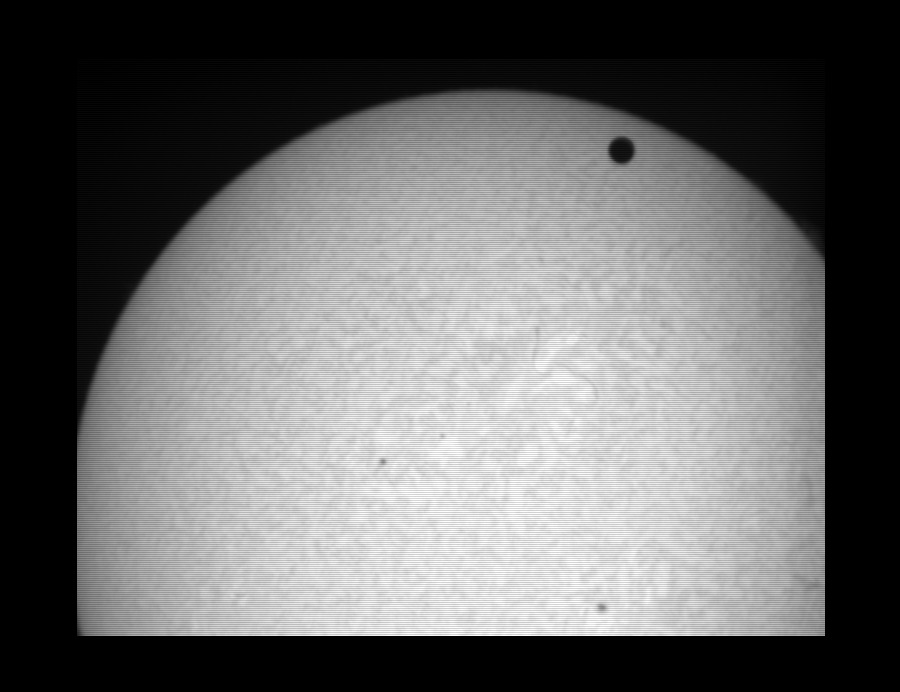
Think about it: the big whitish ball is about 3 times further away than the little black dot. Gosh, that Sun must be a massive ball of gas, and our fair planet must be small and almost insignificant.

And then, two things happened that in my mind occurred instantaneously and simultaneously. Suddenly, all the clouds were gone, and suddenly, there was a crowd. And let me tell you: I’d rather have a crowd than a cloud in these circumstances.

The clouds stayed away for the rest of the day (contrary to the forecast), and through the different telescopes or with the eclipse glasses (courtesy of the Dunlap Institute), the views were spectacular. Venus looked great through the Solar telescope with a prominence near the solar limb; and one of the most impressive sights for me was through our 8 inch Schmidt-Cassegrain telescope manned by Bob Duff (I didn’t manage to look through all telescopes). When I looked, that setup offered the best illusion of depth that I’ve seen all day, maybe aided by the level of detail seen in the sunspots! If you take the time (in your mind) to put the Sun more than three times further away than the little dot Venus, you realize how much smaller planets are than the Sun… humbling!

And yes, there certainly was a crowd. We had 1,000 eclipse glasses to distribute, but they were all gone *before* second contact, by about 6:15pm. There were many more people showing up after that, so we must have had somewhere between 2,000 and 3,000 visitors. That’s *WAY* more than I had hoped for, and I cannot thank our friends from the RASC enough to show up in such numbers. We certainly could not have handled such a crowd alone — it’s a great example of collaboration!

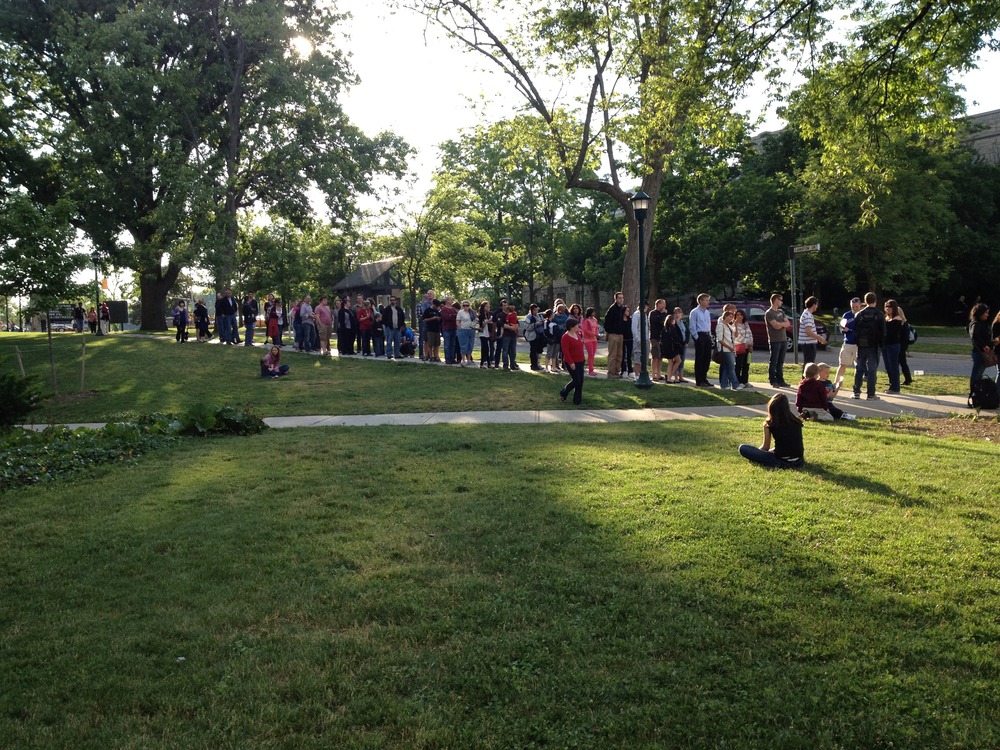
Similar scenarios of crowd overload were unfolding at the Cronyn observatory. I thought I had seen people in a long, neverending line when our Astronomy 1021 projects were going into their last week.  I was wrong. Judge for yourself; I have never seen something like this at Cronyn (picture taken facing away from the observatory, looking in the direction of Western road; if you’re not familiar with Western you should know that what you’re seeing here is only a very small part of the actual line. The people in the picture here would probably have to wait in line for about 2 hours to get to the telescope….).
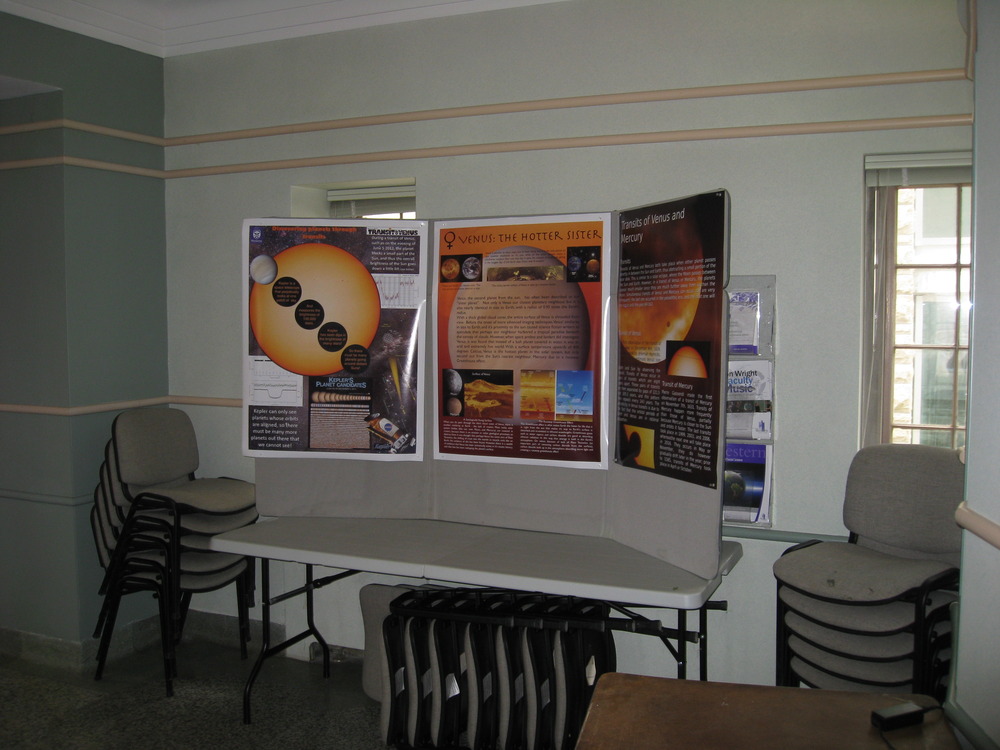
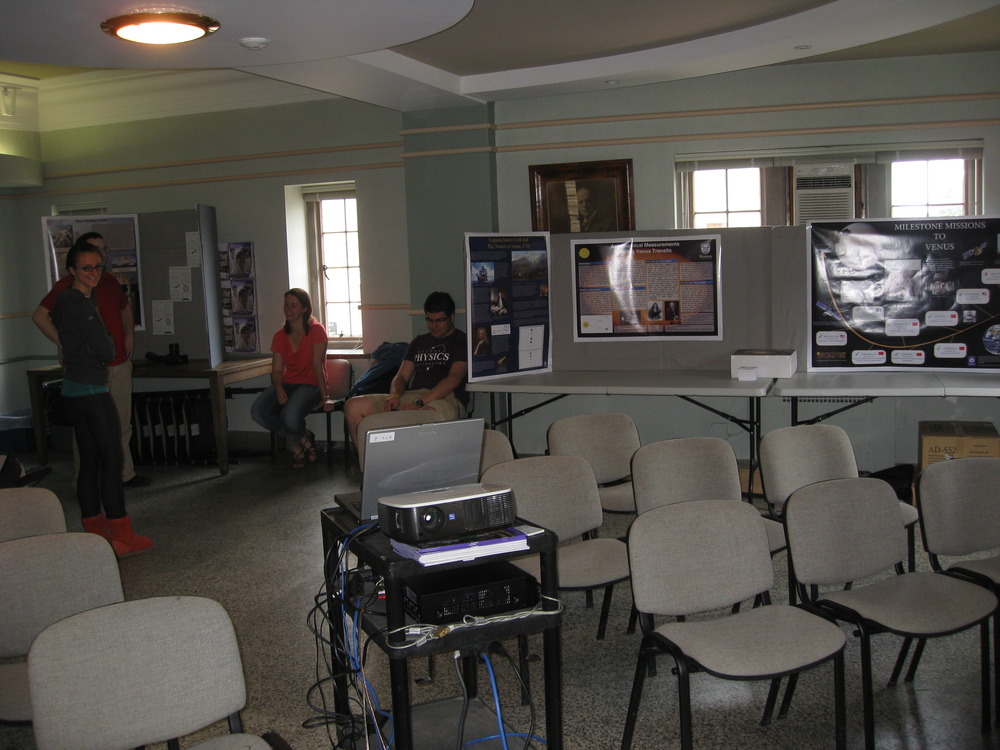
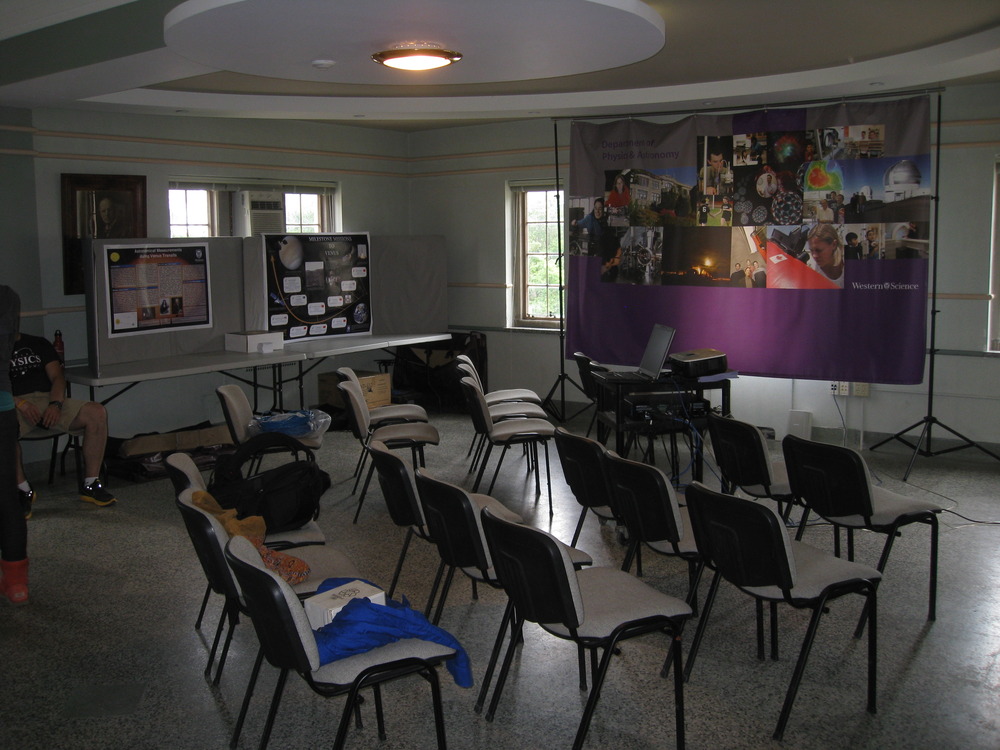
At Cronyn, we had a live feed of the event from Hawaii in the conference room as well as in the dome upstairs, and we also had a small exhibit with 8 custom-made posters about Venus, transits or related topics made especially for the event, many made by students. A nice addition was a poster from my colleague Kelly Olson from the classics department about Venus and Aphrodite in the classic culture, with some augmented reality (several Venus statues).
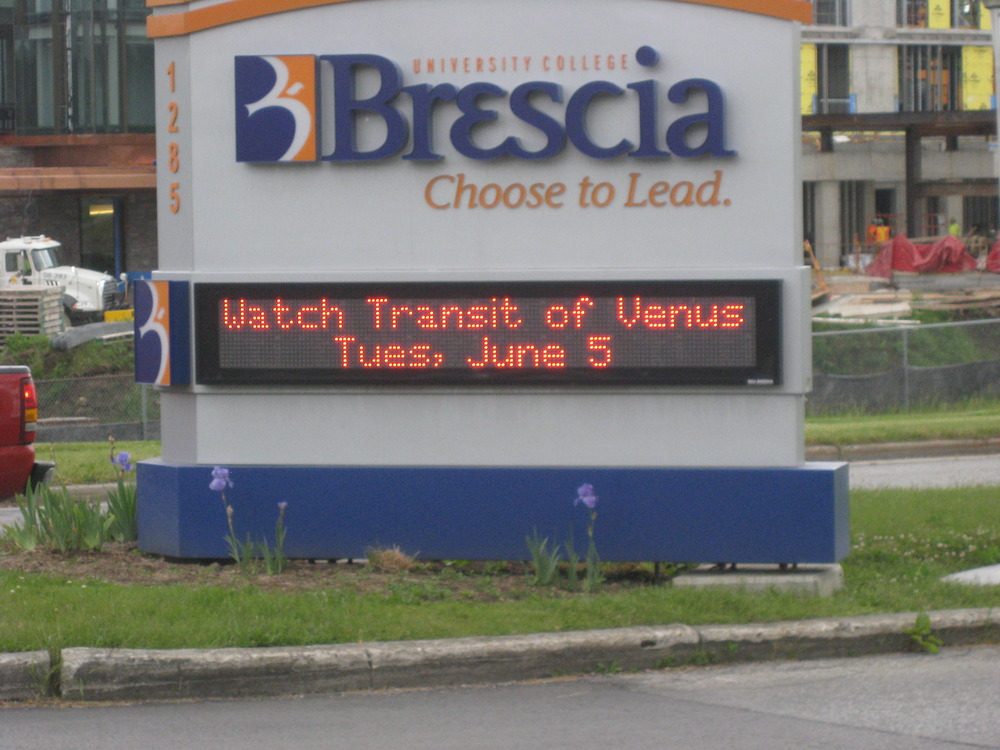
If we had a crowd, it may have been partly due to some advertising. In addition to newspaper, radio, TV and the interweb, we catered to our 4-wheeled friends on the road. Whoever had to stop for a red light, couldn’t avoid it:

So I think this was a great success, beyond any expectation. As humbled as I am by the cosmic alignment and sense of scale, it was the crowds and the fact that our team could accomodate them that just blew my mind.

Let it be clear that many people made this event the success it was, and I want to thank each and every one of them for representing the Department of Physics and Astronomy in such a brilliant way, and for creating an unforgettable memory. I would like to especially express my sincere gratitude, appreciation and admiration though to Henry Leparskas. For this event, he was my right hand, left hand, both feet and my brain at the same time. I guess that only my belly was still fully my own (although Phin is responsible for part of that as well). Henry had a hand in pretty much everything — web site, all posters, buttons, cards, signage, ads, telescopes, …. — and his experience was invaluable. He was on site at 7am, and left Cronyn near 11pm. So thanks Henry — you made this work from the beginning to the end!

As I said, this was a team effort, and all of the players were necessary for success. So a big big thanks also to: Phin Perquin, Peter Frank, Brian Dalrymple, Nelia Andrade Lo Russo, Clara Buma and Jodi Gutrhie; Kelly Olson, Sarah Gallagher, Els Peeters, Pauline Barmby, Allison Hill, Dilini Subasinghe, Farhang Jalilian, Annemarie Pickersgill, Patrick Cookson, Gabe Keenleyside, Sarah Dawson, Laura Lenkic, Robin Wing, Alexander DeSouza, Alyssa Gilbert, Raymond Francis, Tyler August, Michael Bramble and others from the Centre for Planetary Science and Exploration (CPSX); Bob Duff, Peter Jedicke, Rick Saunders and others from the Royal Astronomical Society of Canada (RASC). And my apologies to anybody I would have forgotten here — I am not less grateful to you, but fatigue may be demanding its toll. And of course, thanks to all those that showed up and made it a success!

Finally, if you want to see the best of the best when it comes to movies of this transit, here they are: from the Solar Dynamics Observatory. This is just…. i don’t know, awesome suddenly seems like such a common word….(play all movies!!! really!!)

http://venustransit.gsfc.nasa.gov/

I was thinking about how to properly end a day of this magnitude, and wasn’t sure whether there was a proper end. Fortunately, in my basement, I found Maredsous Tripel. Another reason to be grateful!

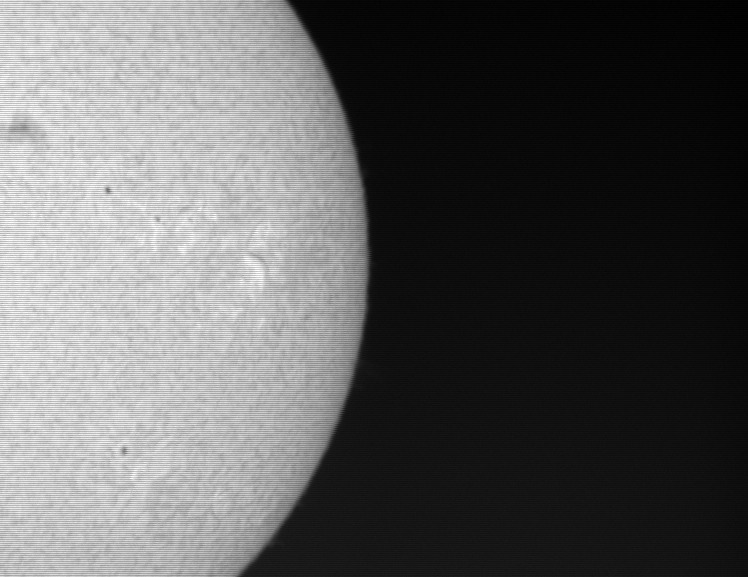
The sun as seen with a CCD through our Solar Telescope.

Pretty Cool huh? Since the solar telescope has an Hα filter, this is an image that is sensitive only to light emitted by hydrogen in the Sun’s chromosphere. After careful analysis, I must conclude that the Sun is most likely a ball of glowing hydrogen.

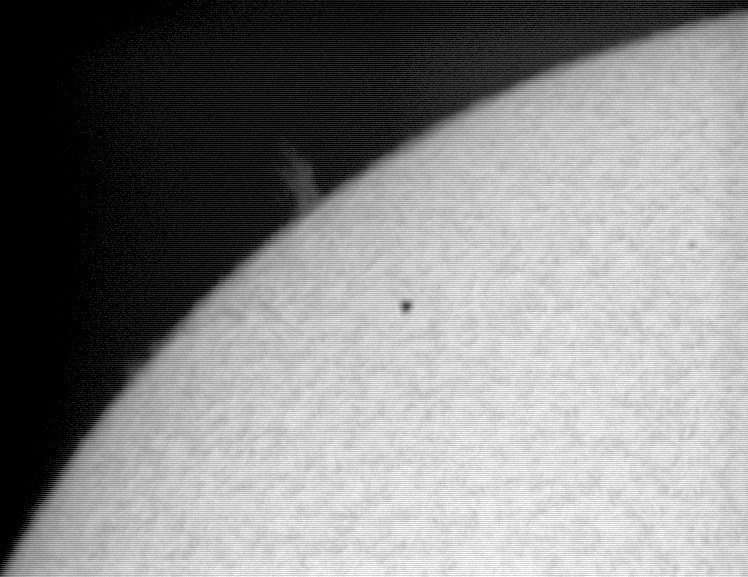
I wanted some more close-up views. Fortunately, we have a Barlow lens, and within a few minutes going around the edge of the Sun, I saw this:

(the black fuzzy dot is a speck of dust, either on the CCD or in the telescope). With a slightly longer exposure, the Sun is saturated, but the prominences jump out:

Now let’s hope it looks just as pretty on Tuesday!


The Venus transit of June 5, 2012 @Western

It’s been busy times for skywatchers. Two weeks ago, on May 5, we had the “Supermoon”: the coincidence of a full moon with the closest approach the Moon makes to the Earth on its elliptical orbit, and which makes the Moon appear larger and brighter in the night sky. Tomorrow, May 20, there will be a solar eclipse, as was posted here before. It is not a coincidence that the Moon happens to be quite far away from the Earth now, and thus the Moon’s apparent size is not big enough to cover the Sun completely, and an annular eclipse is the result in a path that runs over China, Taiwan, southern Japan and parts of the USA. Technically, we should be able to witness a very small partial eclipse in London, but only for less than half an hour before sunset, and only if you have a clear view of the northwestern horizon.

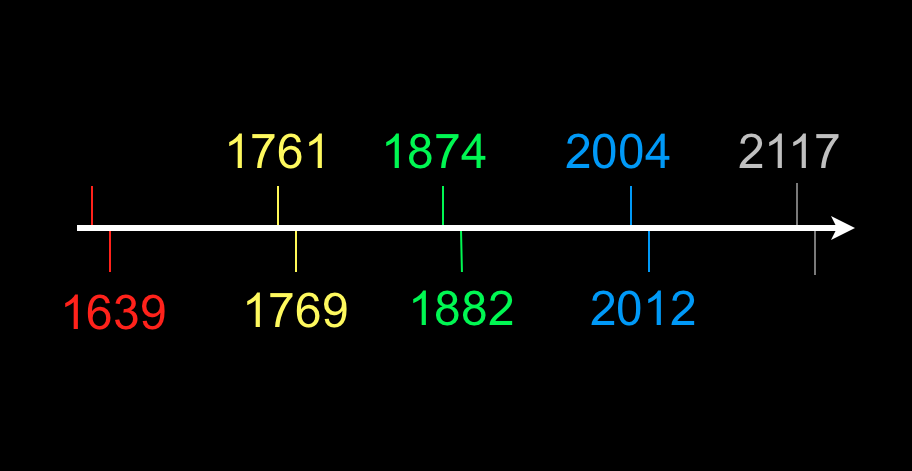
To top it off, the skies offer a very rare Venus transit on Tuesday June 5th, starting a bit after 6pm here in London: the planet will move in front of the Sun and appear as a little black dot that moves across the face of the Sun in  just a few hours. Venus’ orbit is inclined with respect to the Earth’s orbit, and as a result, transits are very rare events (as explained in this two-minute video), and follow an unusual cycle as displayed here:

Transits happen in pairs that are separated by 8 years. Between those pairs though, there are big gaps of either 105.5 or 121.5 years without transits. After the June 2012 transit, we will have to wait until December 2117 to see the next one, and so it’s probably safe to say that the upcoming event is the last chance to see a Venus transit in your lifetime! If you want to know more about Venus transits, you can come out to the Cronyn observatory’s open house on June 2nd and listen to a talk about the Venus transit.

You can see this historical event for yourself, but be careful not to look at the Sun directly without adequate eye protection — the lens in your eye will focus the sun’s light onto your retina, and cause damage in seconds (and you wouldn’t notice since it’s painless). There’s various ways to safely observe the event, and we will offer you several options on Western’s campus! The Department of Physics & Astronomy (with support from PASA) is once more collaborating with the Centre for Planetary Science and Exploration and with the Royal Astronomical Society of Canada to make sure you have the best possible observing experience.To begin with, we will be handing out eclipse glasses that allow you to see the event directly with your very own eyes!

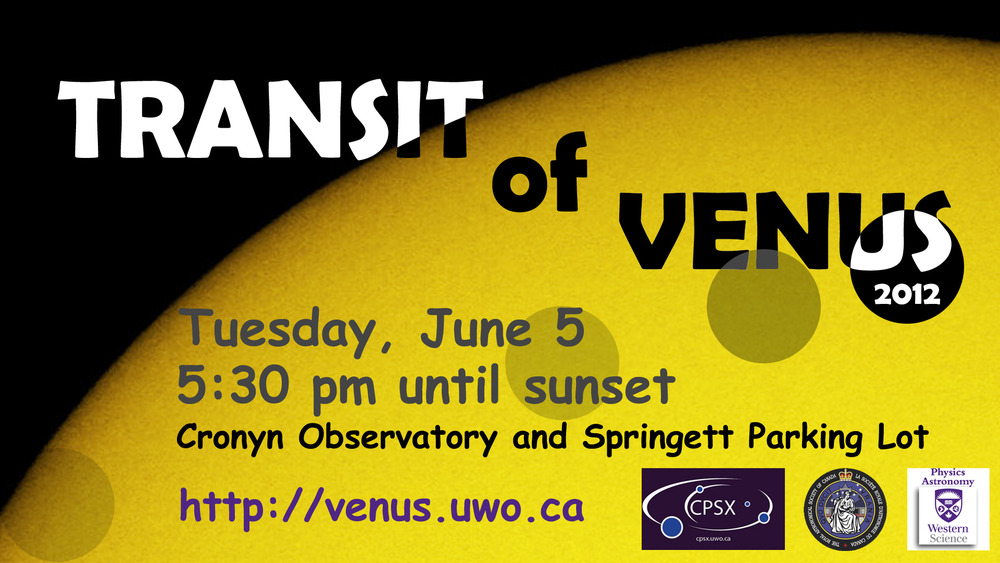
But there’s much more than that. We will be opening up the Cronyn observatory from 5:30pm on. One of the safest ways to observe the Sun is by projection, and that’s what we’ll do with the main refractor at the observatory. Unfortunately, buildings are obstructing our view of the western horizon, and se we won’t be able to observe the transit for very long from Cronyn.Therefore, we will also set up a second observation station in the southeast corner of the Springett parking lot. In addition to projection, we will also use direct views using several telescopes with special filters, including a solar telescope using an Hα filter. Between the Cronyn observatory and the Springett lot, a planet path will show you the solar system to scale. In the conference room of the Cronyn observatory, we will set up a small exhibit around Venus, and we will also broadcast a live stream of the event. If you get asked about the event, point your interested friends and family to http://venus.uwo.ca/.

Although a Venus transit is maybe not as spectacular as a total solar eclipse, it’s a unique opportunity to get a sense of the scale of the solar system. Think about it as you watch that little black dot move: that little black dot is nearly as big as our fair planet!