
Check out NASA’s website for information on this Saturday’s lunar eclipse!
Category Archives: Physics and Astronomy at Western What’s Happening
Opinions, news, and events for the Department of Physics and Astronomy at Western University.
Curling anyone?
I’m sitting here watching the Canada-One Canada Cup of curling (in case you’ve never heard of this, it’s a major curling competition (we call them bonspiels generally), and the winner automatically gets into the 2014 olympic curling trials for Canada). Makes me wonder: hey, how many people in physics and astronomy curl? Have many/any of us curled regularly? Do we actually have “curlers” in our midst?
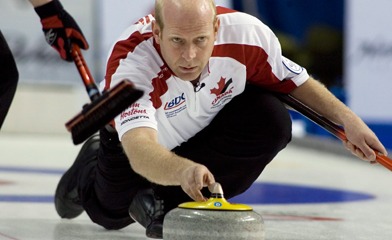
Picured above: Kevin Martin, universal god of curling.
Actually, I know at least part of the answer to this: yes, we do have curlers in our midst. I curl regularly in a local men’s league. Tim Scholl curls on my team. One of Western’s Vanier Scholarship winners (Matt Quinn, recent graduate from our undergraduate program and current MD-PhD student at Western over in imaging at Robarts) curls (he spares for my team whenever I need him!). I know Mike Cottam curls every week, as does Pauline Barmby. Brian Dalrymple also curls.
Who else? If you have ever curled, comment to this post. If you would call yourself a “curler”, let us know! And by the way, in case you’ve never curled before, you need to know that Kevin Martin (pictured above) is the best curler that has ever lived. Take it to the bank!
I’ll restrain from putting in a link here to an academic article on the physics of curling (I assure you, there exist)…
Federal R&D Panel reports with six major recommendations
Whether you are a student or a scientist, you are no doubt familiar with the traditional funding agency for the natural sciences in Canada – NSERC. However,if your research leads you into the realm of applied research, you will inevitably begin to be exposed to a wider, more complicated world of industry-partnered R&D. Support for this kind of work can come from companies themselves (often in the form of direct technical service agreements between the company and your lab), dollar-matching programs at the federal and provincial levels (administered by the traditional agencies of NSERC, CIHR, ORF, et cetera), or more foreign (to those of us in the academy) support programs provided directly to corporations themselves (the “SR&ED” or “shread” credits have been a huge part of this for years). This latter support stream is deep, and it is also going to change in a big way. If you haven’t heard of the “Jenkins report”, you should be aware of it (see below). In the next years, we expect the entire National Research Council structure in Canada to change, as well as the detailed nature of R&D support for industry.
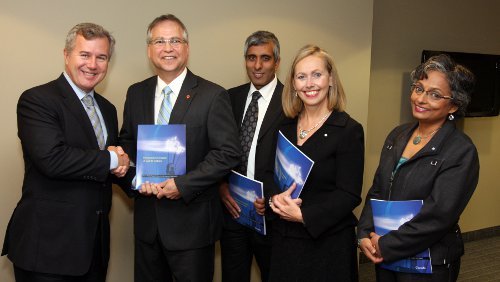
Panel Chair Tom Jenkins, along with Arvind Gupta, Monique F. Leroux and Nobina Robinson, present their reportInnovation Canada: A Call to Action, to the Minister of State (Science and Technology) Gary Goodyear on October 17, 2011. Not shown are panel members David Naylor and Bev Dahlby. (from the Review of Federal Support to Research and Development webpage with link listed below).
http://rd-review.ca/eic/site/033.nsf/eng/home
If this seems all very foreign or irrelevant to university researchers, consider what happened just this past week. The Ontario Research Fund (ORF) provides matching support for Ontario applications to the Canadian Fondation for Innovation (CFI), as well as funds and administers the critical Research Excellence (RE) matching grants competition.
http://www.mri.gov.on.ca/english/programs/ResearchFund.asp
This RE has supported university researchers, with industry partners, with many tens of millions of dollars over the past decade alone. Many, many research staff and students that you see at Western are supported entirely or in part by the ORF RE. This past week (late monday), the current ORF RE application round, as well as the round for next year were cancelled. The money was re-allocated to the South-Western Ontario economic development innitiative announced by Dalton McGuinty on monday (you may have heard about this).
http://www.premier.gov.on.ca/news/event.php?ItemID=19651&Lang=EN).
I’m not going to say whether I think this is good or bad (it is certainly challenging), but these sort of changes (which directly reflect early implementation of the kinds of recommendations made in the federal Jenkins Report) are something we need to react to. There is no immediate benefit to be had by complaining about this, as the changes are already on our doorstep. Criticism may affect change for the coming years, but right now, we need to position ourselves to take advantage of the new climate. This means more industry collaboration, more technical service, and much more strategic planning and effort in monitoring and reacting to the varied opportunities.
The R&D climate has been slowing changing for years now, but I think it’s clear that in the next several years, the changes will be larger and coming faster. It’s an interesting time, so let’s get ready!
The market for superconductors: still dominated by MRI
Superconductivity was discovered quite a while ago. And interest in “high temperature superconductors” has come and gone several times over the last thirty years or so. I remember when I was in high-school, high-Tc superconductors were one of the more common topics for science fairs throughout the country! As the attached article reminds us, we really haven’t found a market for much other than the “traditional” superconducting material: Niobium-Titanium (in copper matrix) – fully 99% (probably more) of the real superconducting wire in the world is made from this material, and MRI remains by far the dominant driver in this market. But, one needs to be aware of the emerging possibilities – who knows, perhaps in two decades we’ll be talking about some of the applications mentioned!
Resistance is futile
Superconductors: A century after their discovery, superconductors are finally moving beyond scientific and medical uses and into power grids
Stories on Carbon-based nanomaterials
One of our methods for room temperature deposition of carbon nanotubes
This is one of the methods we typically use fo. As many of you may know, carbon nanotubes are tubules of graphite which may have diameters less than 1 nanometer. So they are 100,000 times smaller than your hair. Ideally they should look like something like this, where every circle represents a carbon atom and every stick is a chemical bond:
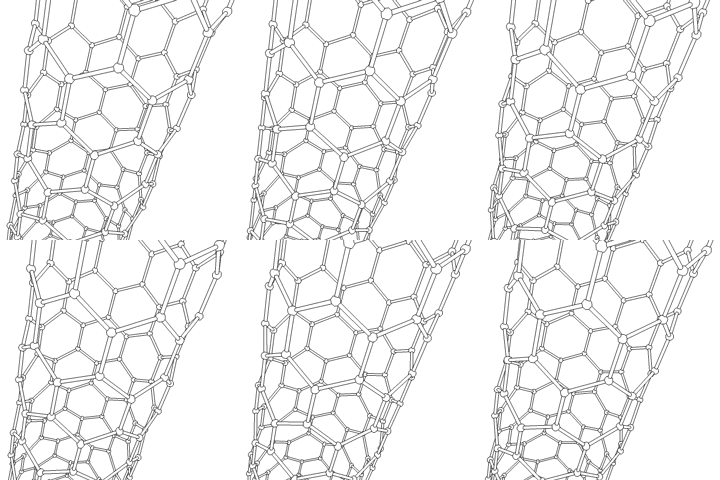
Althougth it is well know that carbon nanotubes synthesize at high temperatures (typically: several hundred degree C) it is quite possible to deposit them at room temperature on virtually any tipe of substrate, making interesting transparent and conduvting networks
While what I show below is only one of many possible methods, I always find it extremely cool!!! Have fun:
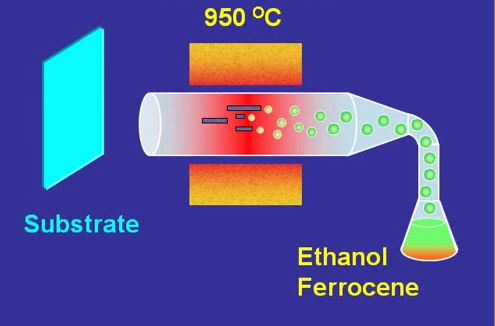
Have a look at http://www.worldscinet.com/nano/05/0505/S1793292010002220.html if you are interested in more details
Rachel Zimmerman Brachman is recipient of Visionary Award
Rachel Zimmerman Brachman, a former graduate student in Physics and Astronomy at Western, has been awarded the Visionary Award by The Women’s International Film and Television Showcase. [award announcement] [ London Free Press article]
—
The View from 400 km
What might it be like to fly over the Earth while aboard the International Space Station?
[vimeo http://www.vimeo.com/32001208 w=400&h=225]
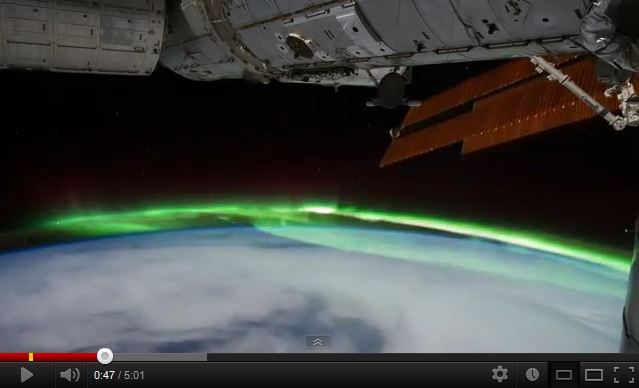
Wonder no longer(!).
Can you identify any interesting locations?
Time lapse video compiled by Michael König.
Learning to GradSchool Ep. I
If I could condense this post into one idea it would be, counter-intuitively perhpas, “Take time off.”
After finishing my undergraduate degree I decided to spend some time some time living abroad in Japan. I’ve always had a fancy for other languages, but Japanese seemed reasonably complicated. With its three “alphabets”, I decided I would need to spend considerable attention studying the language in it’s own environment if I was to learn how to read-write-and-speak it with any degree of adequacy. So, away I went, 10,563 km, from Toronto to Nagoya.
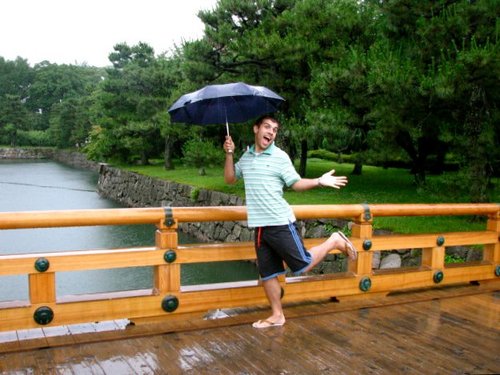
Singing in the rain on a bridge in Kyoto, Japan.
I spent considerable amounts of time huddled over books in libraries and bookstores, writing furiously over cups of coffee in cafes, and striking up conversations with anyone that would pause long enough to listen… to my horrible defacement of the language; though I did get better in time. You get to meet some incredible people when you put down your guard for the simple sake of wanting to have a conversation (a challenging feat when that conversation is in a language you’re struggling to understand): my still-good-friends, graphic designers, Takashi and his wife, Chieko, and I would go cross-country (motor)cycling through the mountains, visiting wonderfully isolated shops and restaurants in the Japanese countryside. I try to visit still, when my schedule, and pocket-book, afford.
With time away from school, you begin to build a life for yourself apart from attending classes and finishing assignments. Yet a part of me could not escape that want for knowledge. On camping trips, I would point out the planets among the stars, and tell stories of the constellations; and my friends would always encourage me, aware of my interest in physics, turning to me for explanations of topics they had heard about on the news, or read in a newspaper, wanting to know more about this-or-that discovery. Perhaps most tellingly for myself, at the end of the day I would return home and almost ritually, with a cup of coffee, browse the arXiv to learn of the latest developments being made by the physics-community.
I have thought of becoming a scientist since I was little boy. But no experience more blatently underscored that desire to me than when I took time away from that trajectory to explore something else. I realized that I didn’t just want to learn about the universe, it was something I needed to do.
Travel is certainly not for everyone, and Japan is a little too far away for many. But the lesson, and perspective, I have found to be essential to encouraging my own focus, now, as an actual graduate student: I don’t just think, but know, I would not want to be doing anything else.
‘Learning to GradSchool’ is a recurring series written by Alexander DeSouza, with posts once-per-month, of his experiences/reflections navigating graduate school/foraging for free food, and learning how to be a better scientist.
#Westernu Cares Food Drive – collecting ’til 14 Dec.
Western Cares Food Drive
Please assist the 2011 Western Cares Food Drive(in support of the London and Area Food Bank) by dropping off non-perishable items – canned or boxed food, diapers, toiletries, etc. Each month the Food Bank helps more than 3,000 families – about 40% are children and youth. Your donation will mean a lot to someone. Please give what you can.
Collection boxes are positioned all around campus, including in the Physics & Astronomy Main Office (PAB 138).
This year, the food drive runs until 14th December. Please help.
Thank you.