Although the article referenced below is talking about American universities, I know for certain that these same debates are going on here in Canada, and within Western. Questions including: “Why do we teach the way we do?”, “How we deliver content?”, and “Are really serving a purpose in ‘today’s world”, are more common and in my mind becoming harder to answer. Why are students sitting in our classrooms instead of watching iTunesU?
I think we have partial answers to some of these questions, but this debate is not going away. I like the quote at the end of the referenced article, where Lawrence Lowell (apparently a past-president of Harvard) is quoted as arguing that “institutions are rarely murdered; they meet their end by suicide… They die because they have outlived their usefulness, or fail to do the work that the world wants done.” Are our universities doomed to this? We’ll be talking about this more, I’m sure.
Schumpeter
University challenge
Slim down, focus and embrace technology: American universities need to be more businesslike
http://www.economist.com/node/21541398
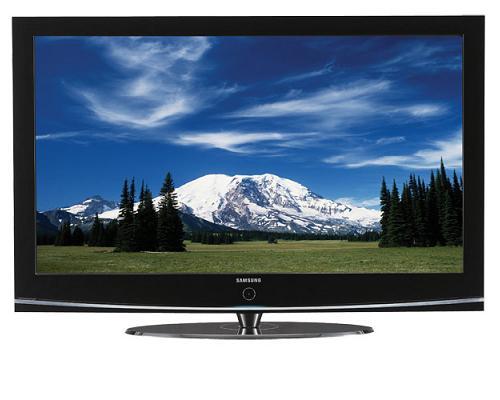
In case you’re xmas shopping already (or want to advise those xmas shopping for you!), it’s good to try to stay on top of the flat-screen monitor/TV market. Below is a recent blog entry from the Economist which overviews the current state of the market. We’re physics people – we’re supposed to know this stuff!…
[from the Economist, Dec 3, 2011]
Difference engine
The devil in the details
Consumer electronics: Changes in technology mean that choosing a big-screen television has become more complicated than ever. Should you pay extra for 1080p resolution, LED backlighting or 3D? We crunch the numbers
IF YOU have not gone shopping for a new television set for quite a while, enough has changed to require some serious thought. So before splurging on a new high-definition television (HDTV) set, it is worth considering which features make sense and which do not.
http://www.economist.com/node/21540381
Superconductivity was discovered quite a while ago. And interest in “high temperature superconductors” has come and gone several times over the last thirty years or so. I remember when I was in high-school, high-Tc superconductors were one of the more common topics for science fairs throughout the country! As the attached article reminds us, we really haven’t found a market for much other than the “traditional” superconducting material: Niobium-Titanium (in copper matrix) – fully 99% (probably more) of the real superconducting wire in the world is made from this material, and MRI remains by far the dominant driver in this market. But, one needs to be aware of the emerging possibilities – who knows, perhaps in two decades we’ll be talking about some of the applications mentioned!
Resistance is futile
Superconductors: A century after their discovery, superconductors are finally moving beyond scientific and medical uses and into power grids
http://www.economist.com/node/21540385?frsc=dg%7Ca
News, Events, and Opinions from our community