Category Archives: Physics and Astronomy at Western Blog

Opinions from the community at The Department of Physics and Astronomy of Western University.

The physics of walking

I like to walk a lot, so naturally (naturally for a physicist, anyway) I have occasionally thought about the physics of walking. Here’s a simple calculation you can do. Imagine that a leg is a pendulum that swings at its natural frequency. First year physics tell you what its period of oscillation is. The length of the stride must be proportional to the length of your leg – if this isn’t obvious, draw a picture. So now it’s easy to figure out how walking speed depends on the length of the leg.


If you do the calculation, you’ll find that walking speed also depends on the acceleration due to gravity.  


This is amusing, but do your results make sense? In other words, does this little calculation have anything to do with real walking? What about running? What about walking on the moon?


Post your thoughts as comments here. The best comment wins a very good (albeit slightly used) book of SF short stories (and yes, I’ll mail it to you if you live somewhere else!).

How I spent my year’s leave, Part 1

I am on administrative leave this year. This is NOT a year-long holiday. It just means I have no classroom teaching duties – all of my time is for research. Nonetheless I am taking advantage of the opportunity to do some work-related traveling. I have just returned from two months in Rio de Janeiro, where I was working in the Department of Mechanical Engineering at the Pontifical Catholic University of Rio (referred to as “Pooky” by those in the know). My host/friend/colleague/collaborator there was Paulo de Souza Mendes. We have a lot of research interests in common. In particular, we both like to do fluid dynamics experiments using a material called Carbopol, which is the main ingredient in hair gel. Much of Paulo’s research is funded by Petrobras, the Brazilian oil company. Petrobras is required by law to use some fraction of their (extremely large) revenues to fund research and other cultural endeavors, and as a result they have a large presence in the research labs of the country. Paulo does experiments that model situations important in the oil extraction business. For example, I was involved in an experiment with Paulo and his graduate student Alexandra Alicke that was concerned with bubbles rising up through Carbopol. Why is this interesting? First of all, Carbopol is a yield-stress fluid, meaning that it behaves like a solid if you don’t push it very hard, but it flows if you push it hard enough. Like hair gel, or margarine, or toothpaste … or freshly poured cement. After an oil well is drilled, a pipe is cemented into the wellbore to isolate the well from the surrounding rock. Bubbles of gas or air can get into the cement before it hardens, rise up a bit due to buoyancy, and then get stuck as the cement hardens. This results in voids in the cement. Sometimes the rising bubble can even leave a long trail behind it as it rises through the not-quite-hard cement. This can weaken the cement and, in the worst case, lead to a catastrophic failure of the well. Paulo and Alexandra use Carbopol to model the properties of the cement. By studying the behavior of the bubbles in their experiment, they can learn more about how bubbles will behave in cement a kilometer under the surface of the ocean, and maybe learn how to prevent expensive and potentially dangerous problems.


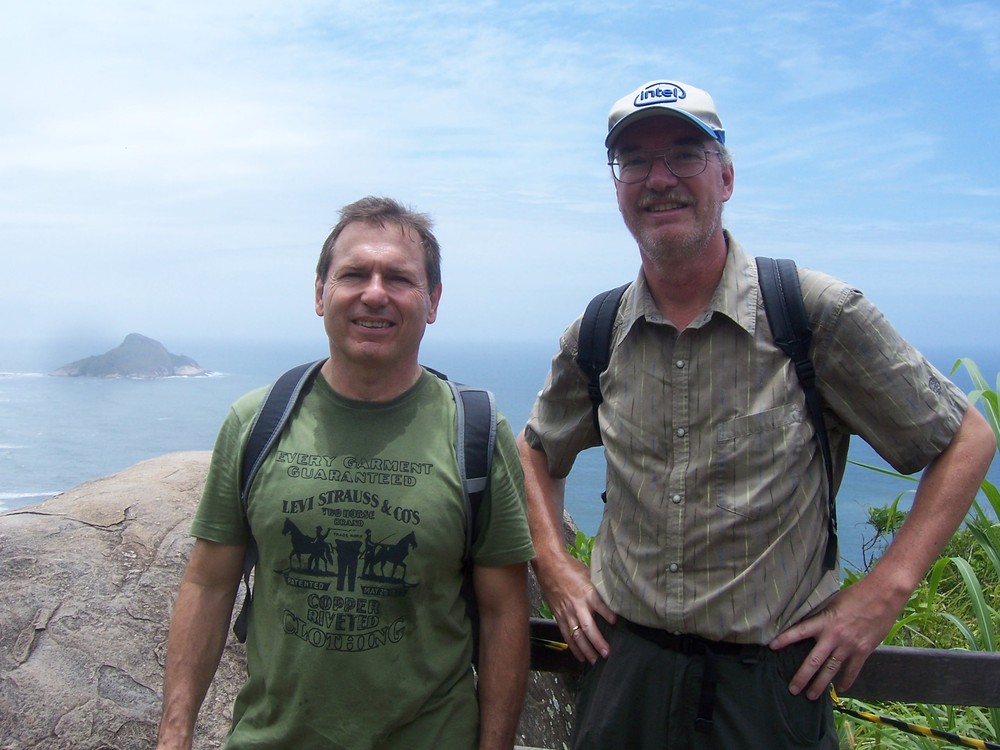
Paulo also likes hiking. Here’s a picture of us in a park a bit south of Rio.

Study Advice

Ideally, you should go through your class notes every night and spend at least another two hours (per hour of class) solving problems.  Realistically, you have a life; it’s not likely that you can devote that kind of time commitment to each course.

Keep good, organized notes
Write your notes out neatly, perhaps in a bound book (available at the book store for roughly $4) or type them up on your computer.  Don’t just copy what the professor says; turn it into your own words so that next time you read over them you will understand concepts and steps quicker and better.  Neat, good, organized notes are easier to understand than loose papers, especially if you only have half of those papers…  Plus, you never know when they are going to come in handy!

Review your notes
Spend about 10 minutes per class hour each night reviewing what you covered in class earlier that day.  This enables you to see the material again and become more familiar with it.  If you didn’t understand a concept in class, go through it slower on your own and see if you can “decode” what your professor did in class.  Don’t have time?  Read them on the bus to/from school or while waiting for the bus.  You would be amazed at how much time you waste on the bus and waiting for it–that’s how I read all 11 novels for my first year English class!

Ask questions
Don’t understand something?  Ask questions!!!  Ask your professor questions, your TA, other students in your class.  Don’t be worried about “appearing stupid”; everyone has questions (except for perhaps Gauss).  You’re in science.  The whole point of science is to ask (and try to answer, through observation) questions about stuff we don’t know.

All of the above is great advice, but they are things you need to do throughout the school year, not suddenly at exam time.  My advice for those exams that you really have to cram for:
Determine the exam content
 You could always try the brute force method of simply asking your professor what is on the exam, but don’t be surprised if it doesn’t work.  Think back to lectures and assignments.  What did you spend a lot of time on?  What did the professor emphasize?  Chances are that will be tested.

Determine what kind of examiner your professor is
Think back to midterms and tests.  Does your professor prefer to test your knowledge through derivations, problems, or conceptual questions?  Will the test be long answer, multiple choice, or a combination?

Determine your weak points
Determine what you don’t know or understand too well.  Determine what you need to know in order to understand the tougher/more advanced material.  Focus on the more basic stuff first.

Acknowledge your strengths
So you understand a concept really well.  Yes, it feels nice to finally be able to get the same answer as the back of the book or practice test solutions or to see how that derivation is “trivial”, but you understand that material; do a couple questions and move on.  If later on during your study session you start to get discouraged, do another one of these problems to boost your confidence!

Make a “cheat sheet”
Even if you aren’t allowed to use it on the exam, make a “cheat sheet”.  It is a good way to summarize concepts and equations that you need to know.

Reward yourself
Sit yourself down in an area with few to no distractions.  Set a time that you are going to work until or a section that you are going to get through.  If it is a time, set a timer and don’t look at your watch while studying.  If it is a section/chapter, put a post-it note in your book at that spot.  Before you begin studying, also set what you will get as your reward, such as two Mario Kart races, a walk around the block, preparing a snack while listening to your favourite song, whatever.  I find the best breaks are relatively short (5-10 minutes) and do not involve brain power.  When your break is done, acknowledge that it is done; sit yourself back down, set a new study goal, and another reward, then work for it.

Eat healthy–maybe even healthier than normal
Pick up carrots, celery, cucumber, apples, pineapple, watermelon, berries, broccoli, cauliflower, etc. to snack on, rather than junk food.  I find I feel a lot better with veggies and fruit in my system.  You also won’t run into a sugar crash.

Maintain your work-out schedule
Even though you are swamped with work, yes, you still have time to go to the gym for your daily swim.  It is a good study break and healthy for you.  If you don’t feel like you have time to head to the gym, then take a walk around your neighbourhood instead.

Avoid coffee and energy drinks 
Okay, so the caffeine in coffee and energy drinks helps you stay awake so you can cram more information into your brain, but is it actually helping?  Are you retaining that information?  A good night’s rest followed by serious studying is more beneficial than spending the night hyped up on caffeine, watching three youtube videos for every two minutes of work, and being completely and utterly drained the next day.

Get a good night’s rest
While you are studying and especially the night before an exam, get a good night’s sleep.  You will feel refreshed and your head will likely be clear and willing to accept more information.

Different things work for different people
 My advice isn’t the only advice out there–I bet your parents, professors, TAs, and friends all have advice.  I know Raffi has a Study Guide on PASA’s website at 
http://pasa-uwo.com/studytips.php.  Try out different methods of studying and see what works best for you.

Good luck!!!

(originally posted by Mel Wright)

Federal R&D Panel reports with six major recommendations

Whether you are a student or a scientist, you are no doubt familiar with the traditional funding agency for the natural sciences in Canada – NSERC. However,if your research leads you into the realm of applied research, you will inevitably begin to be exposed to a wider, more complicated world of industry-partnered R&D. Support for this kind of work can come from companies themselves (often in the form of direct technical service agreements between the company and your lab), dollar-matching programs at the federal and provincial levels (administered by the traditional agencies of NSERC, CIHR, ORF, et cetera), or more foreign (to those of us in the academy) support programs provided directly to corporations themselves (the “SR&ED” or “shread” credits have been a huge part of this for years). This latter support stream is deep, and it is also going to change in a big way. If you haven’t heard of the “Jenkins report”, you should be aware of it (see below). In the next years, we expect the entire National Research Council structure in Canada to change, as well as the detailed nature of R&D support for industry.

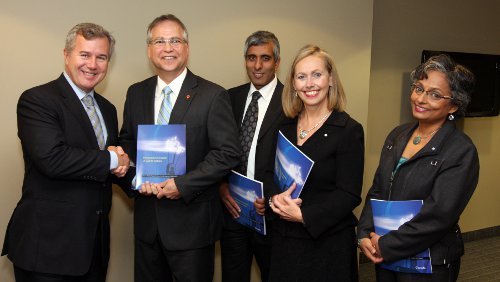
Panel Chair Tom Jenkins, along with Arvind Gupta, Monique F. Leroux and Nobina Robinson, present their reportInnovation Canada: A Call to Action, to the Minister of State (Science and Technology) Gary Goodyear on October 17, 2011. Not shown are panel members David Naylor and Bev Dahlby. (from the Review of Federal Support to Research and Development webpage with link listed below).

http://rd-review.ca/eic/site/033.nsf/eng/home

If this seems all very foreign or irrelevant to university researchers, consider what happened just this past week. The Ontario Research Fund (ORF) provides matching support for Ontario applications to the Canadian Fondation for Innovation (CFI), as well as funds and administers the critical Research Excellence (RE) matching grants competition.

http://www.mri.gov.on.ca/english/programs/ResearchFund.asp

This RE has supported university researchers, with industry partners, with many tens of millions of dollars over the past decade alone. Many, many research staff and students that you see at Western are supported entirely or in part by the ORF RE. This past week (late monday), the current ORF RE application round, as well as the round for next year were cancelled. The money was re-allocated to the South-Western Ontario economic development innitiative announced by Dalton McGuinty on monday (you may have heard about this).

http://www.premier.gov.on.ca/news/event.php?ItemID=19651&Lang=EN).

I’m not going to say whether I think this is good or bad (it is certainly challenging), but these sort of changes (which directly reflect early implementation of the kinds of recommendations made in the federal Jenkins Report) are something we need to react to. There is no immediate benefit to be had by complaining about this, as the changes are already on our doorstep. Criticism may affect change for the coming years, but right now, we need to position ourselves to take advantage of the new climate. This means more industry collaboration, more technical service, and much more strategic planning and effort in monitoring and reacting to the varied opportunities.

The R&D climate has been slowing changing for years now, but I think it’s clear that in the next several years, the changes will be larger and coming faster. It’s an interesting time, so let’s get ready!

(originally posted by Blaine Chronik)

Learning to Gradschool Ep. 1

If I could condense this post into one idea it would be, counter-intuitively perhpas, “Take time off.”

After finishing my undergraduate degree I decided to spend some time some time living abroad in Japan. I’ve always had a fancy for other languages, but Japanese seemed reasonably complicated. With its three “alphabets”, I decided I would need to spend considerable attention studying the language in it’s own environment if I was to learn how to read-write-and-speak it with any degree of adequacy. So, away I went, 10,563 km, from Toronto to Nagoya.

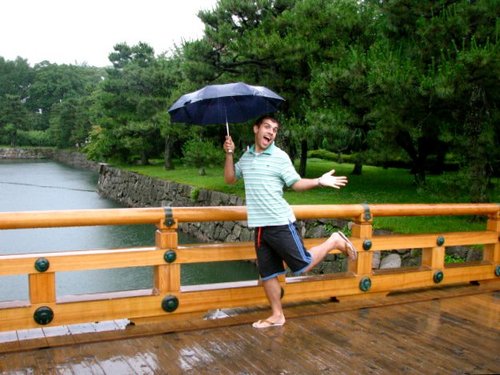
Singing in the rain on a bridge in Kyoto, Japan.

I spent considerable amounts of time huddled over books in libraries and bookstores, writing furiously over cups of coffee in cafes, and striking up conversations with anyone that would pause long enough to listen… to my horrible defacement of the language; though I did get better in time. You get to meet some incredible people when you put down your guard for the simple sake of wanting to have a conversation (a challenging feat when that conversation is in a language you’re struggling to understand): my still-good-friends, graphic designers, Takashi and his wife, Chieko, and I would go cross-country (motor)cycling through the mountains, visiting wonderfully isolated shops and restaurants in the Japanese countryside. I try to visit still, when my schedule, and pocket-book, afford.

With time away from school, you begin to build a life for yourself apart from attending classes and finishing assignments. Yet a part of me could not escape that want for knowledge. On camping trips, I would point out the planets among the stars, and tell stories of the constellations; and my friends would always encourage me, aware of my interest in physics, turning to me for explanations of topics they had heard about on the news, or read in a newspaper, wanting to know more about this-or-that discovery. Perhaps most tellingly for myself, at the end of the day I would return home and almost ritually, with a cup of coffee, browse the arXiv to learn of the latest developments being made by the physics-community.

I have thought of becoming a scientist since I was little boy. But no experience more blatently underscored that desire to me than when I took time away from that trajectory to explore something else. I realized that I didn’t just want to learn about the universe, it was something I needed to do.

Travel is certainly not for everyone, and Japan is a little too far away for many. But the lesson, and perspective, I have found to be essential to encouraging my own focus, now, as an actual graduate student: I don’t just think, but know, I would not want to be doing anything else.

‘Learning to GradSchool’ is a recurring series written by Alexander DeSouza, with posts once-per-month, of his experiences/reflections navigating graduate school/foraging for free food, and learning how to be a better scientist.

(originally posted by Alexander DeSouza)

#westernu Grad Student in Frantic Frenzy to Finish Poster by this morning!

December 1, 2011

#westernu Grad Student in Frantic Frenzy to Finish Poster by this morning

[warning: post contains graphic images, view at your own choosing]

The American Geophysical Union (AGU) Fall Meeting is the largest worldwide conference in the geophysical sciences, attracting nearly [over] 20,000 Earth and space scientists, educators, students, and policy makers. This meeting showcases current scientific theory focused on discoveries that will benefit humanity and ensure a sustainable future for our planet.

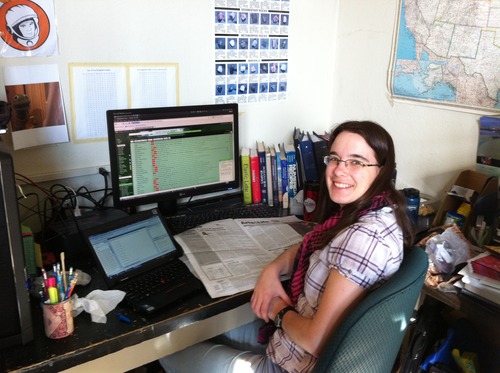
UWO P&A’s own Crown Emily is at wits end with deep Fear and Loathing over her advisor’s insistence she get her poster to the printer by EOB yesterday for printing (see photo). Emily worked past 4 (pm) last night making crucial decisions on the poster (she decided on Times New Roman over Times) and picked up today at the crack of noon, when she decided it would be wise to do that analysis she had written about so lavishly last September for her abstract.

“Bob is such a nudge-nik on these things, he thinks just because there are 5,000 posters in the queue to be printed by Monday morning mine won’t be ready. As if, I’m at Western, not like ***** (institutional name deleted at publisher’s insistence).”

Crows Robin and Justin were not available for comment, as they had finished their posters last week and were last seen heading out to play squash.

The Old Crow has the honor (?) of being on the AGU Fall Meeting Blog Roll and intends to type up a storm down there next week (Dec 5 to 9) as he roams the poster hall. Follow @robin_wing, Emily and I via twitter (@purplecrowlidar), facebook (The Purple Crow Lidar) or directly on our blog, Scatterings.

(originally posted by Robert Sica)

Mars, Ice, Water, Life . . . Ethical Dilemma?

In the past few years, discoveries of ice on Mars, and evidence appearing to show proof of liquid water on the planet, have raised the serious possibility of Martian (microbial) life, either now or sometime in the past. Then a little less than two weeks ago, NASA’s Curiosity rover successfully launched. Its primary goal is to dig up more evidence that suggests life, or the holy grail – evidence of life itself.

All of this raises a whole host of other issues, including, and importantly, ethical ones. If life is found on the red planet, what should we do about it? Are we obligated to abandon exploration or give up on an idea of expanding to Mars, to let it follow its own path? After all, humanity’s track record when it comes to colonizing new worlds is not impressive, so do we get the right to more? And what sort of interference with the evolutionary process (if any) might be acceptable? On Earth we experiment on single-celled life all the time. We encourage our children to do so. Would it make a difference – should it make a difference – if the life we’re looking at came from somewhere else? And if the answer’s yes, doesn’t that imply something about how we define life in the first place?

Just a few questions without answers. At the moment they’re fairly trivial, but if Curiosity finds something, or when, eventually, something somewhere is found, they’re going to be very important. Looking forward to that day.

(originally posted by LizGray)

Study advice

Ideally, you should go through your class notes every night and spend at least another two hours (per hour of class) solving problems.  Realistically, you have a life; it’s not likely that you can devote that kind of time commitment to each course.

Keep good, organized notes
Write your notes out neatly, perhaps in a bound book (available at the book store for roughly $4) or type them up on your computer.  Don’t just copy what the professor says; turn it into your own words so that next time you read over them you will understand concepts and steps quicker and better.  Neat, good, organized notes are easier to understand than loose papers, especially if you only have half of those papers…  Plus, you never know when they are going to come in handy!

Review your notes
Spend about 10 minutes per class hour each night reviewing what you covered in class earlier that day.  This enables you to see the material again and become more familiar with it.  If you didn’t understand a concept in class, go through it slower on your own and see if you can “decode” what your professor did in class.  Don’t have time?  Read them on the bus to/from school or while waiting for the bus.  You would be amazed at how much time you waste on the bus and waiting for it–that’s how I read all 11 novels for my first year English class!

Ask questions
Don’t understand something?  Ask questions!!!  Ask your professor questions, your TA, other students in your class.  Don’t be worried about “appearing stupid”; everyone has questions (except for perhaps Gauss).  You’re in science.  The whole point of science is to ask (and try to answer, through observation) questions about stuff we don’t know.

All of the above is great advice, but they are things you need to do throughout the school year, not suddenly at exam time.  My advice for those exams that you really have to cram for:
Determine the exam content
 You could always try the brute force method of simply asking your professor what is on the exam, but don’t be surprised if it doesn’t work.  Think back to lectures and assignments.  What did you spend a lot of time on?  What did the professor emphasize?  Chances are that will be tested.

Determine what kind of examiner your professor is
Think back to midterms and tests.  Does your professor prefer to test your knowledge through derivations, problems, or conceptual questions?  Will the test be long answer, multiple choice, or a combination?

Determine your weak points
Determine what you don’t know or understand too well.  Determine what you need to know in order to understand the tougher/more advanced material.  Focus on the more basic stuff first.

Acknowledge your strengths
So you understand a concept really well.  Yes, it feels nice to finally be able to get the same answer as the back of the book or practice test solutions or to see how that derivation is “trivial”, but you understand that material; do a couple questions and move on.  If later on during your study session you start to get discouraged, do another one of these problems to boost your confidence!

Make a “cheat sheet”
Even if you aren’t allowed to use it on the exam, make a “cheat sheet”.  It is a good way to summarize concepts and equations that you need to know.

Reward yourself
Sit yourself down in an area with few to no distractions.  Set a time that you are going to work until or a section that you are going to get through.  If it is a time, set a timer and don’t look at your watch while studying.  If it is a section/chapter, put a post-it note in your book at that spot.  Before you begin studying, also set what you will get as your reward, such as two Mario Kart races, a walk around the block, preparing a snack while listening to your favourite song, whatever.  I find the best breaks are relatively short (5-10 minutes) and do not involve brain power.  When your break is done, acknowledge that it is done; sit yourself back down, set a new study goal, and another reward, then work for it.

Eat healthy–maybe even healthier than normal
Pick up carrots, celery, cucumber, apples, pineapple, watermelon, berries, broccoli, cauliflower, etc. to snack on, rather than junk food.  I find I feel a lot better with veggies and fruit in my system.  You also won’t run into a sugar crash.

Maintain your work-out schedule
Even though you are swamped with work, yes, you still have time to go to the gym for your daily swim.  It is a good study break and healthy for you.  If you don’t feel like you have time to head to the gym, then take a walk around your neighbourhood instead.

Avoid coffee and energy drinks 
Okay, so the caffeine in coffee and energy drinks helps you stay awake so you can cram more information into your brain, but is it actually helping?  Are you retaining that information?  A good night’s rest followed by serious studying is more beneficial than spending the night hyped up on caffeine, watching three youtube videos for every two minutes of work, and being completely and utterly drained the next day.

Get a good night’s rest
While you are studying and especially the night before an exam, get a good night’s sleep.  You will feel refreshed and your head will likely be clear and willing to accept more information.

Different things work for different people
 My advice isn’t the only advice out there–I bet your parents, professors, TAs, and friends all have advice.  I know Raffi has a Study Guide on PASA’s website at 
http://pasa-uwo.com/studytips.php.  Try out different methods of studying and see what works best for you.

Good luck!!!

Stories on Carbon-based nanomaterials – 6th Africa MRS Conference (II)

One of the reasons Zimbabwe has been chosen as a venue to the 6th Africa MRS Conference is to reconnect the local scientific community to the world after years of social and economic struggling of this Country (just a quick look on Wikipedia will help you out in understanding)

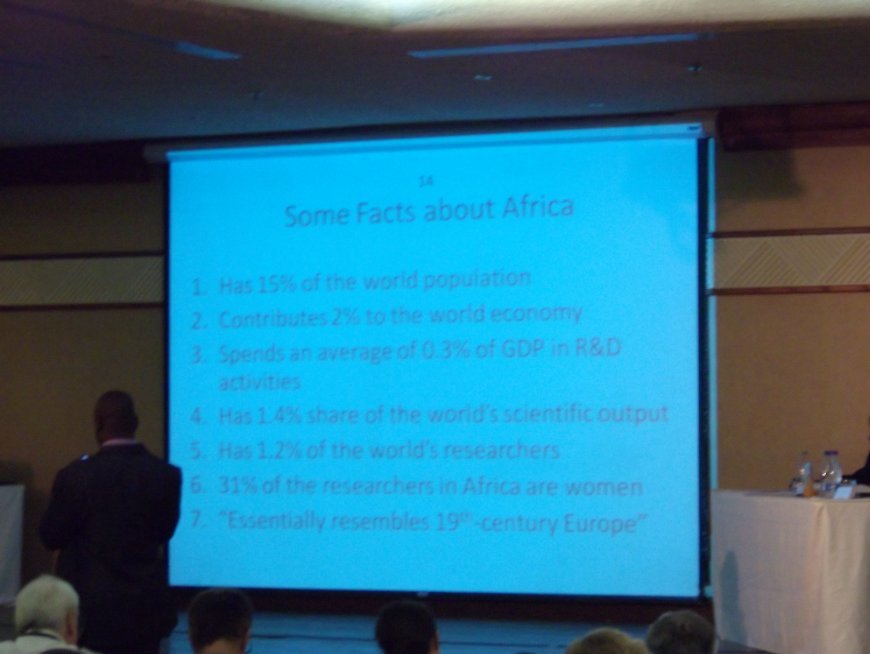
Here are a few data on Africa’s share in the World of Research I took from one slide that came out at the Plenary Session. Africa has…

  • 15% of the World population, but contributes only 2% to the World economy
  • Spends an average 0.3% GDP in R&D activities (most areas in the World are at least a few percent)
  • Has 1.4% share of the World Scientific Output
  • Has 1.2% of the World Scientific Researchers (which means an African Scientific Researcher is more productive than average, since 1.4/1.2 > 1 – We should learn from them!)
  • 31% of African researchers are Women (not sure women have the same share in Physics in Canada…)

I will keep you updated on what’s going on here!


Stories on Carbon-based nanomaterials – 6th Africa MRS Conferemce

I have been invited to present our work on Biological Properties of Graphene at the 6th Conference of the African Materials Research Society (Africa MRS).

http://www.africamrs.co.za/Home.html

Africa MRS Conferences are a great place to understand on science in developing countries and this is the main reason it is now the third time I am joining them. Symposia themes that have been chosen at the 6th Africa MRS are

  • Materials for Energy and Sustainability
  • Materials for Life, Health and the Environment
  • Basic Materials and NanoScience
  • Materials Technology, Processing and Metallurgy
  • Infrastructure Materials
  • Materials Education and Networking

So, after a 24-hr flight trip via Toronto, London UK, and Johannesburg (where I took the chance to visit some “carbon” colleagues at Wits University (www.wits.ac.za/) I am now in Zimbabwe!

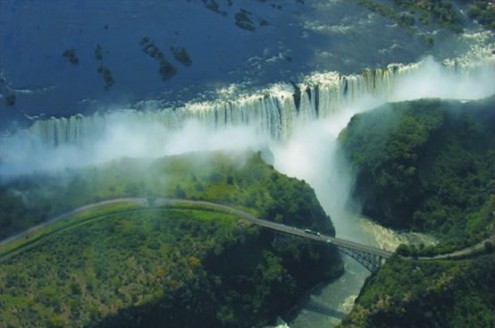
The venue is great, of course. Victoria Falls are the “big sisters” of Niagara Falls, more than three times wider. this is how the Falls look like from above…

I will give my talk Tuesday afternoon and will chair the session on Graphene with African presenters I contributed to organize on Wednesday afternoon.

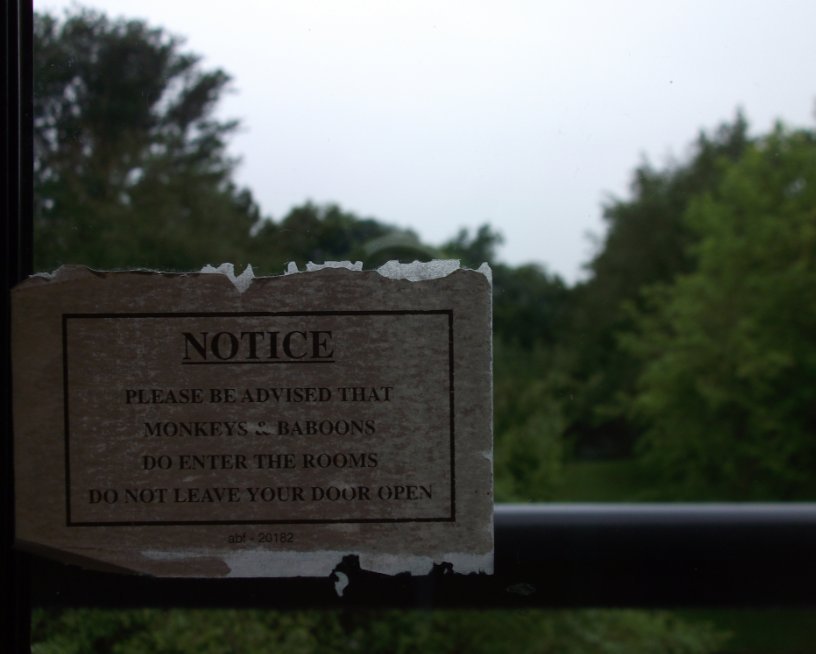
And here another funny spot from my hotel conference room…