Astronomer Dr. Els Peeters has been promoted to the rank of Associate Professor. This is effective July 1, 2012.
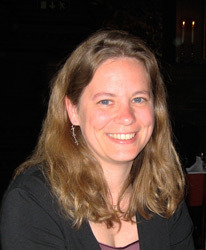

Astronomer Dr. Els Peeters has been promoted to the rank of Associate Professor. This is effective July 1, 2012.
Department of Physics and Astronomy
PhD Public Lecture
Matthew Fox
Supervisor: Dr. Giles Santyr
“Hyperpolarized noble gas magnetic resonance imaging and dynamic spectroscopy for investigation of rat models of lung inflammation”
DATE: FRIDAY, 3rd February 2012
TIME: 1:30 p.m.
PLACE: Robarts 2nd Floor Fisher Conference Room
All are welcome to attend.
All the internet dicussions of the last week got me thinking ‘what discoveries has the internet aided/caused?’. Then I recalled NASAs Galaxy Zoo project, which asks people of the internet to classify galaxies from HST and SDSS images. They have had tremendous success with many follow-up observations being made due to the general public simply asking ‘what is that?’. I highly recommend taking a look at their Blog or getting involved yourself. I find this typre of science inspiring, simultaneously capturing public interest and imagination by getting them actively involved and furthering scientific knowledge: a big thumbs up.
I trust we all had a great Christmas and New Year and are back in to the swing of a new winter term. I have, as promised, been doing some reading into the preparation of an academic CV, and no real surprise it is pretty straight forward and with some common sense not really to difficult. That being said like all things in research experience is key and thus, looking at websites and reading over example documents is the best way to prepare the initial one; which can then be improved upon. For this purpose I include two links:
As a graduate student near the end of my student career I am both nervous and excited about what the next few years have in store and plan to do my utmost to prepare myself for the reality of the current academic and nonacademic job markets. For me, this means information is key, thus I cannot recommend strongly enough events like the Graduate Career Day for arming ones self with the information to make the decision that is right for you.
I also, highly recommend that we spend a long time deciding which path to take. Make the academis versus industry decision for yourself. It wasn’t something I really thought about seriously until my PhD. was well underway, and I spent a lot of time weighing up the pros and cons for me and my family. For me personally the final decision came when I was looking over the projects that I have had to lay a side, the bits that I am not going to have time to finish in my PhD. research. As I was sorting the folders with all the titbits of background information and personal data I began to wonder about the possibilities housed in these notes. It was that juvenile excitement that made me realise that it is not only the science of Stellar Astronomy that is important to me but also the freedom of personal research. That being said, if I had to choose between research and hands on observing, the telescope would win hands down (but that is for another dicussion, later when I start looking at my options).
Anyway, since I seem to have rambled a little there, I will conclude. Make the decision for you, not for your supervisor or simply because it is easier to not think about it.
For undergrads interested in applying their skills outside of physics, the Dept. of Economics offers graduate programs that you may be interested in. They admit enough students with backgrounds in physics that they have made a poster and brochure aimed specifically at physics students.
They suggest that if you are even mildly interested, you should contact them soon as they have already started admitting students for Fall 2012.
I have received an email from the International Astronomical Youth Camp advertising their program and looking for participants. I don’t know much about this, except that it will be held this year in Germany from August 5-25, and that it is really expensive.
If any undergrads or young grad students are interested (the age cut-off is 24), you can find more information on their web site.
If you think about how we currently do research and publish our results, there’s lots of room for improving the process, and make scientific progress faster. Here’s an interesting article about a more collaborative approach to doing science.
http://www.nytimes.com/2012/01/17/science/open-science-challenges-journal-tra…?src=dayp
On June 5th, the planet Venus will move in front of the Sun — a Venus transit. Transits of Venus are rare events, and if you miss this year’s transit, you will have to wait until the year 2117 to see one. Mark the date in your calendar! The transit will be visible from London (and we are planning to help you see it) , although the sun will set before the transit is over. If you want to see the entire event, you will have to travel a bit…. Use this site for more info: