The Physics of Snowflakes?!

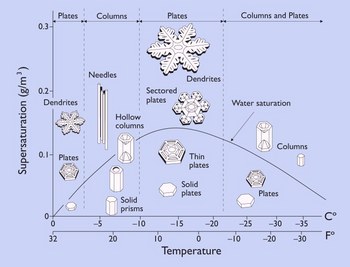
It’s unusual to see physics applied to more ‘common’ things in nature nowadays. Usually it’s ‘supermassive black hole… dark matter… proton collision.. LHC this, LHC that’ but modern research is still applied to tangible things…. Like snowflakes.

A physicist at Caltech did a study of the geometry of snowflakes and how/why they form the way they do.

Check it out!

http://www.physorg.com/news/2011-12-snowflake-science-physicist-snowflakes-thin.html


The end was near…sort of

For those of you that weren’t tracking it asteroid 2005 YU55 passed ~325,000 km from Earth on Nov. 9th at 6:30 p.m (ET). Although this may not seem “close” it is by astronomical standards.This was the closest fly-by of an asteroid since 1976.

Purdue University Professor Jay Melosh said the impact of such an object [YU55 is 400 m wide] would carve a crater  ~7 km across and 500 m deep whereas oceanic impact results in a 20 m tsunami [tsunami caused by earthquake that hit Japan earlier this year was estimated at ~10 m high waves].

NASA’s Near-Earth Object (NEO) program tracks ~1000 asteroids that are at least 1 km wide. An impact from one of these NEO’s would cause catastrophic effects. The next fly-by of YU55 is expected in 2028 at a much closer distance…

LHC & The Higgs Boson-Does it exist? We’ll know soon

The Large Hadron (as opposed to funnier spellings) Collider (LHC) is a particle accelerator that hopes to answer many important questions, specifically the existence of the Higgs Boson (HB), which is a hypothetical massive elementary particle predicted by the Standard Model (SM) of particle physics.

The LHC has already completed its 2nd year of operation and even though it has only reached half its designed beam energy (7 TeV-expected 2014) has constrained the mass of the HB to 114-141 GeV. This is the mass range where the HB was theoretically expected to be found and turns out to be the most difficult to observe. Physicists at CERN believe that by then end of 2012 we should confirm the existence of the HB OR rule it out, which would shake the foundations of the SM.


Article: http://www.quantumdiaries.org/2011/11/23/where-do-we-stand-on-the-higgs-boson…

Understanding the “Big screen TV” market?…

In case you’re xmas shopping already (or want to advise those xmas shopping for you!), it’s good to try to stay on top of the flat-screen monitor/TV market. Below is a recent blog entry from the Economist which overviews the current state of the market. We’re physics people – we’re supposed to know this stuff!…

[from the Economist, Dec 3, 2011]

Difference engine

The devil in the details

Consumer electronics: Changes in technology mean that choosing a big-screen television has become more complicated than ever. Should you pay extra for 1080p resolution, LED backlighting or 3D? We crunch the numbers

IF YOU have not gone shopping for a new television set for quite a while, enough has changed to require some serious thought. So before splurging on a new high-definition television (HDTV) set, it is worth considering which features make sense and which do not.


http://www.economist.com/node/21540381

Jokes from the desk of a graduate student: Vol. 1

Are you ready to LAUGH?! [Only Elizabeth Laird appropriate jokes] 

When Mr. Leno of the Tonight Show went J-walking and asked pedestrians some science questions, he discovered some amazing new facts about the Universe: 

Jay Leno: “Why does dew appear on plants in the morning when the Sun comes up?” A waitress: “Is it because the Sun makes them perspire?” 

Jay Leno: “Why does the Moon orbit the Earth?” An auto mechanic: “To get to the other side?” 

Jay Leno: What are magnets?” A taxi driver: “Are they the things crawling over a week-old dead cat?” 

Jay Leno: Which is more useful, the Sun or the Moon?” A thirteen-year old: [Pause] “I think it’s the Moon because the moon shines at night when you want the light, whereas the Sun shines during the day when you don’t need it.” 

It is reported that Copernicus’ parents said the following to him at the age of twelve: “Copernicus, young man, when are you going to come to terms with the fact that the world does not revolve around you.” 

Schrodinger’s cat walks into a bar: and doesn’t. 

Light travels faster than sound, that’s why some people appear bright until you hear them speak.


REMINDER: PhD Public Lecture (Physics) – TODAY, FRI. 9th Dec. @ 1 p.m. – ALI HATEF

TODAY!


Department of Physics and Astronomy


PhD Public Lecture


Ali Hatef

Supervisor: Dr. Mahi Singh


“Quantum Coherence and Interference in Metallic Photonic Crystals and Hybrid Systems”


DATE:            FRIDAY, 9th December 2011

TIME:             1:00 p.m.

PLACE:         Physics & Astronomy Room 22


All are welcome to attend.

Where are all the aliens? We don’t know yet-but we know what to look for…

A recent post on the astrobites website summarized an interesting paper that called for the search of Self-Replicating Probes (SRPs). They state that it is puzzling we haven’t found evidence of intelligent life yet, but even more so that it hasn’t found us.

An SRP has 2 purposes: explore & reproduce. Using the resources in a star system to reproduce, a new probe would travel to another system while one would remain to explore. Calculations show there should be 100 to 100^9 SRPs in our Solar System (SS). We haven’t detected them yet because they are just too small [the Hubble Space Telescope can’t even see landing gear on the Moon!].

Therefore, if our Galaxy does harbour ET intelligence, our SS is the first place to look!

[The paper can be found here: http://adsabs.harvard.edu/abs/2011arXiv1111.6131W]


Neil deGrasse Tyson’s (host of NOVA ScienceNOW) opinion on intelligent life [the 2-min mark is where the fun starts]LINK: http://www.youtube.com/watch?v=NxfJfv9tirU


Also see http://www.astronomynow.com/news/n1111/08SETI/ for ways we could detect lights from an alien civilization.


REMINDER: Physics & Astronomy Colloquium TODAY (Thurs. 8th Dec.) – DR. NAZIR KHERANI, Elec & Comp Eng. @ UofT

TODAY

PHYSICS & ASTRONOMY COLLOQUIUM

Date:           Thursday, 8th December 2011
Time:          1:30 p.m.
Location:    Physics & Astronomy Seminar Room 22

Dr. Nazir P. Kherani
Electrical and Computer Engineering
University of Toronto

“Photovoltaic – Photonic Crystal Interplay”

ABSTRACT

On the steps of Volta’s discovery of the voltaic effect in 1800 and Becquerel’s discovery of the photovoltaic effect in 1839, followed more than a 100 years of research before scientists at Bell Laboratories developed the first silicon pn junction photovoltaic device. In the intervening 60 years great strides have been made in the field of photovoltaics (PV). Today it is recognized that PV can become a significant component of sustainable terrestrial energy sources. It is non‐polluting, environment friendly, and its fuel is distributed relatively uniformly and is free.

However, with the continual drive towards grid‐parity and thus reduction of cost per peak watt, a range of novel approaches are being pursued which offer the potential combination of reduction in material and processing costs and maximal solar utilization. In this context, photonic crystals present interesting light propagation control that could make them amenable to novel photovoltaic‐photonic crystal integrations. Recently, we have proposed a novel class of photonic crystals, called selectively transparent and conducting photonic crystals (STCPCs). These STCPCs, a significant advance over existing 1D PCs, combine intense wavelength selective broadband reflectance with the transmissive and electrically conductive properties of sputtered transparent conducting oxides. This integration of optical and electrical functionalities into a single device element has opened the way for performance enhancement in a range of optoelectronic devices including photovoltaics.

The talk will provide an overview of photovoltaics, highlighting a range of device material systems and cell concepts and their associated strengths and challenges. The presentation will then focus on our recent studies on the potential use of photonic crystals in PV devices, with an emphasis on their application in thin film silicon solar cells; specifically, their application of selectively transparent and conducting photonic crystals in photovoltaics and allied devices will be underlined. Allied investigations into low‐cost high‐efficiency ultra‐thin silicon photovoltaics and recent laser-assisted synthesis of tailorable light trapping patterns in silicon will also be presented.


Image002

Coffee & cookies will be available, courtesy of

Image001

Graphene for the Real World

Last year’s Nobel Prize in Physics went to a pair of researchers working on graphene. The remarkable two-dimensional material was noted for its impressive conductivity and strength. At the time, however, no one knew how to make it practical. Now a team in China have managed to turn nanometre-sized flakes of graphene oxide into long fibres, which can be used in a variety of applications.