But it’s all going to be OK, Canada’s Environment Minister Peter Kent knows what’s at stake for Canada at the talks in Durban, South Africa…. hmmm…
Why is it that a country that stands to lose the most through climate change in the Arctic has thrown Kyoto out of the window and is standing in the way of further agreements to combat climate change?
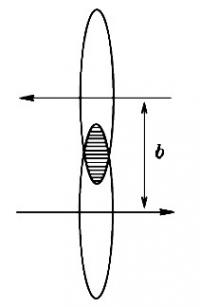
Usually this question is meaningless since protons are too small to scatter light, they don’t ‘look’ like anything. However at speeds close to the speed of light it seems they are a ‘black disk’, kinda like an elongated hockey puck.
Physicists at the LHC have been smashing high energy protons together for a while now and the data they have gathered has lead to this conclusion by calculating and measuring the cross-section of proton-proton inelastic scattering collisions to that of the total cross-section (elastic plus inelastic). In the collision world of physics, at least at VERY high energies (the asymptotic limit to infinity), elastic and inelastic collisions hold more or less the same meaning, for an inelastic collision the protons absorb eachother and for an elastic collision they scatter off eachother.
Theoretically at very high speeds relativity tells us that the proton will be ‘squished’ from length contraction and you can imagine a spherical object being squished down to a flat disk, this is essentially what is being suggested here.
Although the article referenced below is talking about American universities, I know for certain that these same debates are going on here in Canada, and within Western. Questions including: “Why do we teach the way we do?”, “How we deliver content?”, and “Are really serving a purpose in ‘today’s world”, are more common and in my mind becoming harder to answer. Why are students sitting in our classrooms instead of watching iTunesU?
I think we have partial answers to some of these questions, but this debate is not going away. I like the quote at the end of the referenced article, where Lawrence Lowell (apparently a past-president of Harvard) is quoted as arguing that “institutions are rarely murdered; they meet their end by suicide… They die because they have outlived their usefulness, or fail to do the work that the world wants done.” Are our universities doomed to this? We’ll be talking about this more, I’m sure.
Schumpeter
University challenge
Slim down, focus and embrace technology: American universities need to be more businesslike
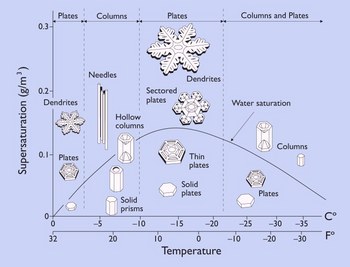
It’s unusual to see physics applied to more ‘common’ things in nature nowadays. Usually it’s ‘supermassive black hole… dark matter… proton collision.. LHC this, LHC that’ but modern research is still applied to tangible things…. Like snowflakes.
A physicist at Caltech did a study of the geometry of snowflakes and how/why they form the way they do.
For those of you that weren’t tracking it asteroid 2005 YU55 passed ~325,000 km from Earth on Nov. 9th at 6:30 p.m (ET). Although this may not seem “close” it is by astronomical standards.This was the closest fly-by of an asteroid since 1976.
Purdue University Professor Jay Melosh said the impact of such an object [YU55 is 400 m wide] would carve a crater ~7 km across and 500 m deep whereas oceanic impact results in a 20 m tsunami [tsunami caused by earthquake that hit Japan earlier this year was estimated at ~10 m high waves].
NASA’s Near-Earth Object (NEO) program tracks ~1000 asteroids that are at least 1 km wide. An impact from one of these NEO’s would cause catastrophic effects. The next fly-by of YU55 is expected in 2028 at a much closer distance…
The Large Hadron (as opposed to funnier spellings) Collider (LHC) is a particle accelerator that hopes to answer many important questions, specifically the existence of the Higgs Boson (HB), which is a hypothetical massive elementary particle predicted by the Standard Model (SM) of particle physics.
The LHC has already completed its 2nd year of operation and even though it has only reached half its designed beam energy (7 TeV-expected 2014) has constrained the mass of the HB to 114-141 GeV. This is the mass range where the HB was theoretically expected to be found and turns out to be the most difficult to observe. Physicists at CERN believe that by then end of 2012 we should confirm the existence of the HB OR rule it out, which would shake the foundations of the SM.
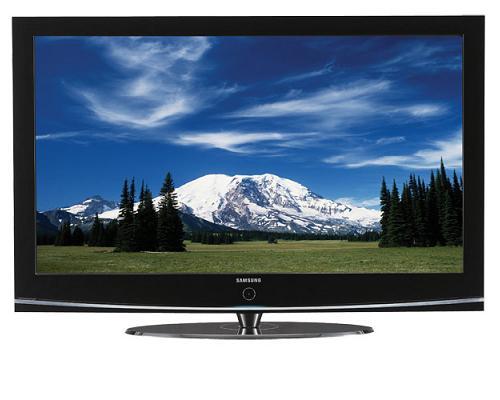
In case you’re xmas shopping already (or want to advise those xmas shopping for you!), it’s good to try to stay on top of the flat-screen monitor/TV market. Below is a recent blog entry from the Economist which overviews the current state of the market. We’re physics people – we’re supposed to know this stuff!…
[from the Economist, Dec 3, 2011]
Difference engine
The devil in the details
Consumer electronics: Changes in technology mean that choosing a big-screen television has become more complicated than ever. Should you pay extra for 1080p resolution, LED backlighting or 3D? We crunch the numbers
IF YOU have not gone shopping for a new television set for quite a while, enough has changed to require some serious thought. So before splurging on a new high-definition television (HDTV) set, it is worth considering which features make sense and which do not.
Are you ready to LAUGH?! [Only Elizabeth Laird appropriate jokes]
When Mr. Leno of the Tonight Show went J-walking and asked pedestrians some science questions, he discovered some amazing new facts about the Universe:
Jay Leno: “Why does dew appear on plants in the morning when the Sun comes up?” A waitress: “Is it because the Sun makes them perspire?”
Jay Leno: “Why does the Moon orbit the Earth?” An auto mechanic: “To get to the other side?”
Jay Leno: What are magnets?” A taxi driver: “Are they the things crawling over a week-old dead cat?”
Jay Leno: Which is more useful, the Sun or the Moon?” A thirteen-year old: [Pause] “I think it’s the Moon because the moon shines at night when you want the light, whereas the Sun shines during the day when you don’t need it.”
It is reported that Copernicus’ parents said the following to him at the age of twelve: “Copernicus, young man, when are you going to come to terms with the fact that the world does not revolve around you.”
Schrodinger’s cat walks into a bar: and doesn’t.
Light travels faster than sound, that’s why some people appear bright until you hear them speak.
A recent post on the astrobites website summarized an interesting paper that called for the search of Self-Replicating Probes (SRPs). They state that it is puzzling we haven’t found evidence of intelligent life yet, but even more so that it hasn’t found us.
An SRP has 2 purposes: explore & reproduce. Using the resources in a star system to reproduce, a new probe would travel to another system while one would remain to explore. Calculations show there should be 100 to 100^9 SRPs in our Solar System (SS). We haven’t detected them yet because they are just too small [the Hubble Space Telescope can’t even see landing gear on the Moon!].
Therefore, if our Galaxy does harbour ET intelligence, our SS is the first place to look!