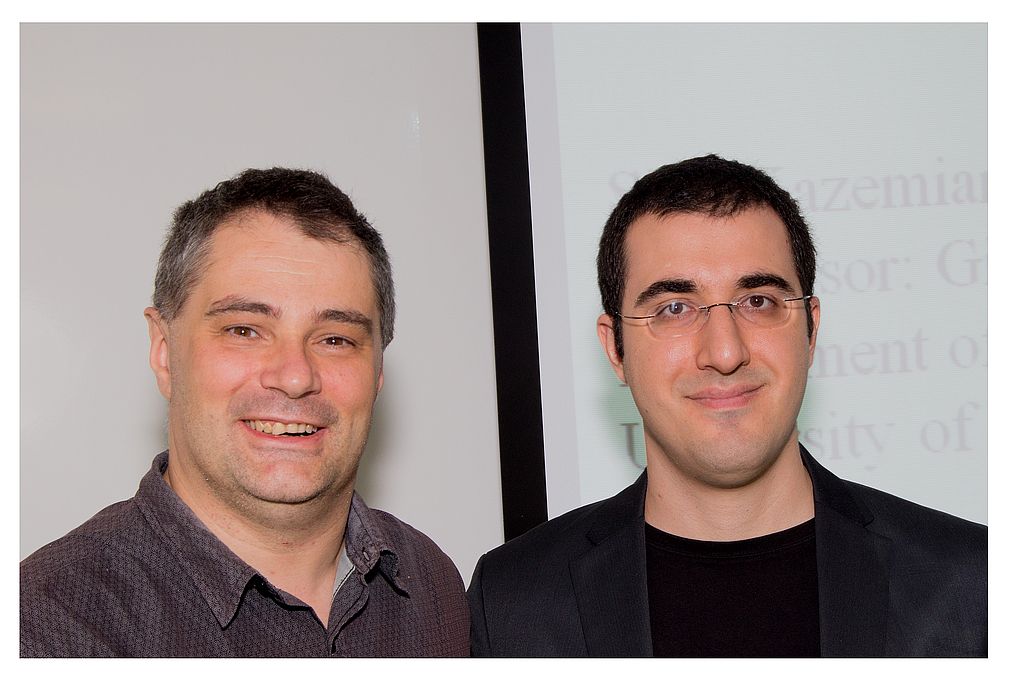
On Tuesday August 29, 2017, Sina Kazemian gave a public lecture on his thesis topic “Modelling the thermal conductivity of layered materials from photothermal measurements”.
He then successfully defended the thesis. Sina was supervised by Dr. Giovanni Fanchini.
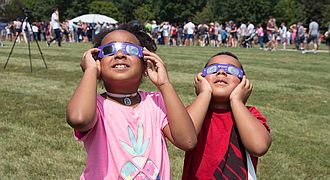
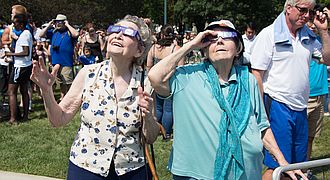
On Monday August 21, 2017, the Department of Physics and Astronomy hosted a viewing of the partial eclipse on University College hill and the Cronyn observatory. Undeterred by the heat more than 5000 visitors of all ages, both the public and members of the Western community, came out to enjoy the show creating a festival atmosphere for the afternoon. Nature cooperated with clear skies offering magnificent views throughout the nearly three-hour event, where 75% of the sun was covered by the moon at the maximum of the eclipse. Several telescopes were set up along the walkway on the hill, as well as demonstrations of safe projection methods, while at Cronyn the Sun’s image was projected through our 25.4 cm refractor, and a live stream from the path of totality was broadcast in a classroom in the Engineering building next to the Observatory.
A big thank you to the volunteers from the Department of Physics and Astronomy and the Royal Astronomical Society of Canada, who handled the large, enthusiastic crowd of anxious eclipse seekers with grace and professionalism, distributing viewing glasses, information sheets and much-needed water, and helping make an already unforgettable day even more so. The event would not have been possible without their efforts and dedication. Particular thanks go to Prof. Jan Cami for organizing the event and PhD candidate Robin Arnason for running operations on the day.
On Monday August 14, the summer undergraduate students presented their research in PICO style during the Fusion Pizza event. Each student did a two minute presentation with slides before spreading out across the room for a Q&A session where attendees could circulate inquiring about each student’s research. The undergrads brought laptops and tablets to show their slides and provide more details for those interested. The event was a great success with some fantastic presentations and some interesting research on display.
Our Summer Undergraduate Presenters (l to r) Matt McCready, Derek Churchill, Roy Zang, Logan Dewsnap, Tim Hallett, Tina Yu, Chris Lee, Ian Fare.
Three other students participated in the event, but were not present on the day: Meet Panchal, Josh Folkerson, and Adrian Mahjour.
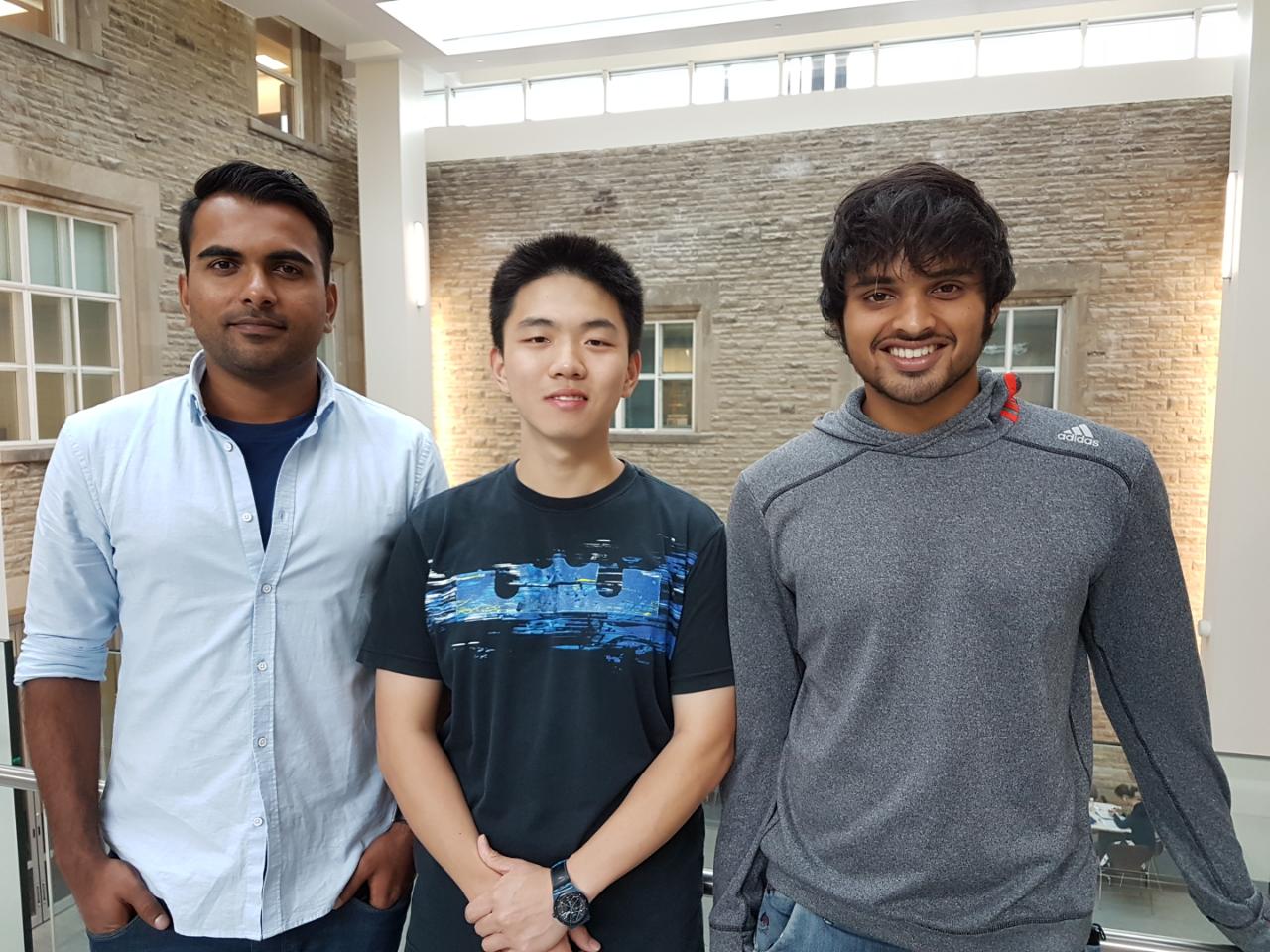
This summer the Department is hosting three international interns who have come to Canada through the Mitacs Globalink Research Internship program. These students are Abhishek Chaudhary, working with Prof. Giovanni Fanchini, Shyam Menon, working with Prof. Shantanu Basu, and Xiyang Zhang, working with Prof. Sree Ram Valluri.
Left to right: Abhishek Chaudhary, Xiyang Zhang, Shyam Menon.
The Mitacs Globalink Research Internship program is a competitive program for international students from selected countries, currently Australia, Brazil, China, France, India, Germany, Mexico, Saudi Arabia, Tunisia, and Ukraine. After a detailed process run by Mitacs, selected top-ranked applicants participate in a 12-week research internship under the supervision of a Canadian university faculty member.
Abhishek Chaudhary is currently pursuing a Masters degree in Engineering Physics at the University of Oldenburg, Germany. He is also funded by the German DAAD exchange program. According to Abhishek, “Being a Mitacs intern at Western University has been a very delightful and educational experience for me. My colleagues and supervisor Prof. Fanchini have been very helpful and supportive. I am also thankful for being allowed a certain degree of freedom to structure my internship as per my interests in graphene based solar cells. This research internship has further solidified my interest to pursue a PhD in semiconductor physics.”
Shyam Menon is pursuing a combined Bachelors-Masters degree in Physics at the Indian Institute of Technology (IIT) – Varanasi, India. Here he is running large-scale three-dimensional simulations of star formation, stating that “The experience has given me a lot of really good exposure to what it’s like to do research.There’s a lot of good research coming out of Canada now, especially here at Western. In fact, I am thinking about research as a career and doing graduate school in Canada. I would love to come back!”
Xiyang Zhang is an undergraduate student majoring in Statistics in the College of Mathematics, Sichuan University, China. He relates that “I seized an opportunity offered by Mitacs, starting my research project about data mining of gravitational wave data at Western. Here, a kindness toward multiculturalism and a strong academic atmosphere attract me deeply, facilitating my work tremendously.”
These three students are but the latest in a rich history of international interns in the Department of Physics and Astronomy at Western. There have been about ten Mitacs intern students in the Department in the last five years, and many others funded by other programs like the German DAAD, the Ontario/Baden-Wuerttemberg exchange program and the Ontario-India exchange program. In the Department, we hope to provide a positive experience of research and all-around support so that these students can pave the way for more exchange students in the future. These students can directly assess for themselves the merits of returning to Western for graduate studies. To this effect, the Mitacs students are also eligible for a Globalink Graduate Fellowship if they intend to return to Canada for graduate studies.
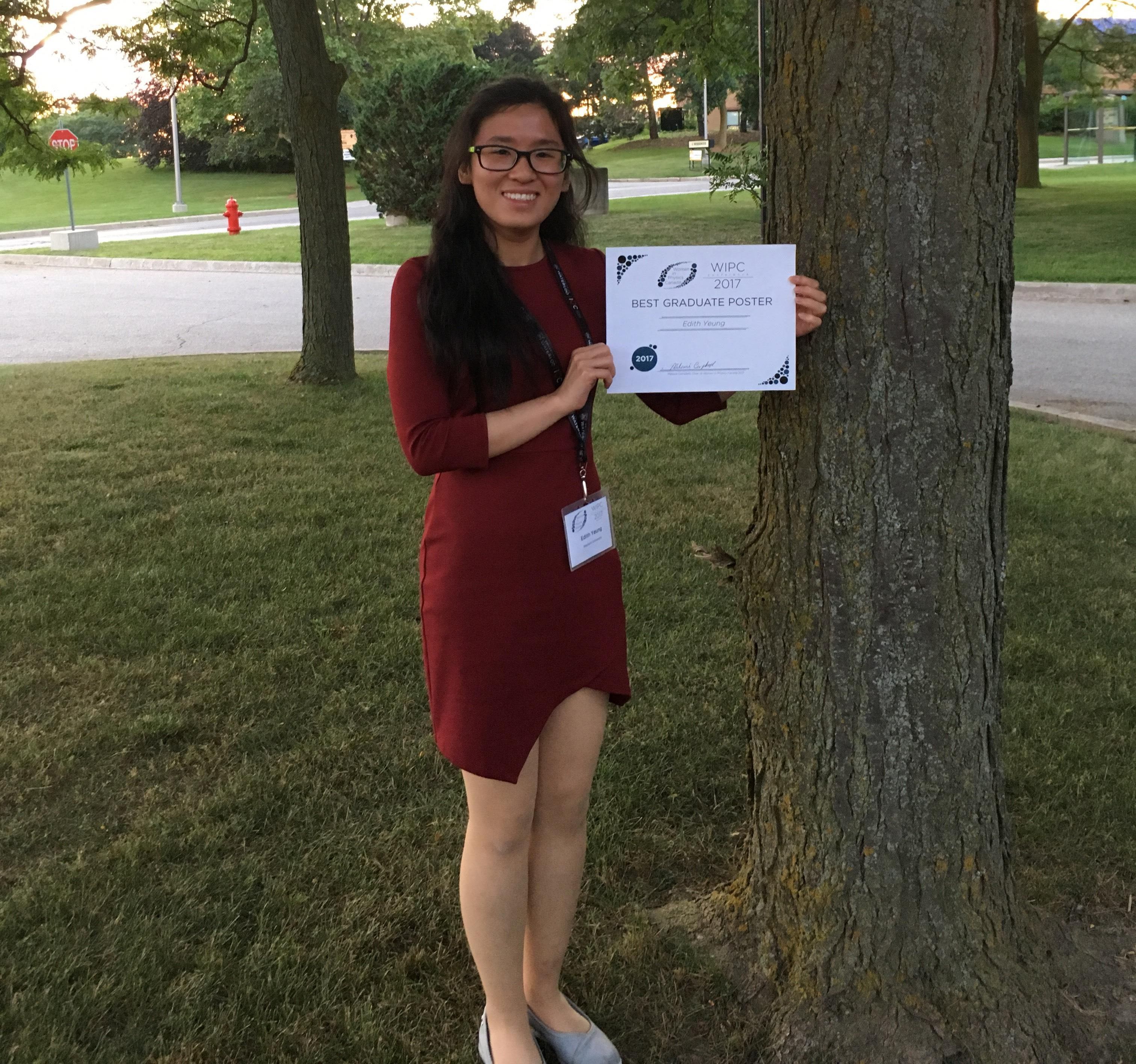
Edith Yeung won the Best Graduate Poster award at the sixth annual Women is Physics Canada (WIPC) conference was hosted by the University of Waterloo, for her poster entitled “Incorporation of radical polymers in perovskite solar cells as hole transport material”.
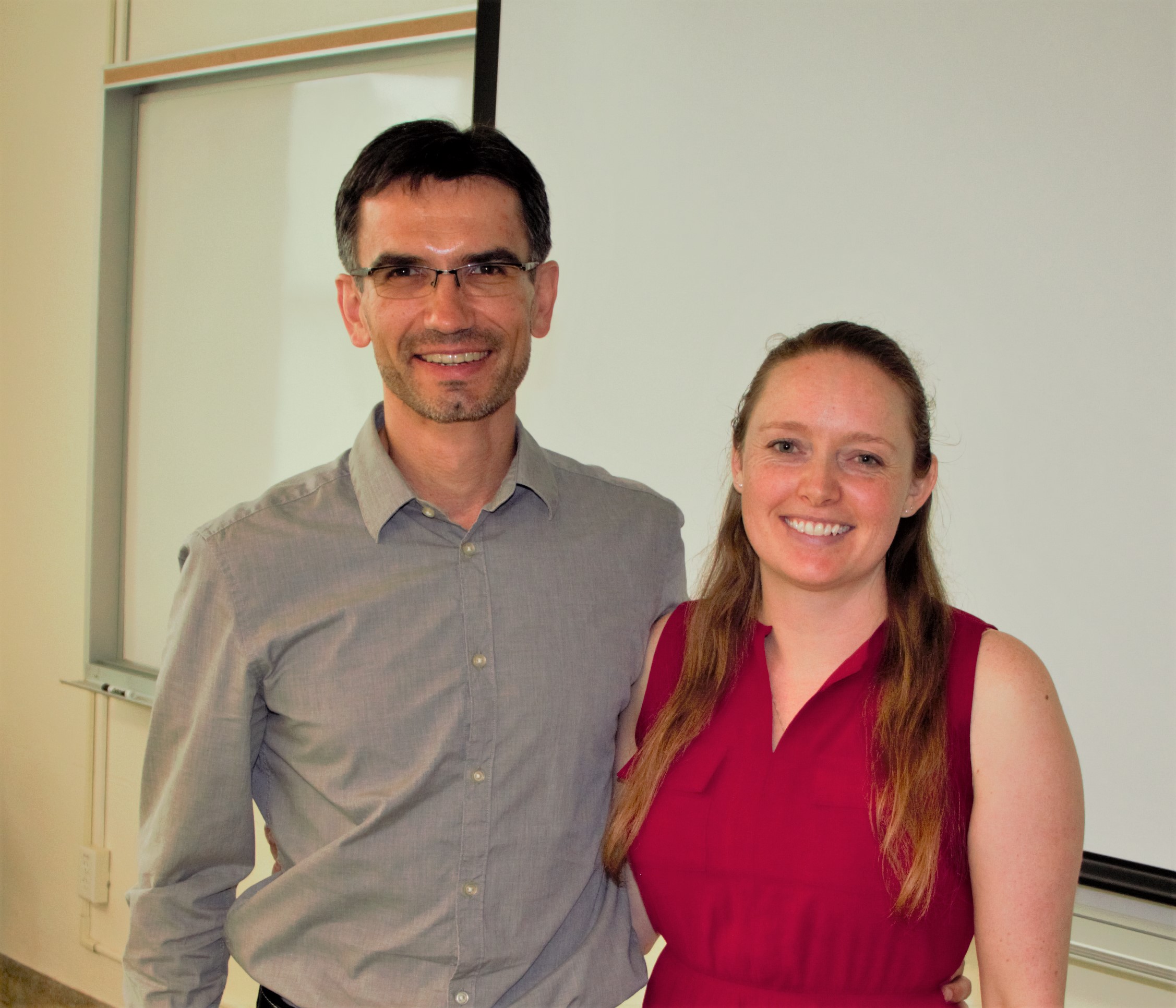
On Thursday July 13, 2017, Kendra Kellogg gave a public lecture on her thesis topic “Investigating the Effects of Gravity, Cloud Structure and Metallicity on Brown Dwarf Atmospheres”.
She then successfully defended the thesis.Kendra was supervised by Dr. Stan Metchev.
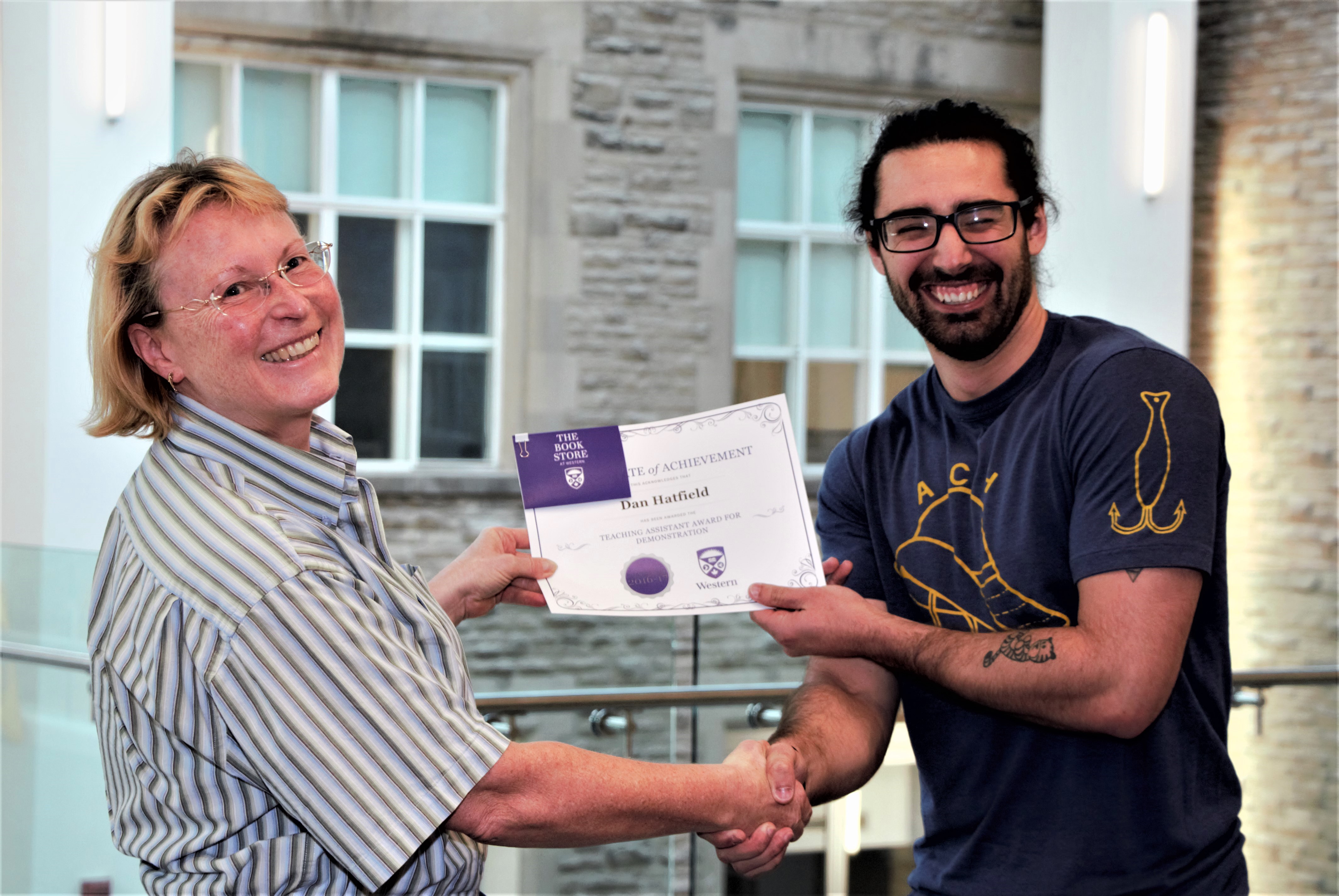
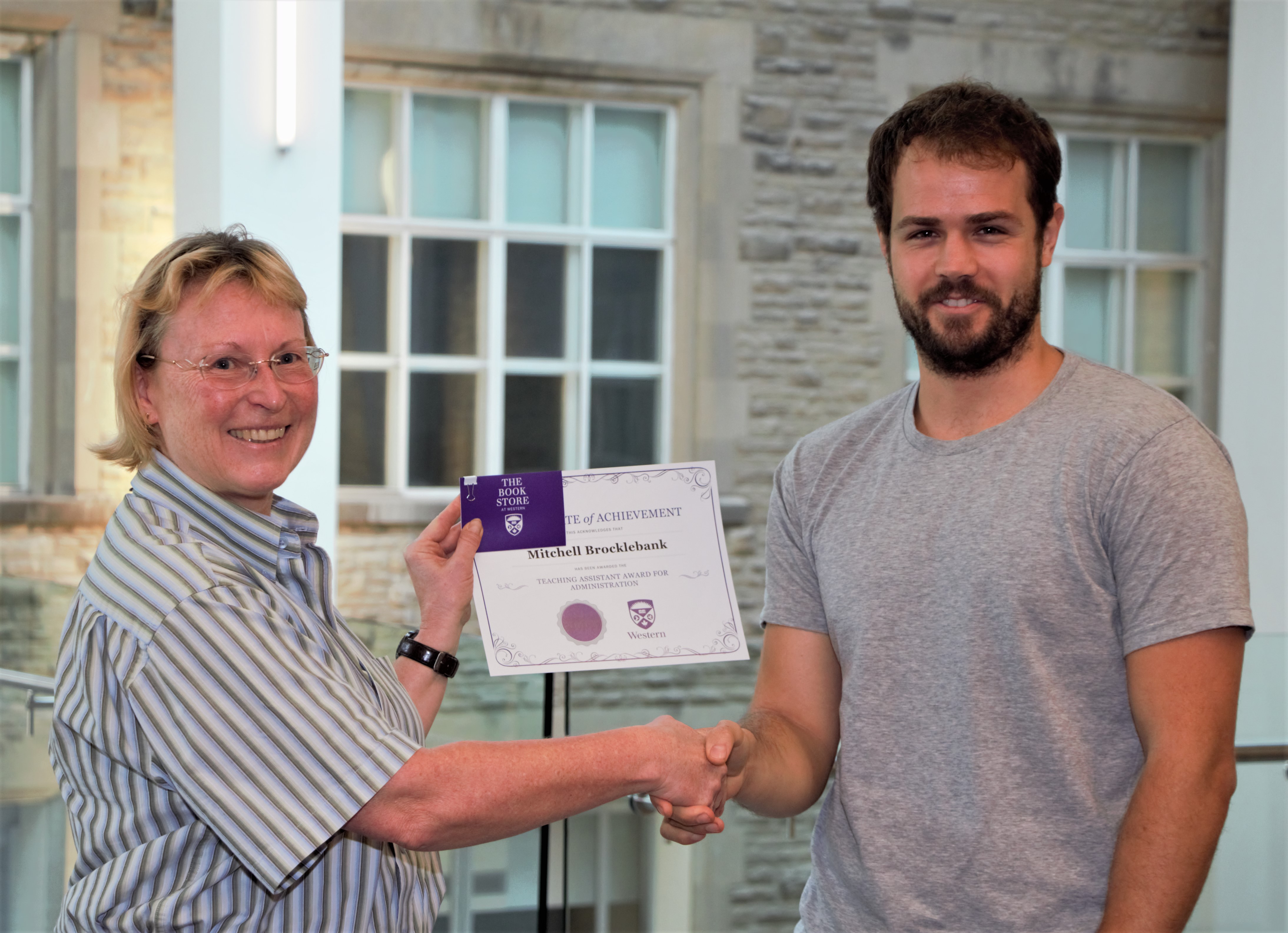
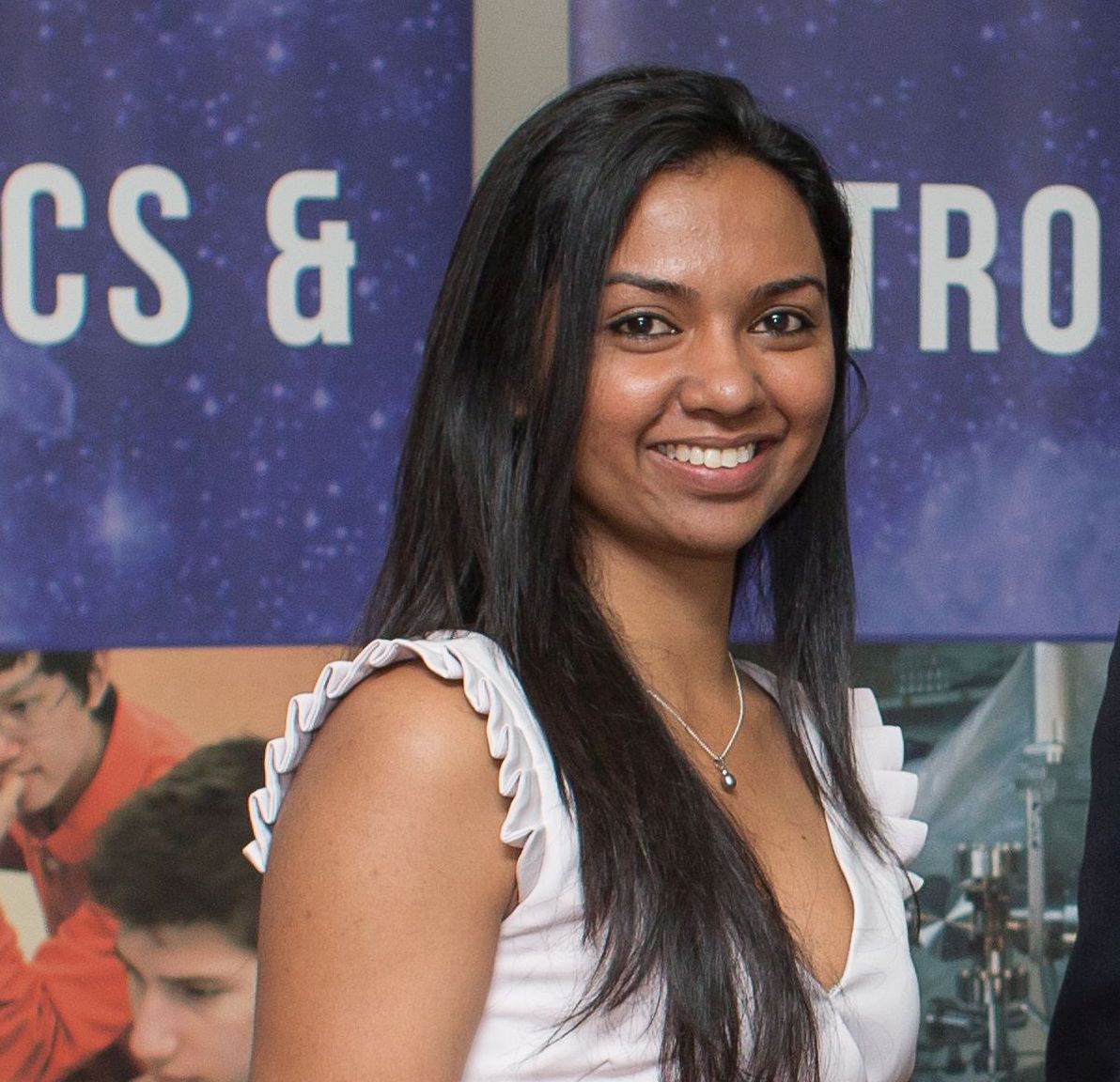
On Monday June 26 the department honoured its TA Award winners for the 2016-2017 academic year. The event was hosted by graduate chair, Silvia Mittler, during the weekly department coffee and each winner was awarded a certificate and a $100 gift card to the campus bookstore.
TA Award for Demonstration: Dan Hatfield
TA Award for Administration: Mitchell Brocklebank
TA Award for Tutoring: Shayamila Mahagammulla Gamage (absent, attending a conference in Romania)
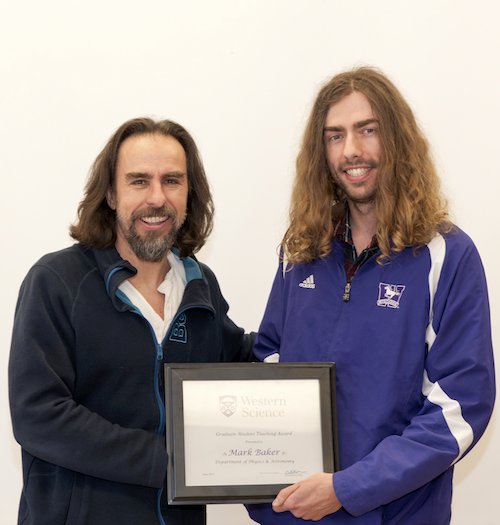
At a ceremony back in May, Mark Baker was awarded the Faculty of Science’s Graduate Student Teaching Award for the Department of Physics & Astronomy
On Thursday June 15, 2017, the department of Physics and Astronomy celebrated its graduating class of 2017 with a reception for graduates and their family and friends prior to the convocation ceremony at Alumni Hall. Congratulations to all of our Graduates!
Physics and Astronomy Graduating Class of 2017:
PhD graduates
Thesis title
Supervisor(s)
Abedin Abedin
Astronomy
Formation and past evolution of the meteoroid complex of Comet 96P/Machholz
Peter Brown & Paul Wiegert
Isabelle Cyr
Astronomy
The geometry and density of B-emission star disks from statistical analysis and numerical simulations
Carol Jones
Sabastine Ezugwu
Physics
Nanoscale thermal and electronic properties of thin films of graphene and organic polyradicals
Giovanni Fanchini
Bethany Grzenia
Astronomy
The circumstellar environments of B-emission stars constrained by optical interferometry
Carol Jones
Zahra Haghshenasfard
Physics
Linear and Nonlinear Dynamics of Spin Waves in Ferromagnetic Nanowires
Mike Cottam
Bushra Hussain
Physics
Methods for Improved Estimation of Low Blood Velocities using Vector Doppler Ultrasound
Tamie Poepping & James Lacefield
Fereshteh Rajabi
Physics
Dicke’s Superradiance in Astrophysics
Martin Houde
Maryam Tabeshian
Astronomy
Detection and Characterization of Extrasolar Planets through Planet-Disk Dynamical Interactions
Paul Wiegert
MSc graduates
Thesis title
Supervisor
Aysegul Abdelal
Physics
Silicon Nanostructures Deposited by Molecular Beam Epitaxy on Silicon Oxide
Peter Simpson & Lyudmila Goncharova
Kieffer Davieau
Physics
The study of plasmonics in nanohole metallic metamaterials
Mahi Singh
Marwa Dawaga
Physics
Automatic detection of eye blinking using the generalized Ising Model
Andrea Soddu
PhD and MSc Graduates in Attendance
BSc graduates
Degree
Christopher Brown
Major in Physics
Dario Crisci
Major in Physics
Edward De Wit
Bachelor of Engineering Science,
Electrical EngineeringB.Sc. (3 Year)Major in Physics
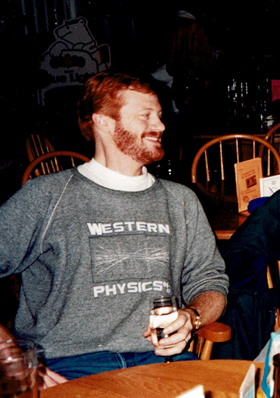
Mike Sharpe obtained his honors BSc degree at Western in Physics in 1986.
After working at the London Regional Cancer Program for two years, he returned to Western to complete his PhD in Medical Biophysics.
Since then Mike’s work has transformed the medical physics field, making significant impact in the delivery of radiotherapy for breast cancer patients, and influenced medical physicists throughout the world. Quoting from the American Association of Physicist in Medicine, “Dr. Sharpe has advanced the field through the development, validation, and application of radiotherapy and imaging technologies on which he has published over 70 papers in peer-reviewed journals and 11 book chapters, and has co-authored several patents.”
Unfortunately, he passed away from cancer at the prime age of 51.
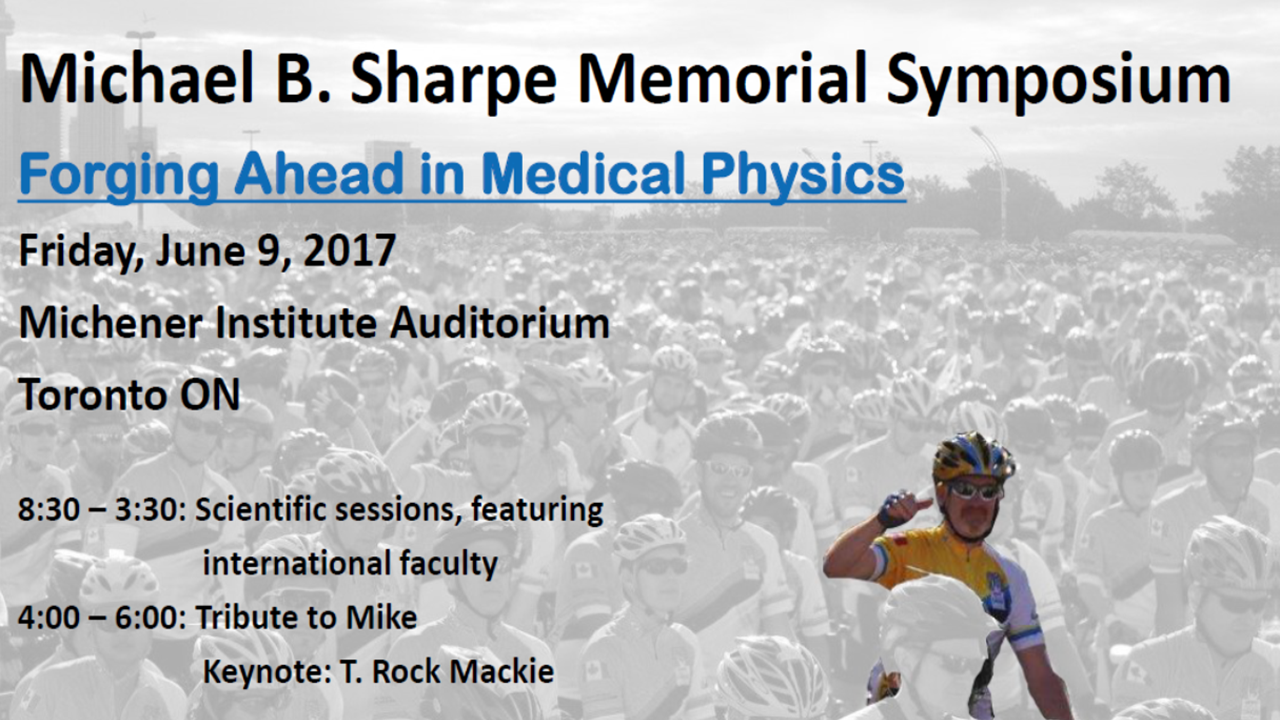
This past Friday (June 9, 2017) , the Michael B. Sharpe Memorial Symposium was held in Toronto, a day before Mike’s favourite cycling event, the Enbridge Ride to Conquer Cancer. Physicists and physicians from different parts of Canada came to give scientific talks interspersed with stories of how Mike Sharpe influenced their work and their lives.
So, what can we do with a BSc in Physics? Mike Sharpe has provided a brilliant example – he touched many lives and made the world a better place.
Congratulations are in order for a pair of Physics & Astronomy graduate students who won awards at recent conferences.
At the Canadian Astronomical Society (CASCA) annual meetings in Edmonton, Megan Tannock won 1st prize for the Best student poster presentation (as judged by the Board), for her poster: Weather on Other Worlds: Discovery of Three Extremely Fast Rotating Brown Dwarfs.
At the Canadian Association of Physicists (CAP) Congress held in Kingston, Carolyn Cadogan won 2nd place in the Condensed Matter and Materials Physics division for her talk: Optical and Electrical Properties of Self-Assembled Silicon Nanoclusters.


 Kendra was supervised by Dr. Stan Metchev.
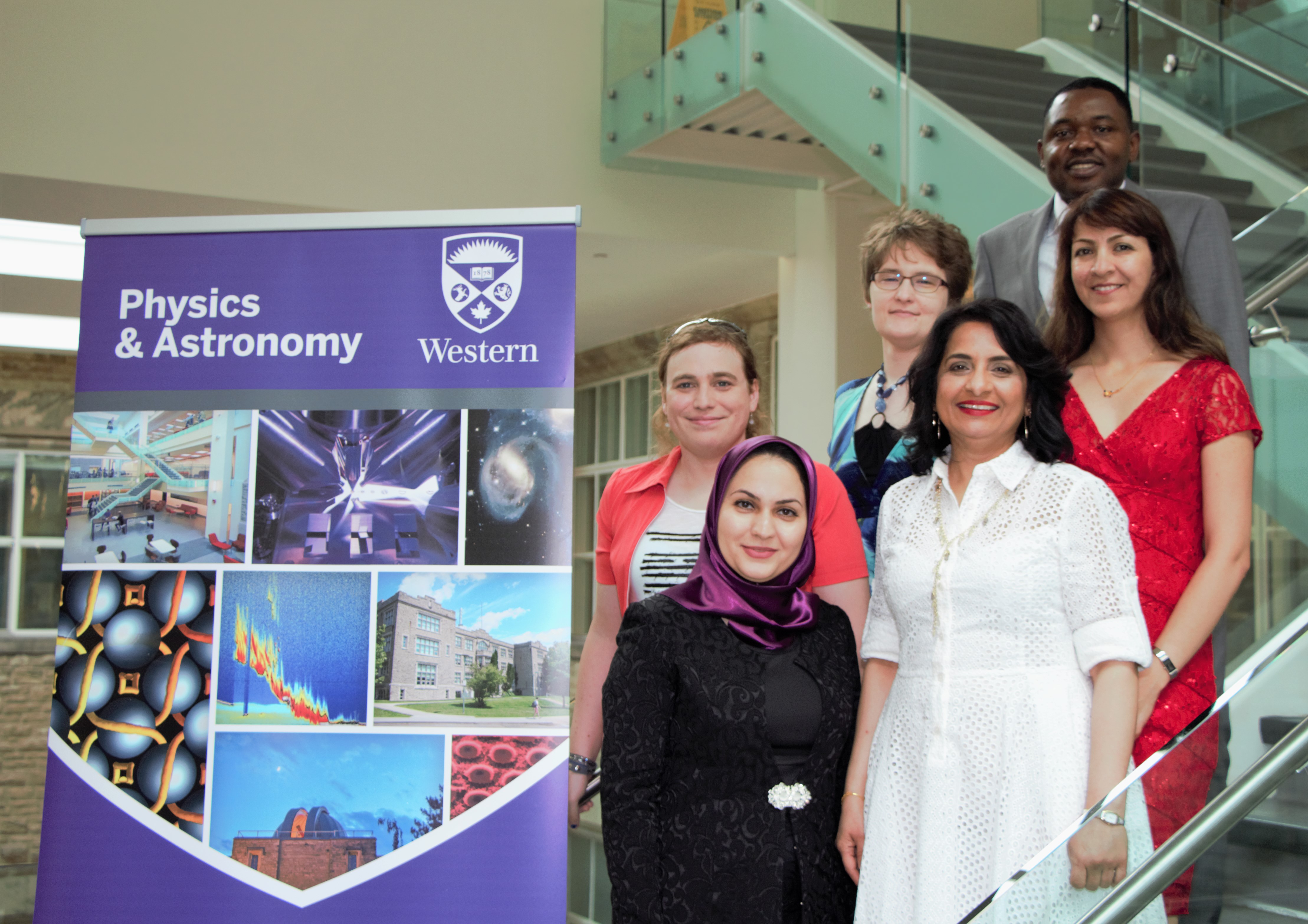 PhD and MSc Graduates in Attendance
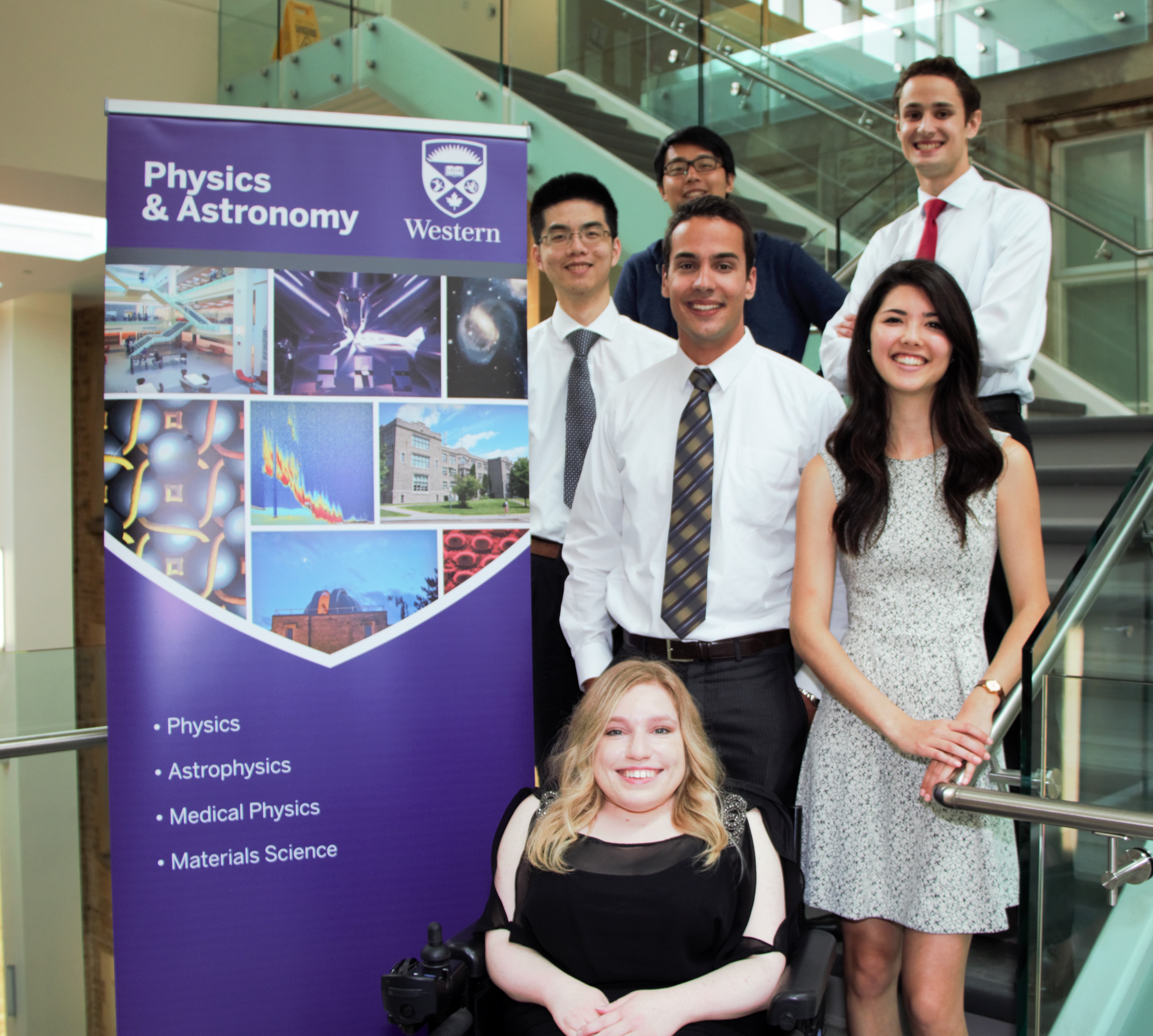 BSc Graduates in attendance