All posts by Eugene Wong

Michael B. Sharpe: a lifetime of achievements starting with Western’s undergraduate degree in physics

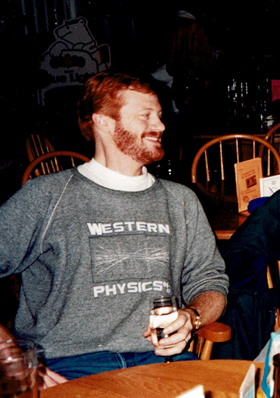
Mike Sharpe obtained his honors BSc degree at Western in Physics in 1986.

After working at the London Regional Cancer Program for two years, he returned to Western to complete his PhD in Medical Biophysics.

Since then Mike’s work has transformed the medical physics field, making significant impact in the delivery of radiotherapy for breast cancer patients, and influenced medical physicists throughout the world. Quoting from the American Association of Physicist in Medicine, “Dr. Sharpe has advanced the field through the development, validation, and application of radiotherapy and imaging technologies on which he has published over 70 papers in peer-reviewed journals and 11 book chapters, and has co-authored several patents.”

Unfortunately, he passed away from cancer at the prime age of 51.

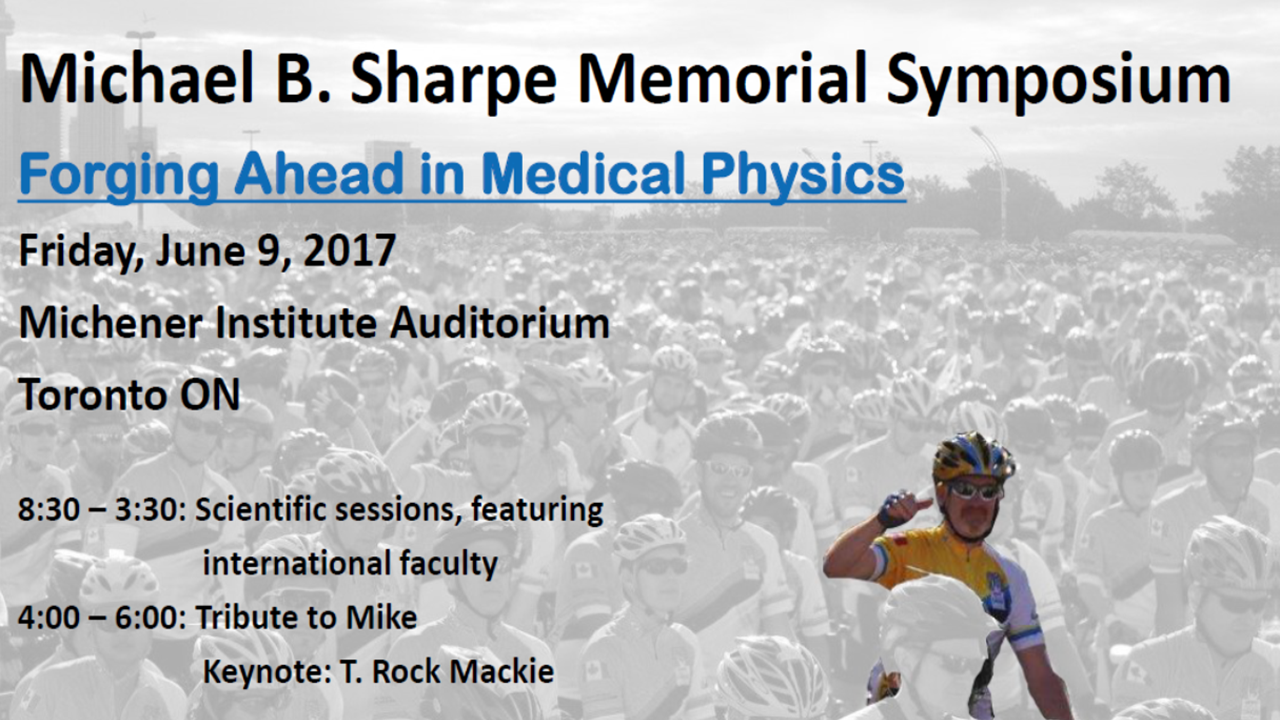
This past Friday (June 9, 2017) , the Michael B. Sharpe Memorial Symposium was held in Toronto, a day before Mike’s favourite cycling event, the Enbridge Ride to Conquer Cancer. Physicists and physicians from different parts of Canada came to give scientific talks interspersed with stories of how Mike Sharpe influenced their work and their lives.

So, what can we do with a BSc in Physics?  Mike Sharpe has provided a brilliant example – he touched many lives and made the world a better place.

Eugene

Stories of love and commitment behind our awards

Few of us heard the named awards for our undergraduate students:

  • Don Hay award for the student with the best fourth year thesis,
  • Maude Holt-Kingston award Gold Medal award for the highest achieving student in honour specialization in Astrophysics, and
  • Raymond Compton Dearle Gold Medal for the highest achieving student in  honour specialization in Physics

Even fewer know the history of the people behind these named awards.  Thankfully, our late Don Moorcroft has documented the history of the Physics & Astronomy department and contained valuable information.

Prior to 2015 award ceremony, I had the opportunity to get in touch with Diane Coffin, daughter of Donald Hay.  I asked about Don Hay and history, and here’s her reply:

Donald Ross Hay received his Bachelor of Science and Masters of Science from U.W.O. in 1946 & 1947. He then went on to receive his Phd from McGill University in 1952. In 1952, he was hired by the Department of Defence Research Board in Ottawa, Ontario as a scientist. 

In 1958, he was offered a position at U.W.O. as a professor of Physics, and established a research program in lower atmospheric physics, particularly micrometeorology, which he continued until his death in April, 1985. Throughout his career, dad published 96 articles, and one is currently archived in the Library of Congress in Washington, D.C. From 1963 until 1971, he was commissioned by the North American Treaty Organization (NATO) to attend annual meetings throughout Europe and Asia, and give lectures about his research.

Dad and mom were married in 1952, and his wife, Jean, still lives in London. She'll be 89 years old this year. My parents have two children - John and Diane - and three grandchildren - Ryan, Matthew, and Charlie.

This would be the 30th year anniversary of Don Hay’s passing, and the donation is given each year by Don’s wife Jean Hay.

That, to me, showed how deep Jean loved her husband, and the unwavering commitment to honour him.  I wanted all, not just the award winners,  to know this.

Maude Holt-Kingston was an endowed award in Astronphysics established by Prof Harold Kingston.  According to Moorcroft,

Harold Reynolds Kingston [1921-47] (Queens, MA, 1908; Chicago, PhD, 1914) arrived from the University of Manitoba and took over as Head of the Department of Mathematics. He took a great, although largely amateur, interest in astronomy, and following his arrival at Western the name of the department was changed to the Department of Mathematics and Astronomy, a name which remained until 1958-59. 

You read that correctly. Prof Kingston was a Mathematician, but when he got interested in Astronomy, he renamed the department to Mathematics and Astronomy!

The award was endowed by Prof Kingston in memory of his wife Ethel Maude Holt. This time, it is love from the husband for his wife.

(For some reasons, on the official handbook, Maude Holt-Kingston’s name was left out of this Gold Medal award, so I will need to followup with this.)

Last but not least, we have the Raymond Compton Dearle Gold Medal award for Physics. According to Moorcroft, Prof Raymond Compton Dearle [1919-58] (Toronto, MA, 1917, PhD, 1919), became the second Head of the department of Physics in 1919 and held the position for 30 years. In spite of the evident difficulties at Western, which that year had only 44 freshmen in the entire faculty of Arts, Dr. Dearle saw the opportunities for the Physics department.

It was Prof Dearle that helped plan the new Sciences Building (now, the Physics and Astronomy Building). Construction began in 1922, and into which all the science departments moved starting in 1924. It was renovated recently into this brand new Physics & Astronomy building that you now enjoy.

This award has been presented in the past number of years by Rev. Paul Ross, grandson of Prof Dearle. When I spoke to Rev Ross, I sensed the immense respect for Prof Dearle, and the love for his grandfather.

If you endured this lengthy blog, thank you. I hope you will find the human stories behind the men and women of these awards inspirational. I did. We scientists have long been trained to be “robotically” objective, and the human side may not shine through in our daily work.

Thank you.

Eugene

Preparation for classroom teaching

I was preparing for my first year classes and reread this “original” article from physicist Carl Weiman that was published in 2005 in Physics Today.

http://scitation.aip.org/content/aip/magazine/physicstoday/article/58/11/10.1063/1.2155756

Ten years later, I felt that it is still relevant and I have shared that with the TAs of this class.

Active learning strategies can be implemented in different scales.  It can be just one class out of the entire term, to every class, 5 minutes to 50 minutes of class time.  I hope this helps give some insights to improve our teaching.

Eugene


Colour of Hope Run at Western

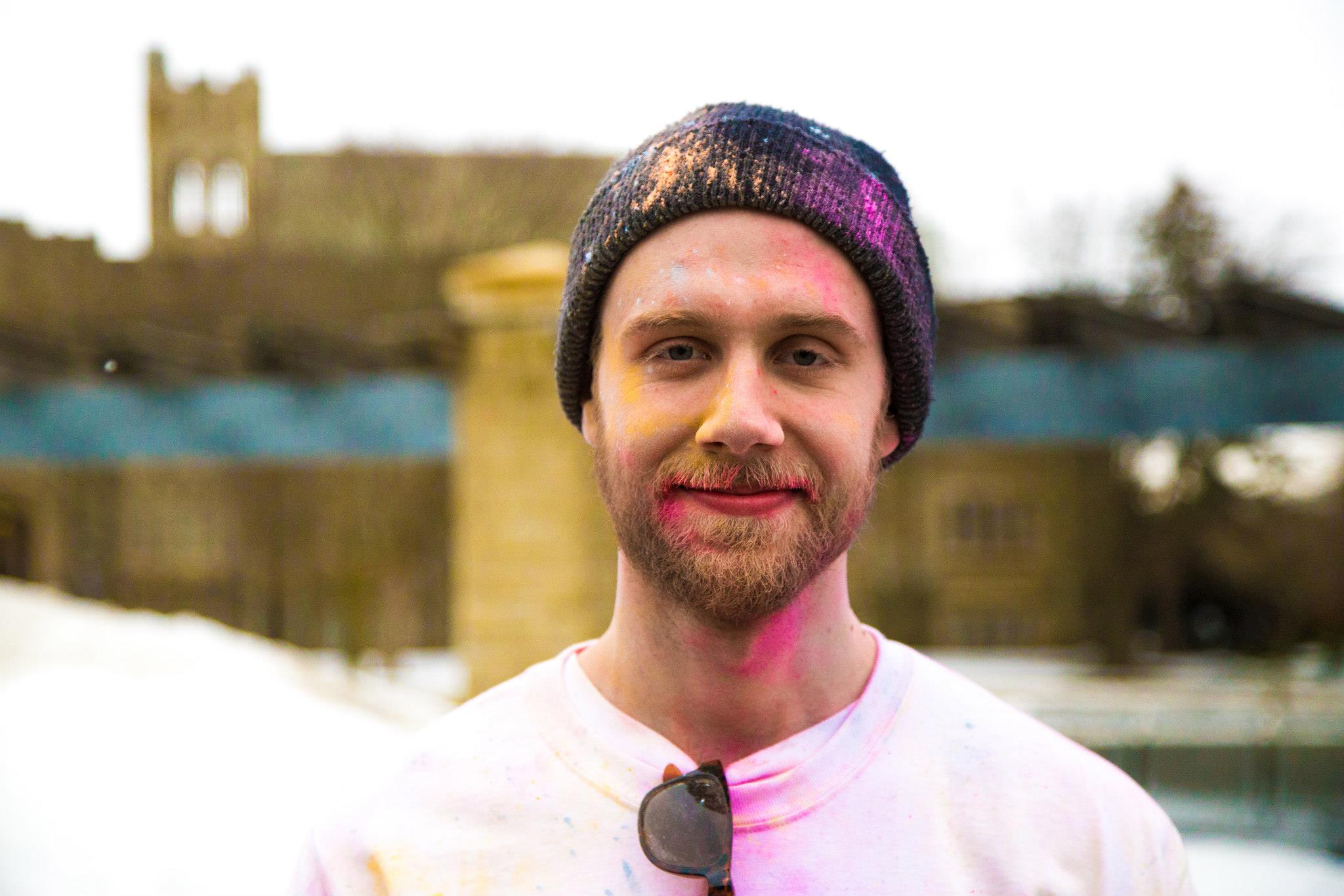
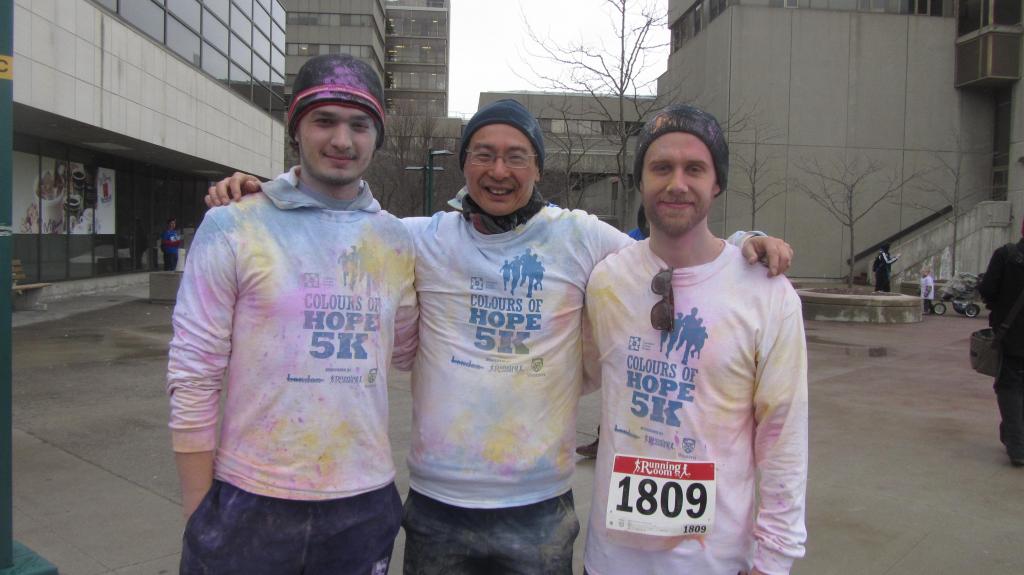
On March 15 2014, there was an inaugural Colour of Hope Run at Western. Despite the cold, we had a good turn out and it was a lot of fun.  It raised funds for the Canadian Cancer Society and for Western’s students in cancer research (CaRTT).  Among the participants were 3rd year undergraduate Physics student David Uren and Physics graduate Tom Hrinivich.  More photos on can be found here.

 1781185_670418556333962_1239462451_o1523801_670424713000013_1956996749_o

067_zps5771a1b6

Physicist for Life

It is that time of the year again … Canadian Cancer Society (CCS) Relay for Life event (Friday June 15th at the TD Waterhouse stadium).  This is the signature event that the CCS organizes as their major fundraising effort.  Funds raised in this event goes to prevention advocacies, support for those diagnosed and undergoing cancer treatments, and for research. With the drop in government support for cancer research, fundraising from relay for life is becoming ever more critical.

My students have created a “Physicist for Life” team (this is our fifth year, I think). This year, I am going by this motto: participation first, donation second.  Considering asking one of your friends and join this team together:   http://convio.cancer.ca/site/TR?team_id=269961&pg=team&fr_id=10563&fl=en_CA&et=WpCQGjlWopET_F0d0ssSDw&s_tafId=188868. In fact, I would be so happy if physics and astronomy can spin off another team.  If you have as much an inkling of interest, come and talk to me. If you wondered why I have not signed up yet, the reason is simple:  I am hoping to create another team.

The idea for us to participate is to close the circle: helping CCS help us researchers make discoveries to help patients.  Just by being there, participants and volunteers would appreciate it and will have an extra reason to continue to support CCS and its research arm. In addition, I have been critical of their allocation for research spending. The researchers’ voice can be heard louder and we can all be part of the solution if we contribute to helping CCS in their signature fundraising event.

Thank you.

Eugene

Relay for Life

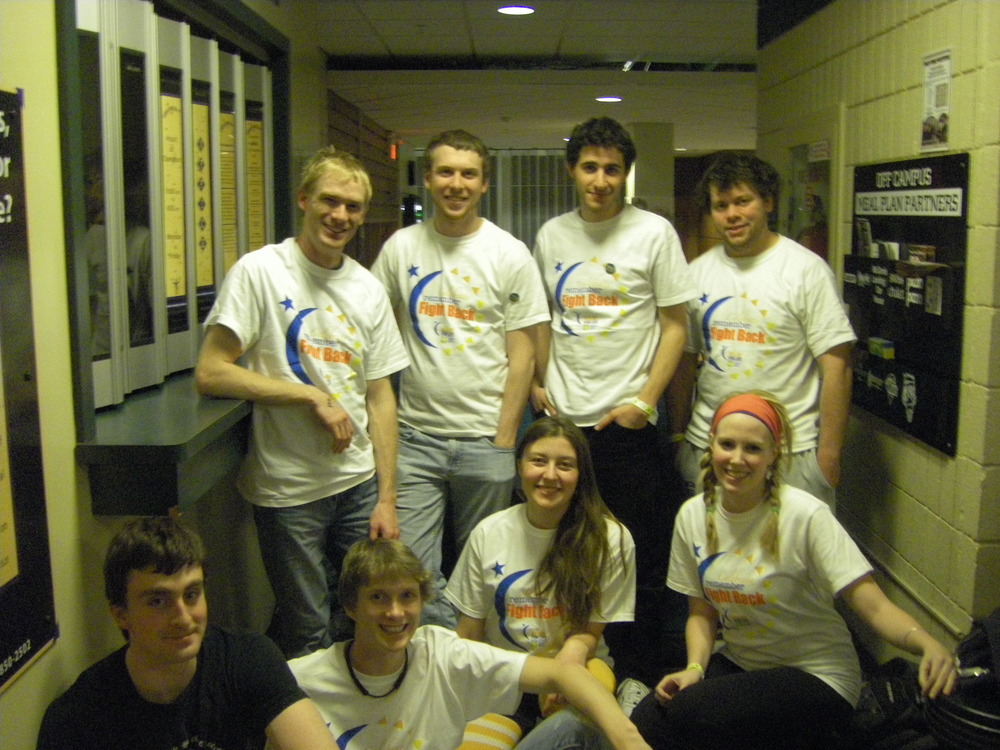
Last year’s Physics and Astronomy Department’s Relay for life team (from left to right, top to bottom): Jason Kirkness, Allan Rutt, Dan Martire, Mat Abado, Ben Revington, Gabe Keenleyside, Mel Wright, and Ashley Rutt
 
Relay for Life is an event that takes place across Canada annually to raise awareness and funds for the Canadian Cancer Society.  The money raised through this event goes towards funding Canadian research projects on all types of cancer, providing information services and supporting programs in the community, advocating for public policies that prevent cancer, and helping those living with it.  More information on the society can be found at http://www.cancer.ca. Cancer is a disease that has affected a lot of lives, including mine and quite a few others in our department.


Most Relay for Life teams consist of 10-15 people.  Participants walk/run/jog along a track for the duration of the event (12 hours).  At least one member per team must be on the track at all times.  Don’t let that daunt you though!  There are plenty of other events throughout the night.  Such events in the past have included futsol, movies, yoga, Rock Band, and free Marble Slab ice cream.


This year, as in the past, we have a Physics and Astronomy Department (and friends) team.  The details for this year’s campus event are:
Our team name: Run ’til it Hz
Where: UCC Atrium
When: Saturday, March 24th 7:00 PM to March 25th 7:00 AM


This would be a perfect time to get to know some people in the department, have fun, and (if necessary) catch up on readings, marking, or course work.


Join our team by registering online at https://secure2.convio.net/cco/site/TRR/RelayForLife/RFL_ON_even_/897751001?pg=ptype&fr_id=10708.  (There is a $10 registration fee.)


Donate on behalf of our team either in person to Nelia (main office) or Mel (room 130) or online at http://convio.cancer.ca/site/TR/RelayForLife/RFL_ON_even_?pg=team&fr_id=10708&team_id=265639.


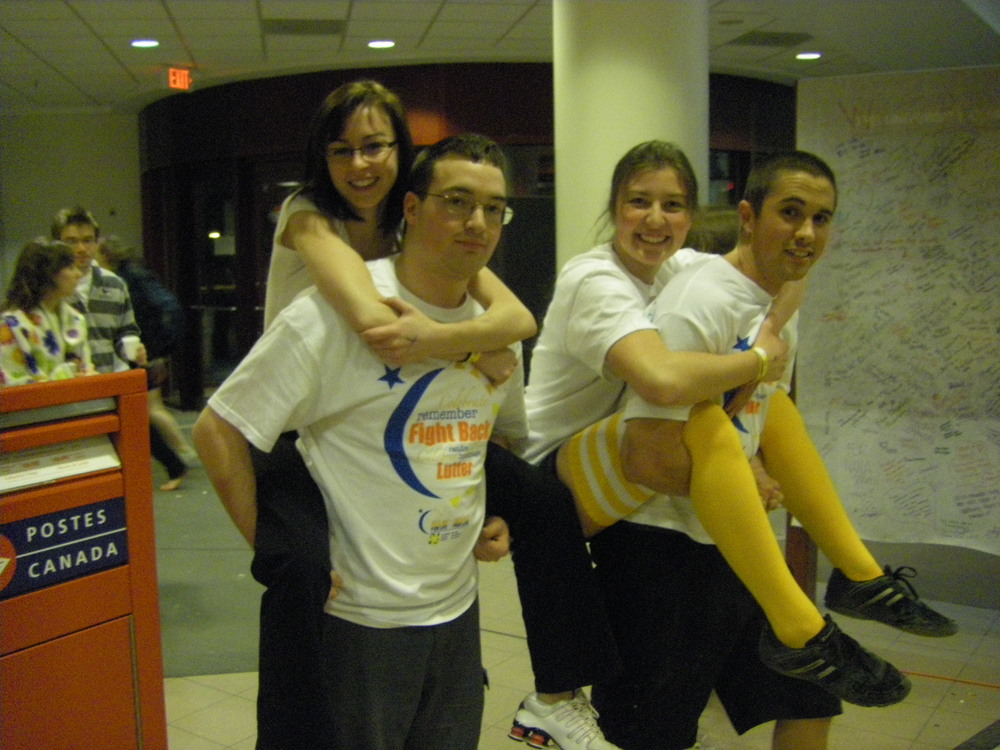
Some of 2010’s department team: Elaine Hegarty, Patrick Cookson, Mel Wright, and Chris Witters


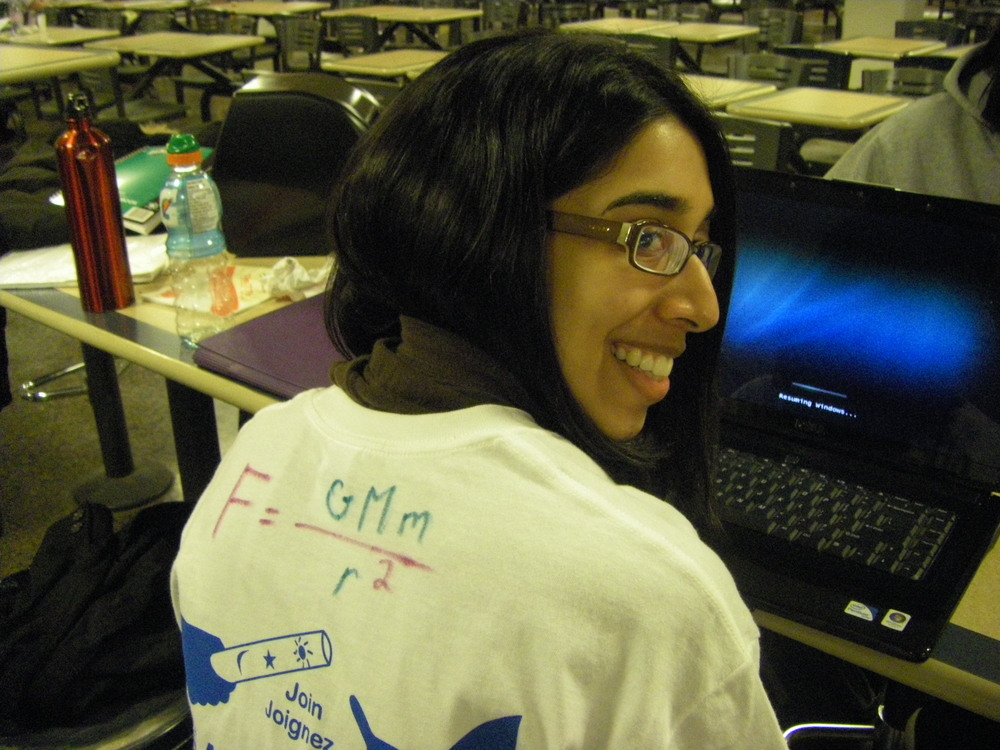
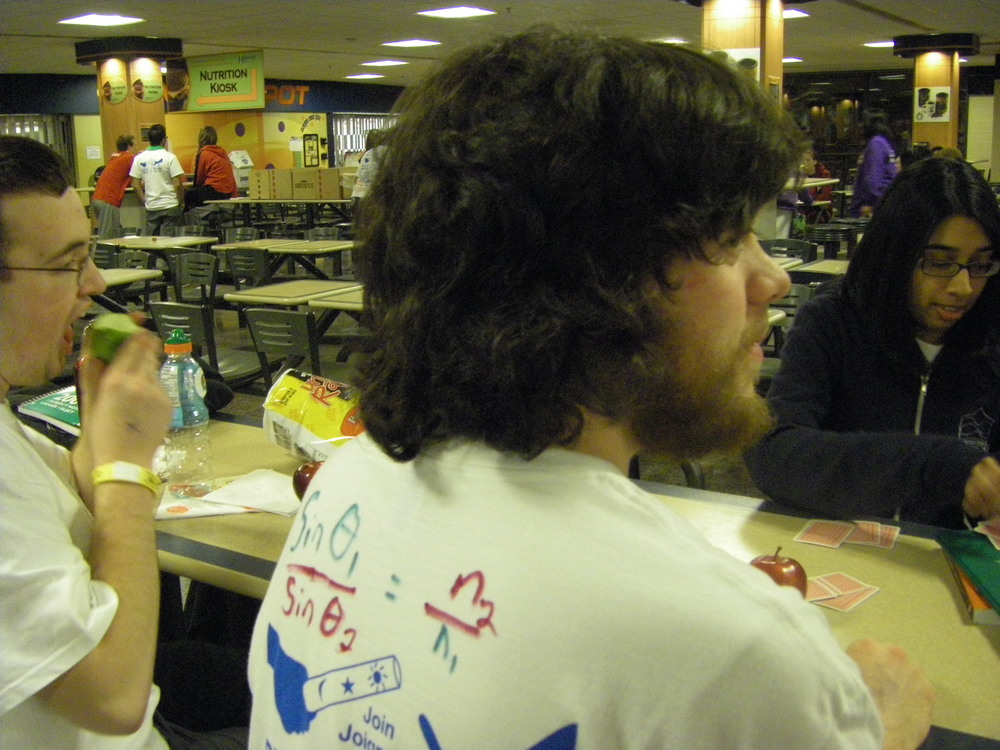
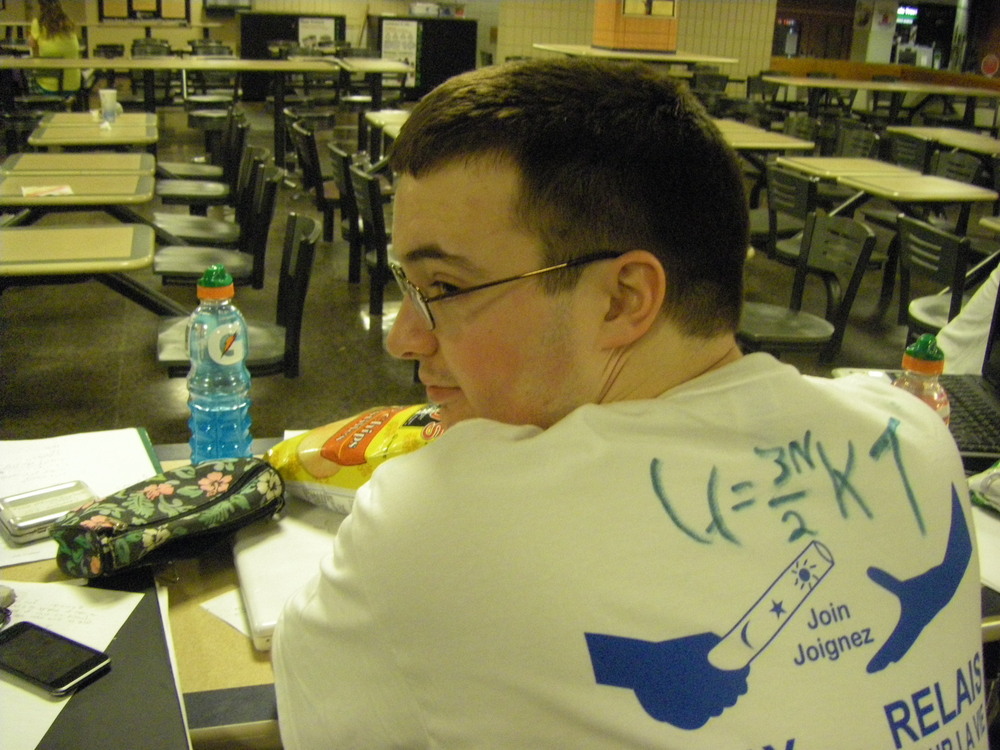
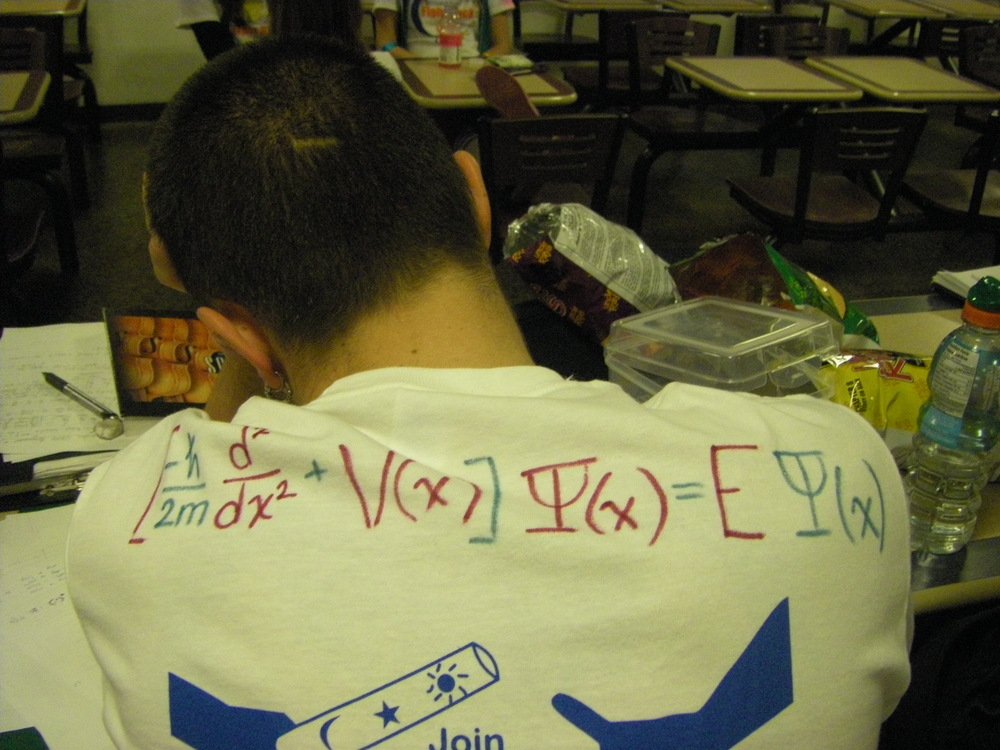
Most people decorate their shirts for relay.  Here is how our team decorated theirs in 2010:
Dilini Subasinghe:

Mat Abado:

Pat Cookson:

Chris Witters:

Carl Wieman’s insights into teaching science

If you have not heard of Carl Wieman, his bio is on http://cwsei.ubc.ca/.  In 2009, he has given various talks on scientific approach in science education.  Many of you who are in tuned with science education would no doubt know of his work.

I found that he had transcribed his talk into five written parts here: http://www.science20.com/carl_wieman/why_not_try_scientific_approach_science_education

While you may not agree with his proposed solutions, I would like to quote two points here that I find particularly good that may pique your interests:


  1. “puzzle of my graduate students—why their first 17 years of education seemed so ineffective, while a few years of doing research turned graduate students into expert physicists”
  2. “… novices see the content of physics instruction as isolated pieces of information— handed down by an authority and disconnected from the world around them — that they can only learn by memorization.  To the novice, scientific problem-solving is just matching the pattern of the problem to certain memorized recipes.
    Experts—i.e., physicists—see physics as a coherent structure of concepts that describe nature and that have been established by experiment. Expert problem-solving involves employing systematic, concept-based, and widely applicable strategies.”

I would love to hear what your thoughts are on Wieman’s insights or if you have ideas of how best to turn novices into experts.


Science lend a helping hand to solve a medical problem

On Jan 20th 2012, the Globe and Mail had a piece of article on the use of Technetium-99m in nuclear medicine without requiring production of its “neutron rich” parent, Molybdenum-99 (Mo-99), which is created in a nuclear reactor by bombarding natural occuring Mo-98 (~25% natural abundance) with a neutron flux. The aging Chalk River nuclear reactor currently produces 40% of worldwide supply of this isotope for medical use.


In fact, London is involved in the production of Technetium-99m from a cyclotron, which is located at the St Joseph’s Hospital. ( http://communications.uwo.ca/com/western_news/stories/schulich_assistant_professor_to_develop_non-reactor_based_isotopes_20110203447355/ )


Digging deeper, this involves using a cyclotron (proton beam) to create Technetium-99m by knocking out a proton from Mo-100 (~10% natural abundance) when Mo-100 is used as a target. For more details, see http://medicalphysicsweb.org/cws/article/research/47248 .
This is an example of how basic science can help solve a problem in medicine.

Pondering mammography for breast cancer screening over the Christmas holidays

I attended the first annual Canadian Cancer Research Conference in November which brought a diverse group of cancer researchers together.  In one of the plenary session, Dr. Martin Yaffe, a medical physicist whose expertise is in breast cancer and mammography, gave a talk on the recent recommendation on the guidelines from the Canadian Task Force on Preventive Health Care for women with an average risk of developing breast cancer. The controversy is this:  women who do not have increased risk of breast cancer due to BRAC gene mutations or family history of breast cancer, under age 50, no longer recommended mammography.  Even more controversial is that self-examination does not have any benefits in any age group.


This guideline was first brought to media attention by the Globe and Mail:

http://www.theglobeandmail.com/life/health/new-health/conditions/cancer/breast-cancer/new-breast-cancer-screening-guidelines-inflame-debate-add-to-confusion/article2243503/ 


Subsequenty, Martin Yaffe wrote why he rejected the new screening recommendation: 

http://www.theglobeandmail.com/life/health/new-health/conditions/cancer/breast-cancer/why-i-reject-most-of-the-new-breast-cancer-screening-recommendations/article2252072/


In his talk, he provided additional reasons for the screening program: a)  recommendations were not based on phase 3 randomized clinical trials b) current technologies of digital mammography have even better image signal to noise than those used in randomized trials, and c) the task force did not consult the scientific experts at large prior to understand all the nuances of non-randomized versus randomized trials. 


Being a medical physicist, when I visit friends and families during this time of the year, I do ask if they had done their annual health check. Maybe you should do the same so I won’t be so strange, but one must think through this task force recommendation to make sure that it made sense.