Earlier this year I visited the United Arab Emirates (UAE) and spent part of my time there as a visitor at Sharjah University. Sharjah is one of the seven emirates that make up the UAE. I also visited the more well known emirate of Dubai. This was a very enlightening trip for me to a part of the world I had never visited before, and I found many opportunities emerging there.
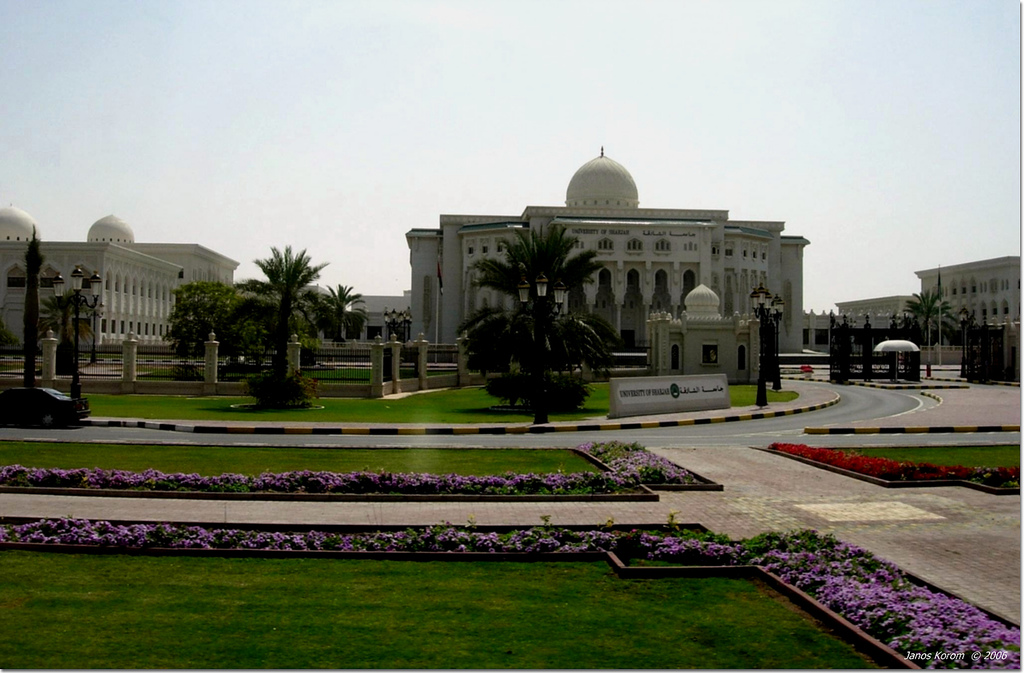
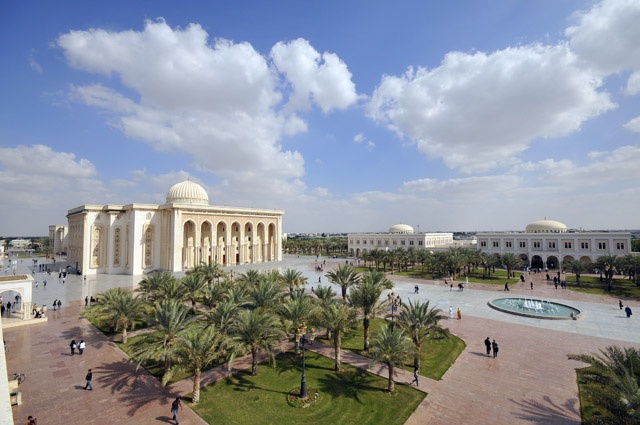
I was a guest of the Department of Applied Physics (now renamed to Department of Applied Physics and Astronomy – more on that later). Sharjah has historically been a hub for education in the UAE, and one cannot help but be in awe of the sprawling campuses and imposing white arabesque architecture of Sharjah University and the neighboring American University of Sharjah.
Sharjah UniversityAmerican University of Sharjah
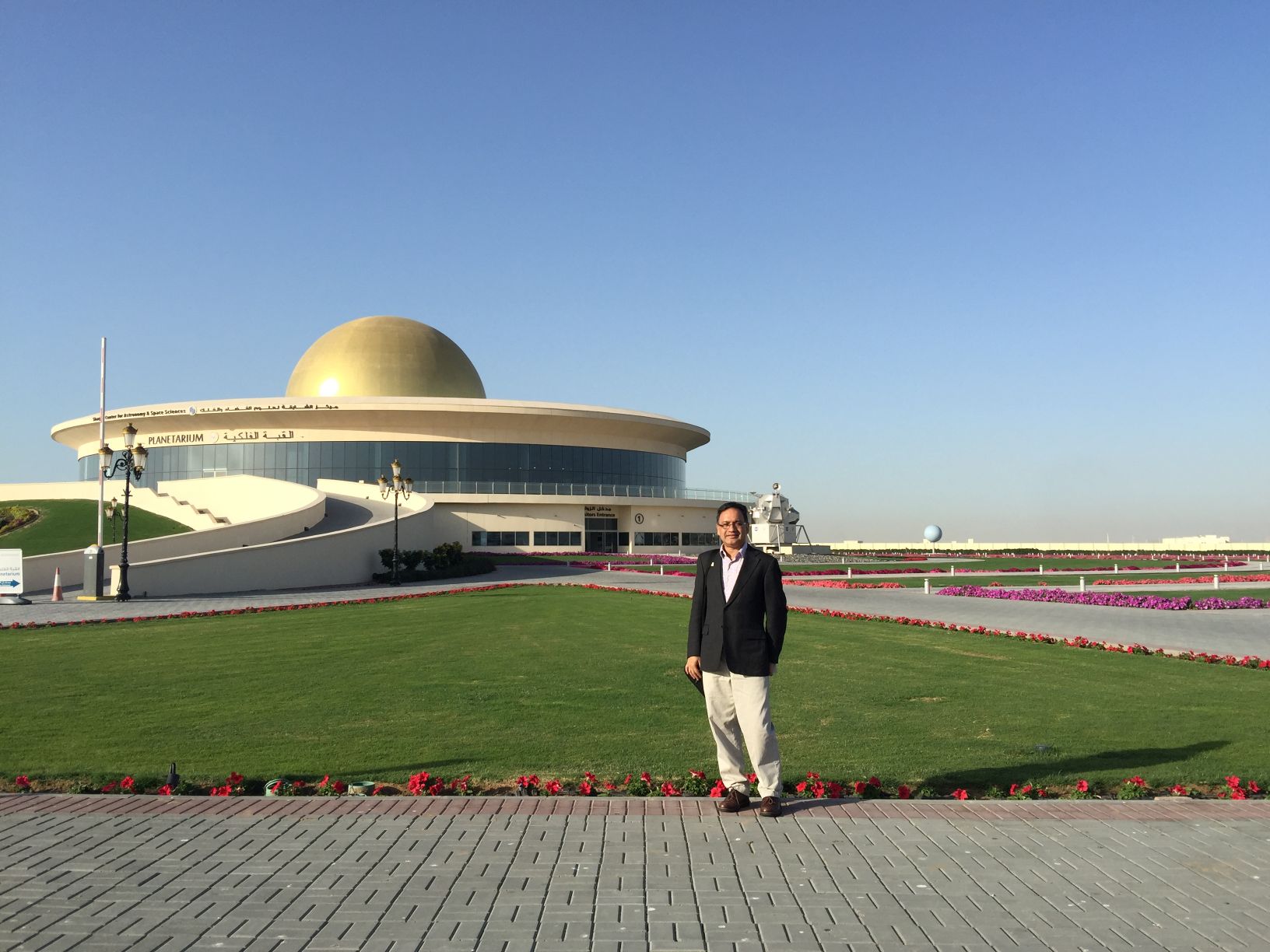
Hospitality to guests is an important part of the culture in this part of the world and I truly appreciated the warm greetings from a wide range of people, including Dean of Science Dr. Majid Merabti, Chair of Applied Physics Dr. Gaffar Attaelmanan, and many other faculty and some very eager students. Dr. Merabti highlighted how Sharjah University is trying to make the transition to a research intensive university. The highlight of my stay was to visit the newly built and sparkling Sharjah Center for Astronomy and Space Sciences, which houses a planetarium and space science museum. I was hosted by its Manager Dr. Ilias Fernini and gave a public lecture on The Life and Death of Stars. This was a first-time experience for me in two ways – I was speaking inside a planetarium with my slides projected onto a side of the dome, and my talk was being translated in real time as I spoke! The translation into Arabic was done very ably by the Planetarium Manager Marwan Shwaiki. About half the audience was listening to me directly and the other half had headphones and listened to Marwan’s translation. I also learned that many of the faculty and staff members are in the UAE on work visas and originate from other countries. I met faculty members from Algeria, Egypt, Jordan, Palestine, Sudan, and even…Canada! There are several citizens or PR holders of Canada amongst the faculty members.
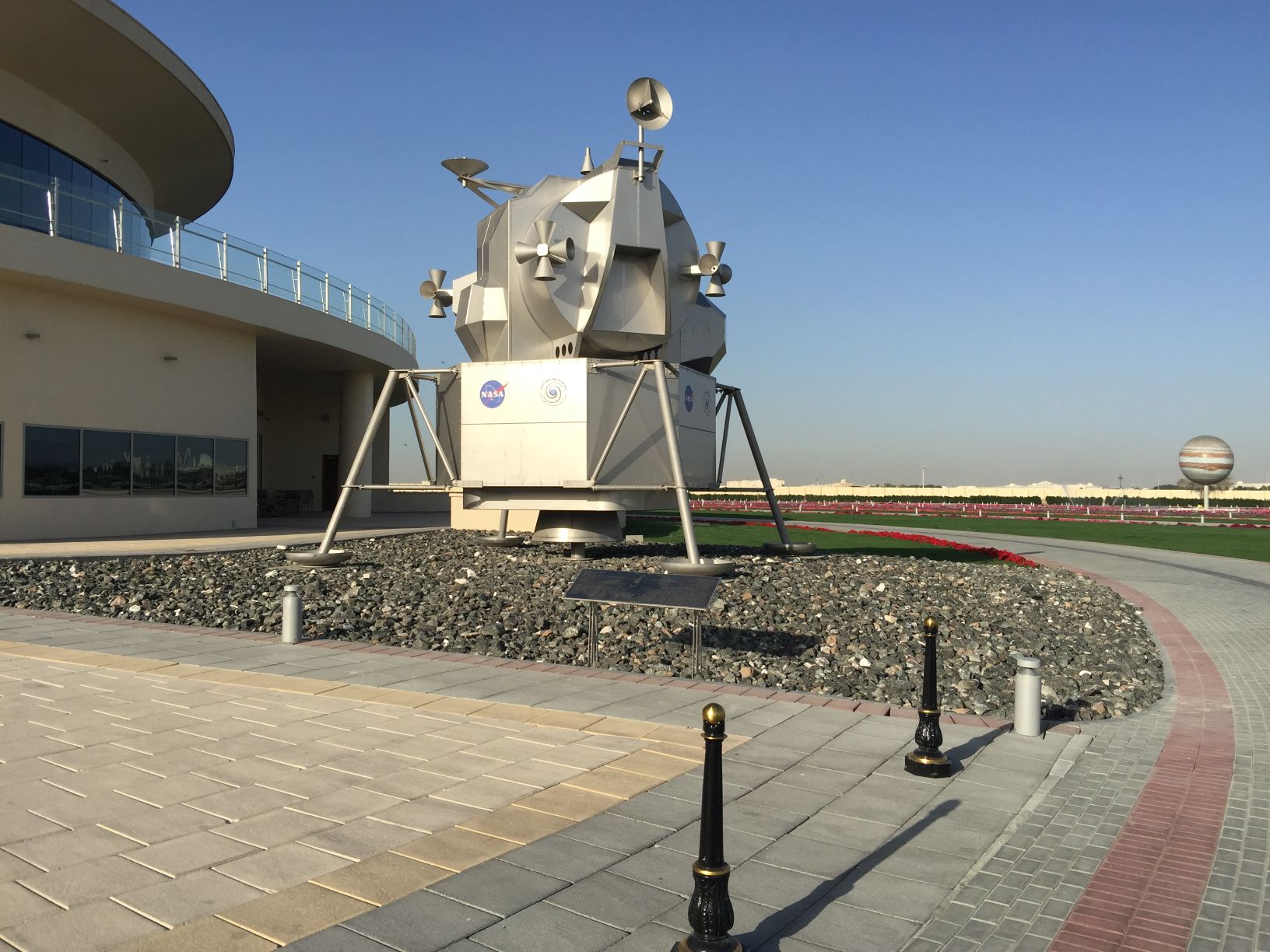
The Sharjah Center for Astronomy and Space SciencesThe replica moon lander outside SCASS looks eerily at home on a desert landscape
I toured the Advanced Material Research Laboratory, which is available for 4th year physics undergraduate students and houses an x-ray diffraction system, a scanning electron microscope, and a Fourier Transform Infrared Spectrometer. Quite impressive, and I wish we could offer equivalent instructional facilities at Western University. But why is there a space science museum and planetarium? The answer seems to lie with a major new initiative in the UAE: the Emirates Mars Mission. I have to admit I had not heard about this before my visit. The Sheikhs of the UAE have decided that they would like to send a Mars orbiter that will arrive at the Red Planet in 2021, to mark the 50th anniversary of the founding of the UAE. The scientific value added in this mission is the plan to make the most extensive map of the Martian atmosphere and to track weather on the Red Planet. This initiative has led to a surge in engineering and aerospace activity and also an interest in funding both space science and astronomy research. The planetarium is but one manifestation of this new focus. Even the Department of Applied Physics at Sharjah University has now added Astronomy to its department name. New faculty positions are to come. New research funding opportunities are available for those who can make the right connections, and basic astronomy research is also being funded. It’s a wise decision for foreign researchers to see if they can collaborate with UAE scientists for mutual benefit. Furthermore, there are additional opportunities in the region. Next door to UAE there are impressive funds available through the Qatar Foundation, and Saudi Arabia is dramatically increasing funding of higher education and science and technology research, evidenced by the King Abdullah University for Science and Technology.
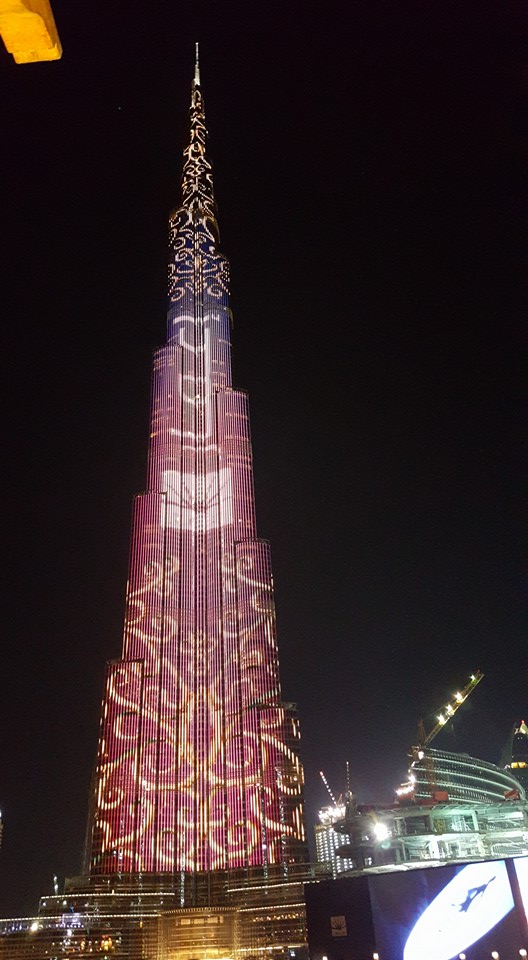
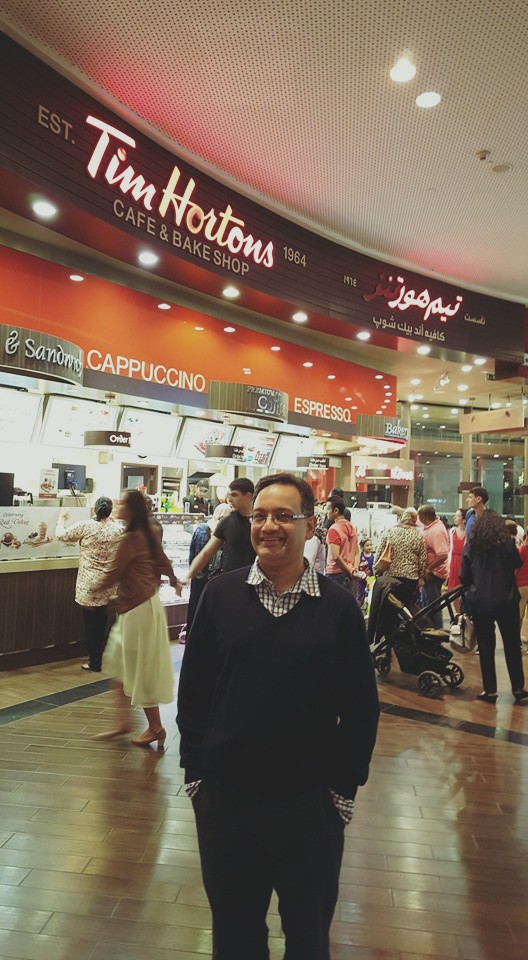
I spent a few days in Dubai, which is now one of the world’s great multicultural hubs, with a large expatriate population that significantly outnumbers the local population. Walking around the city center amongst gleaming skyscrapers one can hear a multitude of languages, e.g., Arabic, Bengali, English, French, German, Hindi, Malayalam, Russian, Tagalog, or Urdu. People seem to be enjoying themselves with extensive options for shopping, dining out, and nightlife. Some but not all restaurants have liquor licenses. Men and women seem to dress as they might back in their home countries and women drivers are a common sight, unlike in neighboring Saudi Arabia. Enjoying the temperate February evening breeze at an outdoor cafe by the Burj Khalifa, the world’s tallest building, I was experiencing something completely new. I could order a meal in Bengali while sitting under skyscrapers on a riverfront resembling Chicago, and watch a night fountain and light show set to iconic American themes like the soundtrack of The Magnificent Seven and Michael Jackson’s Thriller. Gasp, there was even an outlet of Tim Hortons nearby. I was getting confused about where I was. But wait, this is exactly the uniqueness of the UAE experience! Wherever you are from, you may find a bit of your background here, and learn about that of others, with Arabia as your backdrop.
Although I also spent part of my leave year at powerhouse places like Harvard and JPL/Caltech, and organized a winter school in India, this may be the most interesting story to share, for its novelty to many readers and at a time when when much of the news reporting from west Asia (yes, that’s preferable to a colonially inspired name like middle East) focuses on the grim events happening in other countries in the region.
The UAE has come a very long way in just half a century, from a sleepy outpost for date-growing and pearl-diving in the hottest part of the Arabian penisula where few people wanted to live, to a gleaming (and highly air-conditioned) center of international commerce. Some eighty-five percent of people in the UAE are foreigners living on work visas. The world has literally come to the UAE, from the armies of workers who power the construction and service industries, to the businesspeople looking to make their fortune, to those who have already made a fortune elsewhere and are enjoying the lifestyle here. The world is dealing with many effects of globalization, both good and bad, and a more complete perspective on global affairs can be obtained by visiting the unique hub that is the UAE. An interesting read on the history and current situation there can be found in the book Dubai, The Story of the World’s Fastest City, by Jim Krane, which takes a critical look at both the successes and the problems of the emirate. The UAE is now becoming an education hub for students from across Asia, and it wants to foster major engineering/science projects like the Mars Mission. It will be very interesting to track the UAE’s progress in these areas in the next decade and beyond.
The Burj Khalifa lit up at nightTim Hortons in Dubai, where you can order cardamom chai
The morning of Thursday, Sept. 22, 2016 promised to be perhaps the last warm day of the year.
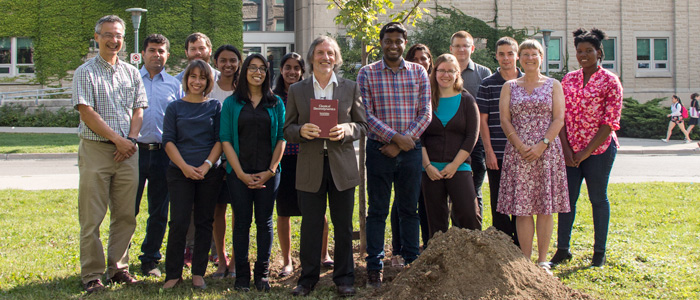
At 10:00am, on the east lawn, the Department of Physics and Astronomy held a ceremonial tree planting in memory of the late physicist John David Jackson, a London boy who became a giant in the field of physics.
Department Chair Bob Sica commenced the planting ceremony for the healthy looking red maple tree by reciting the wording for a plaque which commemorates David Jackson’s career and his impact on the world of physics.
The plaque reads:
Planted in honour of Professor John David Jackson (BSc Physics, 1946)
January 19, 1925- May 20, 2016
A giant among physicists.
His contribution to the intellectual growth
of physics students at Western and worldwide
took root here and lives on in succeeding generations.
The Lead TA program at Western is an initiative funded by The School for Graduate and Postdoctoral Studies (SGPS) and the Teaching Support Centre (TSC). This is the first official year of the program, following a two-year trial. This year, eight lead TA positions were available for graduate student applicants from across all faculties/departments. We are pleased to announce that our own Carolyn Cadogan has been awarded one of these positions for the Faculty of Science.
The role of the Lead TA is intended to be department-specific. That is, the Lead TA’s task is to identify departmental needs, from both the faculty members and graduate students’ perspectives.
This position will be rotated within the Faculty of Science in the future, so we in Physics and Astronomy should all take advantage of this opportunity. Besides providing input to Carolyn, we should make an effort to participate in the activities designed to make graduate students’ life easier as TAs, and help elevate Physics & Astronomy undergraduate learning experiences to the next level.
An informal farewell get-together on the occasion of electronics and instrumentation specialist Doug Hie’s upcoming retirement was held at the Grad Club on Wednesday, August 25, 2016.
It was a jam packed affair with three full tables being occupied by members of the Physics and Astronomy community.
Doug held court at one of the tables, and everyone had a chance to shake his hand, to reminisce a bit, and to wish him well in the next phase of his life.
Phin Perquin recounted some humourous moments from his work with Doug. Certainly almost every corner of the department has been touched by Doug in his long career, including the first, second, and third year laboratories, as well as every major research lab. Doug, along with his ex-colleague Harry Chen, had a hand in the manufacture of much of the modern departmental electronics equipment that is used in laboratory and public demonstrations. The number of computers that Doug had a hand in diagnosing or fixing for the department very nearly surpasses the number of stars in our own Milky Way galaxy.
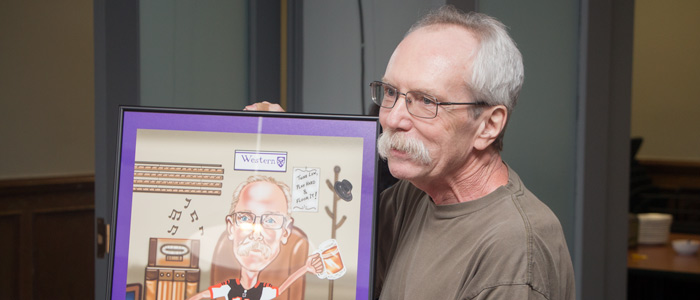
Doug was then presented with a few mementos with which to remember the community that he has been such a vital part of. One gift was a beautiful caricature by a local London artist, depicting Doug relaxing in his favourite Cincinnati Bengals attire. In addition, Brian, Frank, and Phin presented Doug with a historic coat/hat rack, complete with bronze plaque. A bag of Doritos chips was thrown in for good measure.