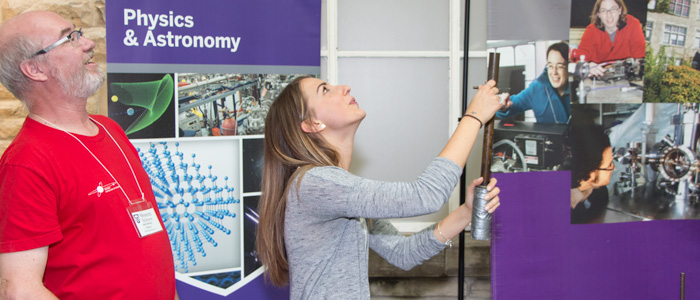
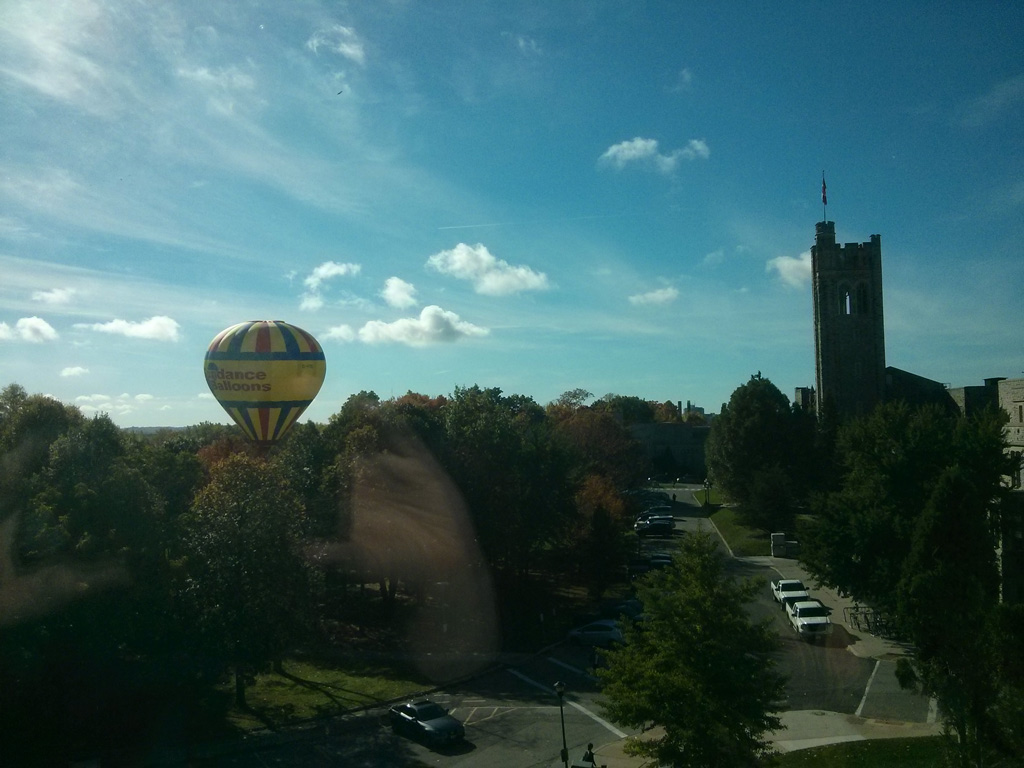
A beautiful, sunny, late fall day greeted visitors to Western’s Fall Preview Day, and specifically the Science departmental displays which were arrayed throughout the atrium of the Physics and Astronomy building.
The Department of Physics and Astronomy was well represented by staff, students, and faculty.
Volunteers from the Physics and Astronomy Department were Abedin Abedin, Peter Frank, Kanthi Kaluarachchi, Dilini Subasinghe, Shayamila Gammage, Shailesh Nene, Bob Sica, Rob Cockcroft, Sarah Gallagher, Eugene Wong, Jeff Hutter, Alex Buchel, Patrick Hatch, Dylan Del Papa, Danielle McFadden, Colin Metrow, Mauli Bhatt, Sarah Scott, Sean Huggins, Sachi Elkerston, Will Hyland, Keegan Marr, Edith Yeung, John de Bruyn, Pauline Barmby, and Henry Leparskas.
The Centre for Planetary Science and Exploration commenced a 3-week long “analogue mission” called CanMars on Monday October 31, simulating a future Mars Sample Return mission. This is carried out in partnership with the Canadian Space Agency, and features a rover and field team down in Utah and a mission control team here at Western in the Physics and Astronomy Building.
An open house was held for the public on Thursday, Nov. 10, 2016.
The setting was the Physics and Astronomy building atrium, under a beautiful clear sky and waxing gibbous moon. Very appropriate indeed.
A few hundred space lovers attended the open house.
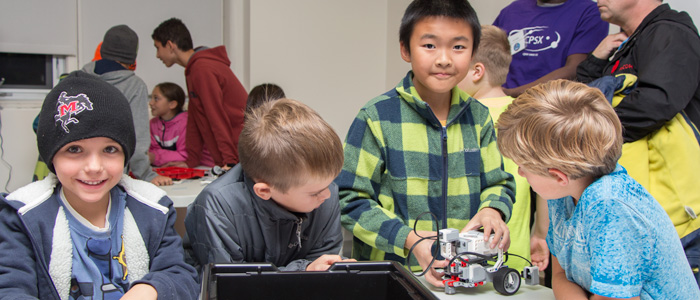
A room dedicated to the building and operation of Lego Mars Rovers was a highlight for those young at heart. Others relaxed at the reception which was held in the atrium.
At 7pm a wonderful panel discussion was led by members of the local CPSX mission team, as well as members of NASA, MDA, and The Canadian Space Agency. Londoners could hear first hand from the people who are building and flying the actual science missions to the red planet. The audience was extremely attentive throughout.
We warmly welcome new technical staff member Abedin Abedin, who took up his position as ‘Demonstration Coordinator‘ on November 7, 2016.
Abedin recently completed his PhD in Physics under co-supervisors Prof. Peter Brown and Prof. Paul Wiegert. His thesis title was “Formation and Past Evolution of the Meteoroid Complex of Comet 96P/Machholz”.
On Thursday, Nov. 3, 2016, Isabelle Cyr successfully defended her PhD thesis.
Prior to the formal examination, Isabelle gave a public talk titled, “The geometry and density of B-emission star disks from statistical analysis and numerical simulations“.
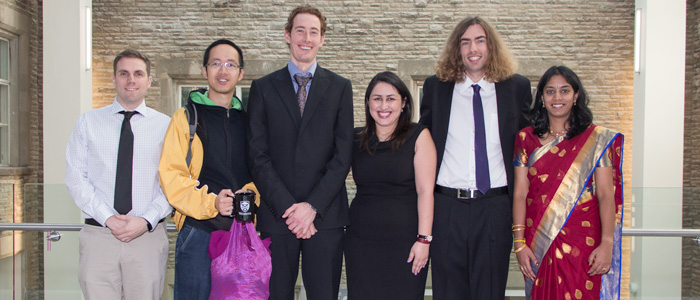
On Friday, October 31, 2016, a reception was held for our Physics and Astronomy graduating students prior to the afternoon convocation ceremonies.
The following is a list of our fall graduates.
Masters of Science
Mark Baker – MSc Physics – Project title “Gauge Invariant Lagrangian Formulation” Sup: Shantanu Basu Sivayini Kandeepan – MSc Physics – Thesis “OMCVD Gold Nanoparticles Covalently Attached to Polystyrene for Biosensing Applications” Sup: Silvia Mittler Collin Knight – MSc Astronomy – Project title “Spatial Properties of the Polycyclic Aromatic Hydrocarbon Population in the Reflection Nebula NGC 2023” Sup: Els Peeters Tianho Ouyang – MSc Physics – Thesis “Self-assembled copper nanoparticle superlattices on graphene thin films” Sup: Giovanni Fanchini Demetrius Ribiero du Paula – MSc Physics – Project Title “A Method for Independent Component Graph Analysis of Resting-State fMRI” Sup: Andrea Soddu
Doctor of Philosophy
Sahar Rahmani – PhD Astronomy – Thesis “What governs star formation in galaxies? A modern statistical approach” Sup: Pauline Barmby Matthew Shannon – PhD Astronomy – Thesis “The spectral variability of astronomical PAHs” Sup: Els Peeters Neven Vulic – PhD Astronomy – Thesis “X-ray Populations in The Local Group: Insights with Hubble & Chandra” Sup: Pauline Barmby & Sarah Gallagher Quanzhi Ye – PhD Astronomy – Thesis “Aging comets and their meteor showers” Sup: Peter Brown
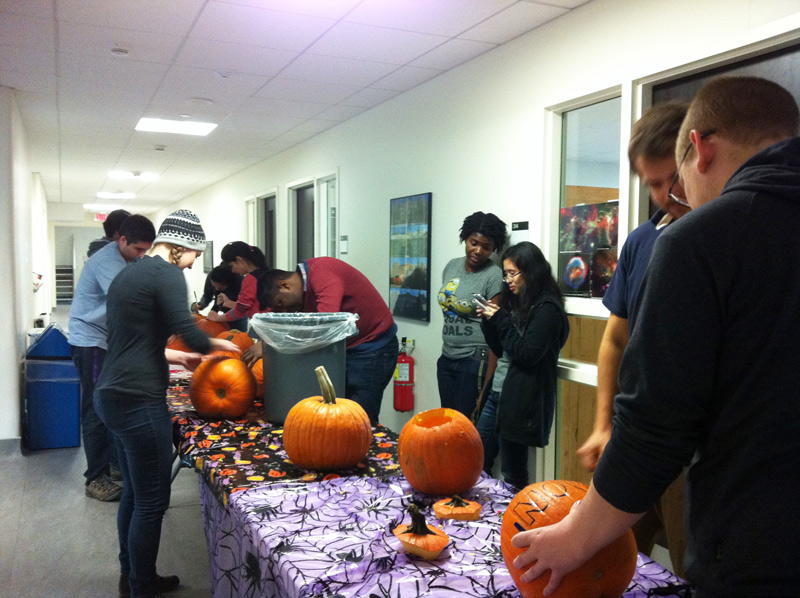
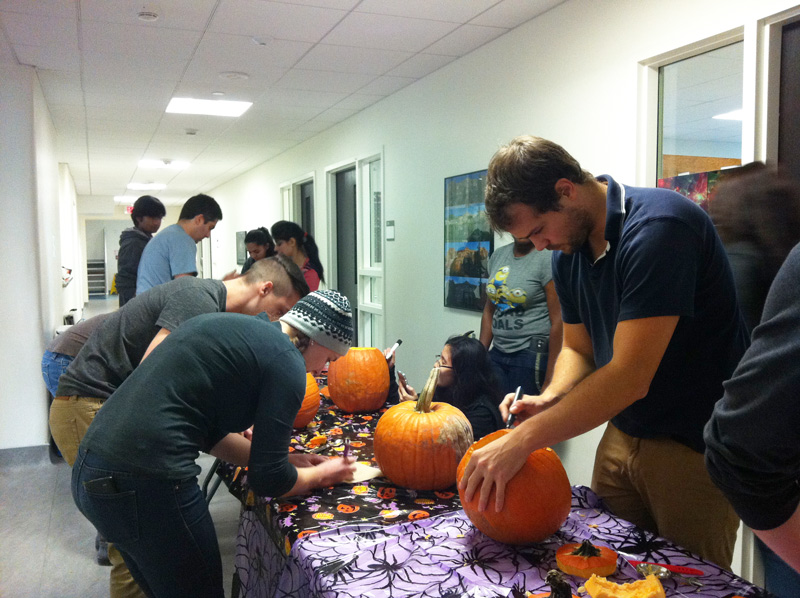
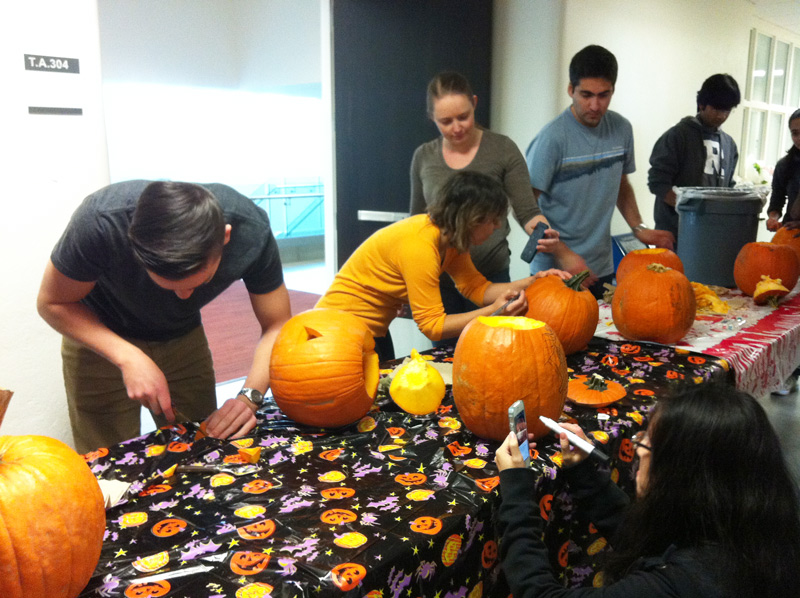
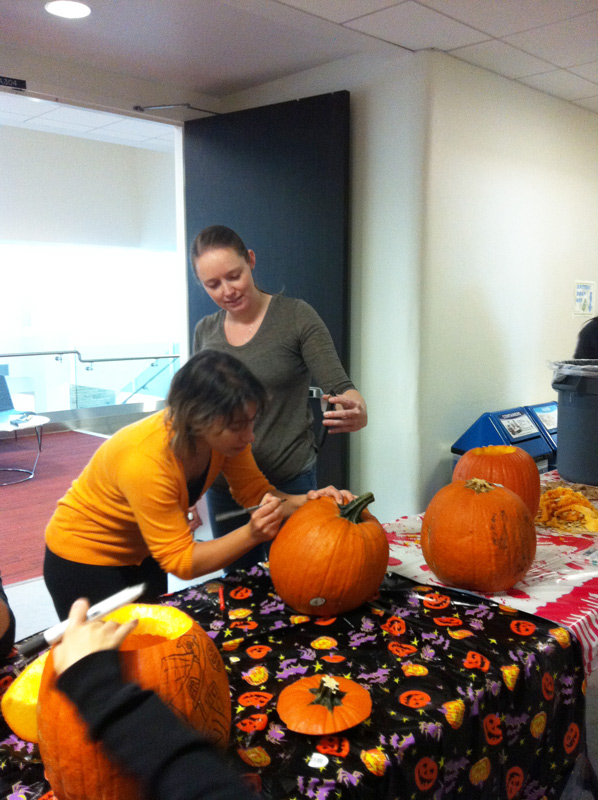
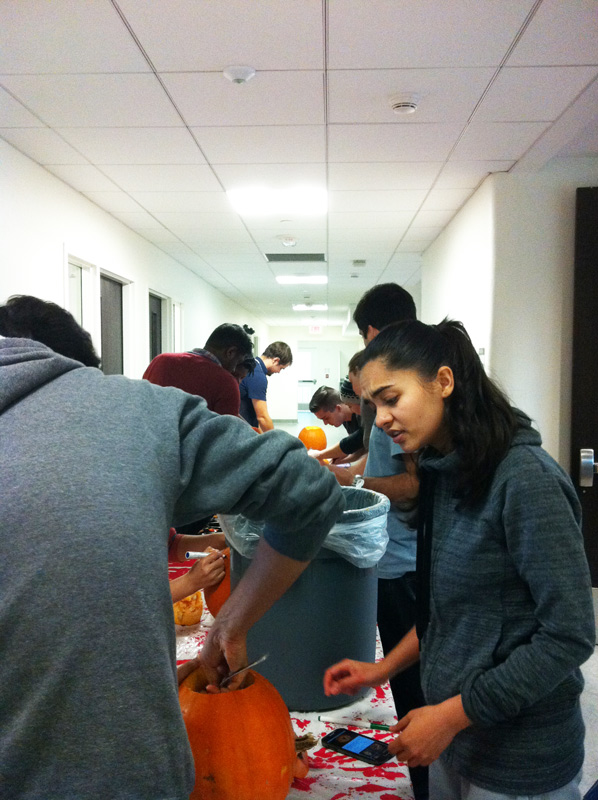
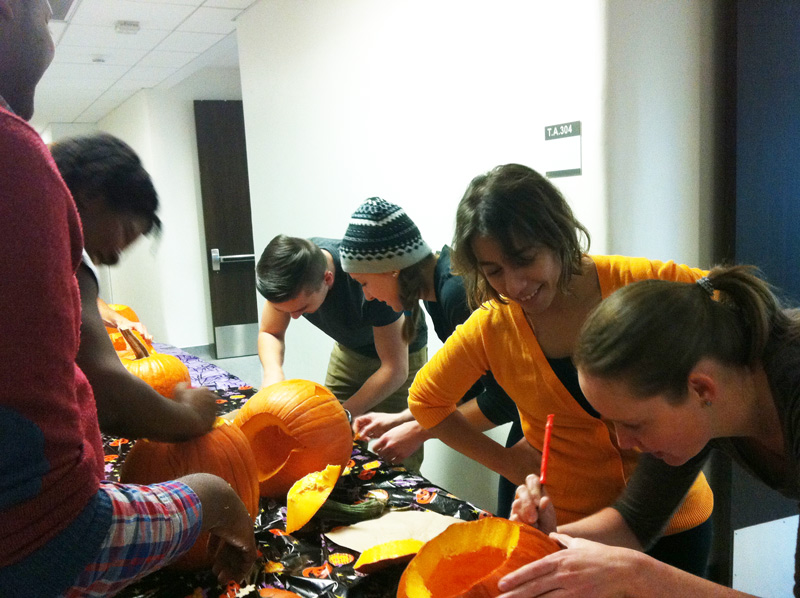
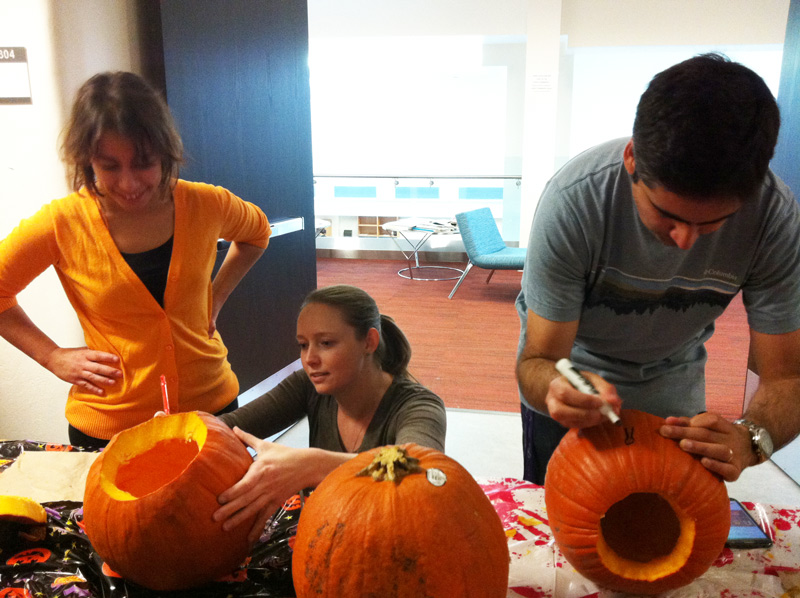
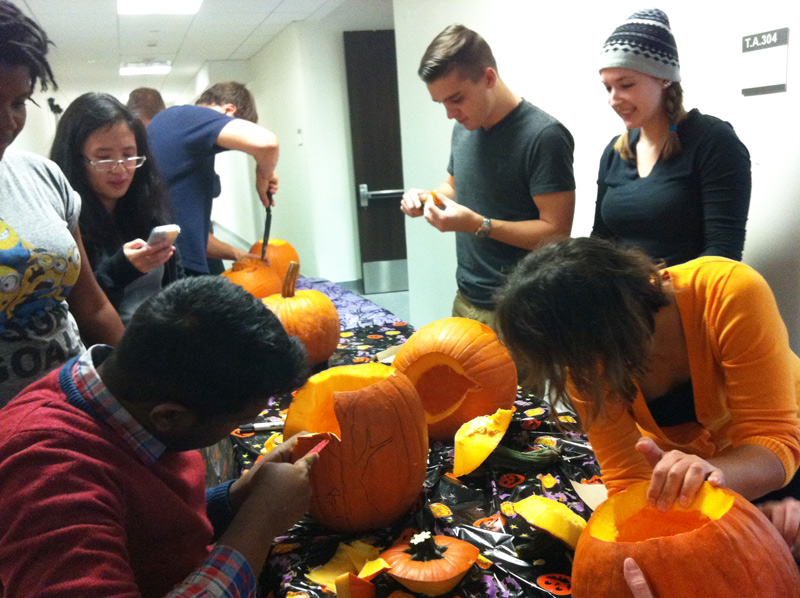
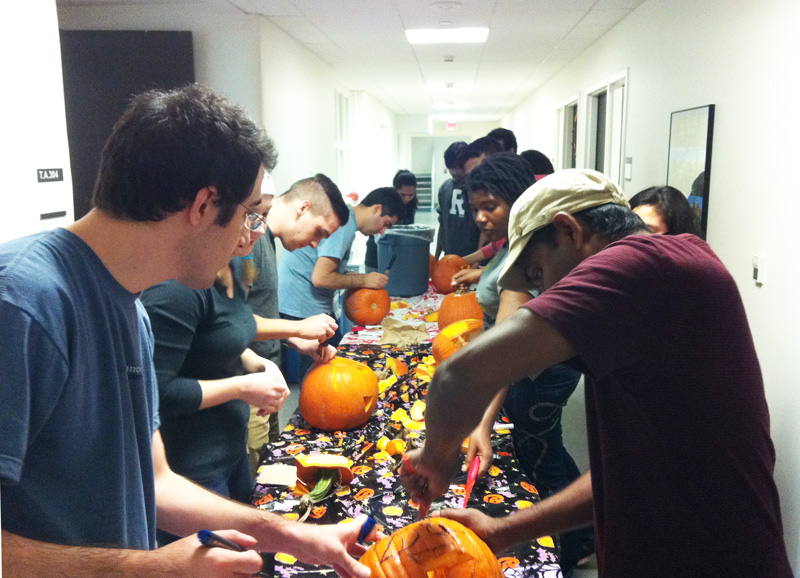
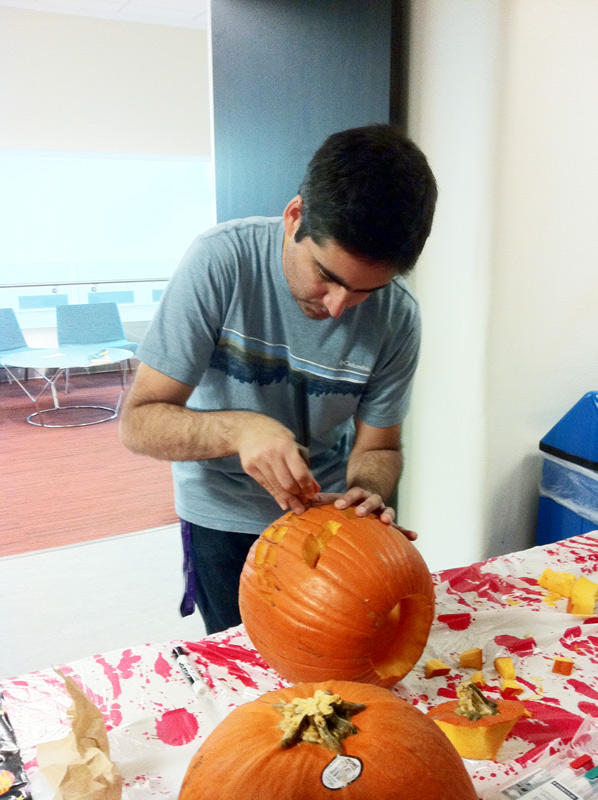
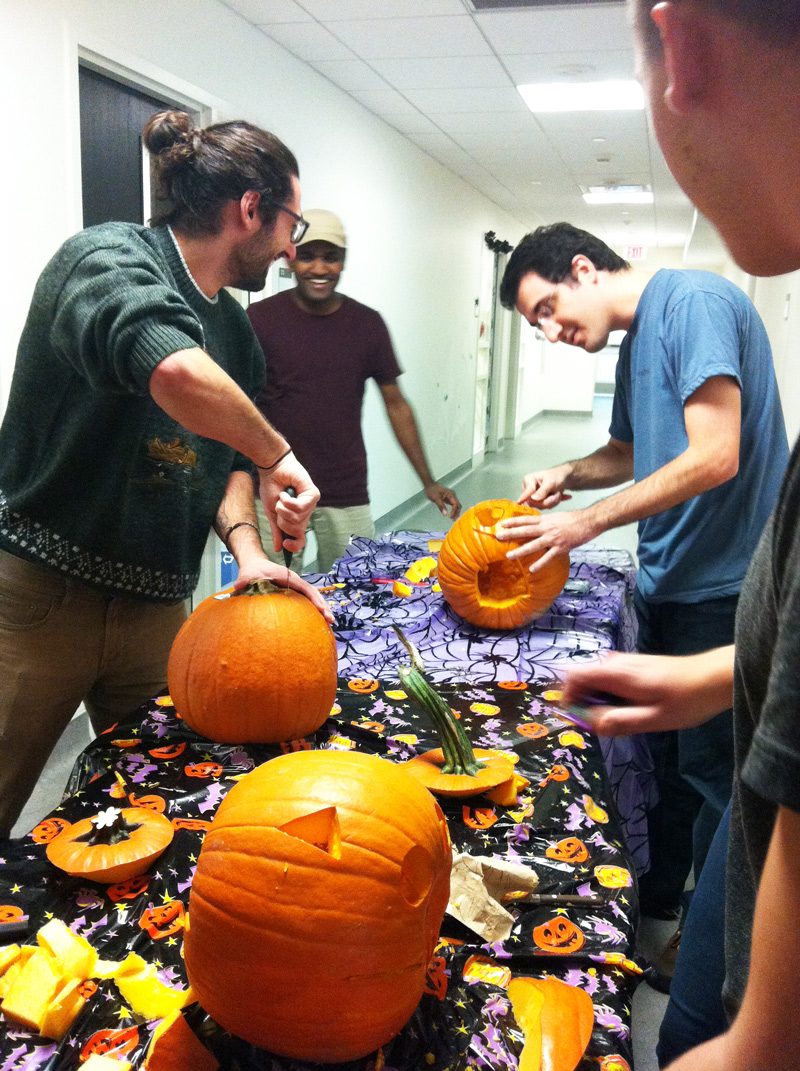
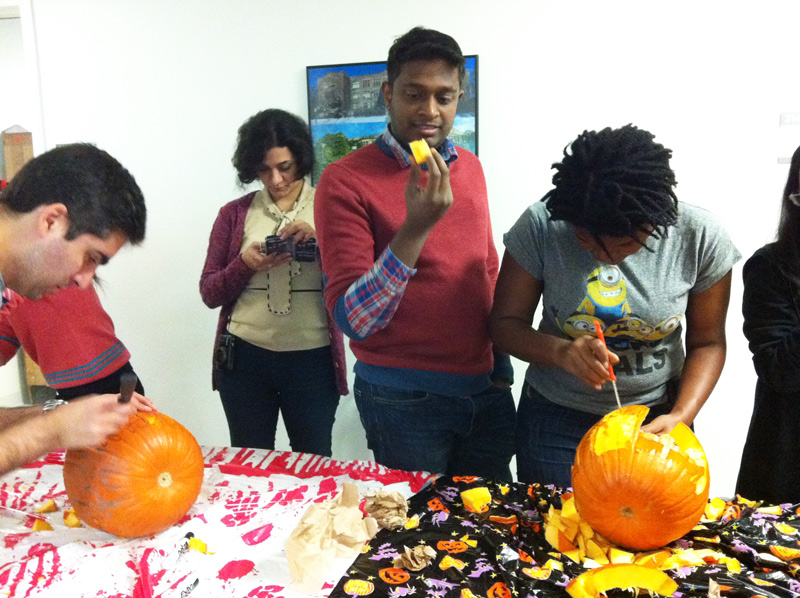
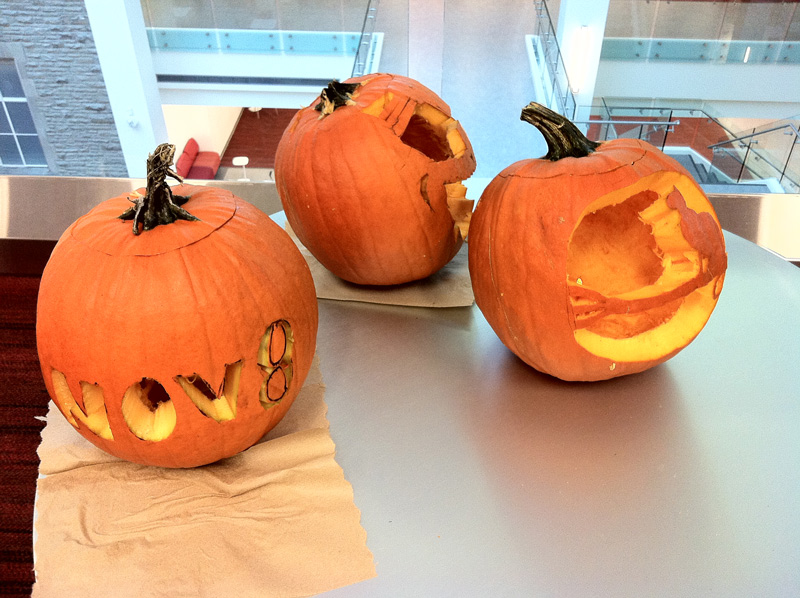
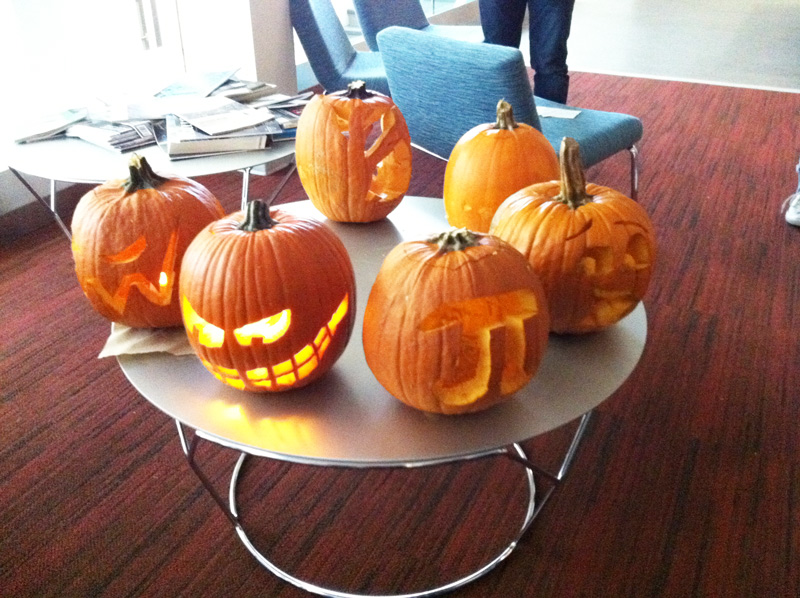
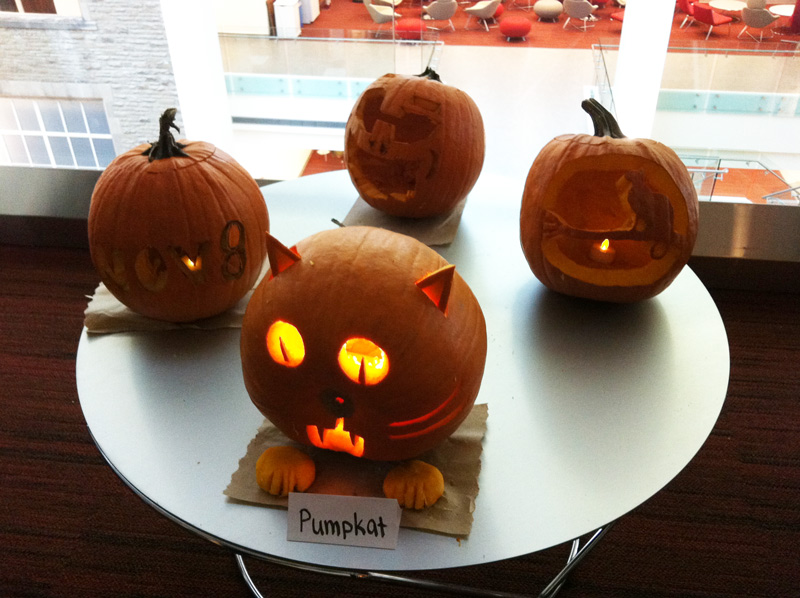
Graduate students held the second annual pumpkin carving contest on Friday, Oct. 28, 2016. Winner has yet to be announced. The event was organized by the Physics and Astronomy Grad Council.
On Thursday, Oct. 13, 2016, Bethany Grzenia successfully defended her astronomy PhD thesis.
Prior to the formal thesis examination, Bethany gave a public talk titled, “The circumstellar environments of B-emission stars constrained by optical interferometry”.
Although Saturday had dawned crystal clear, there was a blustery wind, and the forecast was dicey because of the battle between the local high pressure system and the remnants of Hurricane Matthew.
Forging ahead, the intrepid volunteers arrived at about 3pm to set up displays and telescopes. Parshati Patel, Dilini Subasinghe, Will Hyland, and Nastaran Ghafouriansahraei prepared the lecture room and visitors information table. In the basement, Christy Caudill and Sarah Simpson prepared the impact crater demo, while Elise Harrington would be demonstrating the Sotellunium (Sun-Earth-Moon model). Jennifer Newman set up a table containing the Western meteorite collection. On the observing floor, Everett Clark, Paul Kerans, Dave Clark, Robin Arnason, and Henry Leparskas got telescopes ready, opened the dome and pointed to the moon as it came in and out of the clouds. Dave had his 20.3cm Meade scope, while Paul used his 23.5cm telescope, and lastly Peter Jedicke used the 25.4cm Dobsonian mounted Newtonian reflecting scope. He was later accompanied by Dave McCarter. The historic 25.4cm refracting scope of managed by Robin Arnason and Dilini Subasinghe.
By the 5:00pm opening time everything was in readiness, and as doors opened, a few visitors trickled in. At about the same time a dark set of ominous clouds also descended over north London and the campus.
The clouds were a bit of a disappointment to the telescope volunteers, because the first quarter moon was already well above the horizon and would have been visible otherwise. However, there was lots for visitors to do, as they were given tours of the old telescopes on the observing floor, and got to ask questions about the more modern telescopes that had been deployed on the observing deck outside. Visitors could also enjoy the demonstrations going on in the basement, and they could also get lots of cool stuff at the information table that was situated in the lecture room.
As more visitors began to arrive, at 6:00pm Prof. Catherine Neish spoke in the lecture room on ‘My Favourite Moons’, and at 6:30pm Prof. Phil Stooke spoke on the ‘The Voyages of Apollo’.
By the 7:00 draw time, the building had filled with visitors. Draw time was exciting, as one lucky winner went home with a new telescope, while two other winners received autographed books by retired astronaut Harrison Schmidt, along with other small goodies from CPSX.
As if scripted, as the draw finished visitors looked up to witness that the skies had completely cleared. There was a rush of visitors upstairs, who were greeted with great telescope views of the Moon, Mars, Saturn, and the Andromeda galaxy M31.
By this time Tricia Colvin and Mark Tovey were now also giving tours of the historic 1940 period room, and Peter Jedicke has arrived to help visitors view the sky through the 20cm Dobsonian mounted reflecting telescope.
The observatory hummed with activity for the rest of the evening, and by 10:00pm a few reluctant stragglers departed and the doors were closed.
On the observing deck an announcement was made that we would be in store for the viewing of an Iridium Flare. Sure enough, at about 20:12, visitors spotted the Iridium satellite as it travelled south over London. It brightened significantly as its solar panels sent some extra sunlight down towards London, though the flare was a bit fainter than expected.
Approximately 300 visitors attended INOMN 2016 at Western.
Lead organizer was Outreach Program Co-ordinator for CPSX, Dr. Parshati Patel.
In the main floor lecture theatre volunteers Dilini Subasinghe and Robin Arnason directed visitors to the basement demonstrations and 1940 period room as well as to the upstairs observing floor.
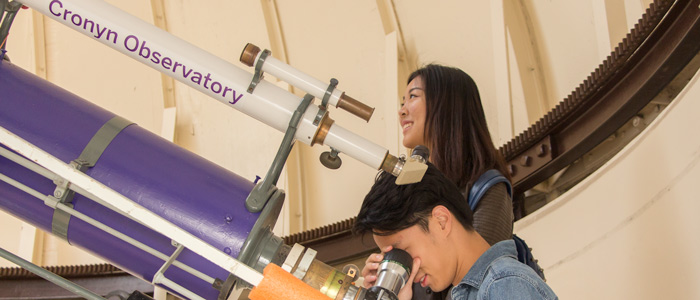
The upstairs observing floor is home to the original observatory telescopes. The newly painted purple 1940 25.4cm refracting telescope built by Perkin Elmer Corporation of New York is still the second largest refractor in Canada next to the 38cm Brashear refractor of the Canadian Museum of Science and Technology (closed for repairs til 2017) in Ottawa. On the observing floor volunteers had also set up many of the telescopes that are normally used on the outside deck. These included the 90mm Coronado solar telescope, the 20cm Meade Schmidt-Cassegrain, the 25.4cm Dob, and Paul’s 23.5cm Schmidt-Cassegrain scope. Helping on the observing floor were Paul Kerans, Everret Clark, Steve Gauthier, Peter Jedicke, Dale Armstrong, and Henry Leparskas.
In between bouts of Scotch mist the dome was opened and the 25.4cm refractor as well as the Dob were pointed at various towers and construction cranes in the distance.
In the downstairs ‘black room’, Tricia Colvin, beautifully attired in period garb, showed visitors a real life demonstration of how the photo sensor of a space telescope can detect extrasolar planets via the transit method.
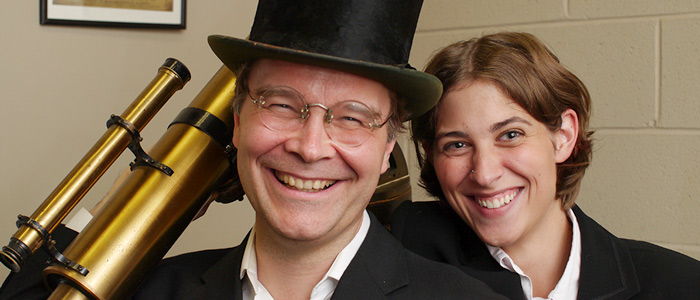
In the 1940 period room, Mark Tovey, dressed as the late Professor Harold R. Kingston, gave tours of observatory’s treasured historic artificats. These include Kingston’s original brass refracting telescope, a 19th century French noonday cannon, and models such as the Sotellunium which were hand built on premises by the retired Rev. William Colgrove and Harold R. Kingston, and much more. Dale Armstrong and Henry Leparskas also gave tours of the period room to small groups of visitors.
At 19:00 Peter Jedicke, Honorary President of the Royal Astronomical Society of Canada, gave a fascinating 40 minute lecture titled, “The Hume Cronyn Memorial Observatory: A Brief History”.
Reluctantly, after such a wonderful day of hosting so many curious visitors, the observatory was closed at 10pm.