I once met a guy who worked in radio on a plane, and he said that when they interview people with interesting jobs (he thought astronomer qualified), he always asked them what sound should be played to set up the piece. Astronomy is historically a very visual science, and so it took me a minute to identify a characteristic sound. I think it has to be the noise of a dome turning to keep the shutter aligned with the telescope.
Because of the rotation of the Earth, a telescope has to move to follow objects while you’re taking data. When you’re observing from the ground at many observatories, the control room is in the same building as the telescope. So, while the instrument is taking data, you occasionally hear the deep rumble as the dome turns. It’s one of my favourite sounds.
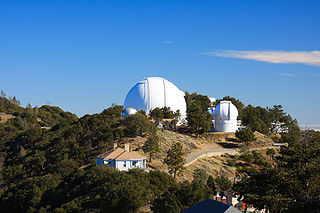
I was once observing at the Shane Telescope at Lick Observatory (see image below) with a graduate student who only had experience at Keck – the 10m-class telescopes on Mauna Kea. Because observing at 14,000 ft is difficult if you’re not used to the altitude, the control room is at a lower altitude. When the Shane turned, he looked at me and said, “What is that?” He’d never heard the dome rumble before.
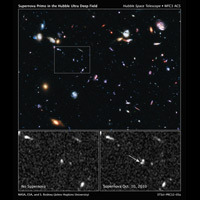
The Hubble Space Telescope imaged the most distant type 1a supernova (exploding stellar remnant) found to date. As astronomers push these detections to larger distances (and therefore further back in time), the size and expansion history of the Universe gets constrained more and more.
The lower panels in the image above (zooms of the top image) show the appearance of the supernova between the time the first one was taken (left) and the second. Here is the full press release.
The Department of Physics and Astronomy and the Centre for Planetary Science and Exploration at The University of Western Ontario, Canada, invite applications for a Tier 2 Canada Research Chair in the area of Exoplanets. The appointment will be at the rank of Assistant or Associate Professor, within the Department of Physics and Astronomy. The selected candidate will be nominated to a Tier 2 Canada Research Chair and appointment to the faculty position will not be conditional on the candidate being awarded the Canada Research Chair.
Expressions of interest are invited immediately. Consideration of applications will begin on February 15, 2012and the position will remain open until filled.
Full details of the announcement can be found here.
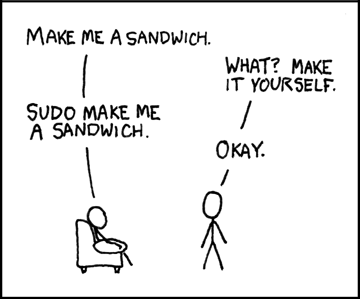
One of the first things that any undergraduate student starting astronomy research has to do is become familiar with the Unix environment. Most of the software used to analyze data is only available in Unix operating systems (this includes Linux and Mac OSX), and programming is much more efficient from the command line. But the real reason you should learn Unix is that this comic becomes really funny:
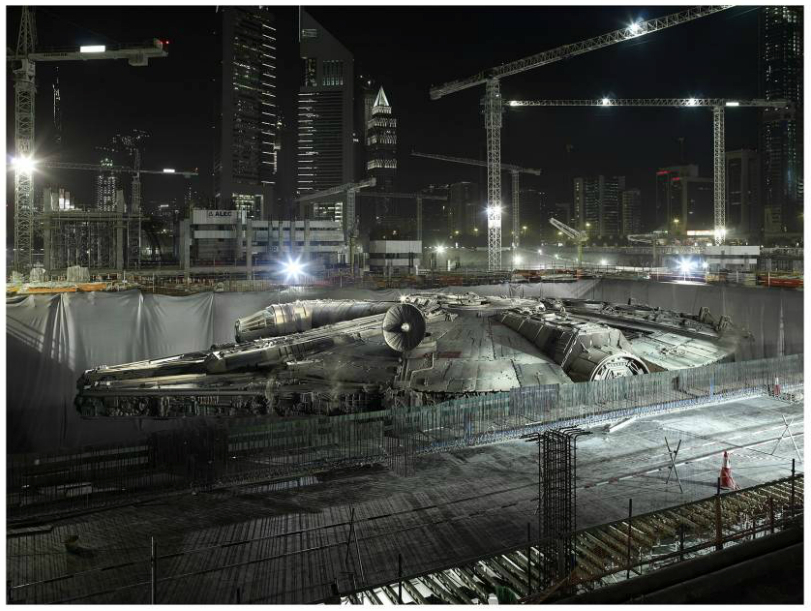
When PASA asked the Physics & Astronomy faculty as part of a series of questions: “Star Trek or Star Wars?”, I had to answer “Battlestar Galactica”. But “Star Wars” was one of the first movies I ever saw in a movie theatre, and so I will always think of it fondly (despite the terrible things George Lucas did to the franchise in later years). Here are some new tweaks on the Star Wars universe from the photographer Cédric Delsaux’s Dark Lensseries.
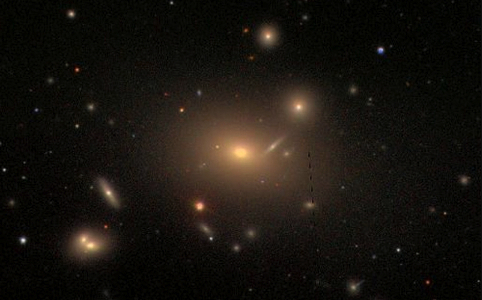
It appears that every massive galaxy hosts a supermassive black hole in its centre. A recent article in the journal Nature described the discovery of black holes as massive as 10 billion Suns. Even by supermassive black hole standards, that’s pretty big. For some perspective, the black hole in the centre of our Galaxy is about 4 million times the mass of the Sun (or about a 2500 times smaller). Is there some upper limit to the mass of black holes? Probably, because they only seem to grow to be a fixed fraction (about 0.3%) of the mass of the galaxies they live in. We’re still working on figuring out how black holes and their host galaxies can grow in tandem.