All posts by Henry Leparskas

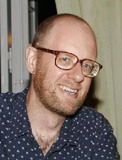
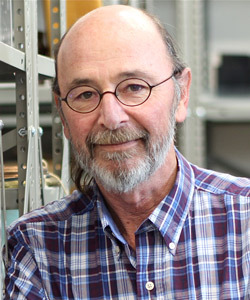
Peter Frank receives Western Award of Excellence

[photo: Paul Mayne, Western News] [see full announcement in Western News]

Peter Frank is one of seven recipients of the Western Award of Excellence for 2012. This is the top honour for staff members at Western.

You can attend the 2012 Western Award of Excellence Presentation Ceremony and Reception set for Thursday, February 16 at 2:30 p.m. in the Great Hall in Somerville House by RSVP at the presentations web site. See details in the Western News. [photo: Paul Mayne, Western News]

Ski waxes – from TAR to NANO


Ski waxing has always been about two things – make the ski glide faster, and make a wax that can last longer. And this doesn’t include the special needs for ‘grip’ or ‘kick’ wax for the classical nordic skier.

The first glide waxes were made of pine tar. Glide wax needs to be hydrophobic so that it can repel water. A coating of pine tar over the old wooden skis fit the bill, and was already available from the ship building industry.

Modern waxes now tout the ‘NANO’ slogan, and can come if powder, hard, or liquid form.Their manufacturers (Holmenkol, the oldest ski wax maker in the world) claim to have improved not only the chemistry, but the physics of the wax,

They keep some of this research secret, but the physics may well pertain  to improving not only the gliding properties of a ski but the texture and surface structure of the ski base, which is important with respect to reducing suction on wet snow, for example.

Interestingly, modern ski waxes vary their hydrophobic properties by varying the amount of fluorocarbon in the mix.  This has turned out to be a potential health risk for those subjected to the smoke and fumes associated with ski waxing.

See: History of ski waxes (source for the above)

See also: Ski wax and the environment

The Kinetic Sculptures of Theo Jansen

I am not sure why I like Theo Jansen’s kinetic sculptures so much.
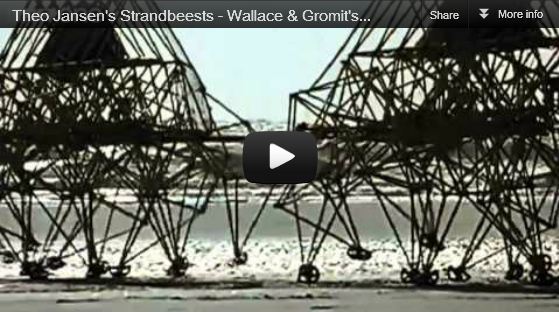
[youtube http://www.youtube.com/watch?v=HSKyHmjyrkA]

It could be the almost miraculous way in which they come to life in a strong wind.

There is also something about Theo Jansen himself.  Is he a mathematician, engineer, artist, or mix of each?

But it is the seeming simplicity of the design of his famous ‘mechanism’ that also enchants me. It strikes the same chords (pun intended) as listening to Glen Gould or Andres Segovia play Bach.

There is also something about longevity and stick-to-it-ive-ness of the artist and musician that I admire in people like Theo Jansen. He has publicly given away the details of his movement mechanism, and one could easily understand if this alone, in terms of fame, would have satisfied Mr. Jansen.  But he has continued working on his kinetic creatures for 20 years, making it a life long passion – not unlike Gould, Segovia, or Bach.

Alex D. has already made an interesting posting in our blog about ‘the golden ratio’ and the Fibonacci sequence in nature, and I would be curious to know if any of the lever arms in Mr. Jansen’s design have similar ratios. In fact if one looks at the Jansen mechanism, it has a curvature that is not dissimilar to portion of a nautilus shell.

Then again, such a simple work of geomety perhaps also harkens back to the days when engineers and physicists creatively designed all kinds of machines containing ingenious cams, gears, governors, and other mechanisms,