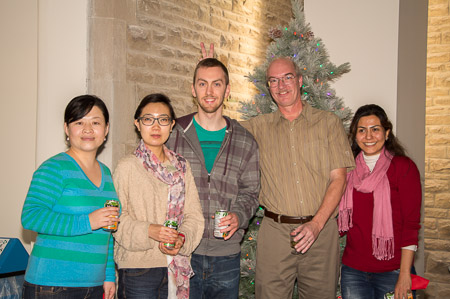
Photo album – Christmas party, Dec. 20, 2012

Photo album – Christmas party, Dec. 20, 2012
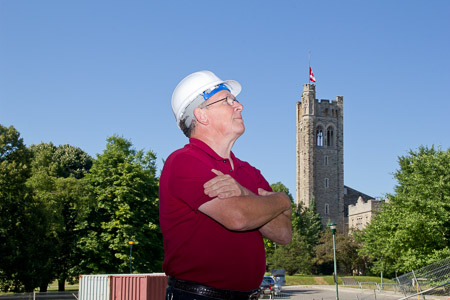
Here is a small photo album of the end of renovations in the fall of 2012, as well as the community making use of the newly renovated building.
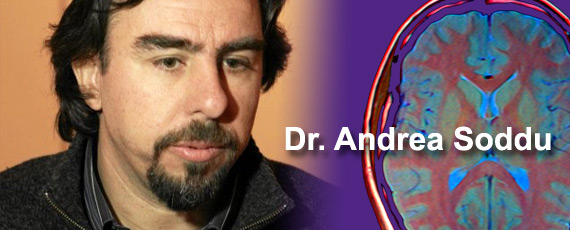 We are pleased to announce that Dr. Andrea Soddu will be joining the Physics and Astronomy faculty on January 1 2013.
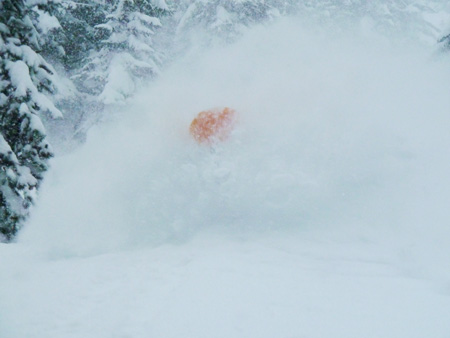 I just received a report that BC back country ski resort Sol Mountain Lodge has received over 5 metres of snow since December 1.
Bing Crosby would have loved it, and I won’t complain if I have to scrape my car windshield tomorrow morning. [photo and report: Alf Skrastins, Calgary]
Don’t forget that you can have NASA email you directly with announcements of favourable ISS flybys for your location. Sign up at http://spotthestation.nasa.gov/
The weather still looks a bit hopeful for the viewing of the International Space Station this evening. Yesterday evening was a bit cloudier than anticipated, but the station was still visible.
Tonight it will be a bit lower: in the sky towards the south;
SpotTheStation! Time: Fri Dec 14 5:46 PM, Visible: 4 min, Max Height: 54 degrees, Appears: SSW, Disappears: ENE
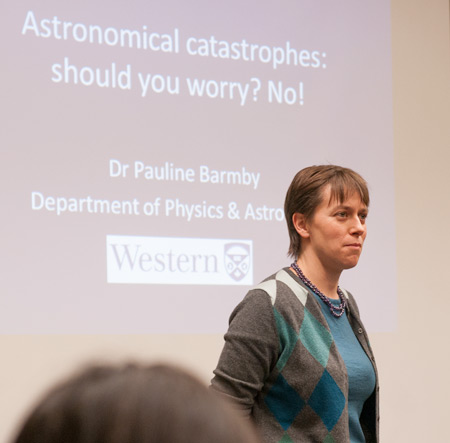
The Faculty of Science and London Public Library joined forces once again, presenting another installment of Science Here and Now.
The speakers for this December 11 talk were Dr. Pauline Barmby (shown in photo) from Physics and Astronomy and Dr. Linda Howie from Anthropology.
Their presentation was titled, “The End of The World as We Know It?“, a look at world astronomical catastrophe myths, including the most recent myth which claims that the Mayan calendar indicates the certain end of the world on December 21, 2012.
 You can find Lisa in our main office in PAB 138.
SpotTheStation! Time: Thu Dec 13 6:36 PM, Visible: 2 min, Max Height: 83 degrees, Appears: WSW, Disappears: NNE
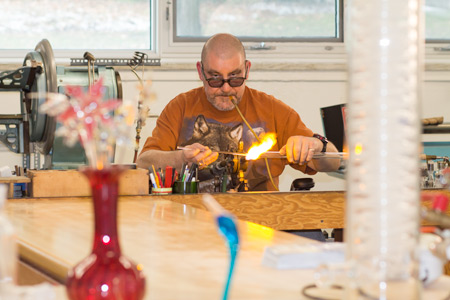
The Department of Physics and Astronomy welcomes Yves Rambour to his new home in the Faculty of Science glassblowing shop.
This new facility is located in Physics and Astronomy PAB 7.
Yves has been at Western for 10 years, and previously worked at the University of Waterloo. He has 35 years of glassblowing experience and is a member of the American Scientific Glassblowers Association.
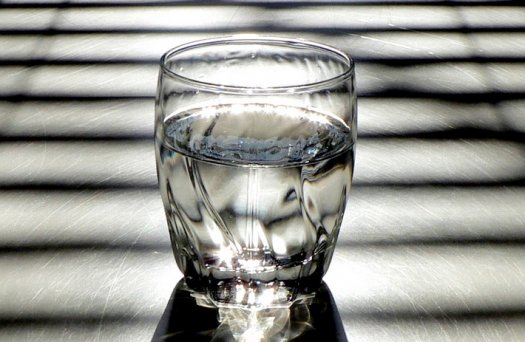
I heard this on CBC’s Quirks and Quarks today. Scientists at Rice University have been able to create steam by putting gold or carbon covered silicon dioxide nano particles in water and shining sunlight on it. They say that 80% of the sunlight’s energy goes into the production of steam, while 20% heats the water independently.