All posts by Henry Leparskas

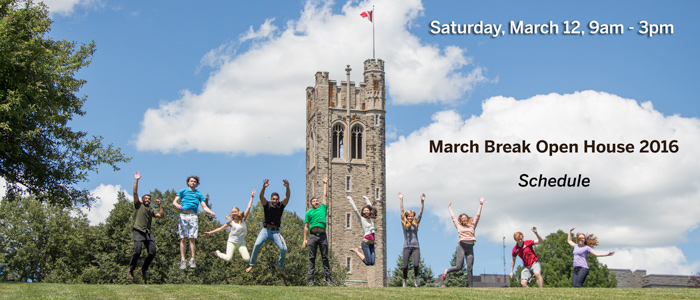
March Break Open House 2016 in Physics and Astronomy

MBOH_2016_2

See the Calendar for the Faculty of Science academic sessions.

Areas of study in the Faculty of Science include: Actuarial Science, Animal Behaviour, Applied Mathematics, Astrophysics, Bioinformatics, Biology, Chemistry, Computer Science, Environmental Geoscience, Environmental Science, Financial Modelling, Game Development, Genetics, Geology, Geophysics, High Performance Computing, Information Systems, Materials Science, Mathematics, Medical Physics, Physics, Planetary Science, and Statistics.

Disciplines in the Basic Medical Sciences (Schulich School of Medicine & Dentistry) include: Biochemistry, Chemical Biology, Computational Biochemistry, Epidemiology and Biostatistics, Interdisciplinary Medical Sciences, Medical Biophysics, Medical Cell Biology, Medical Health Informatics, Microbiology and Immunology, Neuroscience, Pathology, Physiology and Pharmacology.

Physics and Astronomy:

The Physics and Astronomy building will be the site for:


GENERAL SCHEDULE

Welcome Centre
9 a.m. – 2:30 p.m.
North Entrance Atrium, Physics & Astronomy Building

Departmental Displays (Science and BMSc)
9 a.m. – 3 p.m.
Atrium, Physics & Astronomy Building

Welcome and Overview: Bachelor of Science (BSc) and Bachelor of Medical Sciences (BMSc) degrees
9:30 – 10:10 a.m. or 1 – 1:40 p.m.
Room 145, Natural Sciences Centre
Why Western Science and Basic Medical Sciences? Stop by one of these presentations to find out.

Science Tours
9:30 a.m. – 2 p.m.
Room 106, Physics & Astronomy Building
Student led tours of first-year labs, Taylor Library, Zoological Collections and more.

Peer Perspectives
10:30 – 11:10 a.m. or 2 – 2:40 p.m.
Room 145, Natural Sciences Centre
Current students will take questions and offer a student’s view to the Science/BMSc programs at Western.

Biology Student Live Lab
10:30 – 11:30 a.m. or 1:30 – 2:30 p.m.
Room 330, North Campus Building
Participants will get experience in a live lab.

Biology Students’ Q&A for Parents
10:30 – 11:30 a.m. or 1:30 – 2:30 p.m.
Room 295, North Campus Building
Current Biology students will take questions from parents while prospective students are in the live lab.

Mock Lecture – Experience your first class at Western!
11:30 a.m. – 12:30 p.m.
Room 145, Natural Sciences Centre
Our professors will excite you with their lecture style and subjects.
See Western’s March Break Open House.

Silvia Mittler receives ‘Best Paper Presentation’ award at PHOTOPTICS 2016, in Rome, Italy

Silvia Mittler
Silvia Mittler

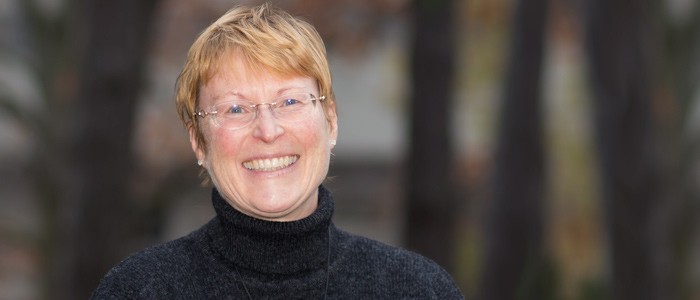
Professor Silvia Mittler attended the 4th annual Conference on Photonics, Optics, and Laser Technology (PHOTOPTICS), which was held in Rome, Italy.

Silvia was awarded for ‘Best Paper Presentation’ for a talk titled, “Waveguide Evanescent Field Microscopies for Application in Cell- and Bacteria- Biophysics“.

[PHOTOPTICS awards archives]


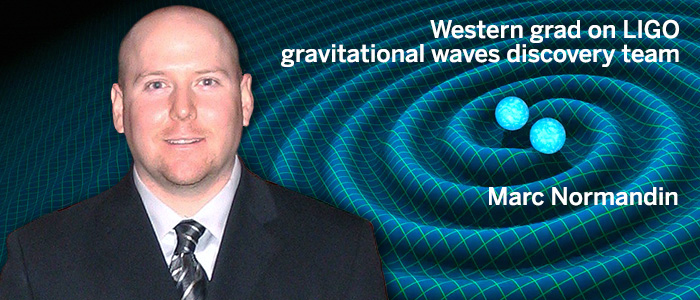
Western grad is member of LIGO gravitational waves discovery team

Marc_Normandin_LIGO_700x300

The announcement of the first detection of gravitational waves rippled around the world on February 11, 2016.

The discovery was made by NSF’s Laser Interferometer Gravitational-Waves Observatory (LIGO). LIGO is funded by the U.S. National Science Foundation.

One member of the discovery team is Western graduate of Physics and Astronomy Marc Normandin.

Marc is presently a University of Texas at Brownesville doctoral student, studying under gravitational waves expert Professor Soumya Mohanty.

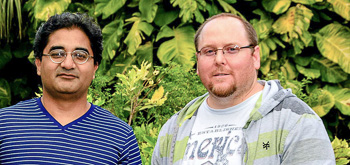
Prof. Mohanty (l) and Marc Normandin (r)

According to Professor Mohanty, ” Marc is a member of the LIGO-Virgo Scientific Collaboration and an author on the detection paper. He has been working on developing a method that optimally combines data from gravitational wave and electromagnetic observations of sources, such as gamma ray bursts, to provide information about the population properties of such sources. Such a method will allow us to draw astrophysically useful conclusions even for sources that are too far away, hence too weak, to be detected confidently as individual gravitational wave events. It uses the idea of combining data from many events to build up confidence in the estimation of properties of a population of sources as a whole and complements the search for gravitational wave counterparts of individual electromagnetic triggers. Thus, the work Marc has been doing is forward looking and likely to play an important role in the new era of gravitational wave astronomy inaugurated by the first detection.”

The tentative title for Marc’s PhD thesis is, “Optimal approach to population study using joint Electromagnetic and Gravitational Wave Observations“.

Describing his current research on his LinkedIn page, Marc writes, “It involves population parameter estimation of model parameters as applied to multi-messenger datasets relating to Gamma-ray Burst (GRB) events. Electromagnetic information and gravitational wave information is combined to yield improved parameter estimations, whereas previous studies focus on only one type of information“.

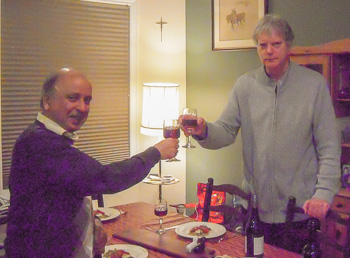
Toasting the discovery of gravitational waves. (l) Ram Valluri, and (r) Peter Komorowski

Marc had completed his MSc in Physics and Astronomy at Western under the supervision of gravitational waves researcher Dr. Ram Valluri.  The title of Marc’s MSc thesis is “Pattern Recognition of a Gravitational Wave Pulsar Signal”.

Shown in the photo ‘Celebrating the discovery of gravitational waves’ are Ram Valluri and Peter Komorowski.   Peter was supervised by Ram Valluri and Martin Houde on his PhD thesis which was titled “An Analytical and Numerical Treatment of Inclined Elliptical Orbits about a Kerr Black Hole“. Peter’s PhD thesis was the first ever in the field of General Relativity within the Department of Physics and Astronomy at Western.

The extreme black holes which Peter studies also emit gravitational waves, which one day may be detected.

Western’s Mars HiRISE imaging team begins 2 week campaign

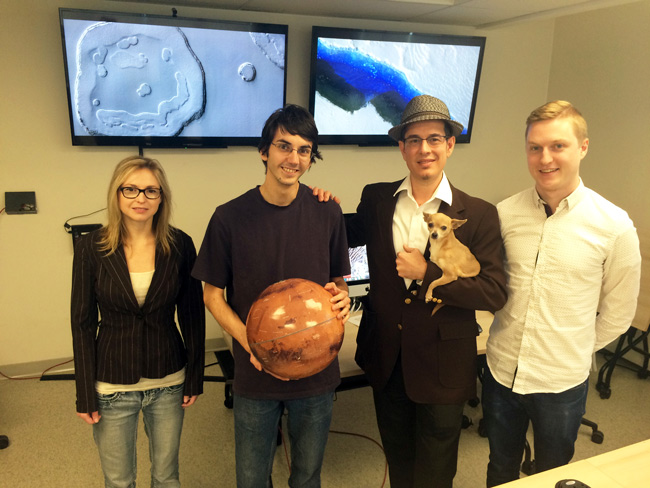
Christy Caudill (ES PhD student), Eric Pilles (ES PhD student), Livio Tornabene (CPSX Research Scientist), Ian Pritchard (Geography MSc student)of the HiRISE imaging team at Western. (l-r)
Christy Caudill (ES PhD student), Eric Pilles (ES PhD student), Livio Tornabene (CPSX Research Scientist), Ian Pritchard (Geography MSc student) of the HiRISE imaging team at Western. [photo:Cassandra Marion]
HiRISE (High Resolution Imaging Science Experiment) is a camera on board the Mars Reconnaissance Orbiter, which is circling the planet Mars.

Western has a team of scientists who plan science image targets for the HiRISE camera. The current campaign runs from Feb. 20 until Mar. 5, 2016.

The scientists are members of the Centre for Planetary Science and Exploration (CPSX), which is a multi-disciplinary group at Western under whose auspices the imaging project is run.

You can see some of the unique images taken by the Western HiRISE team, along with descriptive audio, in a series of short videos that are presently being displayed on the two large hallway public information monitors that reside on the first floor of the Physics and Astronomy building.

Team members not shown in the photo are Ryan Hopkins, Elizabeth Silber and Kayle Hansen.

Excitement mounts with pending announcement of first ever detection of gravitational waves

Here a link to live Guardian coverage of the leadup to the news conference by  American Laser Interferometry Gravitational-Wave Observatory (LIGO) of the possible first detection of gravitational waves.

https://www.theguardian.com/science/across-the-universe/live/2016/feb/11/gravitational-wave-announcement-latest-physics-einstein-ligo-black-holes-live

Here is a CBC News article which highlights some LIGO team members at the University of Toronto.

http://www.cbc.ca/news/technology/ligo-gravitational-wave-1.3440315


Deanna Bushelle is front and centre at celebration of United Way success

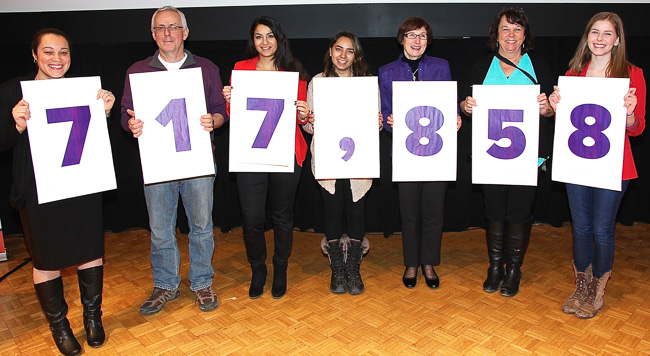
Deanna Bushelle is at far left in this photo of the United Way tally.
Deanna Bushelle is at far left in this photo (courtesy Paul Mayne and Western News).

Hopefully most everyone now has met our new caretaking staff member Deanna Bushelle.

Deanna was in news last October as being Western’s 2015 United Way Sponsored Employee.

After several months on hard work,  Deanna and her fellow Western United Way volunteers presented us with this years tally of $717,858.

Congratulations to Deanna and everyone who participated in the campaign or generously donated to the cause.


Dr. Pete Worden presented the CPSX 2016 Distinguished Lecture

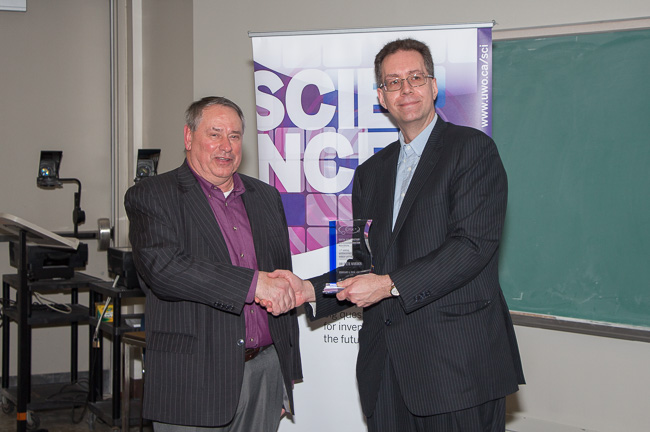
Dr. Pete Worden receives the 2016 Distinguished Lecture Award from former CPSX Director Dr. Peter Brown.
Dr. Pete Worden (left) receives the 2016 Distinguished Lecture Award from former CPSX Director Dr. Peter Brown (right).

Retired U.S. Brigadier General Dr. Pete Worden, now Chairman of Breakthrough Initiatives, is the Centre for Planetary Science and Exploration (CPSX) Distinguished Lecturer for 2016.

Dr. Worden gave two talks. First he spoke at the CPSX lunchtime Research Forum on the topic “Alpha Centauri System – Is There a Habitable Planet? Can We Go There?”.

In the evening, CPSX Acting Assistant Director Dr. Ken MacIsaac welcomed the audience. Former CPSX Director Dr. Peter Brown then introduced the speaker Dr.Pete Worden.

CPSX_Dist_Lecture_2016_2_crop
Dr. Pete Worden presents the 2016 CPSX Distinguished Lecture.

Dr. Worden presented the 2016 CPSX Distinguished Lecture on the topic “From General Relativity to Life in the Universe: A Century of Breakthrough Science”, after which he was presented with the CPSX Distinguished Lecturer Award.  A reception in the Physics and Astronomy Building atrium followed.

Physicist Stephen Hawking and Russian tycoon Yuri Milner created Breakthrough Initiatives to search for intelligent extraterrestrial life in the Universe and consider a plan for possibly transmitting messages out into space.

[images on Flickr]


Astronomer shares love of travel and learning with his students


Professor Shantanu Basu

Astronomy professor Shantanu Basu reflects to the Gazette about how his passion for science and learning was nurtured by his parents.

He is now passing on his personal love of travel and learning to his students.

Shantanu and his students have organized an international conference with the most wonderfully unique title ‘Astronomy at Taj 2016‘, which will be held a stones throw from the Taj Mahal in India.

[Gazette article]