All posts by catschroedinger

Gravitational Lens = Magnifying Glass

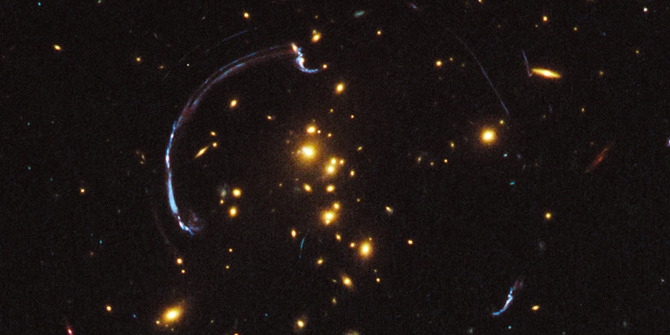
This stunning picture is what resulted when a group of astronomers and NASA pointed the Hubble Space Telescopeat a galaxy 10 billion light-years away. Its remarkable clarity is because of a relativistic effect called gravitational lensing, which in this case really acts like a magnifying glass. The galaxy in question, in the galaxy cluster RCS2 032727-132623, is the brightest distant magnified galaxy ever seen, and is very actively forming stars.

Credit: NASA, ESA, J. Rigby, K. Sharon

No Ordinary Bubble

The video below, taken (incidentally nearby here in Southern Ontario) at Sea World (though not by me, no), is incredible in every sense of the word.

[youtube http://www.youtube.com/watch?v=TMCf7SNUb-Q]

Aside from the dolphins themselves, and the implications to the intelligence of what they are doing, there is a certain beauty for the ring bubble itself; for they seem to be no ordinary bubbles. Vorticies (confined, circular fluid flow) such as these form when two masses of fluids interact with sufficiently different velocities. That is, one fluid moves quickly through a mass of a relatively stationary second fluid (i.e., air moving through water, as depicted in the video); but can also occur if the “two” fluids are actually the same substance moving differentially with respect to itself.

Imagine an isolated bubble of air moving steadily through the water. As the water streams past, the outer most surface of the bubble is peeled away with the direction of motion. Once the surface tension of the bubble is overcome by this current, the spherical shape punctures into the doughnut shape seen. The larger surface area of the outer edge experiences greater stress than along the inner edge, causing the entire ring to rotate rapidly: the outer edge moving with the direction of motion, wrapping behind the ring, and up through it’s center against the direction of motion; stabilizing itself against further rupture.

Thus, in spite of the seeming complexity of its form, the nature of… well, nature… is that the ring bubble is precisely what one should expect to have formed; the no ordinary bubble, is in fact ordinary afterall, and spectacular for being so ; )

Camera Culture

In case you haven’t heard, photons are pretty quick; around 300,000 kilometers per second quick. Fast enough that a single photon could circumnavigate the Earth more than 7 times in one second. While photographing a single photon travelling through space would be impossible, using a series of 5,000 individual sensors firing with picosecond (1 trillionth of a second) separation the Camera Culture group at MIT has recently developed a novel technique for photographing pulses of light traveling through space; each frame recording instances in time between which the individual pulses travel a fraction of a millimeter per step.

[yohttp://www.youtube.com/watch?v=-fSqFWcb4rEutube ]

By repeating the experiment several times over, each sensor can gradually build up a full picture of how the pulse interacts with its environment as it propogates across the scene.

Shocking!

But not the electric kind.

I’m of course referring to those other beloved shocks, rapidly steepening non-linear wave profiles; shock waves!

The video below is one of my favorite examples from a recent competition to document fascinating examples of fluid behaviour. The formation of aerodynamically stable jets by particles caught up in an expanding shock wave is a common feature of explosive dispersals, but is not understood very well. This video, prepared by a group from McGill University, sheds some light on the matter by demonstrating how the formation of those jets varies as a function of the particle properties.

[youtube http://www.youtube.com/watch?v=78l4cU5F2YE]

Courtesy of the American Institute of Physics’ Gallery of Fluid Motion.

Physics & Astronomy Colloquium – This THURSDAY, 2nd Feb. – DR. ANDREA SODDU, University of Liège

Poster: http://www.physics.uwo.ca/colloquia/Colloquia%20Notices/2011_2012/SODDU%20Research%20Talk.pdf

The University of Western Ontario
DEPARTMENT OF PHYSICS AND ASTRONOMY

PHYSICS & ASTRONOMY COLLOQUIUM

Date:           Thursday, 2nd February 2011
Time:          1:30 p.m.
Location:    Physics & Astronomy Seminar Room 22

Dr. Andrea Soddu
University of Liège
Liège, Belgium

“Neuroimaging in patients with disorders of consciousness: listening to a shy brain when the heart is shouting”

ABSTRACT

Patients who survive a severe brain injury, patients in coma, vegetative state, minimally conscious state and locked in syndrome represent a problem in terms of diagnosis, prognosis, treatment and daily management. The use of appropriate standardized behavioural scales at the bed side has been proven to be a relevant step for a proper diagnosis but chances to miss signs of consciousness are still not marginal. The possibility to support behavioural evaluations with neuroimaging techniques offers an additional tool to reduce the chances of misdiagnosis. Multimodal approaches combining different neuroimaging data sets are very promising and the importance of centres offering different techniques appears nowadays to be strategic for the studies of these disorders.

How to thesis: Focus

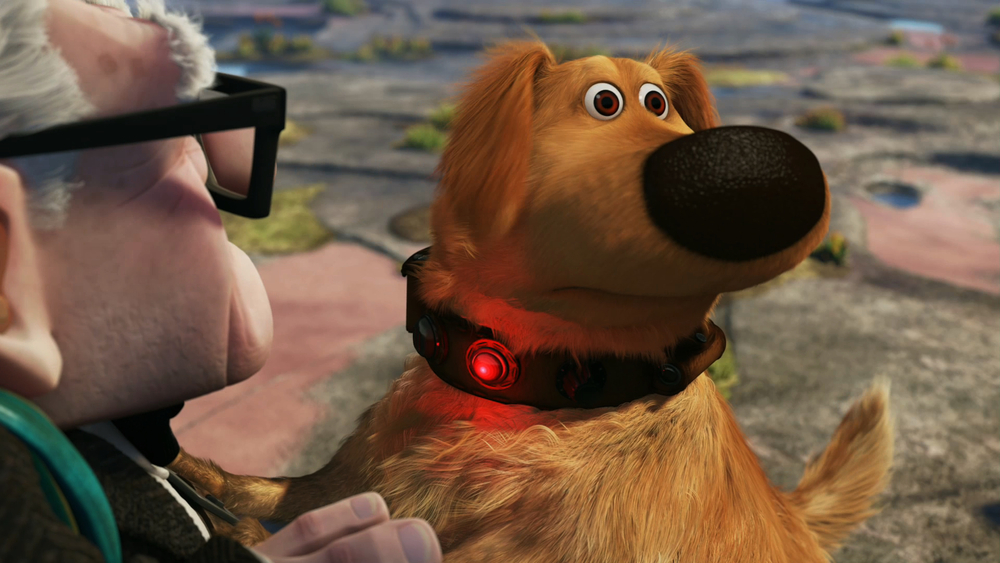
Focusing on one task for a long period of time is somewhat important for writing a thesis (or doing any task that requires sustained concentration in general).  However, it has never been a strong suit of mine.  Sometimes I feel a lot like that dog from the movie Up.

Fortunately, I have picked up some tricks that help me concentrate and perhaps this information can be helpful to others who might still be having problems with this.  Here they are:

Sleep

Now, this may sound obvious, but keeping a regular sleep schedule can be difficult sometimes and a lot of the time, sleep gets set aside in favour of more time to do work.   However, getting a solid x hours of sleep a night (where x is the number of hours you require to feel rested) is really key to working well.

There’s even science to back this up.  People who are sleep deprived experience more difficulty in performing tasks requiring a lot of attention as well as doing things like forming new memories (if you needed another reason to avoid staying up all night cramming for midterms the night before).

Of course, it’s also an entirely different thing to forgo sufficient sleep in the days just before a deadline than it is to make a habit of it.

Exercise

Regular physical activity not only helps with sleep quality and reduces stress, but personally, I find it makes me a lot less restless during the day.  If I’m less restless, I can get more work done.  It also has a lot of health benefits, so it’s a good thing to do aside from helping you pay attention.

Caffeine

If you’re the sort of person who has a lot of negative effects from caffeine, this won’t help.  But there are studies indicating that caffeine does help improve focus and attention span.  This may seem a bit counterintuitive (e.g. shouldn’t it make you more restless?), but it does make sense when you consider that a well-rested person can focus better than one that is sleep deprived/tired and that caffeine is a stimulant, which will temporarily make you feel less tired.

Scheduling

I think I’ll write more on this point in another post, but in short: Make a schedule and try to stick to it.  If you make a series of small goals throughout the day (or mini-deadlines, if you prefer to think of it that way) and make a sincere effort to accomplish the tasks you set by the time in which you set out to do them, it can be easier to focus on that one task that you want to finish by a certain time.  Don’t beat yourself up if you fail to meet your schedule, just do your best (you can never anticipate the difficulties that might crop up during a particular task if you haven’t done it).

Take Breaks

By this, I don’t mean that you should randomly take some time out of your day to browse youtube.  I mean you should schedule some breaks throughout the day (say 10 minutes every hour) in which you do something that takes you away from the task you were performing.  So if you were working on your computer, go for a walk, have a snack somewhere that isn’t your desk, make some coffee/tea, do some dishes, whatever.

Working in small chunks makes it easier to focus (you don’t have to do it for nearly as long) and doing something different from your previous task really gives you a break from it.  If you go from sitting at the computer working to sitting at the computer checking your email, this isn’t quite the same effect (your body isn’t getting a break from its previous task).  You may also find that taking a walk can give you time to mull over any issues you were having with your work and perhaps you can think of a few solutions by the time you get back to your desk.

Music

This definitely doesn’t work for everyone.  It does work for me (and I know I’m not alone in this), but listening to music or having some background noise (nothing too loud, just enough that it’s not absolute silence) helps me pay attention to my work a lot.  It might come from growing up in a fairly noisy house and doing most of my homework in front of the television when I was in high school, but I really just can’t focus when it’s quiet (nor can I focus with construction noises).

I hope that my tricks to stay focused are helpful.  If you have any tricks that you employ, feel free to leave comments because perhaps what works for you will work for other people too.

Until next time…

SQUIRREL!


Sarah is in the final year of her PhD.  “How to thesis” is a series in which she imparts various (hopefully) useful things she has learned during her graduate career.