0 0 1 77 443 University of Western Ontario 3 1 519 14.0 Normal 0 false false false EN-US JA X-NONE
If you haven’t already seen it, there is a new Space magazine in Canada, “Space Quarterly”
The latest edition of Space Quarterly magazine is available. In this issue they focus on space policy along with updates on Canada’s rover program, one of Canada’s next satellites to be launched, NEOSSat and COM DEV’s Automatic Identification System (AIS) satellite constellation. In the new Leaders section they interview Futron founder and CEO Joe Fuller who tells us about why he started his company and how it helps governments and businesses globally.
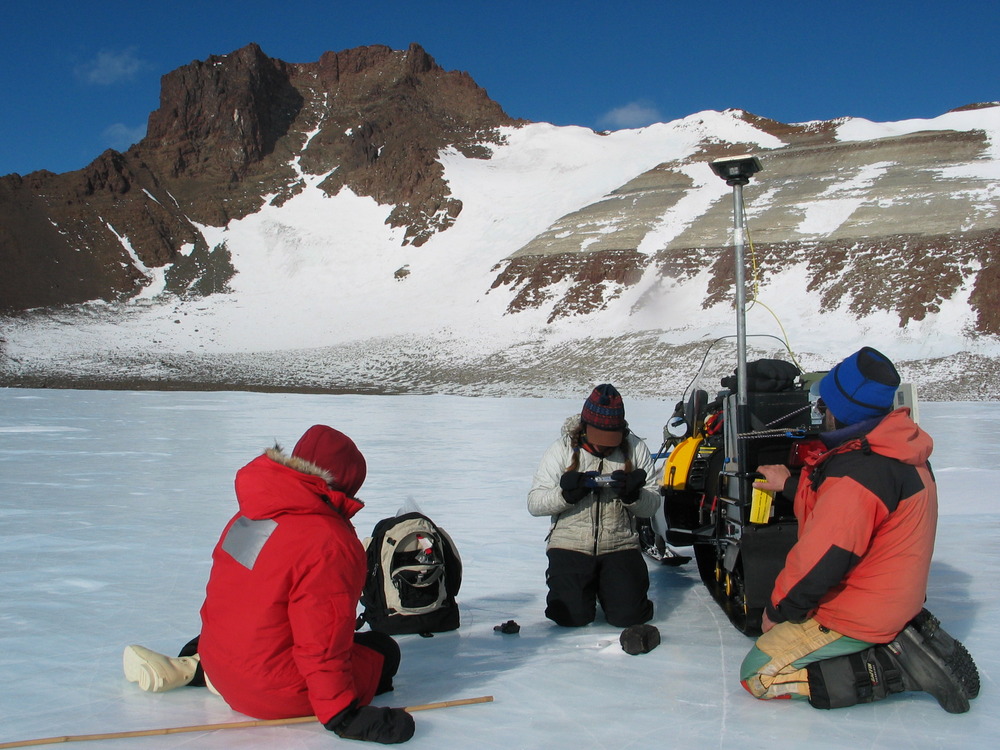
This year marks the 100th anniversary of Norwegian Roald Amundsen reaching the South Pole – the exact date was Dec. 14th, just last week! This anniversary was marked by the Antarctic Search for Meteorite (ANSMET) team who are down in Antarctica searching for meteorites. Indeed, Antarctica is the best place to find meteorites – over 30,000 have been recovered over the past 30 years. You can follow the ANSMET blog here: http://www.humanedgetech.com/expedition/ansmet2012/
I’ve had the pleasure of going on two expeditions with ANSMET and would recommend going to anyone! Most of the participants are scientists and are volunteers. All you need to do to apply is to write a letter and mail it (yes, place it in an envelope and mail it!) to the PI of this project, Ralph Harvey. More instructions and a background on ANSMET can be found here: http://geology.cwru.edu/~ansmet/
Here I will share an email I received this morning from the Canadian Astronomical Society (CASCA).
Budget expectations for the Canadian Space Agency (CSA) show a dramatic decrease in the funding to space astronomy programs. The extent of the cuts will jeopardize the future of space astronomy in Canada and undermine the credibility of the CSA as a partner in international space missions.
All Canadian astronomers are urged to sign the petition, that can be found at the following URL: http://tinyurl.com/CSA-petition (Edited, thanks to the comments below)
This will cut funds to (among others) all space astronomy projects (such as JWST, Herschel, Planck, Astrosat, Astro-H, etc..).
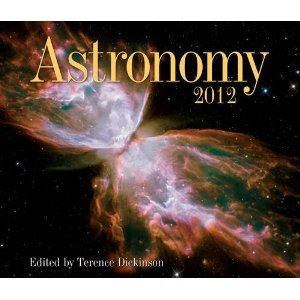
A short list of Astronomy gift ideas for the non-Astronomers on your holiday shopping list.
Astronomy 2012
Deep Sky Wonders
Home Planetarium
And for any budding little scientist in your life, one of my personal favorites and a soon to be addition to our home, Young Mad Scientist Alphabet Blocks.
I thought I would share one of my favourite online resources. A great place to keep up to date on the publications, thesis submissions, job opportunities (research & faculty) and meetings that relate to the Sun and other cool stars.
In the next 12 months I hope to bring you monthly updates on my final year (or so I hope) of my PhD. In this time, I intend to give a little insight into not only the crazy world of thesis writing and submission but also, and more interestingly, into the process of the post Grad-school work applications.
I will post not only detail of the positions for which I apply but also positions that I think are interesting outside of Astrophysics and academia. Although I do intend to do a PostDoc, I think it is nice to see what else is out there and this, I think, is worth sharing.
A little personal homework for myself over Christmas and a perfect place to start: preparing an academic and non-academic CV for Physics and Astronomy graduates. Next month I will include hints and tips and probably a link or two. But for this month I will leave you with some food for thought; what skills does one acquire while studying Physics?
Communications – from giving seminar talks to your peers, to running a lab or tutorial, to writing a research proposal, to writing a scholarship application we communicate on many levels with many different audiences. Being able to communicate complex ideas easily and concisely is a skill that is useful far beyond academia or science.
Time Management – those of us who have had courses to take, while TAing various courses, while carrying out intensive or time consuming research perform a precarious juggling act. It is never easy, but in the long run we gain from such experience. Eventually we become more efficient and not just in our research or our courses or our teaching. Again these are lessons that are more far reaching.
Independence – a good academic supervisor guides us in our research they do not lead. They allow us to make our own decisions under their guidance, and eventually without it. As far as our research is concerned we might have some one guiding the reigns and checking our progress but we also learn to be our own bosses. If we do not pull our weight in the end we fail only ourselves. This should leave us with a great ability to work under our own iniciative.
Computer Literate – for the most part this speaks for itself but in addition to what most of the world consider to be computer literate we have probably all picked-up at least two programming languages along the way and with that the basics of a few others. Similarly given the technological nature of modern research I also imagine that many of us are pretty tech savvy to boot.
Technical Experience – what you are good at here, obviously depends on your area of choice, but we each have something. Depending on what you have been doing for the past few years, you’ll know what it is you are learned in here. But consider the extra bits and pieces that go into that experience.
Problem Solving – I mean thinking on your feet, not algebra. Many of our activities involve doing this: your results do something terribly unexpected, your computer freezes up in the middle of you doing the most important piece of work you have done that week, the target doesn’t appear in the guiding camera.
Technical Writing – journal articles, need I say more.
Teaching – not just communicating but actually conveying information. Personally I see this as one of the best skills a grad student will acquire. Obviously useful in a future academc career, but also in many other things. Paying attention to how students learn arms you with the information on how anybody/everybody learns. This is useful in training of any variety both within and without the work place. The insights you gain from student-TA interactions can be useful in many other places.