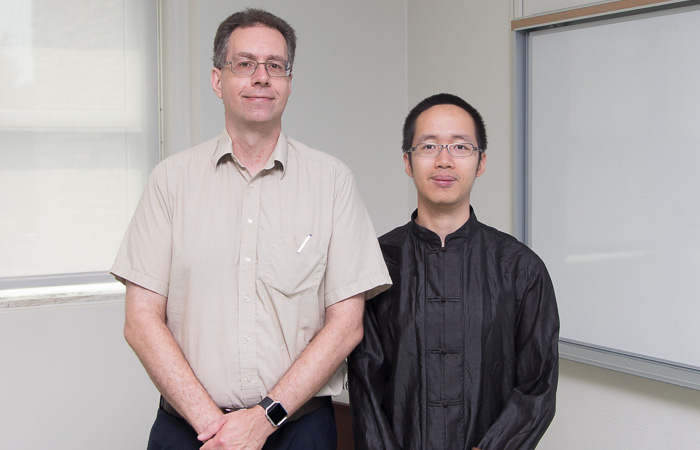
Quanzhi Ye successfully defended his PhD thesis on Thursday, July 28, 2016.
He gave a public talk titled “Aging comets and their meteor showers”.
Quanzhi’s PhD supervisor was Professor Peter Brown.

Opinions, news, and events for the Department of Physics and Astronomy at Western University.
Quanzhi Ye successfully defended his PhD thesis on Thursday, July 28, 2016.
He gave a public talk titled “Aging comets and their meteor showers”.
Quanzhi’s PhD supervisor was Professor Peter Brown.
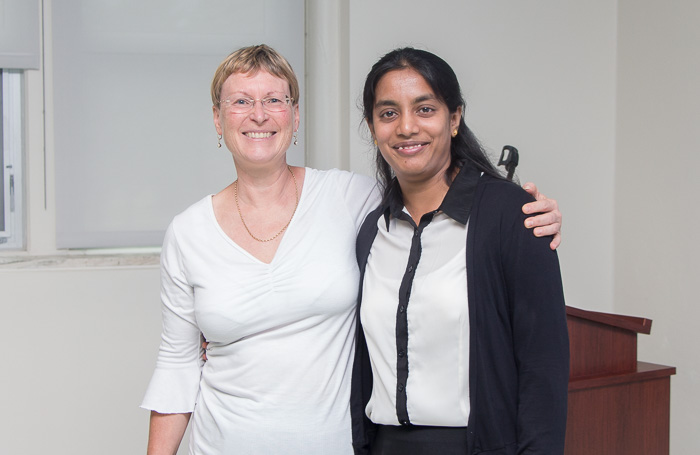
On Monday July 25, Sivayini Kandeepan successfully defended her MSc thesis.
She gave a public talk on the thesis topic, titled, “OMCVD gold nanoparticles covalently attached to polystyrene for biosensing application“.
Sivayini’s thesis supervisor was Professor Silvia Mittler.
PhD student Jaewoo Park has won a Travel Grant to attend the 2016 Graphene Canada Conference, to be held October 18-20 in Montreal, QC. Jaewoo works under the supervision of Prof. Giovanni Fanchini. His presentation at Graphene Canada will be on metal-assisted, selective etching of graphene and the formation of porous graphene based materials for water filtration and other applications.
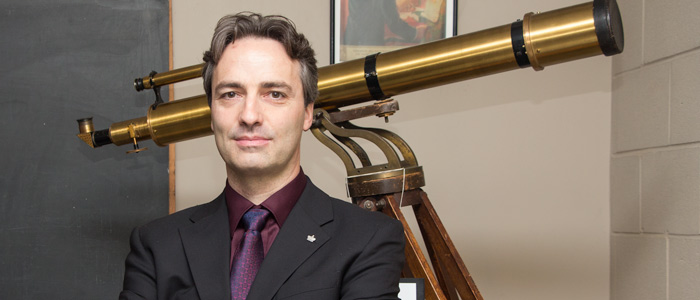
Astronomer Jan Cami is the 2016 recipient of the Faculty of Science Award for Excellence in Undergraduate Teaching.
The citation from Associate Dean Jeffrey Hutter reads in part, “The committee was impressed by your philosophy of not only enabling students to learn, but also teaching them to want to learn. As one student put it, “you are always challenging, and often inspirational”. Our external examiner noted the Cami “practices the philosophy he espouses”, and noted the “it was indeed heartening to see such devotion to good teaching”.
The award will be officially presented at the Faculty of Science Awards Recognition Luncheon in December.
Western astronomy graduate student Robin Arnason is on an international team that has discovered black holes that have very low feeding rates and low levels of X-ray emission.
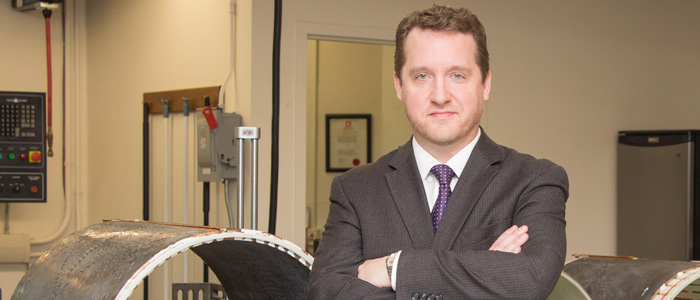 Professor Blaine Chronik is one of two Western scientists who were awarded new NSERC Industrial Researh Chairs.
According to Western Media Relations, “Chronik is working with Toronto-based Synaptive Medical to develop highly customized MRI systems that have been optimized for specific applications like stroke. Health-care providers currently use multi-use, full-body scanners to diagnose any number of ailments, but one of Chronik’s objectives as NSERC/Synaptive Medical Inc. Industrial Research Chair in Magnetic Resonance Systems Development is to become the first Canadian team able to design, prototype and produce custom MRI platforms.
Their efforts will create smaller, lighter, cheaper and easier-to-use MR systems that still produce high-performance results.
“These qualities are essential to bringing the benefits of MRI to health-care settings where the technology has been unavailable or underutilized,” Chronik says. “Our program aims to improve healthcare for Canadians by facilitating the development of safer, more advanced medical devices for use within safer, more advanced MRI systems.”
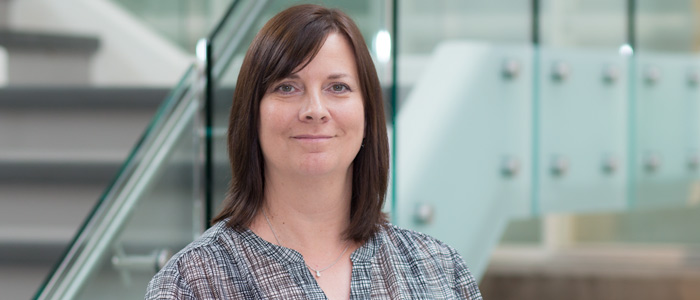
We welcome new Administrative Officer Emily Adams to the staff.
Emily worked previously at Canada Tubeform for 4 years as the Office Manager, and prior to that she was with BTC Logistics/Fraser Direct for 13 years as the Operations Manager.
Her favourite colour is anything in metallic.
Emily and family enjoy caring for and training their horse Chiquita.
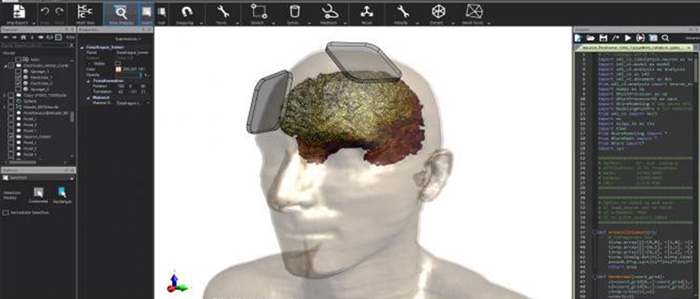 Swiss company ZMT Zurich MedTech AG makes the premier modelling software for electromagnetic interactions with the human body. It describes their Sim4Life software as “Sim4Life is a revolutionary simulation platform, combining computable human phantoms with the most powerful physics solvers and the most advanced tissue models, for directly analyzing biological real-world phenomena and complex technical devices in a validated biological and anatomical environment. The Sim4Life platform also offers leading performance with all the features expected from a multiphysics CAE/TCAD platform.”
Prof. Blaine Chronik’s xMR laboratory has developed software modelling techniques that have been incorporated into Version 3.0 of Sim4Life. The work was done by Dr. Chronik, senior research scientist Dr. Will Handler, and Western grad Dr. Chad Harris, now with Synaptive Medical of Toronto.
According to Dr. Handler, “Chad, Blaine and I worked on implementing new mathematical techniques to improve our capability to design magnets, by calculating current densities on surfaces on arbitrary volumes, and expanded the math to allow the modelling of the interactions of any magnet we build with arbitrary conducting surfaces. This capability has been added to the new version of sim4life using our code library and allows the design of gradient coils, a basic component of an MRI system, in sim4Life and the modelling of device interactions for things like pacemakers with gradient coils in the MRI.”
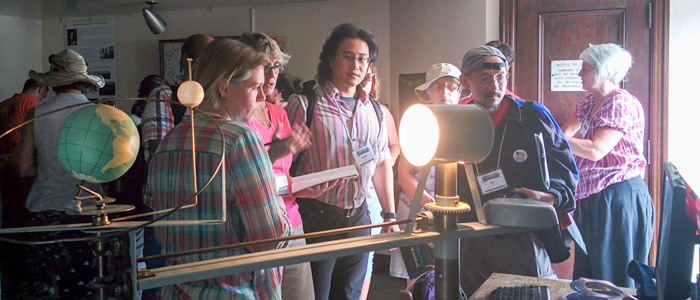
A group from the Ontario Association of Physics Teachers (OAPT) came to workshops at Western during the week of July 4, 2016. The event was sponsored by the Ontario Teachers Federation (OTF).
One day was spent at an astronomy workshop hosted by Western astronomer Sarah Gallagher, along with postdoctoral fellows Parshati Patel and Aycha Tammour, and graduate student Viraja Khatu. Western astronomers Pauline Barmby and Stanimir Metchev were on hand for the daytime and evening observatory visits.
Sarah Gallagher led the Wednesday classroom activities. After lunch the group visited the Hume Cronyn Memorial Observatory where the graduate students, along with staff member Henry Leparskas and volunteers Paul Kerans, Heather MacIsaac, Peter Jedicke, and Bob Duff of the Royal Astronomical Society of Canada, London Centre, were on hand to help everyone observe the Sun through telescopes. It was a wonderful day for solar viewing through the Coronado 90mm H alpha scope, as there were many beautiful prominences to be seen on the Sun’s limb. The daytime visit also included a demonstration of the Sotellunium model (Sun-Earth-Moon) of Colgrove and Kingston, as well a demonstration by Parshati of a simple classroom Sun-Earth-Moon model. The model is comprised of a lamp that represents the Sun, and a small white foam ball on a stick that represents the Moon. In this model, our eyes represent the view of the Moon and Sun from Earth. Such a simple model can effectively demonstrate the phases of the Moon, as well as eclipses.
On Thursday evening the teachers visited Cronyn Observatory again for some planet and moon viewing. Additional RASC volunteers Everett Clark and Steve Gauthier were on hand along with Heather MacIsaac, Paul Kerans, Peter Jedicke, Bob Duff, Prof. Stanimir Metchev. and Henry Leparskas. There was a tour of the historical period room, a look at the transit demonstration setup, and fun with the model of Einstein’s Equivalence Principle toy that is on display in the observatory classroom. Four telescopes were set up on the observing deck, and the historic 25.4cm refractor was also in use. There were superb views of the Moon, Mars, Jupiter, and Saturn. The visitors also had a chance to view Jupiter’s moon Io as it approached the limb of the planet.
Asteroid Day is a worldwide awareness campaign that started in 2015.
The celebration happens each June 30 to mark the anniversary of the 1908 Tunguska event, the largest asteroid impact in recent history.
Western University held its inaugural Asteroid Day this year on June 30, 2016.
The event is sponsored by the Centre for Planetary Science and Exporation (CPSX) as well as the Department of Physics and Astronomy, the Department of Earth Sciences, and the Royal Astronomical Society of Canada, London Centre (RASC). It was held at the Hume Cronyn Memorial Observatory.
The day’s agenda included:
Public Talks by four Asteroid Experts:
3:00 PM– Prof. Peter Brown “The Tunguska event and the hazard of asteroid impacts”
4:00 PM- Prof. Paul Wiegert “Fire from the sky: how rocks from space fall to Earth”
5:00 PM- Prof. Mikael Granvik “Killer Asteroids” (Mikael is a visiting asteroid scientist from Helsinki, Finland)
6:00 PM- Prof. Audrey Bouvier “Meteorites: messengers from asteroids and planets”
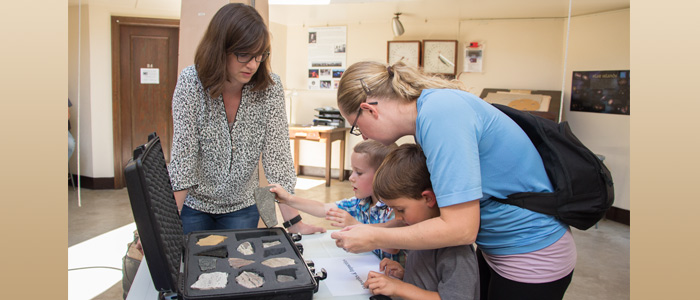
In addition, several meteorite experts were on site with Western’s meteorite display, where they answered questions. It was also an opportunity for the public to bring rocks they think are meteorites for inspection by meteorite experts and learn how to recognize them.
Solar observing also took place on the observing deck where three telescopes were available for safe solar viewing. The 20cm Schmidt-Cassegrain and 90mm Celestron Go-To Maksutov telescopes gave views in white light via mylar filter protection, while the 90mm Coronado scope gave a Hydrogen Alpha view of the Sun’s surface.
Approximately 75 people attended during the day.
Event organizers were Dr. Parshati Patel and Dilini Subasinghe. Volunteers were Heather MacIsaac, Will Hyland, Paul Kerans, Bob Duff, Cassandra Marion, Peter Jedicke, Laura Jenkins, Matt Maloney, Bidong Zhang, Jen Newman, and Henry Leparskas.