Brief video tour of the renovated Physics and Astronomy building.

Brief video tour of the renovated Physics and Astronomy building.
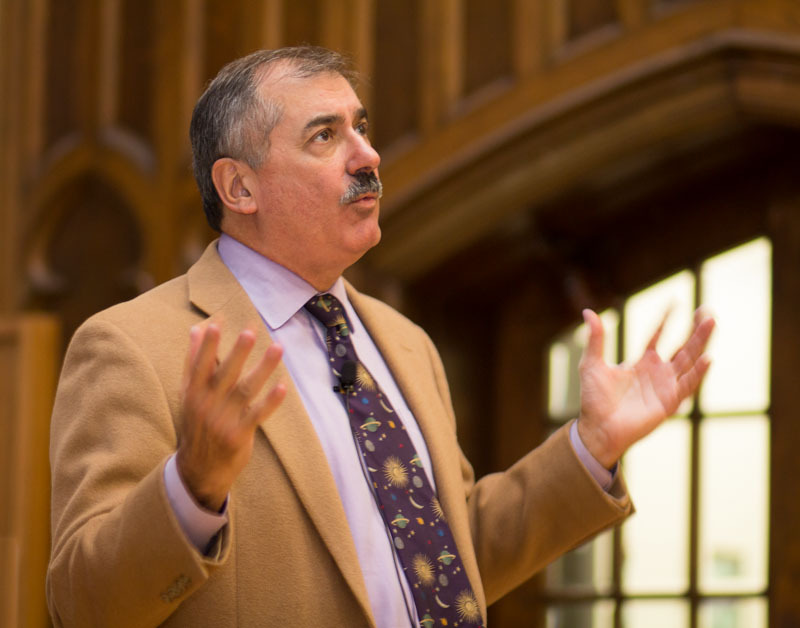
Dr. Edward ‘Rocky’ Kolb gave a superb presentation to a packed house of 270 people in Conron Hall on Thursday, October 4. The 2012 Elizabeth Laird Memorial Lecture was titled “Mysteries of the Dark Universe”. Dr. Kolb gave a wonderful history of the search for Dark Matter and Dark Energy in our visible universe, and he also mapped out the most likely future scenarios and candidates for the discovery of Dark Matter and Dark Energy.
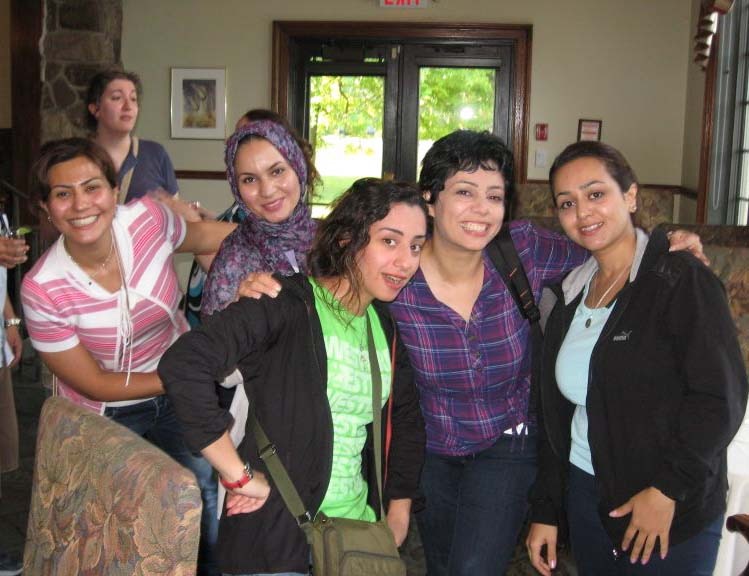
Spencer Hall was once again the venue for a very lively reception for faculty, staff, and graduate students.
This took place on Thursday, September 7, 2012.
Photos are by Shantanu Basu.
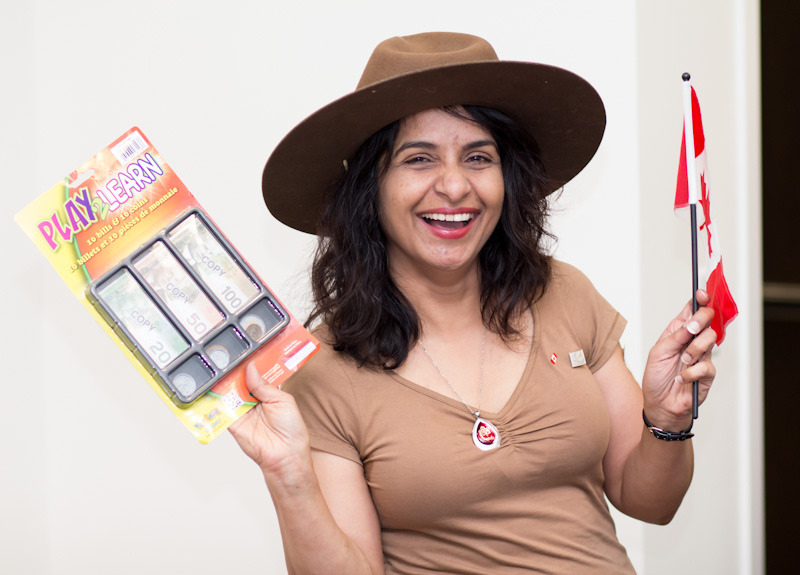
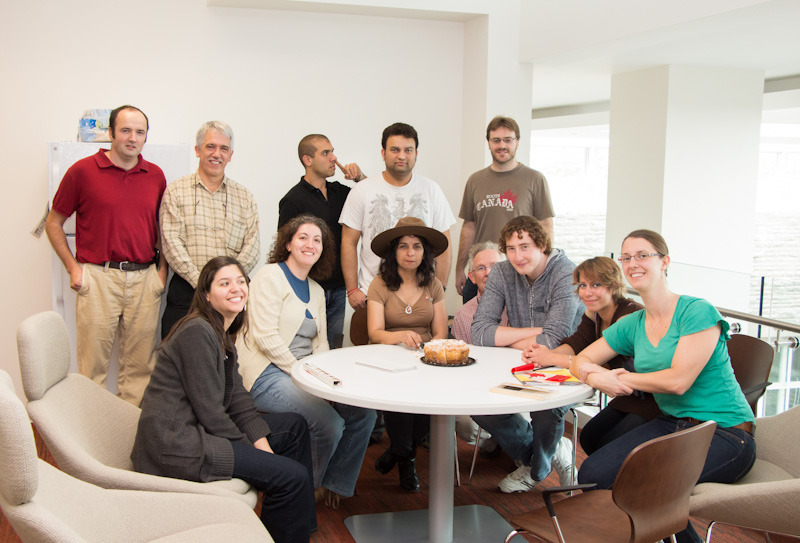
A small but cheery group gathered to celebrate Bushra Hussain’s new Canadian citizenship.

Geron Bindseil has been selected as one of three Learning Development Fellows in the Faculty of Science.
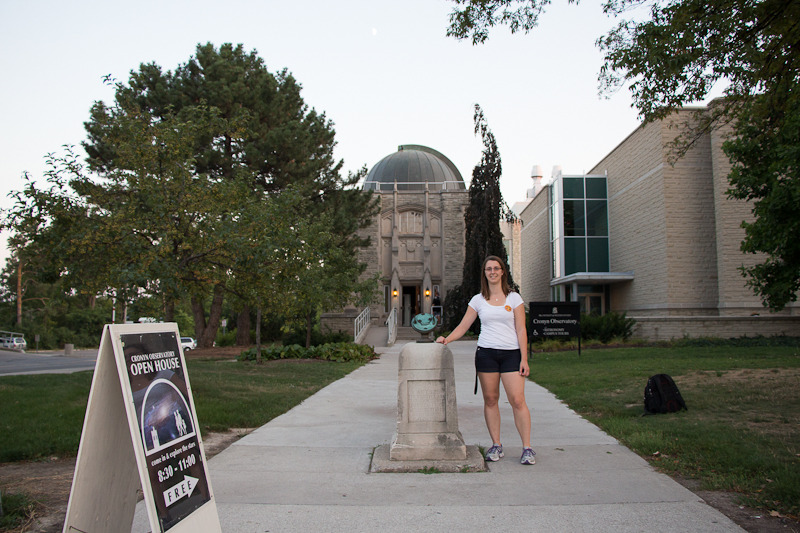
We are pleased to present an evening of star and planet gazing at The Hume Cronyn Memorial Observatory.
This will take place on Saturday, September 1, 2012.
Doors open at 20:30 (8:30pm) and close at 23:00 (11:00pm).
In addition to star gazing, there will be a presentation on a relevant astronomical topic downstairs in the main hall.
A good crowd showed up to view the stars on the final summer public night of the year.
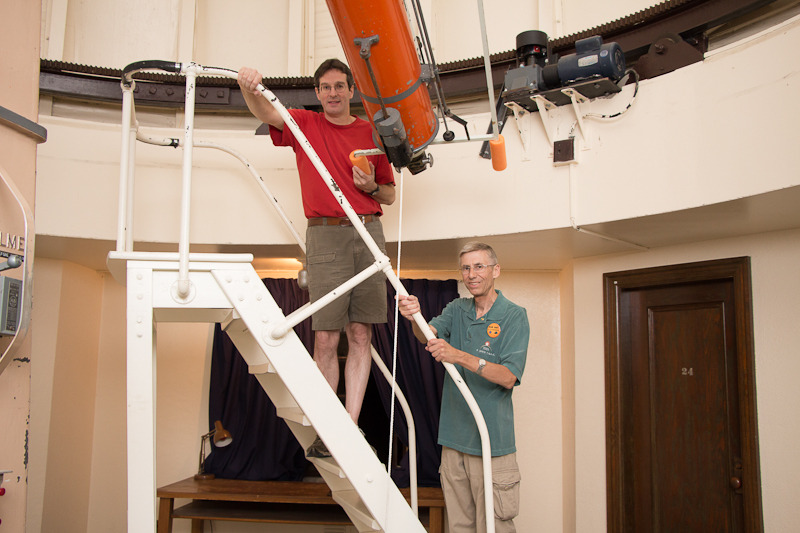
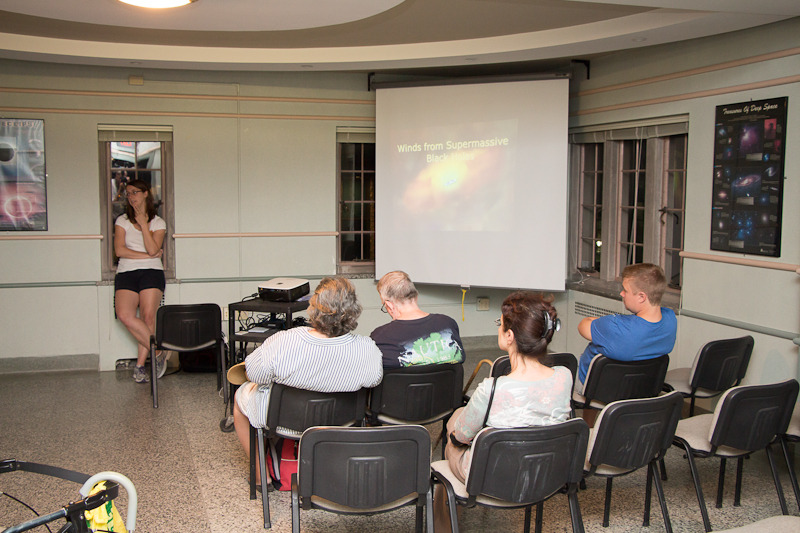
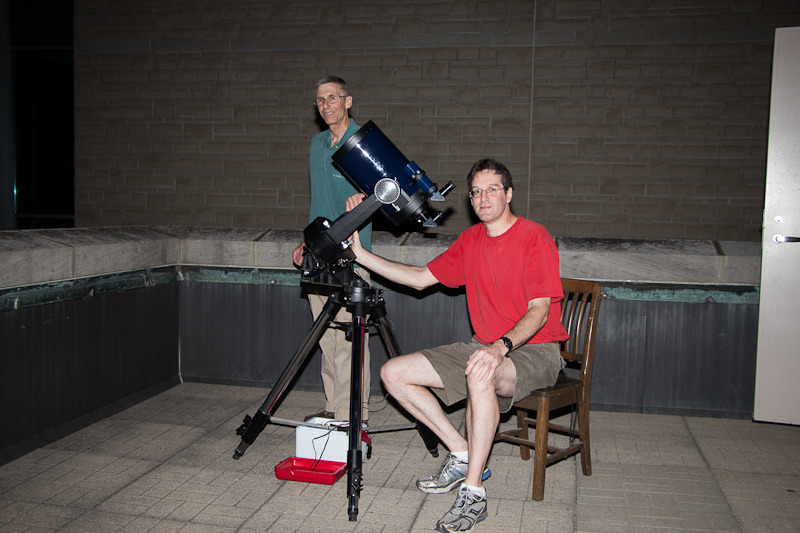
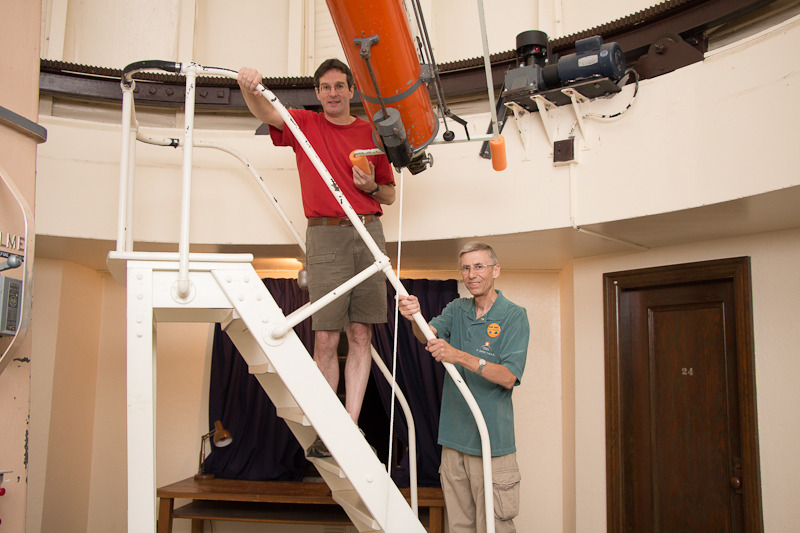
Allison Hill gave a presentation in the lecture hall, while Matt Abado along with RASC members Bob Duff and Dale Armstrong operated three telescopes for star and planet viewing. The star viewing started out with observations of the first quarter moon on the 25cm refractor. The two smaller telescopes were pointed at various interesting objects, including the double star Albireo and the planet Neptune.
The fall and winter public programs at Cronyn Observatory will soon begin.
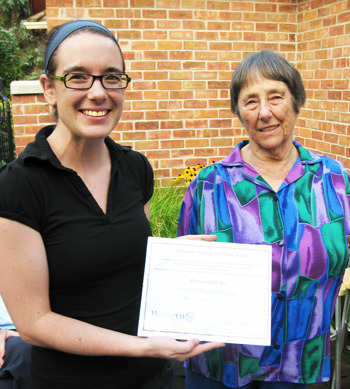
PhD student Emily McCullough (left) is all smiles after receiving the William H. Wehlau Award from Dr. Amelia Wehlau (right).
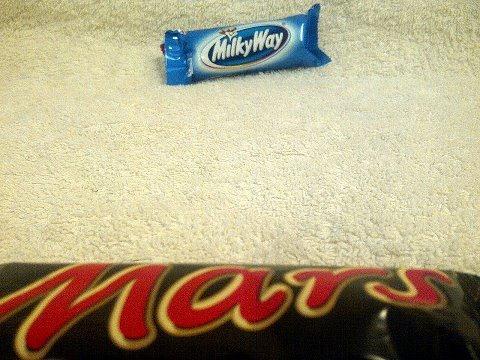
Former astronomy staff member Mira Rasche sends us this delicious image showing the Milky Way from the surface of Mars.
- Email Story
- Size A A A
- Report Typo
- Gordon Osinski sits in his office at Western University with students Raymond Francis and Cassandra Marion. Sitting on his desk in the foreground is a shatter cone, similar to the ones discovered by the team on Victoria Island. (ALEX WEBER, The London Free Press)
While NASA’s Curiosity rover was en route to Mars hurtling through space at 20,900 km/h, a Western University research team and a local astronaut were packed in a Twin Otter float plane making their way to Canada’s west Arctic.
A joint effort between Western’s Centre for Planetary Science and Exploration and the Canadian Space Agency, the team spent nearly two weeks on Victoria Island conducting a geological survey on a newly discovered meteor impact crater.
Their mission was twofold: to examine the crater and to help Canadian astronaut Jeremy Hansen prepare for his next mission.
Just like Curiosity, which touched down early Monday on Mars, Hansen, 36, is expected to one day land on Mars, the moon or a meteor as NASA prepares its astronauts to journey deeper into space.
“As somebody who might be on the moon chipping a rock, it’s interesting for me to see how the work is done,” Hansen said.
The Arctic, being dry, cold and deserted, is also the closest environment on Earth to what Hansen and other astronauts can expect to experience when exploring another planet.
“The idea is to learn how to explore places you haven’t been to before,” said Gordon Osinski, director of Western’s planetary- sciences centre. “You can’t teach that in a classroom.”
Hansen joined Osinski and four Western University students in exploring a crater 30 km in diameter and more than 230 km away from any form of human civilization.
The crew landed on Victoria Island, roughly 21/2 times the size of Great Britain and nestled between Nunavut and Canada’s Northwest Territories, on July 1.
For the next 10 days they explored the crater created more than 300 million years ago — though its exact age is yet to be determined — when an asteroid about two kilometres wide slammed into an ocean bed.
Never before seen by humans, the crater was discovered in 2010 during a regional geological survey of Canada.
By analysing the composition of the rocks inside the crater, geologists can learn about deep space, other planets and how asteroids are formed.
Among some of the fascinating rocks the team uncovered were shatter cones, a rare geological discovery only found beneath impact craters and nuclear test sites.
“It was pretty spectacular,” said Cassandra Marion, a PhD student on the expedition.
Though many of the students on the team have backgrounds in geology, Raymond Francis studies robotics engineering. He hopes to one day build robots, such as NASA’s Curiosity, that will venture into deep space and report findings on its own.
“I have to know how to do these experiments in geology because I have to teach a computer how to do them,” Francis said.
But exploring the crater and taking samples were only part of the job, now that the team is back from the Arctic they’re busy analyzing the data they gathered.
Hansen, who was born in London and raised in Ailsa Craig and Ingersoll, is also back at home in Houston, Tex.
Though NASA has yet to set a date for its next mission with astronauts, Hansen is optimistic he’ll be venturing out of this world in the not too distant future.
In fact, breakthroughs in technology and the development of commercial space flights have Hansen excited not just about his own chance to visit space, but other people’s as well.
“I’m quite optimistic, not just for myself, but for other Canadians as well.
“When the time is right and the economy is right we’re going to have all the pieces together and be ready to go.”
— — —
The crater
- There are about 180 known impact craters on the Earth’s surface
- At 30km in diameter, the Victoria Island crater is considered medium-sized
- Chicxulub crater in Mexico, caused by the asteroid scientists believe killed the dinosaurs, is the largest at 180km in diameter.
E-mail alex.weber@sunmedia.ca, or follow AlexatLFPress on Twitter.
Your Comments
- 0 Comments
- View/Leave Comment
- Email Story
- Size A A A
- Report Typo