All posts by Henry Leparskas

PhD. candidate Chad Harris wins the I.I. Rabi Award of the ISMRM.


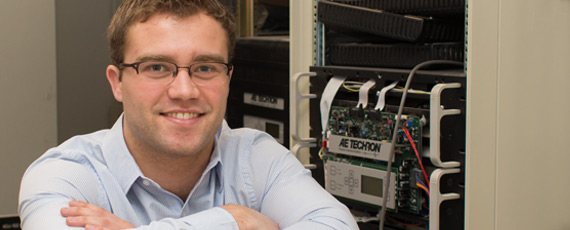
chad_harris_rabi_bannerChad Harris, PhD candidate in Medical Physics, has won the I.I. Rabi Award.
This award is essentially the highest honor that a young MRI researcher can receive.

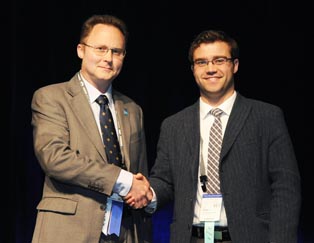
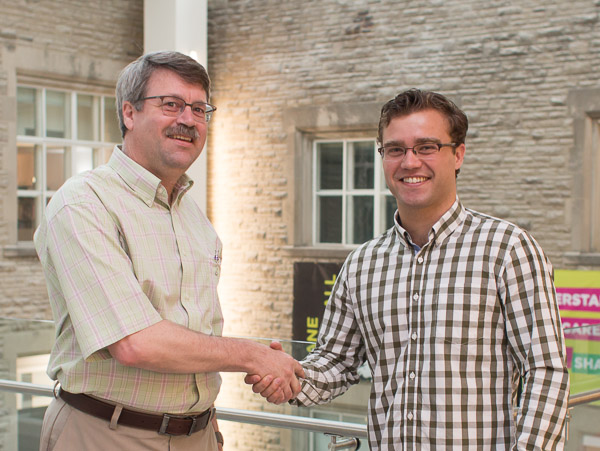
In the left photo below, Chad (right in photo) is shown receiving the award at the annual meeting of the ISMRM which was held in Salt Lake City, Utah in April, 2013. In the photo at right, Chad (on the right) receives congratulations from Dr. Timothy Scholl, representing Dr. Blaine Chronik, who is Chad’s supervisor.

There were three international finalists for this award. Aside from Chad, one of the other three finalists wHarris_YIA_Rabias highly honored 2009 Western physics graduate Adrienne Campbell.
The I.I. Rabi Award is given for original basic science research in magnetic resonance. This includes reports of new MR methodologies and understanding of MR signals, aimed at either human or animal subjects. Examples include manuscripts reporting new hardware, novel pulse sequences, biochad_and_tim_rabi_award_600physical or signal models, or data analysis techniques. The competition is open to clinical and basic scientists at the undergraduate, graduate, postgraduate, resident, and fellow levels working in MR research in academia, industry, or research institutions. Applicants should either be within five (5) years post completion of Ph.D. or three (3) years post completion of appropriate clinical training, as documented by a curriculum vitae and letter of confirmation from their supervisor, mentor, or department head. ISMRM membership is required.
The ISMRM (International Society for Magnetic Resonance in Medicine) is a nonprofit professional association dedicated to promoting communication, research, development and application of magnetic resonance techniques in medicine and biology. The Society presents annual meetings and sponsors other major educational and scientific workshops. The Society is accredited by the Accreditation Council for Continuing Medical Education to provide continuing medical education for physicians.
[ISMRM Awards page for 2013]


Giovanni Fanchini is Western University’s Petro-Canada Young Innovator for 2013-14

fanchini_young_innovator_2

Dr. Giovanni Fanchini has won the Petro-Canada Young Innovator Award for 2013-14 for Western University.

The announcement reads, “We are pleased to announce that Prof. Giovanni Fanchini has received the Western University’s Petro-Canada Young Innovator Award for 2013-2014. This award was established to recognize, promote and support outstanding new faculty researchers whose work is particularly innovative, impacts positively on the learning environment in the department in which they study, and has the potential to be of significance to society at large. The program is intended to help attract and retain bright young minds at Canadian Universities and to help researchers launch their scholarly careers and enable them to carry their research forward”.

Surface Canada 2013 conference runs from May 7-10, with workshop on May 11.


surface_canada_2013_570_180Surface Canada 2013 conference runs from May 7 – 10.

Surface and interface science is a key area of interdisciplinary research at Western with a long and distinguished history, especially within the Department of Physics and Astronomy, and Chemistry.

This conference offers us the opportunity to showcase some key research  facilities within the Faculties of Science and Engineering, in particular Nanofabrication facility, Tandetron Accelerator facility and Surface Science Western.

A special workshop dedicated to experimental techniques to investigate surfaces will be held on Saturday, May 11, 2013.

There will be more than 170 participants at the conference, as well as over 105 at the Saturday’s workshop.

We are very pleased to announce that the following have confirmed that they will speak at Surface Canada 2013:

T.K. Sham, Western University (Plenary Speaker)

John Dutcher, University of Guelph;

Daniel Guay, INRS;

Jean-François Masson, Université de Montréal;

Roger Newman, University of Toronto;

Federico Rosei, INRS.

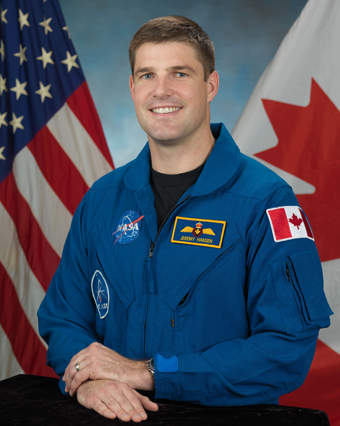
Canadian Astronaut Jeremy Hansen speaking at Western, Wed May 8 at 3:30 pm, UCC 56

a_hansen_lr“Field Geology Training for Canadian Astronauts – Preparing for Future Space Missions”
[Hansen talk May 8 2013 poster – PDF ]

Please join us at 3:30 pm on Wednesday May 8 in UCC 56 for Jeremy Hansen, Canadian Space Agency Astronaut, and Dr. Gordon “Oz” Osinski CPSX’s Associate Director, overview of two expeditions, including their trip to Victoria Island, NWT, in summer 2012, where they discovered Canada’s newest meteorite impact crater!

In July 1971 astronauts Charles Duke and John Young prepared for their Apollo 16 mission to the Moon by carrying out field geology training in and around Sudbury. Why Sudbury? Because it’s the site of one of the world’s largest meteorite impact craters – the scar left by the collision of asteroid almost two billion years ago. Indeed, meteorite impact structures are one of the most common geological landforms in the Solar System. Fast forward more than half a century and the newest cadre of astronauts are studying planetary geology for the first time since the Apollo missions.

In order to prepare for future robotic and human exploration missions it is essential that Canada’s astronauts receive training in geology. Geology is best learned in the field with personalized instruction. The driving paradigm is that the astronauts will be immersed in cutting edge “real” research at a variety of impact crater sites. Further, by focusing on poorly studied or unknown impact craters, the astronauts will experience, first hand, the true spirit of exploration – going somewhere for the first time and with little knowledge except what can be gleaned from satellites.


Jeremy Hansen was born and raised in Ontario. He joined the Air Cadet Program at the age of 12 and obtained both glider and private pilot licenses through this program by the age of 17. This experience led to his acceptance to the Royal Military College where he earned a Bachelor in Space Science and a Master in Physics, and became a CF-18 fighter pilot. Jeremy was selected in May 2009 as one of two members of the third Canadian Astronaut selection. He is one of 14 members of the 20th NASA astronaut class. In 2011, Jeremy graduated from Astronaut Candidate Training and is now eligible for spaceflight. Since his graduation, he’s been assigned as Crew Support Astronaut for Expedition 34/35, the mission of fellow Canadian astronaut Chris Hadfield, and is a Capcom.

Hope to see everyone there!

Jennifer Heidenheim


First Cronyn Observatory public night of the summer a success.

cronyn_6may2013_volunteers_350

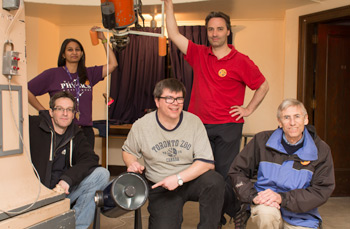
The first Cronyn Observatory public night of the summer was a great success. About 60 people showed up for a presentation on the Eta Aquarid meteor shower, as well as for observing the planets Saturn and Jupiter through four different telescopes. Volunteers were Parshati, Jan, and Henry from Western, and Dale, Bob, Steve, and Dave #5 from the RASC.

It was a special night, with Rogers TV coming down to take some video and do some interviews.

But it got even more exciting when police sirens were heard outside, followed by the arrival of three fire trucks.  The observatory visitors were promptly evacuated until officials could find the cause of the alarm, which turned out to be an electrical fault.

Firefighters who went up to inspect the observing floor asked Jan what we were observing, to which Jan replied “Jupiter”. So these firefighters, decked out in their heavy outfits and wielding their impressive axes, had their first ever view of Jupiter through a telescope. Everyone else got to look at fire trucks in the dark with their lights flashing and spinning!

[images] [ Hume Cronyn Memorial Observatory ]

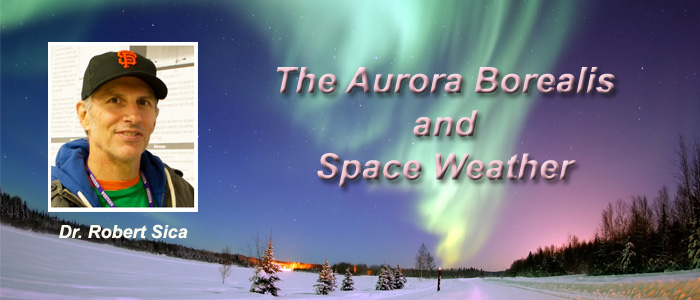
The Aurora Borealis and Space Weather – Talk by Bob Sica at RASC meeting – Friday, April 19

sica_aurora_talkRASC London Centre monthly meeting.

Presentation by Dr. Robert Sica of Western University.

“The Aurora Borealis and Space Weather.”

Space Weather is the study of the interaction of the particles which flow from the Sun with Earth’s atmosphere. This talk will describe the visual result apparent to us on the surface, the Northern (and Southern) Lights, as well as give a lay description of a cutting edge of research: how can the particles from the Sun affect weather on the surface?

Time:  7:00 pm (19:00 hours)

Date: Friday, April 19, 2013

Location: Fanshawe College Rm B1073

[ Link to location map and event details ]