All posts by catschroedinger

Solving tomorrows problems today

There were a couple of times as a child when I would have died without modern medicine. I am not alone.  Most people used to die young and it was only the genetically tough and/or lucky that won the crapshoot and got to the point where they could reproduce. This has to have consequences.  I am passing on a lousy immune system to my kids; someone else may be passing on a more serious genetic disease.  Well, the human race is actually moving towards dealing with this for the first time, as has been seen by a recent debate on medical ethics in the UK.

Mitochondria, small energy powerhouses that in the beginning of life were separate organisms before some bacteria took them over and made them work for a living, have their own DNA that has nothing to do with our 26 chromosomes. Basically the idea is to use the mitochondrial DNA from a third parent for test tube babies whose parents have genetic conditions passed on via the mitochondrial DNA.

It is not quite yet the genetic engineering of human beings, but it is very close.  This technique is not what is needed for dealing with the vast array of genetic ailments that plague modern society, but it certainly opens the door.

Many people seem to be outraged by the idea of it happening, but for me the question is not really whether it should happen, but rather how.
 

Jokes from the desk of a grad student: Vol 7 #westernu

Q: What did the male magnet say to the female magnet?
A: From your backside, I thought you were repulsive. However, after seeing you from the front, I find you rather attractive.

There is just one thing I can promise you about the outer-space program: your tax dollar will go farther.

What kind of star wears sunglasses? A movie star.

How did the astronaut serve drinks? In sun-glasses.

Astronomer 1: So, anyway, the cop pulled me over for running the red light. I explained to him that I did not see the light as red, since I was traveling towards it and it was blue-shifted.

Astronomer 2: And he let you go?

Astronomer 1: No, he gave me a speeding ticket instead.


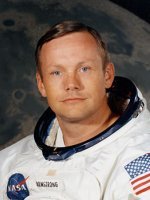
Neil Armstrong dies at the age of 82

The first man to step on Moon has passed away today at the age of 82. He passed away after the complications from a heart surgery earlier this month.

He will be remembered for one line that rings in everyone’s ear every time anyone talks about the first step on Moon “One small step for man, a giant leap for mankind”. He inspired many and will always be remembered for his contributions to human race!


RIP Neil Armstrong!

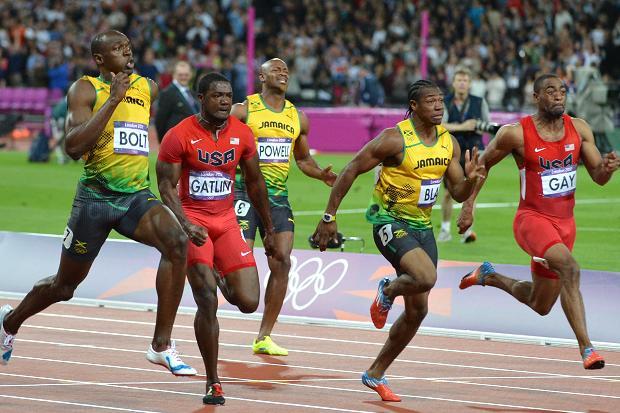
BOLT! (of Usain) Physics of sprinting #westernu

Sprinting has evolved since the first Olympics in 1896 to the point where humans are running the 100 m dash 2.41 s faster [see the article below-nice graph & video]. Projections peg the fastest 100 m time at a possible 9.21 s.

In homage to the Olympics and the new era of sprinting [tall & lanky], lets look at some different attributes required in this sport:

-Large centre of gravity

-Large force exertion on track [~2.5 body weight]

-Reaction time

-Height [fewer strides]


Currently, there are certain limits to what humans can do [i.e.-it takes about 1/3 of a second to lift and put your leg down while sprinting]. The 400 m double-amputee Oscar Pistorius improves on this limit by ~20% because his carbon fibre legs are half the mass.

Whether humans can go below 9 s may be beyond exploiting physics [http://www.bbc.com/future/story/20120712-will-we-ever-run-100m-in-9-secs/1].


Article: http://www.nytimes.com/interactive/2012/08/05/sports/olympics/the-100-meter-d…

How to submit a Paper #westernu

From a recent post on astrobites, general submission guidelines and checklists for the Astrophysical Journal and arXiv. Most useful was a program linked through the article that takes an input latex file, bib (.bbl) file, and its figures and does the following:

-Removes all commented text

-Places bib items in latex file

-Renames figures sequentially IN latex file and creates new files

-Arranges all material in a tarball


http://astrobites.com/2012/08/06/how-to-submit-a-paper/