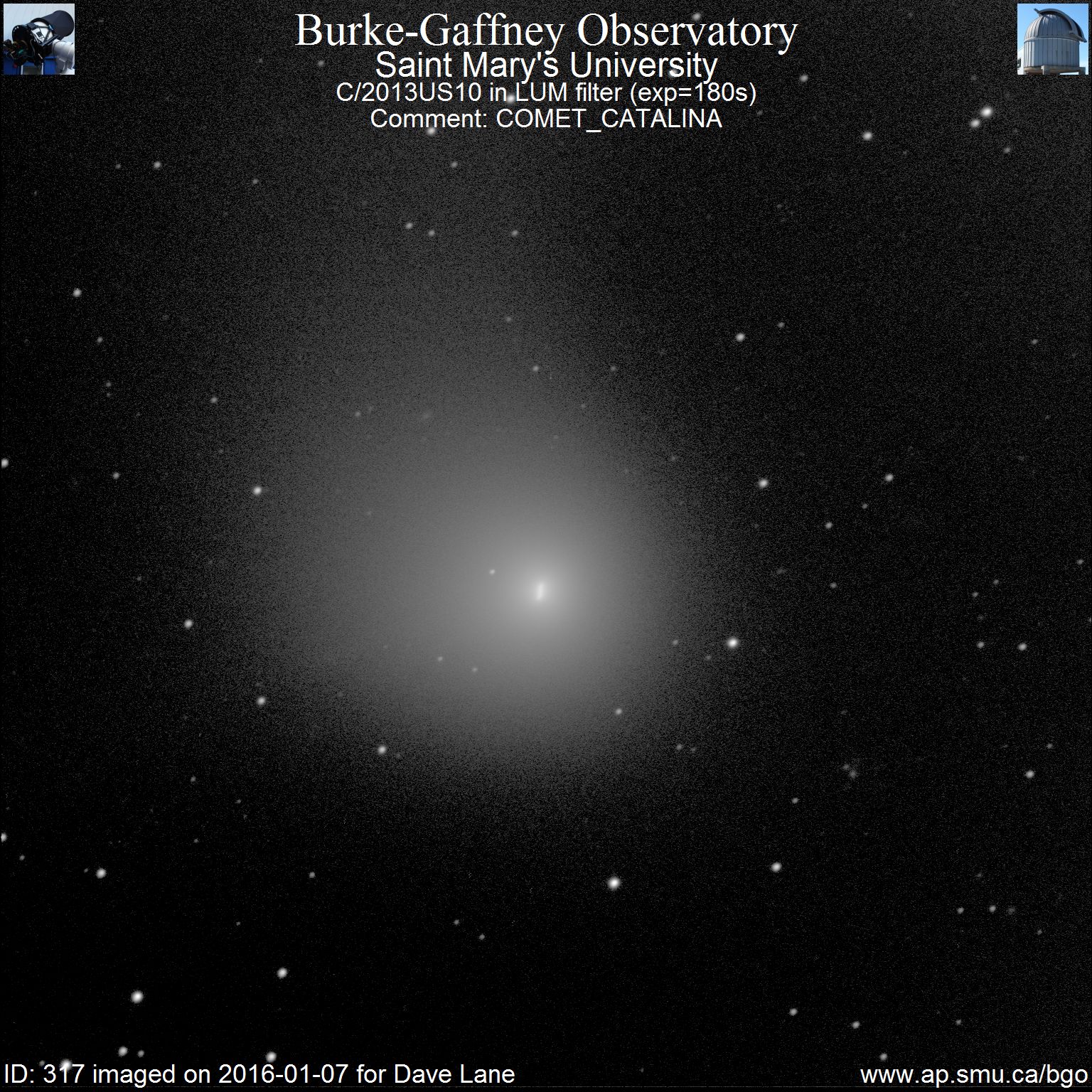
Comet Catalina as photographed by Dave Lane, using the 24 inch telescope at the Burke Gaffney Observatory, which sits high atop the Physics and Astronomy building on the campus of St. Mary’s University, Halifax, Canada.
Thanks to Peter Jedicke, London RASC, for providing the image.
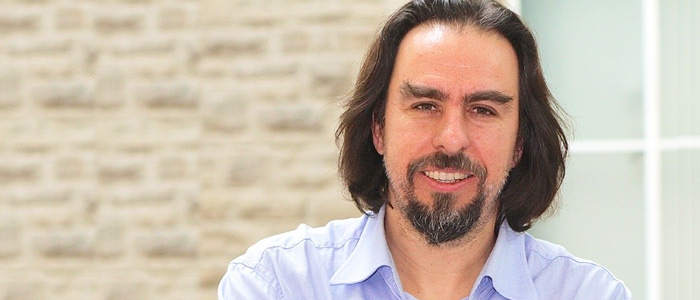
A group of researchers led by Western’s Andrea Soddu, and his Columbian colleague Francisco Gomez, has devised a method that allows them to interpret the functional MRI (Magnetic Resonance Imaging) mapping of the brain in such a way as to provide diagnoses that were previously only available via 18F-fluorodeoxyglucose positron emission tomography (FDG-PET).
Such a new use for functional MRI would expand certain diagnoses to clinics which do not have access to a PET machine. This can potentially save lives of patients who would previously not have had the diagnosis available to them. This also translates into a money saver because the PET machine would not be needed for this particular diagnosis.
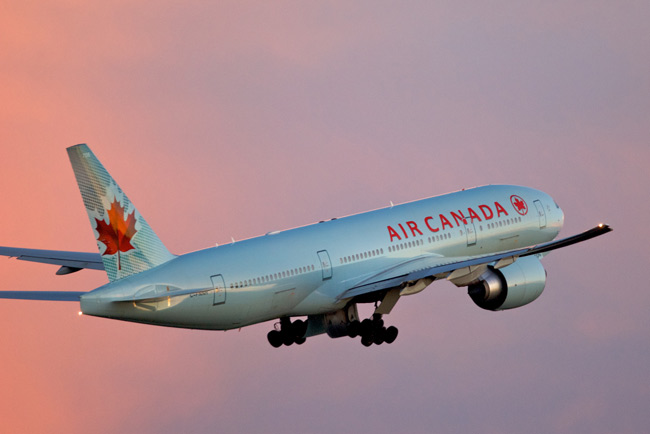
Western atmospheric physicist Professor Wayne Hocking was interviewed by The Globe and Mail regarding the violent turbulence that caused a Christmas Air Canada flight from Shanghai destined for Toronto to be diverted to Calgary.
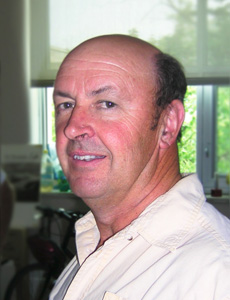
Professor Wayne Hocking
The flight passengers described feeling two sets of large up and down movements of the Boeing 777, before one final violent drop.
These experiences suggested to Wayne Hocking that the turbulence may well have been caused by the oscillating gravity wave motion of the air in the upper atmosphere after it has passed over the mountain ranges of Alaska.