
One of the misconceptions I often run into is that astronomers just sit at telescopes all night long and get all the data they need. Another is that every school with astronomy programs has state of the art observatories at their command. Unfortunately, the latter is not true — I wish it was! As observing proposal season is wrapping up, I thought it would be interesting to give this insight into the process of how astronomers get data.
Here at Western, we have two observatories affiliated with the observatory: the Hume Cronyn Memorial and Elginfield Observatories (actually, there’s a third, the Purple Crow Lidar at Echo Base Observatory, but that’s designed for atmospheric physics, not astronomy). Cronyn Observatory was opened in October 1940 and was, at the time, a state of the art research facility with a 25.4-centimeter refracting telescope and a Schmidt camera. However, that changed over the next three decades as advancements in technology came faster and faster. Today, Cronyn is used for public education and outreach programs, currently led by Prof. Jan Cami.
In the late 1960s, it was clear that Cronyn no longer met the research needs of the faculty, and so a new observatory was commissioned and the Elginfield Observatory and its 1.2-meter telescope were built in the early 1970s. The Elginfield project was possible thanks to funding from the Natural Sciences and Engineering Research Council of Canada, primarily secured due to the efforts of Emeritus Professor William H. Wehlau (1926-1995). Prof. Wehlau was also a driving force behind the building of the Canada France Hawaii Telescope (CFHT), a 3.6-meter telescope on Mauna Kea in Hawaii. Elginfield Observatory was officially closed in 2011 due to lack of use (the majority of the faculty require much different instruments for their research that not available at the observatory) and the yearly costs involved in keeping the facility open.
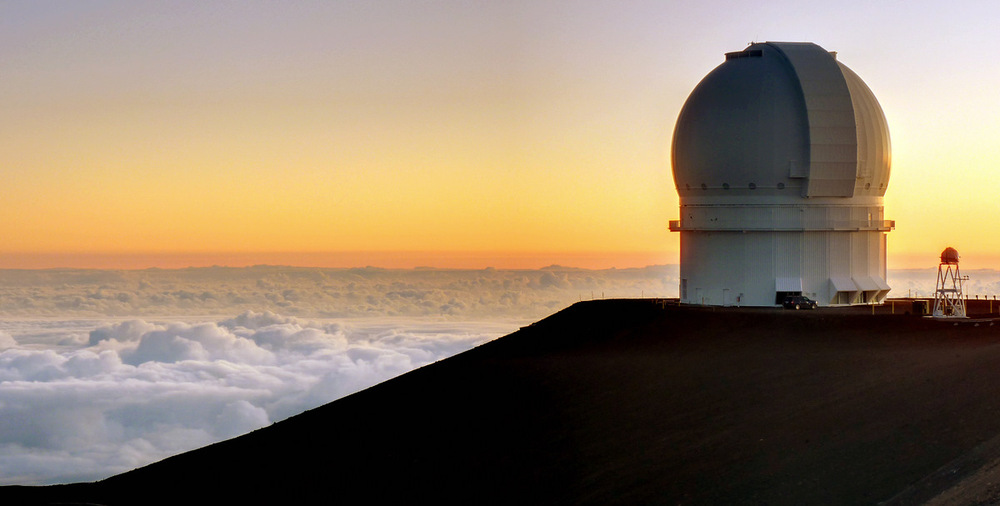
So, where do astronomers get their data from? Telescopes like the CFHT! Large, national and international projects like CFHT have the funding to back them that individual (and usually even groups of) universities cannot afford. However, we don’t all have free access to these facilities, or even access to some at all depending on certain circumstances. Not all observatories are open for anyone to use, though — you have to have some kind of affiliation with the observatory (such as the the European Southern Observatory).
When asking for time with one of these facilities, you have to write an observing proposal (usually twice a year corresponding to two observing semesters). These proposals have to demonstrate your science goals for your observations (and you should usually demonstrate the scientific versatility of the data to make your case even stronger) and explain why the facility that you’re applying to is the only one or the best one for you to use. These proposals are then collected and examined by a Time Allocation Committee (TAC). For example, in divvying up time that Canada receives on various national and international facilities, the CanTAC (including Western’s Prof. Sarah Gallagher) makes the decisions. You may get all of the time you ask for, you may get some of it, or you make get none of it at all depending on the merit of your proposal and how it is ranked against others. For various observatories, the time allocation process is very competitive with many more requests than time is available (this is called “oversubscription”; Hubble has an oversubscription rate of about 4 to 1). And even if you get the time, your accepted proposal only gets you one shot…if you get clouded out for example, then you just have to reapply next time.
Next time, we’ll look at what other observational astronomers can do without having to gain access to all of these observatories around the world (and even those above the world!).
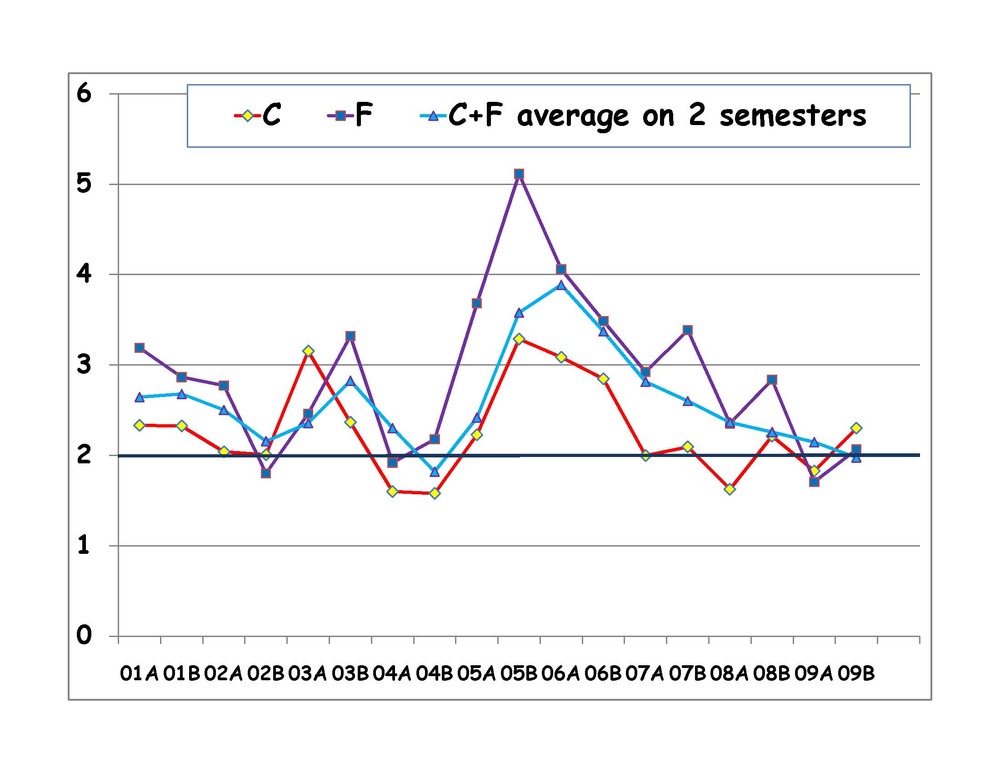
Image source: CFHT. The plot shows the ratio of the time requested to the time available at CFHT in a given observing semester (the first half of 2009 is labeled 09A, the second half 09B, etc.). The red line indicates Canadian time, the purple line French time, and the blue line is the average of Canadian and French time.